Introduction
Have you ever spotted a tiny dog trotting down the street and thought I need one of those in my life? You’re definitely not alone. Very small dog breeds have stolen hearts around the world and for genuinely good reasons.
These little dogs pack enormous personalities into the tiniest packages. However, choosing the right small breed isn’t always straightforward. So many options exist, and each breed has its own unique personality, care needs, and quirks. That’s exactly why this guide exists.
By the end of this article, you’ll know which very small dog breeds suit your lifestyle, what to expect from daily care, and how to avoid the most common mistakes new small-dog owners make. Let’s find your perfect tiny companion together.
What Are Very Small Dog Breeds And Why Are They So Popular?
Defining “Very Small” in the Dog World
Very small dog breeds typically weigh under 10 pounds and stand shorter than 12 inches at the shoulder. Therefore, they’re often called toy breeds or teacup dogs in everyday conversation.
These breeds are genuinely different from medium or large dogs not just in size, but also in temperament, care requirements, and health considerations. In my experience, many people underestimate how much personality a 5-pound dog can have. It’s honestly surprising every single time.
Why So Many People Choose Tiny Dogs
Small dogs work beautifully for apartment living. They also travel more easily than larger breeds. Additionally, their food costs are lower, grooming appointments are quicker, and they’re easier to handle physically.
However and this is important, very small dog breeds aren’t always easier to train. Many of them are fiercely independent and surprisingly stubborn. So, going in with realistic expectations genuinely helps.
Here’s what makes tiny breeds so appealing to so many owners:
- Perfect for small spaces apartments, condos, and tiny homes
- Lower exercise requirements short daily walks usually suffice
- Long lifespans many small breeds live 12 to 18 years
- Portable companions travel-friendly and easy to carry
- Great for seniors manageable size and lower physical demand
Top Very Small Dog Breeds Worth Knowing About
The Most Beloved Tiny Breeds in 2026
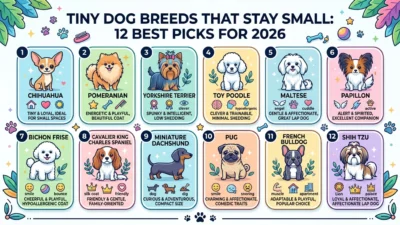
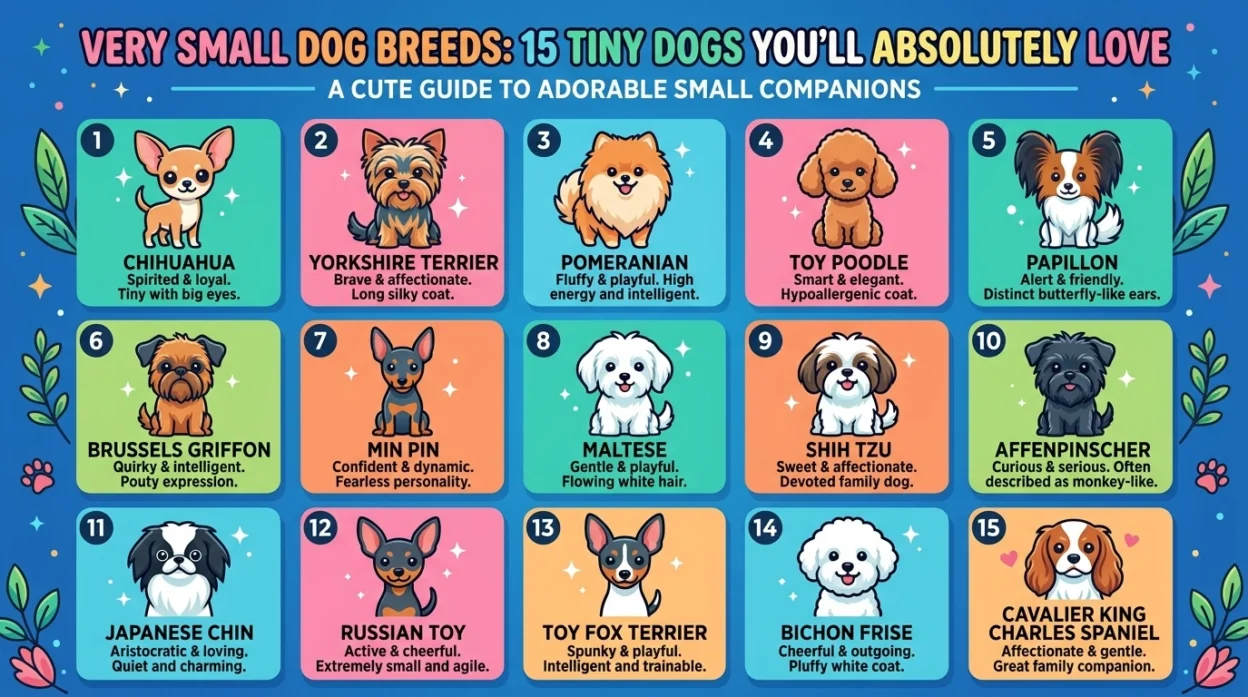
Here’s a helpful comparison table of the most popular very small dog breeds. Therefore, you can quickly find the best match for your lifestyle.
| Breed | Weight | Temperament | Best For |
| Chihuahua | 2–6 lbs | Bold, loyal, feisty | Singles, seniors |
| Pomeranian | 3–7 lbs | Playful, energetic, smart | Active owners |
| Yorkshire Terrier | 4–7 lbs | Confident, affectionate | Families, apartments |
| Maltese | 4–7 lbs | Gentle, playful, loving | First-time owners |
| Toy Poodle | 4–6 lbs | Highly intelligent, gentle | Allergy sufferers |
| Shih Tzu | 9–10 lbs | Friendly, calm, loyal | Seniors, families |
| Papillon | 5–10 lbs | Alert, energetic, curious | Active families |
| Italian Greyhound | 7–10 lbs | Sensitive, gentle, fast | Calm households |
| Russian Toy | 3–6 lbs | Affectionate, lively | Quiet homes |
| Affenpinscher | 7–10 lbs | Curious, stubborn, funny | Experienced owners |
A Closer Look at Fan Favorites
Chihuahuas are possibly the most iconic of all very small dog breeds. These tiny dogs are fearless, deeply loyal, and sometimes hilariously dramatic. However, they can be nippy around strangers if not socialized early.
Pomeranian fluffy, outgoing, and incredibly smart. In my experience, Pomeranians learn tricks faster than most dogs twice their size. They do, however, need regular grooming to keep that gorgeous coat in shape.
Yorkshire Terrier a classic choice for apartment dwellers. Yorkies are confident beyond their size and surprisingly brave. They also adapt well to different family situations, which makes them wonderfully versatile.
Maltese if you want a gentle, white-coated companion, the Maltese delivers beautifully. These dogs are affectionate, relatively easy to train, and genuinely enjoy being close to their people.
Toy Poodles don’t let the fancy haircut fool you. Toy Poodles are sharp, athletic, and extremely eager to please. As a result, they’re one of the easiest very small dog breeds to train.
Pro Tip: Always meet a breed in person before committing. Personality varies widely even within the same breed. A reputable breeder or rescue group can help you find a dog whose energy matches yours perfectly.
[Small Dogs: Best Breeds, Care Tips & Complete Guide 2026]
How to Care for Very Small Dog Breeds: Step-by-Step Guide
Essential Daily Care for Tiny Dogs
Caring for very small dog breeds requires some specific adjustments. However, once you know what to do, daily routines become easy and genuinely enjoyable.
- Feed smaller, more frequent meals. Tiny dogs have small stomachs. Therefore, two to three small meals daily work better than one large feeding. This also helps prevent hypoglycemia low blood sugar which small breeds are prone to.
- Use appropriately sized food and bowls. Small kibbles designed for toy breeds fit better in tiny mouths. Additionally, shallow bowls prevent neck strain during mealtimes.
- Provide gentle daily exercise. Short walks of 15 to 20 minutes twice daily suit most very small dog breeds perfectly. However, avoid overexertion, tiny legs tire faster than you might expect.
- Handle them carefully. Small dogs are fragile. Therefore, teach children to handle them gently. Accidental drops or rough play cause serious injuries in toy breeds.
- Keep them warm in cold weather. Very small dogs lose body heat quickly. So, invest in a good dog sweater or jacket for winter walks. This isn’t just fashionable, it’s genuinely necessary for their comfort.
- Schedule regular vet checkups. Small breeds have specific health concerns: dental disease, luxating patellas, and tracheal collapse appear more frequently in tiny dogs. Therefore, twice-yearly vet visits catch problems early. Always consult your vet for breed-specific health guidance.
- Socialize them early and often. Small dogs can develop “small dog syndrome” fearful, aggressive, or overly anxious behavior without proper socialization. As a result, early exposure to different people, sounds, and environments makes a huge difference long-term.
Grooming Needs by Breed Type
Different very small dog breeds have very different grooming needs. Here’s a quick breakdown:
- Long-coated breeds (Maltese, Shih Tzu, Yorkshire Terrier) daily brushing prevents mats; professional grooming every 6 to 8 weeks
- Double-coated breeds (Pomeranian, Chihuahua long-coat) brush several times weekly; seasonal heavy shedding happens twice yearly
- Smooth-coated breeds (Italian Greyhound, smooth Chihuahua) minimal brushing needed; occasional wipe-down with a damp cloth works well
- Curly-coated breeds (Toy Poodle) professional grooming every 4 to 6 weeks; daily brushing prevents matting between appointments
Common Mistakes Very Small Dog Breed Owners Make
Mistake 1 Skipping Training Because They’re “Just Small”
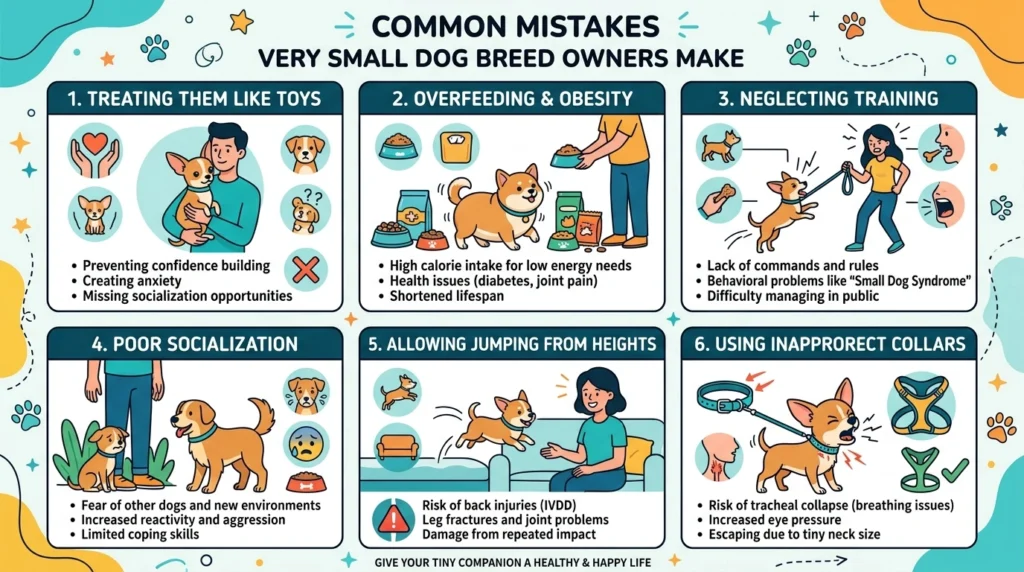
This is honestly the most damaging mistake I’ve seen. Because a dog is tiny, many owners skip basic obedience training. However, an untrained small dog is still an unmanageable dog, just a smaller one. Therefore, start training early and stay consistent.
Small dog owners often carry their dogs everywhere and shield them from every perceived threat. As a result, the dog never learns to cope with normal life. Confidence comes from positive experiences, not from being carried away from them.
Mistake 3 Feeding Too Many Treats
Obesity is a serious health risk for very small dog breeds. Because their total caloric needs are so low, even a few extra treats daily push them significantly over their limit. Therefore, measure food carefully and use tiny treat sizes for training rewards.
Mistake 4 Ignoring Dental Health
Small breeds are disproportionately prone to dental disease. Their crowded teeth create perfect conditions for plaque and tartar buildup. So, brush your dog’s teeth several times weekly and schedule annual professional dental cleanings. Consult your vet about the best dental care routine for your specific breed.
Mistake 5 Letting Them Jump From High Surfaces
Very small dogs frequently injure themselves jumping off sofas or beds. Therefore, invest in small pet stairs or ramps. This simple addition prevents broken legs and joint injuries that are unfortunately common in toy breeds.
Pro Tip: Use a harness instead of a collar for very small dog breeds. Collars put pressure on their delicate tracheas, which can cause serious long-term damage. A well-fitted harness distributes pressure safely across the chest instead.
Frequently Asked Questions About Very Small Dog Breeds
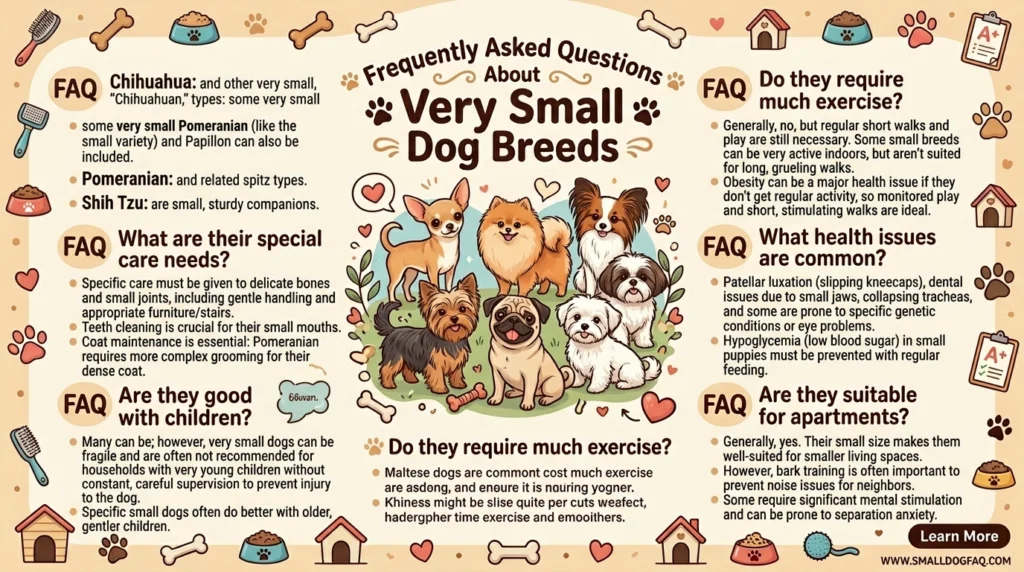
1. What is the smallest dog breed in the world?
The Chihuahua holds the record as the world’s smallest dog breed by official standards. However, the Russian Toy and Toy Poodle are also consistently among the tiniest breeds available. Individual dogs vary; some Chihuahuas weigh as little as 2 pounds when fully grown. Always research the specific breeder’s size history before purchasing a puppy.
2. Are very small dog breeds good with children?
Some are, and some aren’t; it genuinely depends on the specific breed and individual dog. Maltese, Shih Tzu, and Toy Poodles typically do well with gentle, older children. However, Chihuahuas and Italian Greyhounds can be more fragile and less tolerant of rough handling. Therefore, always supervise interactions between very small dogs and young children carefully.
3. How long do very small dog breeds typically live?
One of the biggest advantages of choosing a small breed is their impressive lifespan. Most very small dog breeds live between 12 and 18 years, with some individuals reaching 20 years. Chihuahuas, in particular, are famous for their longevity. However, regular veterinary care, appropriate nutrition, and healthy body weight all significantly influence how long your dog lives.
4. Do very small dog breeds need less exercise than larger dogs?
Generally, yes but they still need daily movement and mental stimulation. Two short walks of 15 to 20 minutes daily suit most toy breeds well. However, high-energy small breeds like Papillons and Toy Poodles genuinely enjoy more activity than that. Puzzle toys and short training sessions also provide important mental exercise that keeps small dogs happy and balanced.
5. What health problems are common in very small dog breeds?
Several health conditions appear more frequently in toy breeds. These include:
- Dental disease crowded teeth in small mouths create higher tartar buildup risk
- Luxating patellas kneecaps that slip out of position, causing lameness
- Hypoglycemia low blood sugar, especially in very tiny or young dogs
- Tracheal collapse a weakening of the windpipe more common in small breeds
- Heart disease certain small breeds have elevated cardiac disease risk
Therefore, regular veterinary checkups are especially important for very small dog breeds. Always consult your vet if you notice any changes in your dog’s health or behavior.
6. Are very small dog breeds easy to train?
Training difficulty varies significantly by breed. Toy Poodles and Papillons are highly trainable and genuinely enjoy learning. Chihuahuas and Affenpinschers, however, can be stubborn and require more patience. The key is consistency, positive reinforcement, and starting early. Because small dogs are often babied, many owners accidentally reinforce bad behavior so staying firm yet gentle makes a real difference.
7. What should I feed a very small dog breed?
Small breed specific dry dog food is the best starting point for most toy breeds. These formulas have higher caloric density and smaller kibble sizes designed for tiny mouths. Additionally, look for named protein as the first ingredient chicken, beef, or salmon. Feed two to three small meals daily rather than one large meal. Always consult your vet for feeding amounts specific to your dog’s weight, age, and health status.
Your Perfect Tiny Companion Is Out There
Very small dog breeds offer so much huge personality, genuine loyalty, long lifespans, and the kind of companionship that fills a home with warmth. However, they do require informed, attentive care to truly thrive.
The right tiny dog for you depends on your activity level, living situation, and experience with dogs. Therefore, take time to research specific breeds, meet dogs in person, and connect with reputable breeders or rescue organizations.