Introduction
Small dogs are absolutely wonderful. They’re cuddly, portable, full of personality and they fit perfectly on your lap at the end of a long day. However, owning a small dog comes with some responsibilities that many first-time owners don’t expect.
Small dogs’ health issues are genuinely different from what large breeds experience. Because of their tiny bodies, unique bone structure, and faster metabolisms, small breeds face specific health challenges throughout their lives. In my experience, the owners who catch problems early are the ones who know what to look for in the first place.
So, have you ever noticed your little dog limping after playing? Or maybe they’ve been coughing more than usual lately? These could be early signs of a health issue worth addressing.
This guide covers everything you need to know. You’ll learn the most common health problems in small breeds, how to spot warning signs early, and exactly what to do about them. Let’s get started.
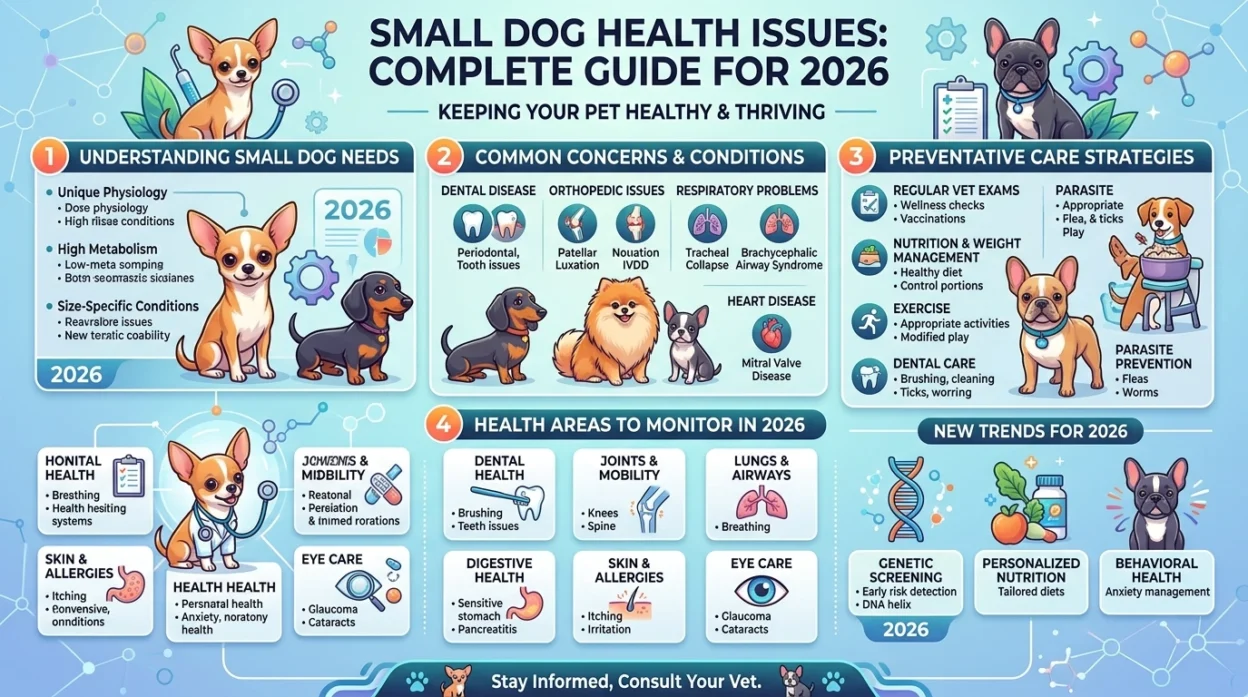
Most Common Small Dogs Health Issues You Should Know
Dental Disease The Silent Problem
Dental disease is one of the most widespread small dogs health issues and most owners don’t even realize it’s happening. Because small dogs have crowded teeth in tiny jaws, plaque and tartar build up much faster than in larger breeds.
By age three, nearly 80% of small dogs show signs of dental disease. That’s a staggering number. Therefore, dental care can’t be an afterthought; it needs to be part of your regular routine.
Warning signs to watch for:
- Bad breath that’s noticeably strong
- Yellow or brown buildup on teeth
- Bleeding or red gums
- Difficulty chewing food
- Dropping food from their mouth while eating
Tracheal Collapse A Breathing Concern
Tracheal collapse is another common issue in small breeds. It happens when the cartilage rings supporting the windpipe weaken over time. As a result, the airway narrows and breathing becomes difficult.
Breeds like Chihuahuas, Pomeranians, and Yorkshire Terriers are especially prone to this condition. You’ll often hear a distinctive “honking” cough almost like a goose sound. If your dog makes this noise, consult your vet promptly.
Patellar Luxation Slipping Kneecaps
Have you ever seen your small dog suddenly pick up one leg while running, then put it back down seconds later? That’s often a sign of patellar luxation, a condition where the kneecap slips out of its normal position.
This condition is extremely common in small breeds. In fact, it affects breeds like Maltese, Pomeranians, and Toy Poodles at much higher rates than large dogs. However, the good news is that mild cases can often be managed without surgery.
Hypoglycemia Low Blood Sugar
Small dogs, especially puppies, are very vulnerable to hypoglycemia, which means dangerously low blood sugar. Because their tiny bodies have less glycogen stored, they can crash quickly if they skip meals or get too stressed.
Signs of hypoglycemia include:
- Weakness or wobbliness
- Shaking or trembling
- Confusion or disorientation
- Seizures in severe cases
Therefore, small dogs need frequent, consistent meals throughout the day. Never skip feeding times especially for puppies under six months old.
How to Protect Your Small Dog’s Health: Step-by-Step Guide
Building a Health Routine That Actually Works
Protecting your small dog doesn’t have to be complicated. However, it does require consistency. Here’s a practical step-by-step approach that genuinely makes a difference.
1. Schedule regular vet check-ups. Small dogs should see a vet at least once a year. Senior small dogs typically over age ten benefit from twice-yearly visits. Early detection of small dogs’ health issues saves money and, more importantly, saves your dog from unnecessary suffering.
2. Brush their teeth daily. Daily brushing is the gold standard for small dog dental health. Use a dog-safe toothbrush and toothpaste, never human toothpaste, which is toxic to dogs. Even brushing three times per week makes a significant difference over time.
3. Use a harness instead of a collar. For small dogs prone to tracheal collapse, collars put dangerous pressure on the windpipe. A properly fitted harness distributes pressure across the chest instead. This simple switch protects their airway every single day.
4. Feed multiple small meals daily. Because small dogs are prone to hypoglycemia, feeding two to three small meals throughout the day is much safer than one large meal. Also, choose a high-quality small breed formula with appropriate caloric density.
5. Keep their weight in check. Obesity is a serious problem in small dogs. Extra weight worsens joint conditions like patellar luxation and puts strain on the heart. Therefore, measure portions carefully and resist the urge to overfeed no matter how convincingly they beg.
6. Provide appropriate exercise. Small dogs need daily exercise, but their tiny joints need protection too. Short, gentle walks twice daily are ideal. Also, avoid letting them jump from high furniture; this puts enormous stress on their knees and spine.
7. Monitor for behavioral changes. Dogs can’t tell you when something hurts. However, behavioral changes speak volumes. Sudden lethargy, reduced appetite, or avoiding activities they normally love are all signals worth investigating with your vet.
Pro Tip: Keep a simple health journal for your small dog. Note their weight monthly, eating habits, energy levels, and any unusual symptoms. This record becomes incredibly valuable at vet appointments helping your vet spot patterns you might otherwise miss.
[Dog Health Care Tips: 15 Ways to Keep Your Pup Healthy]
Small Dog Breeds Most Prone to Health Issues: Honest Comparison
Which Breeds Need Extra Attention?
Some small breeds carry higher genetic risks for specific conditions. Knowing your dog’s breed tendencies helps you prepare proactively rather than react in a crisis.
| Breed | Most Common Health Issues | Risk Level |
| Chihuahua | Patellar luxation, hypoglycemia, tracheal collapse | High |
| Dachshund | Intervertebral disc disease (IVDD), obesity | High |
| Yorkshire Terrier | Dental disease, tracheal collapse, liver shunts | High |
| Pomeranian | Tracheal collapse, alopecia, heart disease | High |
| Shih Tzu | Eye problems, breathing issues, hip dysplasia | Medium-High |
| Maltese | Dental disease, patellar luxation, hypoglycemia | Medium-High |
| Toy Poodle | Patellar luxation, epilepsy, progressive retinal atrophy | Medium |
| Cavalier King Charles | Heart disease, syringomyelia, hip dysplasia | High |
Heart Disease in Small Breeds
Mitral valve disease (MVD) is particularly prevalent in small breeds, especially Cavalier King Charles Spaniels. The mitral valve gradually weakens over time, causing the heart to work harder than it should. As a result, early detection through regular vet check-ups is absolutely critical.
Eye Conditions Worth Watching
Small breeds like Shih Tzus and Pugs have prominent eyes that are exposed to more environmental hazards. Because of this, they’re prone to corneal ulcers, dry eye, and progressive retinal atrophy. Regular eye checks at vet visits help catch these issues before they progress.
Intervertebral Disc Disease (IVDD)
Dachshunds are famously at risk for IVDD, a spinal condition where discs between vertebrae degenerate or rupture. This can cause pain, weakness in the back legs, and in severe cases, paralysis. Therefore, keeping Dachshunds at a healthy weight and preventing jumping are especially important preventive measures.
Common Mistakes Small Dog Owners Make With Health Care
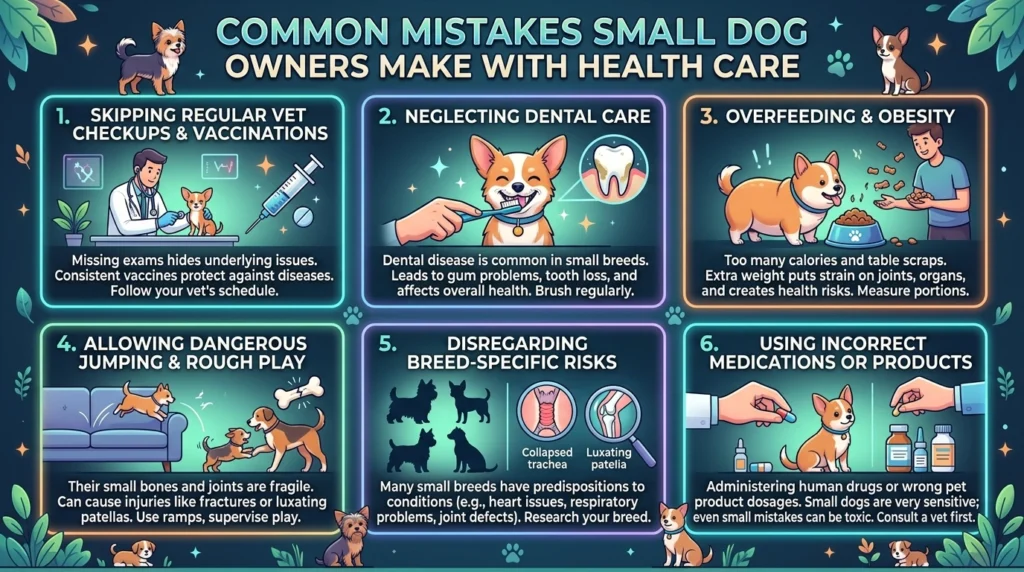
What NOT to Do Important Warnings
Even the most loving owners make mistakes. Here are the most common ones and how to avoid them going forward.
Treating Small Dogs Like Accessories
Small dogs are sometimes treated more like fashion accessories than animals with real medical needs. Because of their size, owners sometimes dismiss symptoms as “not serious.” However, small dogs feel pain and discomfort just as intensely as large breeds often more so because they can’t communicate it as obviously.
Skipping Dental Care Entirely
Dental disease is one of the most preventable small dogs health issues yet it’s also one of the most neglected. Many owners assume their dog’s bad breath is normal. In reality, it signals bacteria building up in the mouth that can eventually spread to the heart, kidneys, and liver.
Using a Collar on Trachea-Vulnerable Breeds
Walking a Chihuahua or Yorkshire Terrier on a collar is a common mistake. Every tug on the leash puts direct pressure on an already vulnerable windpipe. Switching to a harness is a simple, affordable fix that makes an immediate positive difference.
Overfeeding “Just This Once”
Small dogs gain weight very quickly. Because their caloric needs are much lower than large dogs, even small amounts of extra food or treats add up fast. Obesity in small dogs contributes to joint deterioration, heart strain, and diabetes, all serious conditions that are largely preventable.
Waiting Too Long to See the Vet
In my experience, the owners who wait until symptoms are severe face much higher vet bills and much worse outcomes for their dogs. Therefore, if something seems off, make that appointment sooner rather than later. Early treatment almost always means faster recovery and lower cost.
Pro Tip: Ask your vet about pet insurance when your small dog is still young and healthy. Many small breed health conditions become expensive to manage over time. Having insurance in place before problems develop gives you real financial protection when it matters most.
Frequently Asked Questions About Small Dogs Health Issues
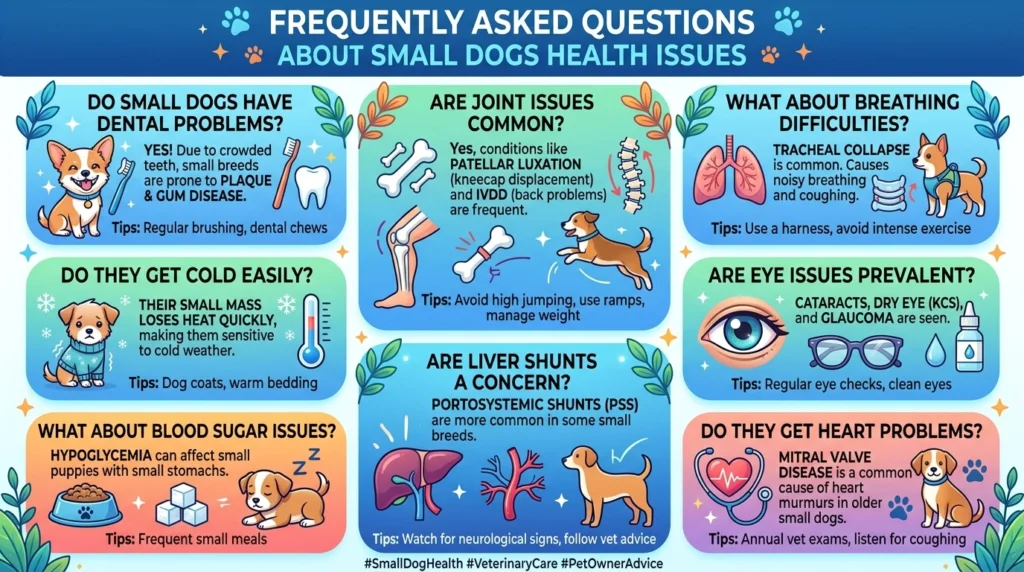
1. What are the most common small dogs health issues overall?
The most common health issues in small breeds include dental disease, patellar luxation (slipping kneecap), tracheal collapse, hypoglycemia (low blood sugar), heart disease, intervertebral disc disease, and eye conditions. Because small dogs live longer than large breeds, often 14 to 18 years, managing these conditions over time becomes an important part of ownership. Regular vet check-ups, appropriate diet, daily dental care, and weight management are the most effective preventive measures for most of these conditions. Always consult your vet for guidance specific to your dog’s breed and age.
2. How do I know if my small dog is in pain?
Small dogs are masters at hiding discomfort; it’s an instinct left over from their wild ancestors. However, there are clear behavioral signals to watch for. These include reduced activity or reluctance to play, changes in appetite, unusual aggression when touched in certain areas, limping or favoring one leg, excessive licking of a specific body part, and changes in posture. Also, watch for changes in facial expression: a tense jaw, squinted eyes, or flattened ears can all signal that your dog is hurting. When in doubt, always consult your vet promptly.
3. Are small dogs generally less healthy than large dogs?
Not exactly small dogs actually tend to live significantly longer than large breeds. However, they do face different types of health challenges. Large dogs are more prone to cancer and hip dysplasia. Small dogs, on the other hand, deal more frequently with dental disease, tracheal issues, joint problems, and hypoglycemia. Therefore, “less healthy” isn’t accurate; they simply need health management that’s specifically tailored to their size and breed characteristics. With proper care, many small dogs live well into their mid-to-late teens in excellent health.
4. How often should a small dog see the vet?
Healthy adult small dogs should visit the vet at least once a year for a full wellness check. However, puppies need more frequent visits in their first year typically every three to four weeks for vaccinations and developmental checks. Senior small dogs, generally considered to be over ten years old, benefit most from twice-yearly check-ups because age-related conditions can progress quickly. In addition, any time you notice unusual symptoms of limping, coughing, changes in appetite, or behavioral shifts don’t wait for the next scheduled appointment. Contact your vet right away.
5. What’s the best diet for preventing small dogs’ health issues?
A high-quality small breed dry dog food formulated specifically for small dogs is the best starting point. These formulas provide higher caloric density in smaller kibble sizes, appropriate protein levels for small breed metabolism, and often include dental health features. In addition, feeding two to three small meals per day rather than one large meal helps prevent hypoglycemia, especially important for toy breeds. Avoid table scraps, excessive treats, and human food. Also, always provide fresh water throughout the day. For dogs with specific health conditions, consult your vet for a dietary recommendation tailored to their individual needs.
6. Can small dog health problems be prevented entirely?
While you can’t eliminate every health risk, you can significantly reduce your dog’s chances of developing serious conditions. Daily dental brushing, appropriate exercise, weight management, regular vet visits, and using a harness instead of a collar are all proven preventive measures. Choosing a reputable breeder who screens for genetic conditions also matters enormously. Therefore, while some issues, especially genetic ones may still develop despite your best efforts, proactive care dramatically improves your small dog’s quality of life and longevity over the long term.
Your Small Dog Deserves the Best Care Possible
Small dogs’ health issues are real but they’re manageable when you know what to look for. Throughout this guide, you’ve learned the most common conditions, how to spot warning signs early, and the practical steps that protect your dog every single day.
The most important takeaway is this: consistent, proactive care beats reactive emergency treatment every time. Daily dental brushing, regular vet visits, appropriate feeding, and weight management are the four pillars that keep most small dogs healthy for their entire long lives.
Your little dog trusts you completely with their wellbeing. Therefore, staying informed and staying consistent with their care is the most loving thing you can do for them.