
Introduction
Your dog depends on you for everything. Food, love, exercise, and most importantly their health. But keeping a dog healthy isn’t always as simple as it sounds. Many owners don’t realize how much small daily habits affect their dog’s long-term wellbeing.
Good dog health care tips don’t have to be complicated. In fact, most of the best ones are surprisingly simple. However, knowing which habits actually matter makes all the difference between a dog who just survives and one who truly thrives.
In my experience, dogs who receive consistent daily care live longer, happier lives. They have more energy, better coats, and fewer expensive vet bills. So, let’s walk through everything you need to know from nutrition and exercise to dental care and mental health in one complete, easy-to-follow guide.
Why Dog Health Care Tips Actually Matter
The Real Cost of Ignoring Your Dog’s Health
Many dog owners only think about health when something goes wrong. By then, however, the problem is often bigger and more expensive than it needed to be. Therefore, prevention is always better than treatment.
Think about it this way. A dog with poor dental hygiene doesn’t just have bad breath. Over time, bacteria from the mouth can travel to the heart, kidneys, and liver. That’s a serious health risk that starts with something as simple as skipping tooth brushing.
What “Healthy” Really Looks Like in a Dog
A truly healthy dog shows clear signs every day. Here’s what to look for:
- Bright, clear eyes with no discharge or cloudiness
- Shiny, full coat without excessive shedding or bald patches
- Firm, consistent stools not loose, not too hard
- Healthy weight ribs felt easily but not visibly protruding
- Good energy levels appropriate for age and breed
- Clean ears with no bad smell or dark discharge
- Pink gums not pale, red, or swollen
If your dog ticks all these boxes, you’re doing great. If not, some simple adjustments to your daily routine can make a huge difference.
Essential Dog Health Care Tips Every Owner Should Follow
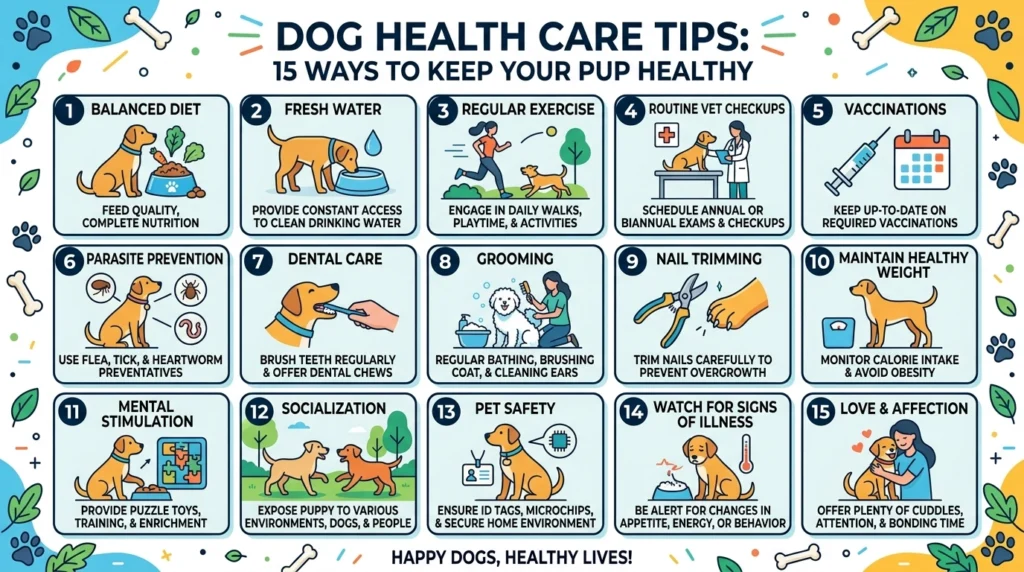
1. Feed a High-Quality, Balanced Diet
Nutrition is the foundation of everything. First, choose a food with a named protein chicken, beef, or salmon as the very first ingredient. Avoid foods where corn, wheat, or soy dominate the top three ingredients.
Also, make sure the food carries an AAFCO nutritional adequacy statement on the label. This confirms the food meets minimum nutritional standards for your dog’s life stage.
Pro Tip: Match your dog’s food to their life stage puppy, adult, or senior. Each formula has different protein, fat, and calorie levels designed for that specific stage of life.
2. Provide Fresh Water at All Times
This sounds obvious, but many owners underestimate how much water dogs actually need. As a result, dehydration becomes a hidden issue especially in summer or for dogs eating dry kibble.
Change your dog’s water bowl at least once daily. Also, wash the bowl regularly to prevent bacterial buildup that you can’t always see.
3. Schedule Regular Vet Check-Ups
Even healthy dogs need annual wellness exams. Your vet can catch early signs of problems like heart murmurs, dental disease, or weight changes before they become serious conditions.
Therefore, don’t wait until your dog is sick to visit the vet. Prevention and early detection save both heartache and money in the long run.
4. Keep Vaccinations Up to Date
Vaccines protect your dog from serious, sometimes fatal diseases. Core vaccines include protection against rabies, distemper, parvovirus, and adenovirus. Your vet will recommend a schedule based on your dog’s age, lifestyle, and local risk factors.
In addition, discuss non-core vaccines like Bordetella (kennel cough) or Leptospirosis if your dog spends time with other dogs or in outdoor areas.
5. Use Flea, Tick, and Parasite Prevention
Parasites are more than just annoying. Fleas cause skin infections and allergic reactions. Ticks spread Lyme disease and other serious illnesses. Heartworm, transmitted by mosquitoes, can be fatal if left untreated.
However, prevention is simple and affordable. Talk to your vet about the best flea, tick, and heartworm prevention products for your specific dog and location.
6. Exercise Daily But Match It to Your Dog’s Breed
Exercise keeps your dog physically fit and mentally satisfied. However, not every dog needs the same amount. A Border Collie needs significantly more activity than a Bulldog, for example.
As a general guide:
- High-energy breeds (Labradors, Huskies, Border Collies) 60 to 90 minutes daily
- Medium-energy breeds (Beagles, Cocker Spaniels) 30 to 60 minutes daily
- Low-energy breeds (Basset Hounds, Shih Tzus) 20 to 30 minutes daily
7. Brush Your Dog’s Teeth Regularly
Dental disease affects over 80% of dogs by age three, according to veterinary research. Therefore, brushing your dog’s teeth is one of the most impactful health habits you can build.
Use a dog-specific toothbrush and toothpaste, never human toothpaste, as it contains ingredients toxic to dogs. Aim for brushing three to four times per week at minimum.
8. Groom Consistently
Grooming isn’t just about looking good. Regular brushing removes dead hair, distributes natural skin oils, and gives you a chance to check for lumps, bumps, cuts, or parasites that might otherwise go unnoticed.
Also, keep nails trimmed. Overgrown nails cause discomfort and can affect your dog’s posture and joint health over time.
9. Maintain a Healthy Weight
Obesity is one of the most common and most preventable health problems in dogs. Overweight dogs are at higher risk for joint disease, diabetes, heart conditions, and a shorter lifespan overall.
Therefore, measure your dog’s food rather than free-feeding from the bag. Also, factor treats into the daily calorie count. Treats should make up no more than 10% of your dog’s daily caloric intake.
10. Prioritize Mental Stimulation
A bored dog is often a destructive or anxious dog. Mental stimulation is just as important as physical exercise especially for intelligent breeds.
Try these simple ideas:
- Puzzle feeders make mealtime a brain workout
- Sniff walks let your dog explore freely by smell
- Training sessions even 10 minutes daily builds focus and confidence
- Interactive toys keep them engaged when you’re busy
[Dog Health Products: Best Picks to Keep Your Pup Healthy]
Dog Health Care Tips: Nutrition and Supplement Guide
Should You Add Supplements to Your Dog’s Diet?
Most dogs eating a complete and balanced commercial diet don’t need supplements. However, certain situations benefit from targeted additions. Always consult your vet before starting any supplement.
Here’s a quick reference guide:
| Supplement | Best For | Key Benefit |
| Omega-3 Fish Oil | All dogs | Coat shine, joint health, reduced inflammation |
| Glucosamine & Chondroitin | Senior dogs, large breeds | Joint support and cartilage health |
| Probiotics | Dogs with sensitive stomachs | Gut health and digestion balance |
| Vitamin E | Dogs with dry skin | Skin barrier support and immune function |
| Fiber supplements | Dogs with digestive issues | Stool consistency and gut motility |
Reading Dog Food Labels Like a Pro
The First Five Ingredients Rule
The ingredient list is ordered by weight. Therefore, the first five ingredients tell you the bulk of what’s in the bag. Look for:
- A named protein (chicken, beef, salmon) in position one or two
- Whole grains or vegetables like brown rice, sweet potato, or oats
- Named fat sources like chicken fat or fish oil
Avoid formulas where multiple corn or soy derivatives appear in the first five positions. This signals a filler-heavy formula with less nutritional value for your dog.
Common Dog Health Care Mistakes to Avoid
Skipping Annual Vet Visits Because Your Dog “Seems Fine”
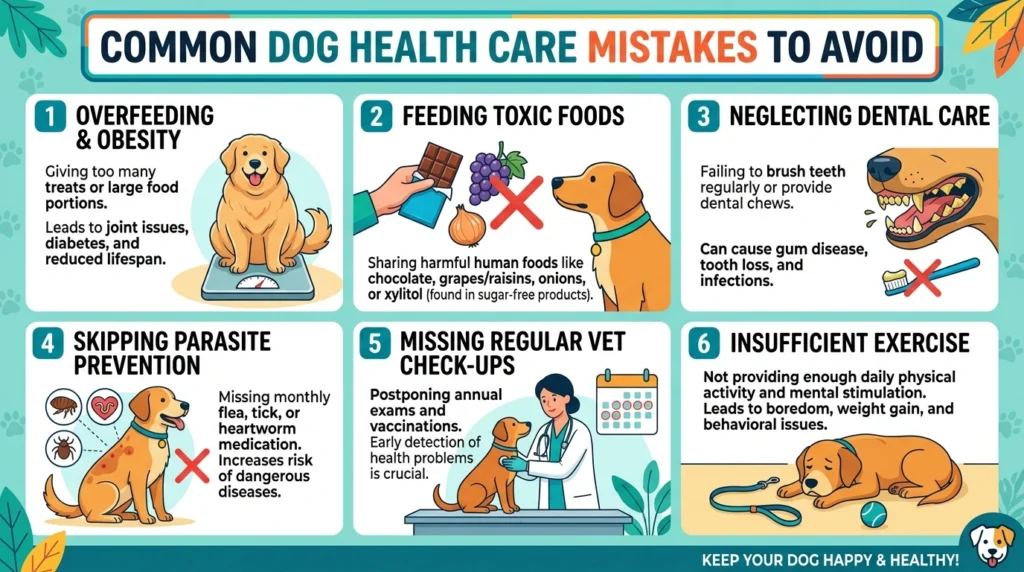
Dogs hide pain and illness instinctively. By the time symptoms are obvious, a condition is often already advanced. Therefore, annual wellness exams catch problems before your dog shows any signs at all.
Overfeeding Treats Without Counting Calories
Treats feel like love but too many lead directly to obesity. Moreover, obesity silently shortens your dog’s life by increasing the risk of nearly every major health condition. Measure treats. Choose low-calorie options. Use praise and play as rewards instead when possible.
Ignoring Dental Health Completely
Most owners never brush their dog’s teeth. As a result, dental disease develops silently for years before causing visible pain or tooth loss. Start dental care early, and your dog’s mouth and overall health will thank you.
Using Human Products on Dogs
Human shampoo, toothpaste, sunscreen, and certain medications are toxic to dogs. Always use products specifically formulated for dogs. When in doubt, ask your vet before applying anything new to your dog’s skin, coat, or body.
Poor socialization during puppyhood leads to fear, anxiety, and aggression in adult dogs. Therefore, expose puppies to different people, animals, sounds, and environments between ages three and fourteen weeks, the critical socialization window.
Pro Tip: Even adult dogs benefit from continued socialization. Regular exposure to new environments and positive experiences builds confidence and reduces anxiety throughout their entire life.
Dog Health Care Tips: Frequently Asked Questions
1. How often should I take my dog to the vet?
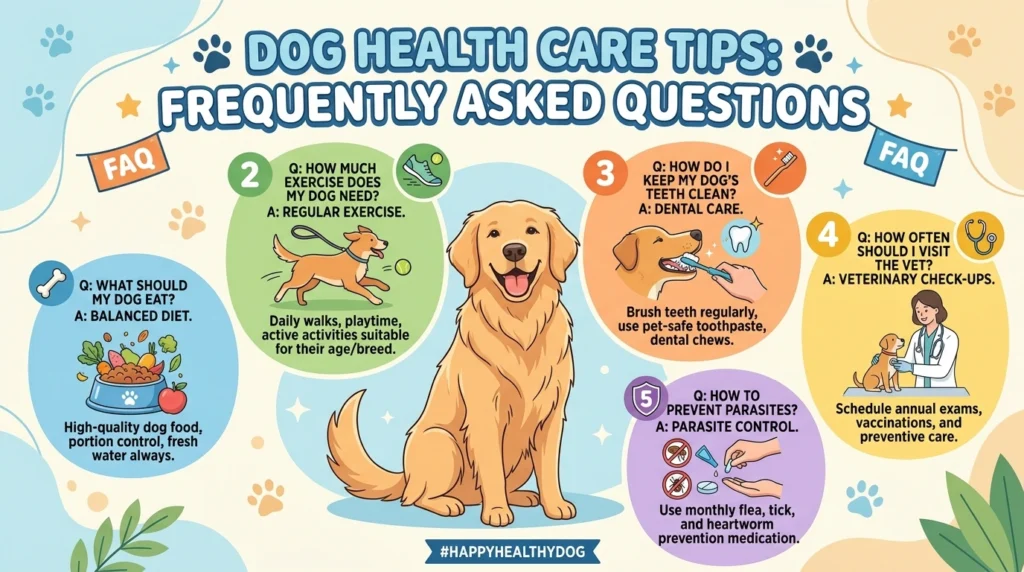
Healthy adult dogs should visit the vet at least once per year for a wellness exam and any necessary vaccinations. Puppies need more frequent visits typically every three to four weeks until 16 weeks of age for their vaccination series. Senior dogs (generally age seven and older for most breeds) benefit from twice-yearly checkups, because age-related conditions can develop and progress quickly. Always consult your vet about the right schedule for your specific dog’s age, breed, and health status.
2. What are the most important dog health care tips for new owners?
For new dog owners, the most important starting points are: choosing a high-quality, life-stage-appropriate food; scheduling a vet visit within the first week; beginning a flea, tick, and heartworm prevention routine; starting basic training and socialization immediately; and establishing a daily exercise and grooming routine. These five foundations set your dog up for a lifetime of good health. In addition, building a relationship with a trusted veterinarian early makes every health decision easier as your dog grows.
3. How do I know if my dog is at a healthy weight?
The easiest way to assess your dog’s weight is the rib check. Run your hands along your dog’s sides. You should feel the ribs easily without pressing hard, but they shouldn’t be visibly prominent from across the room. Also, when viewed from above, your dog should have a visible waist behind the ribcage. From the side, the belly should tuck up slightly behind the chest. If you’re uncertain, your vet can give your dog a body condition score (BCS) at any wellness visit; it’s a reliable, standardized assessment.
4. How much exercise does my dog actually need every day?
Exercise needs vary significantly by breed, age, and individual temperament. Most healthy adult dogs benefit from at least 30 minutes of moderate exercise daily though many breeds need much more. High-energy working breeds like Border Collies, Huskies, and Vizslas may need 90 minutes or more of vigorous activity daily to stay balanced and calm at home. Puppies need shorter, more frequent play sessions rather than long sustained exercise, because their developing joints are vulnerable to overexertion. Senior dogs still benefit from daily movement; gentle walks help maintain joint mobility and mental engagement even as energy levels decline.
5. Are there specific dog health care tips for senior dogs?
Senior dogs have genuinely different health needs than younger adults. First, schedule twice-yearly vet visits to catch age-related conditions: early arthritis, kidney disease, dental disease, and cognitive decline are all more common in older dogs. Switch to a senior-specific food formula with adjusted caloric density and added joint support. Also, provide orthopedic bedding to relieve pressure on aging joints. Keep exercise gentle but consistent short, frequent walks are better than long infrequent ones. Finally, watch for behavioral changes like confusion, house-soiling, or altered sleep patterns, which may indicate cognitive dysfunction syndrome a condition your vet can help manage.
6. What human foods are dangerous for dogs?
Several common human foods are toxic to dogs and should never be offered, even in small amounts. These include: onions and garlic (damage red blood cells), grapes and raisins (can cause kidney failure), chocolate (contains theobromine, toxic to dogs), xylitol (an artificial sweetener causing dangerous blood sugar drops), macadamia nuts (cause weakness and neurological symptoms), and avocado (contains persin, harmful to dogs). If your dog accidentally eats any of these, contact your vet or an animal poison control hotline immediately. Don’t wait for symptoms to appear before seeking guidance.
Start These Dog Health Care Tips Today
Good dog health care doesn’t require perfection. Starting with just two or three of these habits this week will make a real difference in your dog’s quality of life. Feed them well. Move together daily. Visit the vet regularly. And pay attention to the small signals your dog gives you to communicate their health status more clearly than most owners realize.
Your dog gives you unconditional love every single day. These simple, consistent dog health care tips are one of the most meaningful ways to give something equally important back. Start today because every healthy habit you build now adds to the years you’ll share together.