Introduction
Small dogs have a way of stealing hearts without even trying. They curl up in your lap like they own the place. They follow you from room to room with absolute devotion. And somehow, despite their tiny size, they fill an entire home with personality and warmth.
But here’s the thing small dog breeds aren’t all the same. Some are energetic and feisty. Others are calm and cuddly. Some need lots of grooming. Others practically take care of themselves. Choosing the wrong small breed for your lifestyle leads to frustration for both you and your dog.
In my experience, the happiest dog owners are the ones who did their research before falling in love with a face. This guide helps you do exactly that.
You’ll learn what makes small dog breeds unique, how to choose the right one for your home, and which breeds consistently top the list for different lifestyles. Also, you’ll get honest care tips and answers to the questions most people forget to ask. Let’s get started.
What Are Small Dog Breeds and Why Are They So Popular?
Defining Small Dog Breeds
So what exactly counts as a small dog breed? Generally, dogs weighing under 22 pounds fall into the small breed category. However, some breed classifications extend this to 25 or even 30 pounds. Toy breeds are a subset of small breeds typically weighing under 10 pounds.
Small dog breeds come in an enormous variety of shapes, coat types, and personalities. Therefore, “small” doesn’t mean predictable. A Chihuahua and a Beagle are both small breeds but they couldn’t be more different in temperament and care needs.
Why Small Dog Breeds Are Enormously Popular
Ever wondered why small dogs are consistently among the most popular pets worldwide? There are genuinely practical reasons:
- Space efficiency small breeds adapt well to apartments and smaller homes
- Lower food costs a 10-pound dog eats a fraction of what a large breed consumes
- Travel-friendly many airlines allow small dogs in-cabin with their owners
- Longer lifespans small breeds typically live 12 to 16 years on average
- Easier to handle especially for elderly owners or families with young children
- Strong bonding many small breeds are deeply loyal and affectionate
In addition, small dogs often carry outsized personalities. They’re confident, spirited, and endlessly entertaining which is part of why so many people fall completely in love with them.
Most Popular Small Dog Breeds: Full Personality Guide
The Top Small Dog Breeds You Should Know
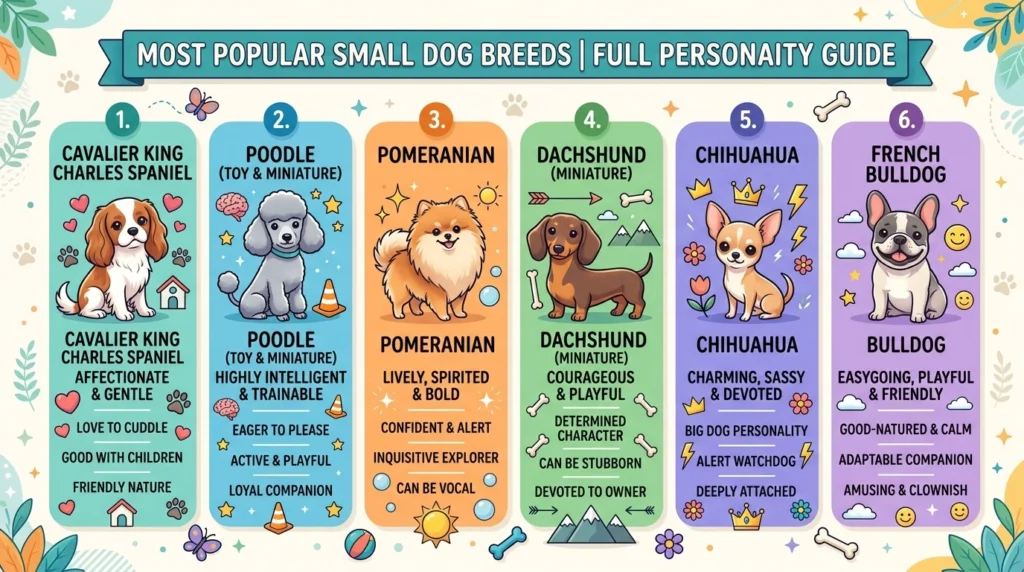
Here’s a detailed look at the most popular and well-loved small dog breeds today. Each one brings something different to the table so read carefully before choosing.
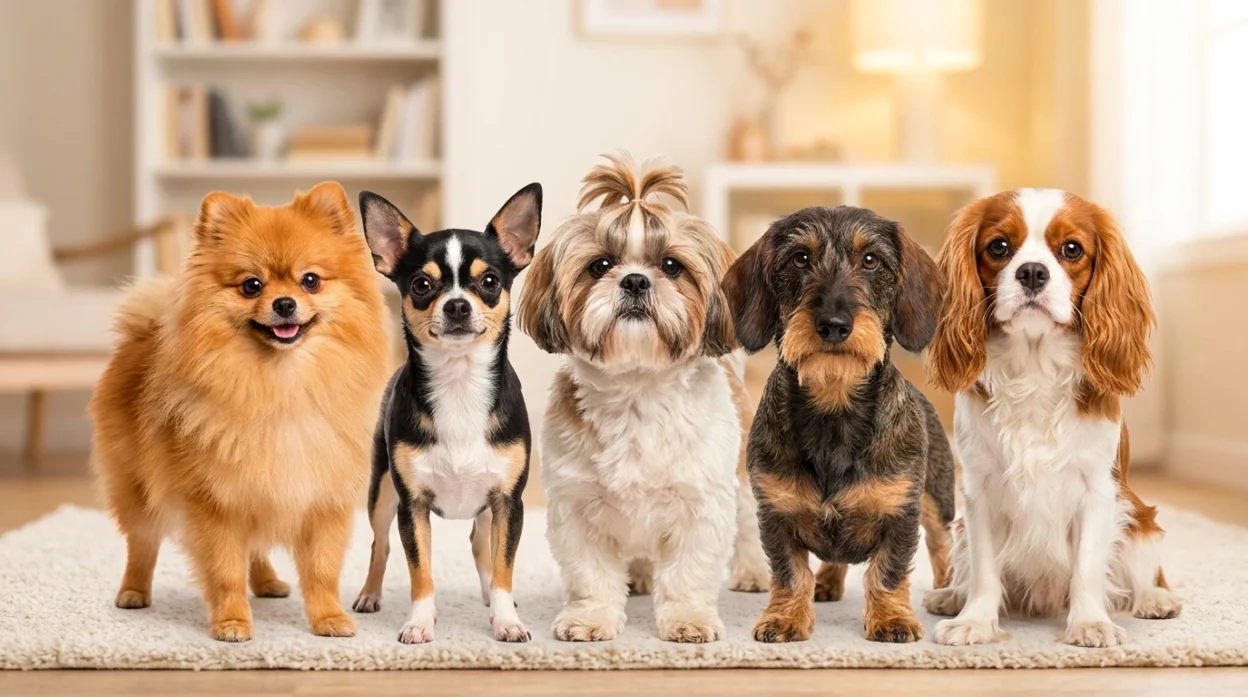
Chihuahua
The Chihuahua is the world’s smallest dog breed. However, nobody told the Chihuahua that. These tiny dogs carry enormous confidence and fierce loyalty to their favorite humans.
- Weight: 2–6 pounds
- Temperament: Bold, loyal, alert
- Energy level: Moderate
- Grooming: Low (smooth coat) to medium (long coat)
- Best for: Single owners or couples, apartment living
French Bulldog
French Bulldogs are charming, low-energy, and adaptable. They don’t bark excessively, which makes them ideal for apartment dwellers. Also, their short coat requires minimal grooming, a big plus for busy owners.
- Weight: Under 28 pounds
- Temperament: Playful, affectionate, easygoing
- Energy level: Low to moderate
- Grooming: Very low
- Best for: Apartment families, urban living
Pomeranian
Pomeranians are fluffy, spirited, and absolutely full of life. They’re intelligent and respond well to training. However, their thick double coat needs regular brushing to stay tangle-free.
- Weight: 3–7 pounds
- Temperament: Lively, curious, bold
- Energy level: Moderate to high
- Grooming: High daily brushing recommended
- Best for: Active owners who enjoy grooming
Shih Tzu
The Shih Tzu was bred specifically to be a companion and it shows. These dogs live for human connection. They’re gentle, loving, and remarkably adaptable. Also, they get along well with children and other pets.
- Weight: 9–16 pounds
- Temperament: Affectionate, outgoing, gentle
- Energy level: Low to moderate
- Grooming: High long coat needs daily attention
- Best for: Families, seniors, apartment owners
Dachshund
Dachshunds are curious, playful, and surprisingly tenacious for their size. Because they were originally bred to hunt badgers, they have a strong independent streak. Therefore, consistent early training matters enormously with this breed.
- Weight: 8–32 pounds (standard and miniature)
- Temperament: Clever, lively, stubborn
- Energy level: Moderate
- Grooming: Low (smooth) to high (long-haired)
- Best for: Owners who enjoy a challenge and a personality-packed dog
Pro Tip: Dachshunds are prone to back problems (IVDD) because of their long spines. Therefore, always discourage jumping from furniture and consult your vet about preventive care strategies especially as your Dachshund ages.
Cavalier King Charles Spaniel
Few breeds match the Cavalier’s natural gentleness and warmth. These dogs love everyone they meet. In addition, they adapt beautifully to both active and relaxed households making them one of the most versatile small breeds available.
- Weight: 12–18 pounds
- Temperament: Gentle, sociable, loving
- Energy level: Moderate
- Grooming: Medium regular brushing and ear checks needed
- Best for: Families with children, seniors, first-time owners
Miniature Schnauzer
Miniature Schnauzers are smart, alert, and deeply loyal. They’re one of the most trainable small dog breeds which makes them excellent for first-time owners willing to invest in training. Also, they’re partially hypoallergenic, which suits many allergy-prone households.
- Weight: 11–20 pounds
- Temperament: Friendly, obedient, spirited
- Energy level: Moderate to high
- Grooming: Medium professional trimming every 6–8 weeks
- Best for: Active families, first-time owners who enjoy training
[Top 10 Small Dog Breeds for Families: Best Picks 2026]
How to Choose the Right Small Dog Breed for Your Life
Step-by-Step Breed Selection Guide
Choosing a small dog breed isn’t about which one is cutest. It’s about which one fits your actual life. Therefore, follow this simple framework before making your decision.
- Assess your living space. Do you have a house with a garden or a small apartment? Most small breeds adapt well to apartments. However, higher-energy breeds like Beagles and Miniature Schnauzers need more outdoor exercise even in a small body.
- Consider your daily activity level. Are you naturally active or more of a homebody? High-energy small breeds like Pomeranians and Miniature Schnauzers need 45–60 minutes of activity daily. Lower-energy breeds like Pugs and Shih Tzus thrive on shorter, gentler walks.
- Think about your household. Do you have young children? Other pets? A gentle breed like a Cavalier King Charles or Bichon Frise handles busy households better than more sensitive breeds like Chihuahuas or Maltese.
- Factor in grooming commitment. Some small breeds need daily brushing and regular professional grooming. Others barely need any maintenance. Be honest about how much time and money you’ll realistically invest in grooming.
- Research breed-specific health issues. Every small breed has its own health tendencies. Brachycephalic breeds like Pugs and French Bulldogs face breathing challenges. Cavaliers are prone to heart conditions. Dachshunds risk spinal issues. Therefore, understanding these risks helps you prepare for long-term care costs.
- Visit breeders or rescues before deciding. Spending time with a breed in person tells you more than any article can. Therefore, arrange visits before committing your instincts during that first meeting are often your best guide.
- Consult your vet. Before bringing any new dog home, discuss the breed’s specific health profile with a veterinarian. This step helps you budget for care and understand what to monitor throughout your dog’s life.
Small Dog Breeds Comparison: Quick Reference Table
Side-by-Side Overview of Popular Small Breeds
| Breed | Weight | Energy Level | Grooming | Kid-Friendly | Hypoallergenic |
| Chihuahua | 2–6 lbs | Moderate | Low–Medium | Moderate | No |
| French Bulldog | Under 28 lbs | Low–Moderate | Very Low | High | No |
| Pomeranian | 3–7 lbs | Moderate–High | High | Moderate | No |
| Shih Tzu | 9–16 lbs | Low–Moderate | High | High | Partial |
| Dachshund | 8–32 lbs | Moderate | Low–High | Moderate | No |
| Cavalier King Charles | 12–18 lbs | Moderate | Medium | Very High | No |
| Mini Schnauzer | 11–20 lbs | Moderate–High | Medium | Very High | Yes |
| Bichon Frise | 12–18 lbs | Moderate | High | Very High | Yes |
| Maltese | Under 7 lbs | Moderate | High | Moderate | Yes |
| Havanese | 7–13 lbs | Moderate | Medium | Very High | Yes |
How to Read This Table
First, identify your top priorities. Then scan the table for breeds that match all three or four of your key requirements. For example, if you need a hypoallergenic small dog that’s great with kids, the Bichon Frise or Havanese immediately stands out. However, if you prefer low grooming above everything else, the French Bulldog is a clear winner.
Common Mistakes People Make With Small Dog Breeds
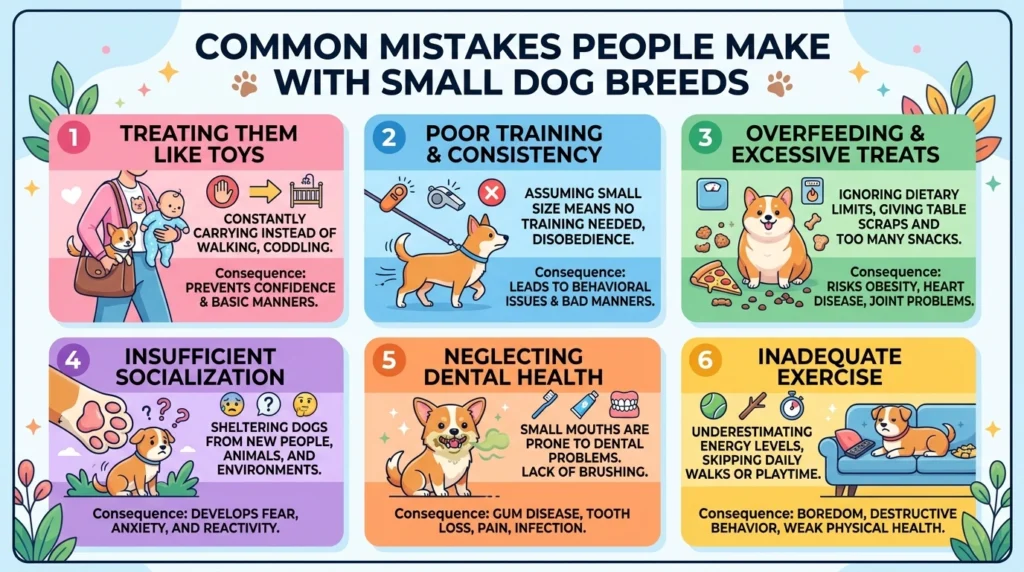
Mistake 1: Treating Small Dogs Like Babies Instead of Dogs
This is the most common mistake I’ve seen with small dog owners. Because small dogs are easy to carry and look adorable, many owners skip basic training and boundaries. As a result, the dog develops anxious, demanding, or snappy behavior often called “small dog syndrome.”
Small dogs need structure, training, and consistent rules just as much as large breeds do. Therefore, enroll in puppy classes early and set clear boundaries from day one.
Mistake 2: Skipping Exercise Because They’re Small
Small doesn’t mean inactive. Many small dog breeds have high energy levels that need proper outlets. Because under-exercised small dogs become bored, they often develop destructive behaviors barking, chewing, and attention-seeking. Therefore, commit to daily exercise appropriate for your breed’s energy level.
Mistake 3: Ignoring Dental Health
Small dog breeds are significantly more prone to dental disease than large breeds. Their teeth are crowded into smaller jaws, which creates more opportunity for plaque and tartar buildup. In addition, dental disease left untreated leads to serious organ health issues over time.
Therefore, brush your dog’s teeth several times per week. Also, schedule professional dental cleanings with your vet annually starting early makes a genuine difference.
Mistake 4: Choosing Based on Looks Alone
That fluffy face is irresistible. However, choosing a dog purely on appearance without researching temperament and care needs leads to mismatched owner-dog relationships. Always research the breed’s full personality profile, exercise needs, and health tendencies before making your decision.
Mistake 5: Underestimating Veterinary Costs
Small dogs live longer which means more years of veterinary care. Also, breed-specific health conditions add up. Brachycephalic breeds may need airway surgery. Cavaliers need regular cardiac screening. Dachshunds may face spinal interventions. Therefore, budget honestly for veterinary care before choosing a breed not after.
Pro Tip: Pet insurance is often more affordable and more valuable for small breed owners than people expect. Because small breeds are prone to specific health conditions, having insurance in place before problems develop can save thousands of dollars in treatment costs. Ask your vet about recommended providers.
Frequently Asked Questions About Small Dog Breeds
1. What is the easiest small dog breed to take care of?
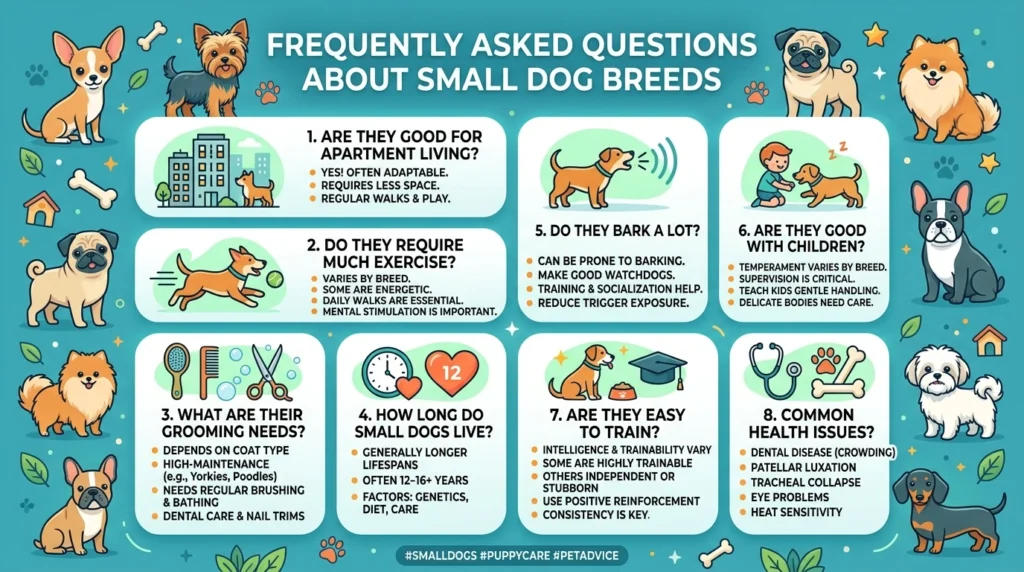
The French Bulldog and the Cavalier King Charles Spaniel are widely considered the easiest small dog breeds to care for. French Bulldogs need minimal grooming and moderate exercise. Cavaliers are naturally gentle, adaptable, and eager to please. However, both breeds have health considerations worth knowing French Bulldogs need brachycephalic monitoring, and Cavaliers need cardiac screening. Therefore, always consult your vet about breed-specific care requirements.
2. What is the smallest dog breed in the world?
The Chihuahua holds the title of the world’s smallest dog breed. They typically weigh between 2 and 6 pounds, though some are smaller still. Because of their tiny size, Chihuahuas are sensitive to cold temperatures and can be fragile around rough handling. Therefore, they tend to do better in households with older children or adults rather than very young kids.
3. Are small dog breeds good for apartments?
Yes, most small dog breeds adapt very well to apartment living. French Bulldogs, Pugs, Shih Tzus, and Cavaliers are all particularly well-suited to smaller spaces. However, even apartment dogs need daily walks and mental stimulation. Therefore, don’t skip exercise just because your dog is small and your home is compact. A bored small dog can be surprisingly loud and destructive.
4. Which small dog breeds are hypoallergenic?
Several small dog breeds are considered hypoallergenic because they shed very little and produce fewer allergens. The most reliably hypoallergenic small breeds include:
- Bichon Frise
- Maltese
- Miniature Schnauzer
- Havanese
- Shih Tzu (low-shedding but not fully hypoallergenic)
However, no dog is completely allergen-free. Therefore, spend time with a breed before bringing one home especially if allergies are a serious concern in your household. Also, consult your doctor about allergy management strategies alongside pet ownership.
5. How long do small dog breeds live?
Small dog breeds generally live significantly longer than large breeds. Most small breeds live between 12 and 16 years. Some like the Chihuahua and Toy Poodle regularly reach 15 to 18 years with good care. Therefore, choosing a small dog is a long-term commitment that deserves serious thought. Also, regular veterinary care, a healthy diet, and appropriate exercise all contribute meaningfully to a longer, healthier life for your small dog.
6. Do small dog breeds bark a lot?
Some small dog breeds are known for frequent barking Chihuahuas, Pomeranians, and Miniature Schnauzers in particular. However, barking is often a behavior issue rather than a breed inevitability. Because small dogs with insufficient exercise and mental stimulation bark more, providing adequate activity reduces unwanted barking significantly. Also, early training and socialization teach dogs to remain calm in situations that might otherwise trigger excessive barking.
7. Are small dog breeds harder to train?
Small dog breeds can be more challenging to train not because they’re less intelligent, but because owners tend to be less consistent with them. However, many small breeds like the Miniature Schnauzer, Papillon, and Havanese are genuinely easy to train with positive reinforcement methods. The key is consistency. Therefore, start training from the very first day your dog comes home, use reward-based methods, and never skip training sessions because your dog is small and “gets away with it.”
Finding Your Perfect Small Dog Breed
Small dog breeds bring extraordinary joy, loyalty, and personality into any home regardless of size. Whether you’re drawn to the bold confidence of a Chihuahua, the gentle warmth of a Cavalier, or the spirited intelligence of a Miniature Schnauzer, there’s a perfect small breed out there waiting for you.
The most important step is matching the right breed to your real lifestyle, not the lifestyle you wish you had. Therefore, be honest about your energy level, living space, grooming commitment, and household dynamics before making your choice.
Research thoroughly. Visit breeders or rescues in person. Ask questions. And always consult your vet before bringing a new dog home.