Introduction
Choosing a family dog is one of the most exciting decisions you’ll ever make. However, it can also feel overwhelming, especially when you’re looking for the perfect small breed that’s gentle with kids, easy to manage, and fits your home perfectly.
The good news? Small dog breeds for families are some of the most loving, loyal, and adaptable pets you’ll find. They don’t need huge backyards. They’re easier to travel with. Also, they’re often gentler on your household budget when it comes to food and vet bills.
In my experience, the right small dog transforms a house into a home almost instantly. But not every small breed suits every family. Some are energetic and playful. Others are calm and cuddly. Therefore, choosing wisely makes all the difference.
This guide covers the top 10 small dog breeds for families with honest personality breakdowns, care tips, and everything you need to make the perfect choice. Let’s find your family’s ideal furry companion.
Why Small Dog Breeds for Families Are a Great Choice
The Real Benefits of Going Small
Ever wondered why small dog breeds are so popular with families? There are some genuinely practical reasons beyond just how adorable they are.
First, small dogs adapt well to different living spaces. Whether you live in an apartment or a house with a garden, most small breeds settle in comfortably. Also, they’re easier for children to handle safely. A 10-pound dog is far less likely to accidentally knock over a toddler than a 70-pound Labrador.
Here are the key benefits small family dogs offer:
- Lower food costs small dogs eat significantly less than large breeds
- Easier to travel with many airlines allow small dogs in-cabin
- Simpler grooming for some breeds short-coated small dogs need minimal upkeep
- Longer lifespans small breeds typically live 12 to 16 years
- Apartment-friendly most small breeds adapt well to limited space
- Gentle with children with proper training and socialization
What to Look for in a Family Dog
Not every small dog is automatically kid-friendly. Therefore, look for these qualities when choosing:
- Gentle temperament patient and tolerant with children
- Sociable nature friendly with strangers and other pets
- Moderate energy level active enough to play, calm enough to relax
- Low aggression especially important around young children
- Trainability easy to teach basic commands and good manners
Top 10 Small Dog Breeds for Families: Full Breakdown
1. Cavalier King Charles Spaniel
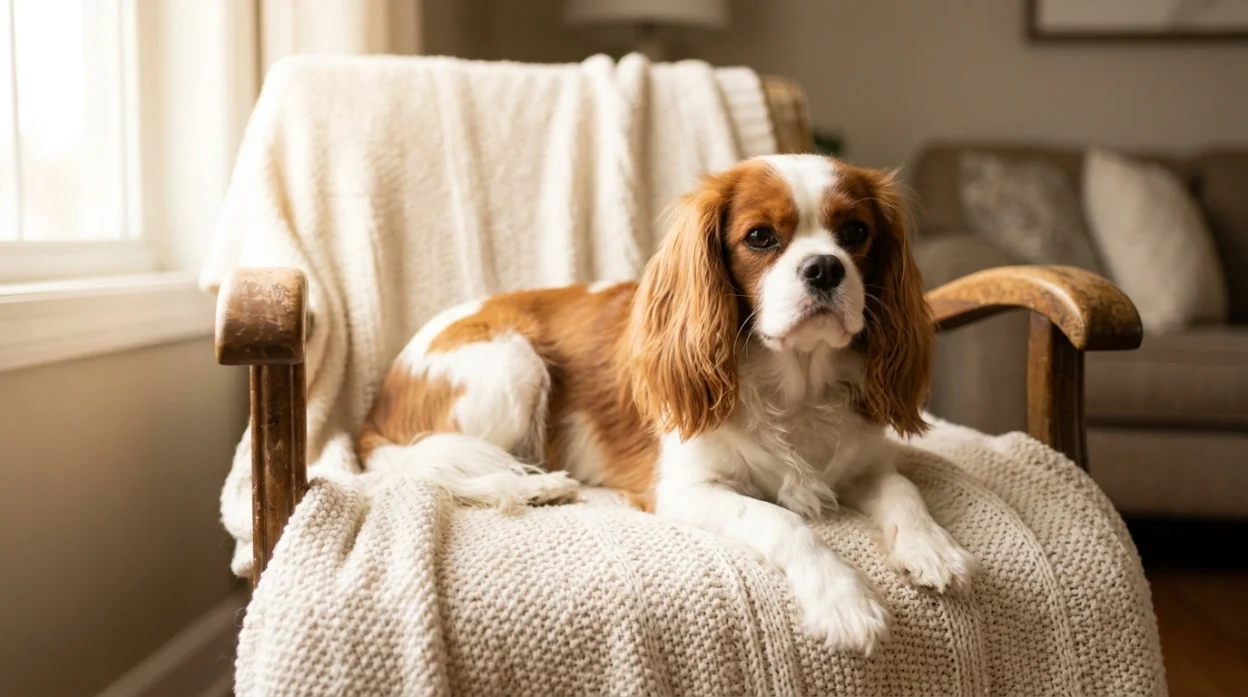
The Cavalier King Charles Spaniel is one of the gentlest small dog breeds for families. These dogs are naturally affectionate and patient even with very young children. They adapt beautifully to both active and quieter households.
- Temperament: Sweet, gentle, adaptable
- Size: 12–18 pounds
- Energy level: Moderate
- Grooming: Medium needs regular brushing
- Best for: Families with young children or seniors
2. Beagle
Beagles are curious, friendly, and absolutely love being part of a family pack. However, they do have a strong scent drive so a secure garden is essential. Because of their sturdy build, they handle rough-and-tumble play with kids surprisingly well.
- Temperament: Merry, friendly, curious
- Size: 20–30 pounds
- Energy level: High
- Grooming: Low short coat, easy maintenance
- Best for: Active families with outdoor space
3. Pug
Pugs are comedians in dog form. They love attention, thrive on human companionship, and get along well with children of all ages. Also, they’re one of the most low-maintenance small breeds in terms of exercise needs.
- Temperament: Playful, charming, loving
- Size: 14–18 pounds
- Energy level: Low to moderate
- Grooming: Low but watch for skin fold cleaning
- Best for: Apartment families, less active households
Pro Tip: Pugs are brachycephalic (flat-faced) dogs. Therefore, avoid exercising them in extreme heat, and always consult your vet about breathing health especially during summer months.
4. Bichon Frise
The Bichon Frise is a joyful, fluffy little dog that rarely meets a stranger. They’re hypoallergenic, which makes them an excellent choice for families with mild pet allergies. In addition, their gentle nature makes them wonderful with children.
- Temperament: Cheerful, gentle, playful
- Size: 12–18 pounds
- Energy level: Moderate
- Grooming: High regular professional grooming needed
- Best for: Families with allergy sufferers
5. Shih Tzu
Shih Tzus were literally bred to be companions. They love sitting in laps, playing gently with kids, and being the center of attention. However, their long coat requires consistent grooming or a regular trip to the groomer.
- Temperament: Affectionate, outgoing, playful
- Size: 9–16 pounds
- Energy level: Low to moderate
- Grooming: High daily brushing if kept long
- Best for: Families who enjoy grooming and bonding time
6. French Bulldog
French Bulldogs have exploded in popularity and for good reason. They’re adaptable, affectionate, and surprisingly sturdy for their size. Also, they don’t bark excessively, which makes them ideal for apartment living.
- Temperament: Playful, alert, adaptable
- Size: Under 28 pounds
- Energy level: Low to moderate
- Grooming: Low short coat, minimal shedding
- Best for: Apartment families, urban households
7. Cocker Spaniel
Cocker Spaniels are beautiful, gentle dogs with warm personalities. They bond deeply with their families and respond wonderfully to children who treat them kindly. Because of their sensitive nature, however, they do best in calm, loving households.
- Temperament: Gentle, smart, happy
- Size: 20–30 pounds
- Energy level: Moderate
- Grooming: Medium-high ears and coat need regular attention
- Best for: Families who enjoy outdoor activities
8. Maltese
The Maltese is a tiny breed with a massive heart. These dogs are lively, loving, and form incredibly strong bonds with their families. Also, they’re hypoallergenic, a big plus for allergy-prone households.
- Temperament: Gentle, playful, fearless
- Size: Under 7 pounds
- Energy level: Moderate
- Grooming: High silky white coat needs daily care
- Best for: Families with older, gentle children
9. Miniature Schnauzer
Miniature Schnauzers are smart, spirited, and wonderfully loyal to their families. They’re alert without being aggressive, and they get along well with children and other pets. In addition, they’re one of the most trainable small breeds available.
- Temperament: Friendly, smart, obedient
- Size: 11–20 pounds
- Energy level: Moderate to high
- Grooming: Medium requires regular trimming
- Best for: Families who enjoy training and interactive play
10. Havanese
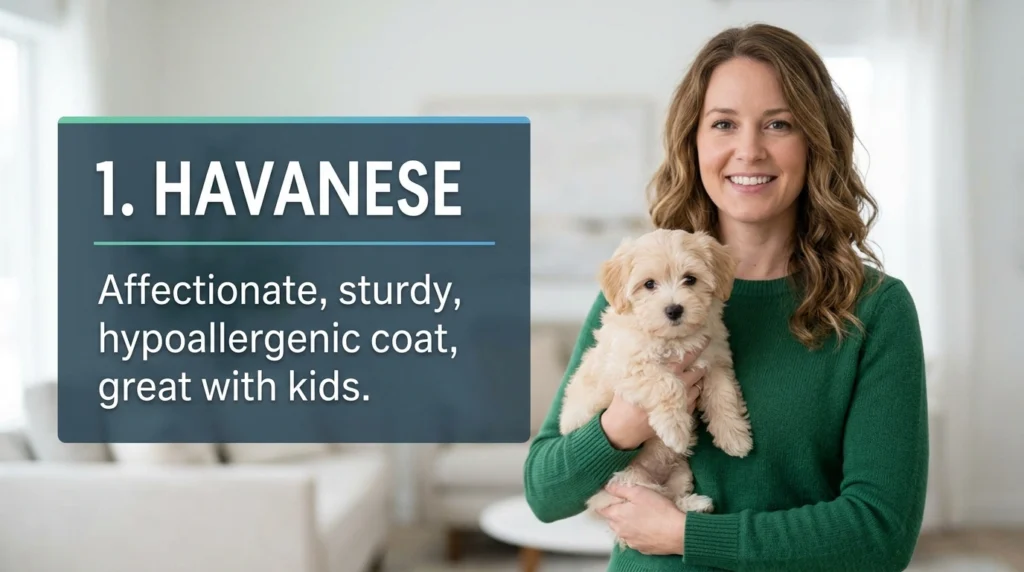
The Havanese is Cuba’s national dog and one of the most charming small breeds for families. They’re social butterflies who love everyone they meet. Also, their low-shedding coat makes them a popular choice for families who prefer a cleaner home.
- Temperament: Friendly, responsive, intelligent
- Size: 7–13 pounds
- Energy level: Moderate
- Grooming: Medium regular brushing needed
- Best for: Social families, multi-pet households
[Tiny Dog Breeds That Stay Small: 12 Best Picks for 2026]
Quick Comparison: Top 10 Small Dog Breeds for Families
Side-by-Side Breed Overview
| Breed | Size | Energy Level | Kid-Friendly | Grooming | Hypoallergenic |
| Cavalier King Charles | 12–18 lbs | Moderate | ⭐⭐⭐⭐⭐ | Medium | No |
| Beagle | 20–30 lbs | High | ⭐⭐⭐⭐⭐ | Low | No |
| Pug | 14–18 lbs | Low–Mod | ⭐⭐⭐⭐ | Low | No |
| Bichon Frise | 12–18 lbs | Moderate | ⭐⭐⭐⭐⭐ | High | Yes |
| Shih Tzu | 9–16 lbs | Low–Mod | ⭐⭐⭐⭐ | High | Partial |
| French Bulldog | Under 28 lbs | Low–Mod | ⭐⭐⭐⭐⭐ | Low | No |
| Cocker Spaniel | 20–30 lbs | Moderate | ⭐⭐⭐⭐ | Medium-High | No |
| Maltese | Under 7 lbs | Moderate | ⭐⭐⭐ | High | Yes |
| Mini Schnauzer | 11–20 lbs | Moderate-High | ⭐⭐⭐⭐⭐ | Medium | Yes |
| Havanese | 7–13 lbs | Moderate | ⭐⭐⭐⭐⭐ | Medium | Yes |
How to Use This Table
First, look at your family’s energy level. Then match it to the breed’s energy rating. For example, an active family with older kids will thrive with a Beagle or Miniature Schnauzer. However, a quieter household with a toddler might find a Cavalier King Charles or Pug a much better fit.
Mistakes to Avoid When Choosing Small Dog Breeds for Families
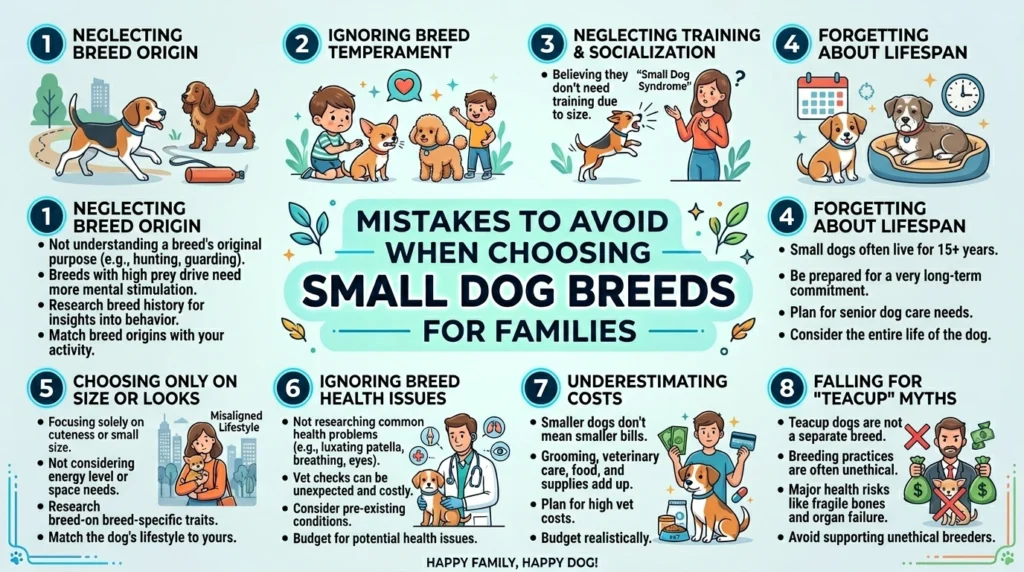
Mistake 1: Choosing Based on Looks Alone
A dog’s appearance is tempting; those big eyes and fluffy coats are hard to resist. However, choosing based on looks alone is a common mistake that leads to mismatched households. Therefore, always research temperament, energy level, and care needs before committing.
Mistake 2: Ignoring Your Living Space
Some small breeds need more exercise than their size suggests. For example, Beagles need significant daily activity despite being relatively compact. As a result, underestimating exercise needs leads to destructive behavior and unhappy dogs.
Even the friendliest breed needs proper early socialization. Because small dogs can develop “small dog syndrome” , fearful or snappy behavior caused by lack of boundaries and consistent training from puppyhood matters enormously. Therefore, enroll in puppy classes early and expose your dog to different people and situations regularly.
Mistake 4: Not Supervising Kids and Dogs Together
No matter how gentle a breed is, always supervise interactions between young children and dogs. Even the sweetest dog may nip if it feels cornered or hurt. Teaching children how to interact respectfully with dogs is just as important as choosing the right breed.
Mistake 5: Overlooking Health Care Needs
Small breeds have specific health vulnerabilities. Brachycephalic breeds like Pugs and French Bulldogs face breathing challenges. Cavalier King Charles Spaniels are prone to heart conditions. Therefore, always consult your vet about breed-specific health concerns and schedule regular check-ups. Never skip annual veterinary visits, preventive care genuinely extends your dog’s life.
Pro Tip: Before bringing any dog home, schedule a vet visit within the first week. A full health check establishes a baseline and helps you catch any concerns early. Also, ask your vet specifically about breed-specific health risks for the breed you’ve chosen.
Frequently Asked Questions About Small Dog Breeds for Families
1. What is the best small dog breed for families with young children?
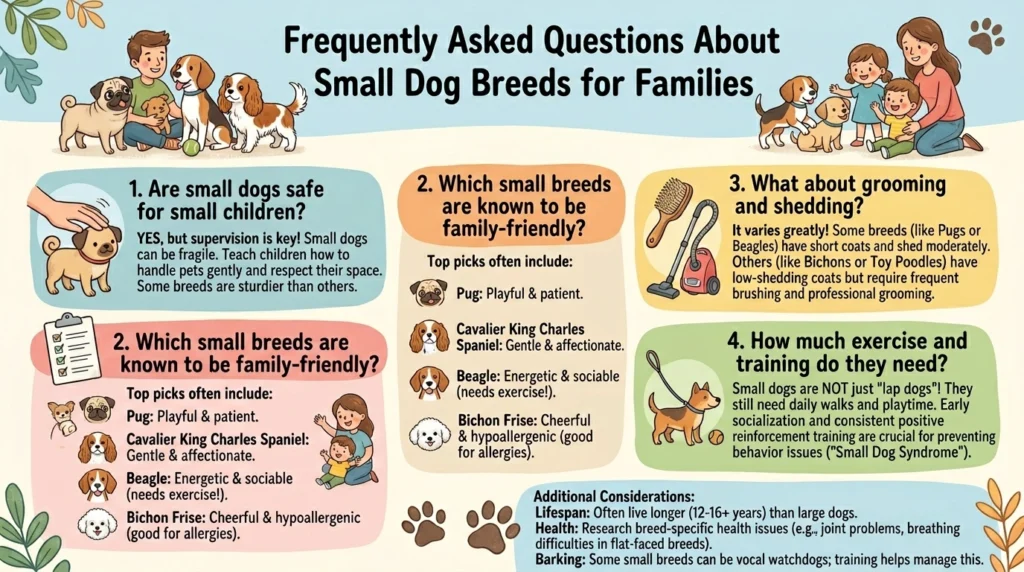
The Cavalier King Charles Spaniel and the Bichon Frise are widely considered the best small dog breeds for families with young children. Both are naturally gentle, patient, and tolerant. However, always supervise interactions between any dog and very young children. Teaching children to handle dogs respectfully reduces the risk of accidental nipping or stress for the dog.
2. Are small dog breeds good for first-time dog owners?
Yes, many small dog breeds are excellent for first-time owners. The Cavalier King Charles Spaniel, Shih Tzu, and Havanese are all known for being easy to manage and eager to please. However, some small breeds like Beagles and Miniature Schnauzers need more consistent training and exercise. Therefore, match the breed’s needs to your experience level and lifestyle for the best outcome.
3. Which small dog breeds are hypoallergenic?
Several small dog breeds produce fewer allergens than others. The most hypoallergenic options include:
- Bichon Frise
- Maltese
- Miniature Schnauzer
- Havanese
- Shih Tzu (partially)
However, no dog is 100% hypoallergenic. All dogs produce some level of dander. Therefore, if allergies are a concern, spend time with the breed before bringing one home and consult your doctor about allergy management strategies.
4. How much exercise do small dog breeds need?
Exercise needs vary significantly by breed. For example, a Pug or Shih Tzu needs just 20–30 minutes of gentle daily activity. A Beagle or Miniature Schnauzer, however, needs 45–60 minutes of more vigorous exercise each day. Therefore, match the breed’s energy level to your family’s activity habits. Under-exercised dogs, even small ones, develop behavioral issues over time.
5. What’s the longest-living small dog breed?
Small dog breeds generally live longer than large breeds. However, some consistently outlive others. The Chihuahua, Maltese, and Shih Tzu regularly reach 14–16 years with good care. The Havanese and Bichon Frise also enjoy long lifespans of 13–15 years. Therefore, choosing a small breed means committing to potentially 15+ years of companionship which is a beautiful thing worth planning for thoughtfully.
6. Are small dogs harder to train than large dogs?
Small dogs can be slightly more stubborn than some large breeds partly because owners tend to be less consistent with them. However, many small breeds like the Miniature Schnauzer, Havanese, and Bichon Frise are highly trainable when given consistent, positive reinforcement. The key is to start early and never skip training because a dog is small. Small dogs benefit from boundaries and structure just as much as large breeds do.
7. What small dog breed is best for apartment living?
French Bulldogs, Pugs, Shih Tzus, and Cavalier King Charles Spaniels all adapt exceptionally well to apartment living. Because they have moderate to low exercise needs, a daily walk and indoor playtime meet most of their physical requirements. Also, these breeds tend not to bark excessively which your neighbors will genuinely appreciate. In addition, they’re small enough to be comfortable in limited floor space without feeling cramped.
Your Perfect Family Dog Is Waiting
Finding the right match from the top 10 small dog breeds for families comes down to understanding your family’s lifestyle and energy level. Active families thrive with Beagles and Miniature Schnauzers. Quieter households fall in love with Cavaliers and Pugs. Allergy-prone families find relief with Bichon Frises and Havanese.
Every breed on this list brings something unique and wonderful to family life. Therefore, take your time, do your research, and visit breeders or rescue organizations before making your final decision. Also, always schedule a vet visit within the first week of bringing your new dog home.
Top 10 small dog breeds for families , Top 10 small dog breeds for families , Top 10 small dog breeds for families , Top 10 small dog breeds for families , Top 10 small dog breeds for families.