

Introduction
Most people either love them or do a double-take. The hairless dog is one of the most unique and misunderstood pets in the entire dog world. No fluffy coat. No shedding on your sofa. Just warm, smooth skin and a personality that more than makes up for the missing fur.
But owning a hairless dog isn’t as simple as skipping the grooming brush. These special dogs have specific skincare needs, sun sensitivity, and temperature requirements that most dog owners don’t expect. Therefore, going in prepared makes all the difference.
In my experience, hairless dog owners become some of the most passionate and dedicated pet parents around. Once you understand what these dogs truly need, the bond you build is extraordinary.
This guide covers everything the top hairless breeds, daily care routines, health considerations, and honest answers to the questions most new owners ask. Whether you’re seriously considering one or just curious, let’s explore this fascinating world together.
What Is a Hairless Dog? Breeds and Origins Explained
The Science Behind the Missing Coat
Ever wondered why some dogs are born without fur? The answer lies in genetics. A natural genetic mutation causes the hairless trait in dogs. As a result, these breeds either carry a dominant gene that suppresses hair growth or a recessive mutation affecting coat development.
Hairless dogs have existed for thousands of years. Archaeological evidence suggests hairless breeds appeared in ancient Mexico, Peru, China, and Africa. Therefore, they aren’t a modern creation, they’re genuinely ancient companions with remarkable histories.
The Most Popular Hairless Dog Breeds
Several distinct hairless breeds exist worldwide. Here’s a quick overview of the most well-known:
- Xoloitzcuintli (Mexican Hairless Dog) one of the oldest and rarest breeds in the world
- Chinese Crested comes in both hairless and powder-puff varieties
- Peruvian Inca Orchid an ancient breed from Peru with elegant, slender build
- American Hairless Terrier the only hairless breed developed in the United States
- Argentine Pila Dog a rare South American hairless breed
- Ecuadorian Hairless Dog one of the rarest dogs on Earth
Each breed has a distinct personality, size range, and care requirement. Therefore, understanding the differences helps you choose the right match for your household.
Are Hairless Dogs Truly Hypoallergenic?
This is one of the most common misconceptions about hairless dogs. Many people assume they’re completely hypoallergenic because they don’t shed fur. However, that’s not entirely accurate.
Dog allergies are usually triggered by dander, saliva, and urine, not just fur. As a result, hairless dogs do produce fewer airborne allergens than heavy-shedding breeds. However, they’re not 100% allergy-free. Therefore, if you have dog allergies, spend time with a hairless dog before committing to ownership and consult your doctor about managing sensitivity.
Top Hairless Dog Breeds: Full Breakdown and Comparison
Xoloitzcuintli The Ancient Mexican Hairless Dog
The Xoloitzcuintli (pronounced “show-low-eets-QUEENT-lee”) is one of the world’s oldest dog breeds. Ancient Aztec people considered them sacred companions and healers. Today, they’re loyal, calm, and surprisingly athletic family dogs.
Key facts:
- Size: Available in toy, miniature, and standard sizes
- Temperament: Calm, loyal, alert
- Energy level: Moderate
- Care level: Medium needs sunscreen and moisturizer
- Best for: Experienced dog owners, quieter households
Chinese Crested Elegant and Affectionate
The Chinese Crested is probably the most recognized hairless dog worldwide. They have hair only on their head (crest), feet (socks), and tail (plume). Because of their delicate nature and deep affection for their owners, they bond intensely with their families.
Key facts:
- Size: Small 8 to 12 pounds
- Temperament: Affectionate, playful, alert
- Energy level: Moderate
- Care level: Medium-high sensitive skin needs regular attention
- Best for: Apartment dwellers, gentle families
American Hairless Terrier Energetic and Trainable
The American Hairless Terrier is the only hairless breed developed entirely in the United States. Unlike most hairless breeds, this one carries a recessive gene meaning both parents must carry it for puppies to be hairless. They’re feisty, smart, and genuinely entertaining companions.
Key facts:
- Size: Small to medium 12 to 28 pounds
- Temperament: Curious, energetic, playful
- Energy level: High
- Care level: Medium skin care plus regular exercise needed
- Best for: Active families, first-time hairless dog owners
Peruvian Inca Orchid Elegant and Ancient
The Peruvian Inca Orchid is an elegant, slender hairless dog with a graceful appearance. Because they come in three sizes small, medium, and large they suit a wide range of households. Also, they’re affectionate with their families but naturally reserved with strangers.
Key facts:
- Size: Small, medium, or large
- Temperament: Affectionate, loyal, reserved
- Energy level: Moderate to high
- Care level: Medium requires skin protection
- Best for: Calm households, experienced owners
Pro Tip: If you’re a first-time hairless dog owner, the American Hairless Terrier is the most beginner-friendly option. They’re robust, trainable, and adapt well to different living situations making the unique care requirements easier to manage while you’re learning.
Hairless Dog Care: Complete Step-by-Step Guide
Daily and Weekly Care Routines
Caring for a hairless dog is genuinely different from caring for a coated breed. However, once you establish a routine, it becomes second nature. Here’s exactly what you need to do:
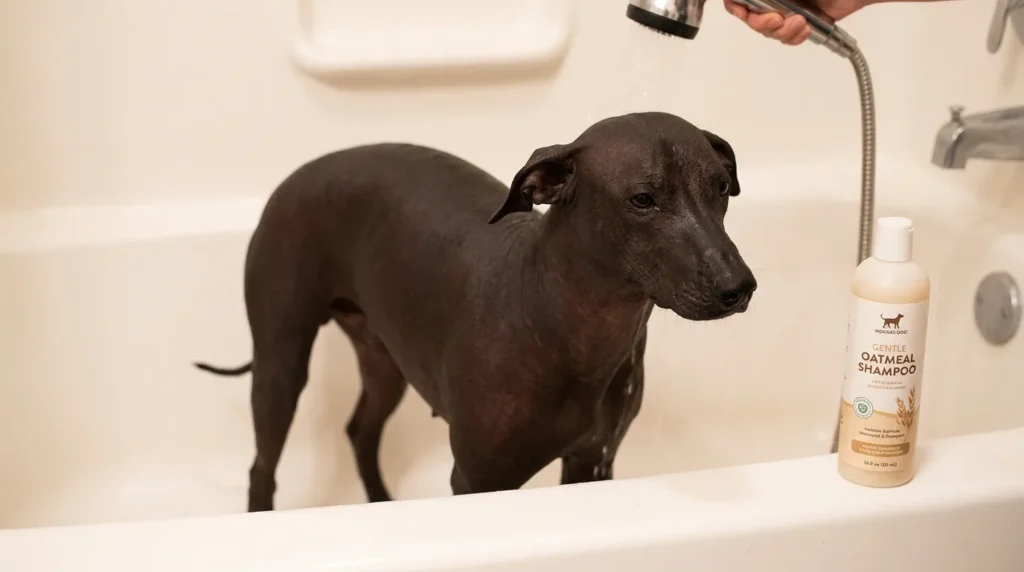
- Daily skin check. Run your hands gently over your dog’s skin each day. Look for redness, dry patches, blackheads, or cuts. Because hairless dogs lack the protection of a coat, skin issues appear quickly and need fast attention.
- Moisturize regularly. Apply a vet-approved, unscented moisturizer to your dog’s skin two to three times per week more often in dry climates or winter. Also, avoid human lotions with fragrances or chemicals, as these irritate sensitive skin.
- Apply sunscreen before outdoor time. This is non-negotiable. A hairless dog can sunburn within 30 minutes in direct sunlight. Therefore, apply a pet-safe sunscreen to all exposed skin before any outdoor activity especially between 10am and 4pm.
- Bathe weekly or every two weeks. Hairless dogs need more frequent bathing than coated breeds because their skin oils accumulate faster. Use a gentle, hypoallergenic dog shampoo. However, over-bathing strips natural oils so weekly is usually sufficient.
- Dress for cold weather. Hairless dogs get cold quickly. Therefore, invest in quality dog sweaters, jackets, and even pajamas for indoor wear during cooler months. This isn’t optional, it’s a genuine health need.
- Clean skin folds carefully. Some hairless breeds have skin folds around the neck or face. These areas trap moisture and bacteria. Therefore, clean folds gently with a damp cloth or vet-recommended wipe every few days.
- Regular vet check-ups. Schedule veterinary visits every six months. Because hairless dogs have unique skin needs and some breed-specific health concerns, professional monitoring matters more than with many coated breeds.
Essential Products Every Hairless Dog Owner Needs
Here’s your basic care kit:
- Pet-safe SPF 30+ sunscreen for outdoor protection
- Unscented dog moisturizer for daily skin hydration
- Hypoallergenic dog shampoo for weekly bathing
- Dog sweaters and jackets for temperature regulation
- Soft dog bed no rough fabrics that irritate skin
- Gentle skin wipes for quick clean-ups between baths
Hairless Dog Health: What Every Owner Should Know
Common Health Issues in Hairless Dogs
Skin Conditions
Skin problems are the most common health challenge for hairless dogs. Because they have no fur barrier, environmental irritants, sun damage, and temperature changes affect them directly. Common skin issues include:
- Acne and blackheads especially around the chin and back
- Sunburn even on cloudy days with UV exposure
- Dry, flaky skin particularly in winter or dry climates
- Skin infections from bacteria or yeast buildup in skin folds
Therefore, consistent skincare isn’t just cosmetic, it’s medically important for these dogs. Always consult your vet if you notice persistent skin changes.
Dental Problems
This surprises many new owners. Hairless dogs, especially the Xoloitzcuintli and Chinese Crested, frequently have dental abnormalities. The same gene that causes hairlessness sometimes affects tooth development. As a result, missing teeth, abnormally shaped teeth, or early tooth loss are common.
Therefore, start dental hygiene early. Brush your dog’s teeth daily with vet-approved toothpaste. Also, schedule annual professional dental cleanings with your veterinarian.
Temperature Sensitivity
Hairless dogs don’t regulate body temperature as efficiently as coated breeds. They get cold in cool weather and overheat in extreme heat. Therefore, monitor your dog’s comfort level closely and adjust their environment accordingly. In addition, never leave a hairless dog in a cold car or exposed to extreme temperatures without protection.
Joint and Bone Concerns
Some larger hairless breeds, particularly the Peruvian Inca Orchid can be prone to joint issues as they age. Therefore, provide a comfortable, supportive bed, maintain a healthy weight through proper diet, and consult your vet about joint supplements if your dog shows any stiffness.
Mistakes to Avoid With a Hairless Dog
Mistake 1: Skipping Sunscreen
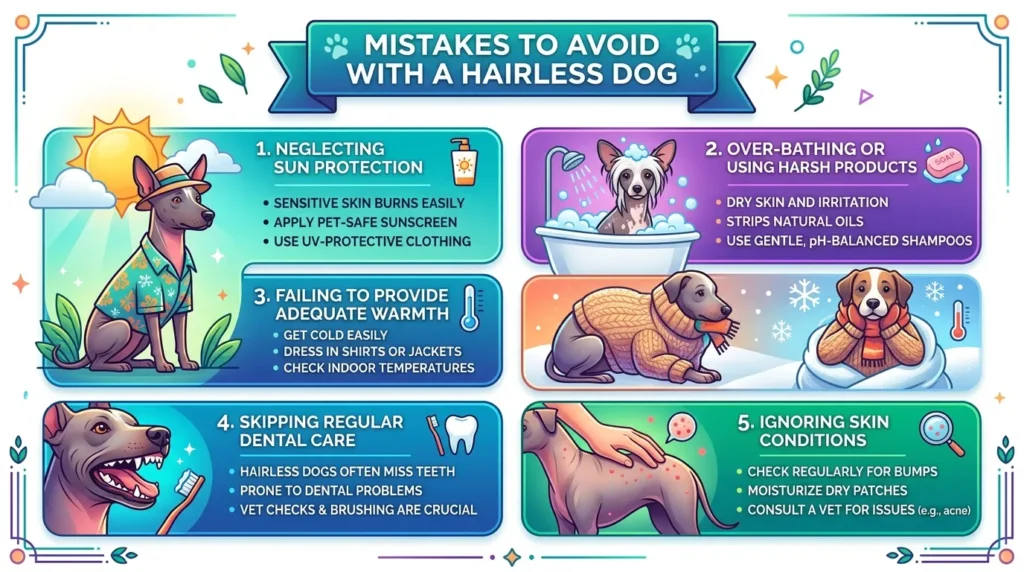
Many new hairless dog owners underestimate sun damage risk. However, a single afternoon of unprotected sun exposure causes painful sunburn on bare skin. Therefore, apply pet-safe sunscreen every single time your dog goes outside even on overcast days.
Mistake 2: Using Human Skincare Products
Human moisturizers, sunscreens, and shampoos often contain fragrances, alcohols, and chemicals that irritate dog skin. Therefore, always use products specifically formulated for dogs. When in doubt, ask your vet for product recommendations suited to your specific breed.
Mistake 3: Assuming They Don’t Need Grooming
Many people choose hairless dogs specifically to avoid grooming. However, hairless dogs actually require more consistent skincare attention than many coated breeds. As a result, underestimating this commitment leads to skin problems that become costly and uncomfortable for your dog.
Mistake 4: Ignoring Cold Weather
A hairless dog shivering indoors is genuinely uncomfortable and at risk of health issues. Therefore, provide warm clothing for cold days and ensure your home maintains a comfortable temperature year-round. Also, never assume a short outdoor trip in cold weather is harmless, it isn’t.
Mistake 5: Skipping Regular Vet Visits
Because hairless dogs have unique health profiles especially regarding skin, teeth, and temperature regulation, regular vet check-ups matter enormously. Therefore, don’t skip annual or biannual visits even when your dog seems perfectly healthy.
Pro Tip: Keep a simple skin journal for your hairless dog. Note any changes in skin texture, color, or new spots weekly. Because skin issues develop quickly on bare skin, early detection prevents minor irritations from becoming serious infections. Sharing this journal with your vet at check-ups gives them genuinely useful information.
Hairless Dog Breed Comparison Table
| Breed | Size | Energy | Beginner-Friendly | Grooming Needs | Cold Tolerance |
| Xoloitzcuintli | Small–Large | Moderate | No | Medium | Low |
| Chinese Crested | Small | Moderate | Yes | Medium-High | Very Low |
| American Hairless Terrier | Small–Med | High | Yes | Medium | Low |
| Peruvian Inca Orchid | Small–Large | Moderate-High | No | Medium | Low |
| Argentine Pila Dog | Small–Large | Moderate | No | Medium | Low |
Frequently Asked Questions About Hairless Dogs
1. Are hairless dogs good pets for families?
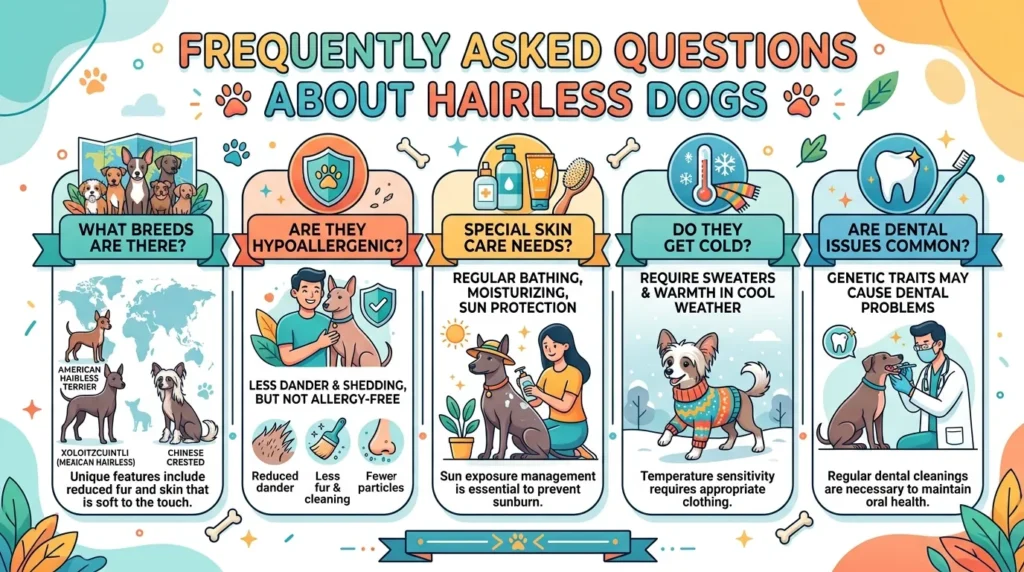
Yes, many hairless dogs make wonderful family pets. However, the best choice depends on your family’s energy level and experience. The Chinese Crested and American Hairless Terrier are particularly well-suited to family life. Both breeds are affectionate and playful. However, their delicate skin means young children need to learn gentle handling. Therefore, supervising interactions between small children and hairless dogs is especially important to prevent accidental skin injury.
2. Do hairless dogs feel cold easily?
Yes, hairless dogs feel temperature changes very directly because they have no fur insulation. They get cold much faster than coated breeds. Therefore, dog sweaters, jackets, and warm bedding are essential, not optional accessories. In winter, many hairless dog owners also keep their home slightly warmer than usual. Also, outdoor time in very cold weather should be brief and always include protective clothing.
3. Are hairless dogs hypoallergenic?
Hairless dogs produce significantly fewer airborne allergens than heavy-shedding breeds because they don’t release fur. However, they’re not completely hypoallergenic. Dog allergens come from dander, saliva, and urine all of which hairless dogs still produce. Therefore, spending time with the specific breed before committing is the only reliable way to assess your personal reaction. Consulting your doctor or allergist is also a smart step before bringing any dog home.
4. How much does a hairless dog cost?
Hairless dog prices vary significantly by breed and breeder. A Chinese Crested typically costs between $1,000 and $3,000 from a reputable breeder. A Xoloitzcuintli can range from $2,000 to $4,000 or more depending on size and lineage. However, adopting from a breed-specific rescue organization costs considerably less. Therefore, research both breeder and rescue options before deciding. Also, factors in ongoing skincare costs sunscreen, moisturizer, clothing, and vet visits add up over time.
5. What do hairless dogs eat?
Hairless dogs eat the same nutritionally balanced diet as any other dog. However, maintaining a healthy weight is particularly important because excess body fat creates additional skin fold issues and joint stress. Therefore, feed a high-quality dog food appropriate for your dog’s size and age. Also, omega-3 fatty acids found in salmon oil and quality fish-based foods actively support skin health from the inside out. Always consult your vet about the best diet for your specific hairless breed.
6. Do hairless dogs bark a lot?
Barking tendencies vary by breed rather than by the hairless trait itself. For example, the Xoloitzcuintli is naturally calm and relatively quiet. The American Hairless Terrier, however, is a terrier at heart and terriers tend to be vocal and alert. Therefore, research the specific breed’s temperament rather than assuming all hairless dogs behave the same way. Training from puppyhood also significantly influences barking habits regardless of breed.
7. Can a hairless dog live in a hot climate?
Surprisingly, yes with careful management. Many hairless breeds originated in warm climates, including Mexico and Peru. However, direct sun exposure still causes sunburn even in breeds developed in hot regions. Therefore, provide shade, apply sunscreen consistently, and avoid outdoor activity during the hottest parts of the day. Also, ensure constant access to fresh water and a cool indoor environment during heatwaves. Always consult your vet about heat management specific to your breed.
Is a Hairless Dog Right for You?
The hairless dog is truly one of a kind. No shedding on your furniture. No fur on your clothes. Just a warm, smooth, deeply affectionate companion who needs a little extra care in return for extraordinary loyalty.
However, these dogs aren’t low-maintenance. They need sunscreen, moisturizer, warm clothing, and consistent veterinary care. Therefore, going in with clear expectations sets both you and your dog up for a wonderful life together.
If you’re ready to commit to the unique care routine, the rewards are genuine and lasting. Hairless dog owners consistently describe these breeds as some of the most loyal, loving, and entertaining companions they’ve ever known.