
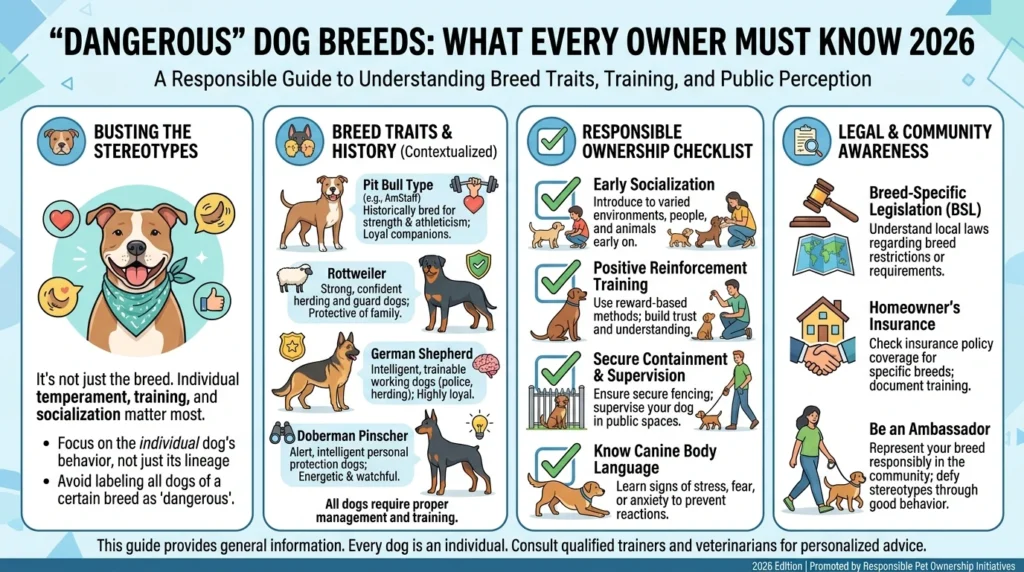
Introduction
Some dogs are naturally more powerful than others. That’s simply a fact. But here’s something most people get wrong: a dangerous dog isn’t always about the breed alone. However, certain breeds do carry traits that make them riskier in the wrong hands.
If you’re researching dangerous dog breeds, you’re already being a responsible person. Whether you’re a new dog owner, a parent, or just someone curious about safety, this guide gives you honest, practical answers.
In my experience, the most dangerous situations happen when powerful breeds meet unprepared owners. Therefore, understanding which breeds need extra care and why can genuinely prevent accidents and save lives.
This article covers the top dangerous dog breeds, the real reasons behind aggressive behavior, and exactly how to stay safe. Let’s get into it.
Why Some Dog Breeds Are Considered Dangerous
The Science Behind Breed Behavior
Not every dog bites. However, certain breeds were historically bred for protection, fighting, or hunting. As a result, they carry stronger instincts than the average family pet.
Factors that make a breed potentially dangerous include:
- Jaw strength some breeds have incredibly powerful bites
- Size and weight larger dogs cause more injury when they do bite
- Prey drive strong instinct to chase and grab
- Territorial behavior protective instincts that can turn aggressive
- High energy levels untrained energy becomes unpredictable behavior
It’s also important to note that the environment matters enormously. Therefore, a well-trained Rottweiler can be gentle. Meanwhile, a poorly socialized Labrador can still bite. However, certain breeds amplify risk when training is missing.
Breed Traits vs. Individual Behavior
Every dog is an individual. However, breeds do share common tendencies shaped by centuries of selective breeding. For example, Pit Bulls were bred for strength and tenacity. As a result, these traits can become dangerous without proper management.
Think of it this way a sports car and a family sedan both get you places. However, the sports car demands more skill to handle safely. Similarly, powerful breeds demand more responsible ownership.
Top 10 Dog Breeds Considered Dangerous
Which Breeds Make the List and Why
Here’s an honest breakdown of breeds most commonly associated with serious bite incidents. This list is based on reported bite statistics and veterinary data not just reputation.
| Breed | Bite Strength (PSI) | Risk Factor | Key Trait |
| Kangal | 743 PSI | Very High | Livestock guardian instinct |
| Cane Corso | 700 PSI | Very High | Highly territorial |
| Rottweiler | 328 PSI | High | Strong protective drive |
| American Pit Bull | 235 PSI | High | High prey drive |
| German Shepherd | 238 PSI | Medium-High | Protective, high intelligence |
| Siberian Husky | 320 PSI | Medium | High prey drive, escape artist |
| Alaskan Malamute | 400 PSI | Medium-High | Strong-willed, powerful |
| Doberman Pinscher | 245 PSI | Medium-High | Loyal but fearless |
| Chow Chow | 220 PSI | Medium | Aloof, territorial with strangers |
| Wolf Hybrid | Varies | Very High | Unpredictable wild instincts |
A Closer Look at the Most Commonly Flagged Breeds
Rottweilers are powerful, loyal dogs. However, their protective instincts can become dangerous without early socialization. In addition, their sheer size means even playful behavior can knock a child over easily.
Pit Bull Terriers are perhaps the most debated breed on any dangerous list. Many owners report them as loving family dogs. However, statistics show they’re involved in a high percentage of serious bite incidents annually. Therefore, responsible ownership is absolutely critical with this breed.
German Shepherds are highly intelligent working dogs. Because of this, they need consistent mental and physical stimulation. Without it, frustration can turn into destructive or aggressive behavior over time.
Pro Tip: The breed alone doesn’t make a dog dangerous. However, a powerful breed plus poor training plus an inexperienced owner creates a genuinely dangerous combination. Always research your breed before bringing one home.
How to Stay Safe Around Dangerous Dog Breeds
Practical Safety Tips for Owners and Non-Owners
Whether you own one of these breeds or simply encounter them in daily life, safety should always come first. Here’s a step-by-step guide to staying safe.
- Never approach an unfamiliar dog without permission. Always ask the owner first, especially with large or powerful breeds.
- Read body language carefully. A stiff posture, raised hackles, and a fixed stare are all warning signs. Therefore, back away slowly if you notice these signals.
- Don’t run from an aggressive dog. Running triggers prey drive instantly. Instead, stand still and avoid direct eye contact.
- Supervise children at all times. Kids move unpredictably and can accidentally provoke even well-trained dogs. As a result, never leave young children alone with any powerful breed.
- Invest in professional training early. The first six months of a puppy’s life are critical for socialization. Therefore, enroll in professional obedience classes as early as possible.
- Socialize your dog consistently. Expose your dog to different people, environments, and situations regularly. Because of this, they become comfortable rather than reactive in new situations.
- Use proper containment. Strong breeds need strong fences, sturdy leashes, and secure enclosures. In addition, always use a leash in public spaces regardless of how well-trained your dog is.
- Spay or neuter your dog. Studies consistently show that intact male dogs are significantly more likely to show aggression. As a result, this single step can meaningfully reduce risk.
What to Do If a Dog Attacks
First, protect your face and neck immediately. Use a bag, jacket, or anything available as a barrier. Then, staying as calm as possible and avoiding screaming loud noises can escalate the situation further.
If you’re knocked down, curl into a ball and cover your neck with your hands. Finally, seek medical attention immediately after any bite, even a small one. Dog bites carry significant infection risk and should always be evaluated by a doctor.
[100 Types of Dogs: Complete Breed Guide for 2026
Common Mistakes Owners Make With Dangerous Dog Breeds
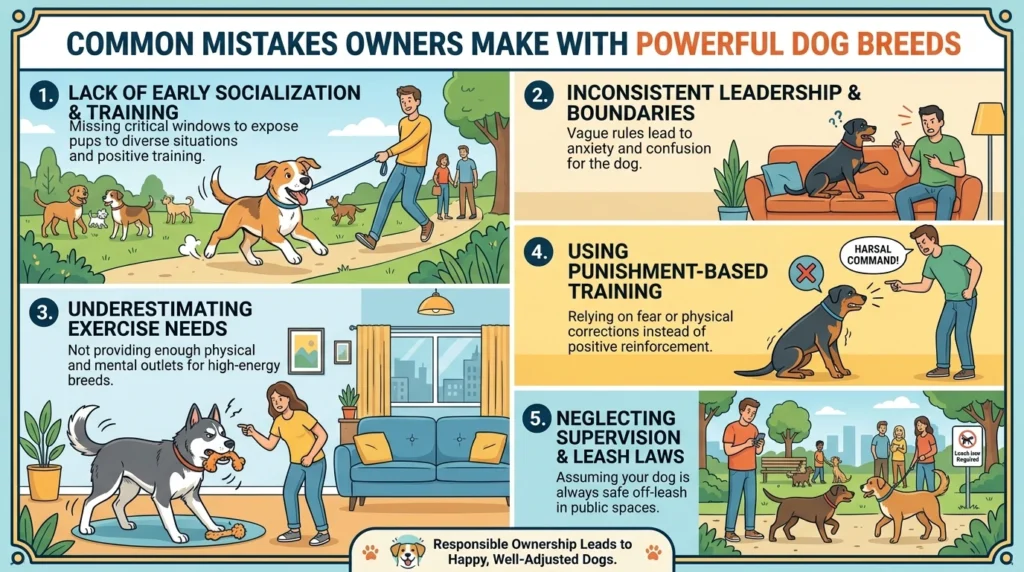
Mistakes That Turn a Good Dog Into a Risky One
Even well-intentioned owners make errors that create dangerous situations. Here are the most common mistakes and how to avoid them.
This is the biggest mistake by far. Many owners wait until problems appear before addressing behavior. However, by then, patterns are already deeply established. Therefore, socialization needs to start in puppyhood not after the first incident.
Relying on Breed Reputation Alone
Some owners assume their breed is naturally gentle based on reputation. However, every individual dog needs training regardless of breed temperament. A Pit Bull raised without boundaries is a risk. Similarly, a Rottweiler without consistent leadership becomes unpredictable.
Using Punishment-Based Training
Harsh punishment increases fear and anxiety in powerful breeds. As a result, fear-based aggression becomes much more likely. Instead, always use positive reinforcement methods. Reward good behavior consistently and work with a certified trainer if you’re struggling.
Ignoring Warning Signs
Dogs give warnings before they bite. Growling, stiffening, and lip curling are all communication signals. However, many owners punish these warnings which actually makes the situation more dangerous. Because the dog loses its warning system, biting becomes the first response instead.
Underestimating Strength and Energy
Large, powerful breeds need significant exercise often more than owners expect. A Malamute needs hours of activity daily. Therefore, a daily 20-minute walk simply won’t meet their needs. Pent-up energy in a powerful breed creates frustration, and frustration creates risk.
Pro Tip: If you’re struggling with an aggressive or reactive dog, don’t wait. Consult a certified professional dog trainer or veterinary behaviorist as soon as possible. Early intervention makes an enormous difference in outcomes.
Frequently Asked Questions About Dangerous Dog Breeds
1. What are the most dangerous dog breeds statistically?
Based on bite severity and reported incident data, the breeds most frequently involved in serious attacks include Pit Bull Terriers, Rottweilers, German Shepherds, and Wolf Hybrids. However, it’s important to remember that statistics reflect reported incidents, not the overall behavior of the entire breed population. Therefore, responsible ownership, training, and socialization remain the most significant factors in any dog’s behavior, regardless of breed.
2. Are dangerous dog breeds illegal to own?
In some countries and regions, yes. Breed-specific legislation (BSL) exists in parts of the UK, Canada, Australia, and certain US states and cities. For example, Pit Bulls are banned or heavily restricted in several jurisdictions. Therefore, always check your local laws before acquiring a breed on the restricted list. Penalties can include fines, mandatory surrender of the dog, or criminal charges in serious cases.
3. Can dangerous dog breeds be safe family pets?
Many powerful breeds live happily and safely as family pets. However, they require experienced owners, consistent training, early socialization, and appropriate management. For example, Rottweilers are frequently described as gentle giants by experienced owners who’ve put in the training work. Therefore, the answer depends more on the owner’s commitment than the breed itself. Always consult a professional trainer before bringing a high-risk breed into a home with young children.
4. How do I know if my dog is becoming dangerous?
Warning signs include increasing growling or snapping at people or other animals, resource guarding food or toys with intensity, unpredictable reactions to normal situations, stiffening or staring when approached, and a history of biting or attempted biting. If you notice these signs, consult your veterinarian and a certified animal behaviorist immediately. Early intervention is always more effective than waiting for a serious incident to occur.
5. Do dangerous dog breeds require special insurance?
In many cases, yes. Homeowner’s and renter’s insurance policies frequently exclude certain breeds or charge higher premiums for owners of high-risk breeds. Rottweilers, Pit Bulls, and Dobermans are commonly on these exclusion lists. Therefore, always disclose your dog’s breed to your insurance provider and shop for pet liability coverage if needed. Some specialty insurers offer coverage specifically designed for owners of restricted breeds.
6. Is aggression always genetic in dangerous breeds?
Genetics play a role but they’re not the whole story. Breeding does influence temperament tendencies. However, environment, socialization, training, and owner behavior have an enormous impact on how those genetics actually express themselves. In fact, many dogs of so-called “dangerous breeds” never show any aggression throughout their entire lives because of responsible upbringing. Therefore, thinking of genetics as destiny rather than tendency misses the full picture of canine behavior.
7. What should I do if I’m bitten by a dangerous dog breed?
First, move to safety and clean the wound thoroughly with soap and water. Then seek medical attention immediately even for small bites. Dog bites carry serious infection risk, including rabies in some regions. In addition, report the incident to local animal control authorities. Document everything: photos of injuries, owner information, and witness details. Finally, consult a legal professional if injuries are serious, as dog bite liability laws vary significantly by location.
Responsible Ownership Is the Real Answer
Here’s the bottom line on dog breeds: dangerous discussions: the breed is a factor, but it’s rarely the only factor. Powerful dogs in responsible hands live peaceful, happy lives alongside families every day.
However, powerful dogs in unprepared hands become genuine public safety risks. Therefore, the conversation shouldn’t only be about which breeds are dangerous. It should be about which owners are prepared.
If you’re considering one of the breeds on this list, do your research thoroughly first. Invest in professional training, commit to consistent socialization, and be honest about your experience level. Your dog’s behavior will ultimately reflect your leadership far more than their genetic heritage.