

Introduction
Your dog can’t tell you when something feels wrong. That’s the hardest part of being a dog owner. One day they’re full of energy, and the next they’re quiet, slow, or just not themselves.
Understanding common dog health problems and solutions is one of the most important things you can do as a pet parent. Because the earlier you spot a problem, the faster you can help.
In my experience, most dog owners only learn about health issues after something goes wrong. However, knowing the warning signs in advance makes a huge difference. This guide covers the most common dog health problems, their symptoms, and practical solutions you can start using today.
Let’s make sure your dog gets the long, happy, healthy life they deserve.
Most Common Dog Health Problems and Solutions Explained
Why Dogs Get Sick More Than We Realize
Dogs face health challenges just like humans do. In fact, veterinary visits in the US have increased by over 30% in the last decade because more owners are paying attention. That’s a good thing.
However, many health problems go unnoticed for too long. Therefore, learning to recognize early warning signs is genuinely life-saving for your pet.
Here are the most common dog health problems you should know about.
1. Skin Problems and Allergies
Skin issues are among the top reasons dogs visit the vet. You might notice your dog scratching constantly, licking their paws, or developing red patches on their skin.
Common causes include:
- Food allergies (chicken, beef, or wheat are frequent triggers)
- Environmental allergens like pollen or dust mites
- Flea bites and skin parasites
- Fungal or bacterial infections
Solutions that actually work:
First, identify the trigger. A vet can run allergy tests to pinpoint the cause. Then, switch to a limited-ingredient diet if food allergy is suspected. Also, regular flea prevention is essential, don’t skip it.
In addition, bathing your dog with a vet-recommended medicated shampoo helps soothe irritated skin quickly. However, always consult your vet before starting any treatment plan.
Pro Tip: Omega-3 fatty acids from fish oil can significantly reduce skin inflammation in dogs. Ask your vet about the right dosage for your dog’s weight.
2. Ear Infections
Ever noticed your dog shaking their head repeatedly or scratching at one ear? That’s often a sign of an ear infection. This problem is especially common in dogs with floppy ears like Cocker Spaniels and Basset Hounds.
Signs to watch for:
- Redness or swelling inside the ear
- Dark discharge or unusual smell
- Whimpering when the ear is touched
- Head tilting to one side
How to solve it:
Clean your dog’s ears regularly with a vet-approved ear cleaner. Also, keep the ears dry after baths and swimming. If an infection is already present, your vet will prescribe antifungal or antibiotic ear drops.
Therefore, regular ear checks at least once a week can prevent most infections before they become serious.
3. Dental Disease
Here’s something surprising: over 80% of dogs show signs of dental disease by age three. Yet most owners never think about their dog’s teeth until there’s a visible problem.
Warning signs include:
- Bad breath that’s unusually strong
- Yellow or brown tartar buildup
- Red or bleeding gums
- Difficulty chewing or dropping food
Practical solutions:
Brush your dog’s teeth at least three times a week using dog-safe toothpaste. In addition, dental chews and water additives help reduce plaque buildup between brushings. However, nothing replaces a professional dental cleaning at your vet clinic.
As a result of poor dental hygiene, bacteria can enter the bloodstream and affect the heart, liver, and kidneys. So take those teeth seriously.
[Dogs Health Issues: Signs, Causes & Solutions 2026]
4. Obesity and Weight Problems
Is Your Dog Carrying Extra Weight?
Obesity affects nearly 56% of dogs in the United States, according to the Association for Pet Obesity Prevention. It’s one of the most common and most preventable dog health problems today.
Signs your dog may be overweight:
- You can’t feel their ribs easily
- They get tired quickly during walks
- Their waist isn’t visible from above
- They struggle to groom themselves
Solutions that make a real difference:
First, measure your dog’s food at every meal instead of free-feeding. Then, choose high-quality dog food with appropriate calories for their age and size. Also, increasing daily exercise gradually, even 15 extra minutes of walking per day, helps.
In addition, cut back on treats. Many owners don’t realize how many calories treats add up to daily. Therefore, use small pieces of vegetables like carrots as low-calorie treat alternatives.
Pro Tip: Ask your vet to calculate your dog’s ideal daily caloric intake. This single step prevents most weight gain before it starts.
5. Joint Pain and Arthritis
When Moving Becomes Difficult
Joint problems are especially common in older dogs and large breeds. However, even younger dogs can develop joint issues particularly if they’re overweight or genetically predisposed.
Common symptoms:
- Stiffness after lying down
- Reluctance to climb stairs or jump
- Visible limping on one or more legs
- Whimpering when touched near joints
Effective solutions:
First, maintaining a healthy weight puts tremendous pressure on joints. Then, add joint supplements like glucosamine and chondroitin to your dog’s diet. Also, provide orthopedic bedding to reduce pressure during sleep.
In addition, low-impact exercise like swimming is excellent for dogs with joint pain. Finally, your vet may recommend anti-inflammatory medications for more severe cases. Always follow their guidance carefully.
6. Digestive Problems
Upset Stomachs Happen Here’s What to Do
Digestive issues are incredibly common in dogs. Vomiting, diarrhea, and loss of appetite can happen for many different reasons.
Common causes include:
- Eating something they shouldn’t have
- Sudden food changes
- Bacterial or viral infections
- Parasites like roundworms or giardia
Solutions to try:
For mild stomach upset, withhold food for 12 hours then introduce a bland diet of plain boiled chicken and rice. However, if vomiting or diarrhea lasts more than 24 hours, visit your vet immediately.
Also, regular deworming and parasite prevention keeps digestive infections at bay. Therefore, follow your vet’s recommended schedule for these treatments consistently.
Step-by-Step Guide to Managing Dog Health Problems at Home

A Simple Daily Health Routine That Works
You don’t need to be a veterinarian to keep your dog healthy. However, consistency in daily care makes an enormous difference over time. Here’s a simple routine that any owner can follow.
- Check your dog’s eyes and ears daily. Look for discharge, redness, or swelling. These are early warning signs that something’s off.
- Feel their body gently. Run your hands along their body to check for lumps, sore spots, or unusual swelling. Early detection saves lives.
- Watch their eating habits. A dog that suddenly stops eating is telling you something. Don’t ignore appetite changes for more than 24 hours.
- Monitor their bathroom habits. Changes in urine color, frequency, or stool consistency often signal health problems early.
- Check their paws and nails. Cracked paws, swollen toes, or overly long nails cause real discomfort. Trim nails monthly.
- Note their energy levels. A dog that’s suddenly lethargic without obvious reason deserves a vet visit. Energy changes are important signals.
- Weigh your dog monthly. Unexplained weight loss or gain is always worth investigating with your veterinarian.
Dog Health Problems Comparison: Symptoms and Solutions
| Health Problem | Main Symptoms | Home Solution | When to See Vet |
| Skin Allergies | Scratching, redness, licking | Omega-3 supplements, gentle shampoo | If symptoms persist 7+ days |
| Ear Infections | Head shaking, dark discharge | Regular ear cleaning | If discharge or swelling present |
| Dental Disease | Bad breath, yellow teeth | Daily brushing, dental chews | Annual professional cleaning |
| Obesity | Ribs not felt, low energy | Measured meals, daily walks | If overweight by 20%+ |
| Joint Pain | Stiffness, limping | Joint supplements, soft bedding | If limping is persistent |
| Digestive Issues | Vomiting, diarrhea | Bland diet for 12-24 hours | If symptoms last over 24 hours |
Common Mistakes Dog Owners Make With Health Problems
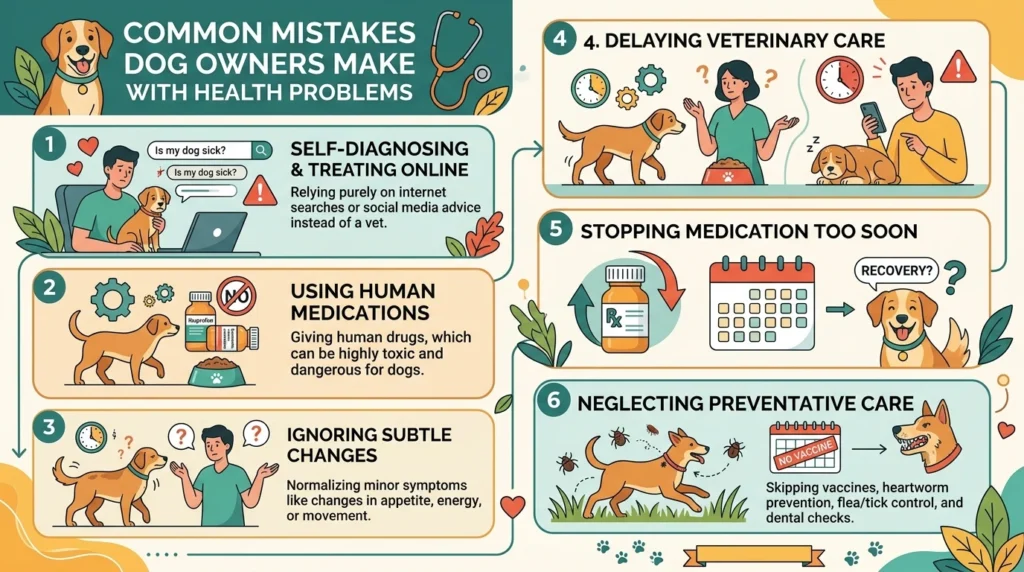
Are You Making These Errors Without Realizing?
Even the most loving dog owners make mistakes when it comes to health. Knowing these pitfalls helps you avoid them easily.
Mistake 1 Waiting Too Long to See the Vet
Many owners wait days or weeks before booking a vet appointment. However, early intervention almost always leads to better outcomes. Therefore, when in doubt, call your vet. A quick phone consultation can save your dog significant suffering.
Mistake 2 Giving Human Medications
This is genuinely dangerous. Paracetamol, ibuprofen, and many other human medicines are toxic to dogs. Never give your dog any medication without explicit veterinary approval, no matter how safe it seems to you.
Mistake 3 Ignoring Behavioral Changes
Dogs communicate through behavior. When a normally playful dog becomes withdrawn, that change matters. In addition, aggression, excessive barking, or sudden anxiety can all signal underlying health problems. Pay attention to these shifts.
Mistake 4 Skipping Annual Vet Checks
Annual wellness exams aren’t just for sick dogs. They catch problems early, often before symptoms appear. As a result, regular check-ups genuinely extend your dog’s healthy life. Don’t skip them.
Mistake 5 Overfeeding Treats
Treats feel like love. However, they add up to significant extra calories very quickly. Therefore, always factor treats into your dog’s total daily caloric allowance. Use healthy options like carrots, blueberries, or cucumber slices instead of high-calorie commercial treats.
Pro Tip: Keep a simple health journal for your dog. Note their weight, appetite, energy level, and any symptoms monthly. This information is incredibly valuable when you visit your vet.
Frequently Asked Questions About Dog Health Problems and Solutions
1. What are the most common dog health problems I should watch for?
The most common dog health problems include skin allergies, ear infections, dental disease, obesity, joint pain, and digestive issues. Each of these conditions has clear warning signs scratching, head shaking, bad breath, weight gain, stiffness, and vomiting respectively. Knowing these signs helps you act quickly. However, always consult your vet for an accurate diagnosis rather than self-treating based on symptoms alone.
2. How do I know if my dog’s health problem is serious?
Certain symptoms always warrant an immediate vet visit. These include difficulty breathing, seizures, collapse, severe vomiting or diarrhea lasting more than 24 hours, inability to urinate, sudden paralysis, or extreme lethargy. In addition, any symptom that worsens quickly rather than improving deserves prompt veterinary attention. When in doubt, always err on the side of caution and call your vet.
3. Can I treat my dog’s health problems at home?
Mild issues like minor stomach upset, small cuts, or dry skin can often be managed at home with appropriate care. However, most health problems benefit from professional veterinary diagnosis and treatment. Home treatment without knowing the underlying cause can sometimes make things worse. Therefore, use home care for very minor issues only, and consult your vet for anything that persists or worsens.
4. How can I prevent common dog health problems?
Prevention starts with consistent daily care. Feed your dog a high-quality, appropriately portioned diet. Also, maintain regular exercise suited to their breed and age. Keep up with vaccinations, flea prevention, deworming, and annual vet check-ups. In addition, brush their teeth regularly, check their ears weekly, and monitor their weight monthly. As a result of these habits, many of the most common health problems become much less likely to develop.
5. What dog health problems are most common in older dogs?
Senior dogs, generally those over seven years old, are more prone to arthritis, dental disease, kidney disease, heart problems, and cancer. In addition, cognitive decline (similar to dementia in humans) affects many older dogs. Therefore, senior dogs benefit from more frequent vet check-ups every six months rather than annually. Also, adapting their diet and exercise routine to their changing needs makes a significant difference in their quality of life.
6. Are certain breeds more prone to health problems?
Yes, breed significantly affects health risk. For example, Bulldogs and Pugs often face breathing difficulties due to their flat faces. Labrador Retrievers are prone to obesity and joint problems. German Shepherds frequently develop hip dysplasia. Therefore, knowing your breed’s specific health risks allows you to take preventive action early. Talk to your vet about breed-specific screening tests that may be appropriate for your dog.
7. How often should I take my dog to the vet?
Healthy adult dogs should visit the vet at least once per year for a wellness exam. Puppies need more frequent visits typically every 3 to 4 weeks until 16 weeks of age for vaccinations. Senior dogs benefit from biannual check-ups. However, any time your dog shows concerning symptoms, don’t wait for the annual appointment. A prompt visit often prevents small problems from becoming serious ones.
Your Dog’s Health Is in Your Hands
Understanding dog health problems and solutions gives you real power as a dog owner. You don’t need to be a vet to make a genuine difference, you just need to pay attention, act early, and build healthy habits into your daily routine.
Start small. Check your dog’s ears today. Measure their food this week. Book that overdue vet appointment. Each small action adds up to something significant over time.