

Introduction
Choosing the right dog breed can completely change your life. However, with hundreds of breeds available, the decision feels overwhelming for most people. Have you ever walked into a shelter or pet store and felt totally lost?
You’re not alone. Many new dog owners pick a breed based on looks alone and later struggle with energy levels, grooming needs, or temperament mismatches. That’s a problem worth solving before you bring a puppy home.
In this guide, you’ll discover the most popular dog breeds, what makes each one special, and exactly how to match a breed to your lifestyle. Whether you live in a small apartment or a large house with a yard, there’s a perfect dog waiting for you. Let’s find yours together.
Why Dog Breeds Matter More Than You Think
Most people underestimate how much a dog’s breed affects daily life. However, understanding breed characteristics helps you make a much smarter choice from day one.
What Breed Traits Actually Mean for You
Every dog breed was originally developed for a specific purpose. For example, Border Collies were bred to herd livestock. As a result, they have intense energy and need constant mental stimulation. Basset Hounds, on the other hand, were bred to track scents slowly so they’re naturally calm and low-energy.
Therefore, matching your lifestyle to a breed’s natural instincts is the single most important step in choosing a dog.
The Main Dog Breed Groups
The American Kennel Club recognizes seven main breed groups. Each group shares common traits that help you narrow your search:
- Herding Group intelligent, energetic, excellent with commands (e.g., Border Collie, German Shepherd)
- Sporting Group active, friendly, love water and outdoor activities (e.g., Labrador Retriever, Golden Retriever)
- Toy Group small, affectionate, perfect for apartments (e.g., Chihuahua, Pomeranian)
- Working Group strong, loyal, protective (e.g., Rottweiler, Siberian Husky)
- Hound Group scent-driven or sight-driven hunters (e.g., Beagle, Greyhound)
- Terrier Group feisty, energetic, independent thinkers (e.g., Jack Russell, Bull Terrier)
- Non-Sporting Group diverse group with varied traits (e.g., Bulldog, Poodle)
Understanding these groups gives you a solid starting point. In addition, it saves you from making a choice you’ll regret later.
Most Popular Dog Breeds in 2026 and What Makes Them Special
Now that you understand breed groups, let’s look at the most popular dog breeds people are choosing today. These breeds top the charts for good reasons; they’re adaptable, friendly, and well-suited to modern family life.
Top 10 Most Popular Dog Breeds Right Now
| Breed | Size | Energy Level | Best For |
| Labrador Retriever | Large | High | Families, active owners |
| French Bulldog | Small | Low-Medium | Apartments, city living |
| Golden Retriever | Large | High | Families with children |
| German Shepherd | Large | High | Active owners, security |
| Poodle | Small-Large | Medium | Allergy sufferers |
| Bulldog | Medium | Low | Relaxed households |
| Beagle | Medium | Medium | Families, outdoor lovers |
| Rottweiler | Large | Medium-High | Experienced owners |
| Dachshund | Small | Medium | Small homes, couples |
| Shih Tzu | Small | Low | Seniors, apartment living |
The Breeds Worth Knowing Better
Labrador Retriever consistently ranks as the most popular breed worldwide. They’re friendly, easy to train, and incredibly patient with children. However, they need daily exercise otherwise they become destructive at home.
French Bulldogs have exploded in popularity recently. They’re quiet, loving, and perfectly sized for city apartments. Because they have flat faces, though, they can struggle in hot weather. Always consult your vet about exercise limits for this breed.
Golden Retrievers are the definition of a family dog. They’re gentle, loyal, and absolutely love people. In addition, they respond beautifully to training making them a top choice for first-time owners.
Pro Tip: Before choosing any breed, visit a local dog show or breed-specific event. Spending time with adult dogs of that breed gives you a realistic picture that puppy photos simply can’t provide.
[Best Dry Dog Food for Large Dogs: Top Picks 2026 Guide]
How to Choose the Right Dog Breed for Your Lifestyle: Step-by-Step

Choosing a dog breed doesn’t have to feel like a guessing game. Therefore, follow this simple step-by-step process to make a confident, informed decision.
Step-by-Step Breed Selection Guide
- Assess your living space first. Do you live in an apartment or a house with a yard? Large, energetic breeds like Huskies need space to run. However, smaller breeds like Pugs or Shih Tzus thrive in compact spaces.
- Honestly evaluate your activity level. Are you someone who exercises daily, or do you prefer quiet evenings at home? Active owners match well with Border Collies or Vizslas. Meanwhile, couch-friendly owners pair better with Bulldogs or Basset Hounds.
- Consider everyone in your household. Families with young children need gentle, patient breeds like Golden Retrievers or Beagles. Also, households with allergy sufferers should consider hypoallergenic breeds like Poodles or Bichon Frises.
- Think about grooming commitment. Some breeds require daily brushing and regular professional grooming. For example, Afghan Hounds and Collies have beautiful coats that demand serious maintenance. Short-haired breeds like Boxers, however, need minimal grooming.
- Factor in your budget for food and vet care. Larger breeds eat more food and often have higher vet bills. Therefore, a Great Dane costs significantly more to maintain than a Chihuahua over their lifetime.
- Research breed-specific health issues. Every breed has known health predispositions. For instance, German Shepherds are prone to hip dysplasia. Bulldogs struggle with breathing issues. Knowing these risks ahead of time helps you prepare. Always consult your vet when selecting a breed for health reasons.
- Spend time with the breed before committing. Borrow a friend’s dog for a weekend. Also, volunteer at a local shelter and interact with different breeds. This real-world experience is more valuable than any online quiz.
Dog Breeds for Specific Lifestyles: Find Your Perfect Match
Not every breed suits every person. However, matching your specific situation to the right breed makes all the difference. Here’s a breakdown of the best dog breeds for different lifestyles.
Best Dog Breeds for Apartments
Living in a small space doesn’t mean you can’t have a wonderful dog. These breeds adapt beautifully to apartment living:
- French Bulldog quiet, low-energy, and absolutely loves lounging
- Cavalier King Charles Spaniel gentle, affectionate, and calm indoors
- Shih Tzu small, friendly, and perfectly happy without a yard
- Pug playful but low-maintenance energy-wise
- Maltese tiny, loving, and content in small spaces
Best Dog Breeds for Families With Children
Children need dogs that are patient, sturdy, and gentle. Therefore, these breeds consistently earn top marks for family life:
- Golden Retriever endlessly patient and loves kids of all ages
- Labrador Retriever energetic, playful, and incredibly tolerant
- Beagle curious, friendly, and the right size for family fun
- Boxer protective yet gentle, with natural playfulness
- Newfoundland nicknamed “nature’s babysitter” for good reason
Best Dog Breeds for First-Time Owners
First-time owners need breeds that are forgiving, easy to train, and naturally friendly. In addition, lower-maintenance coats help new owners stay on top of grooming.
- Golden Retriever eager to please and responds beautifully to training
- Labrador Retriever adaptable, friendly, and endlessly patient
- Poodle highly intelligent and low-shedding, making care simpler
- Cavalier King Charles Spaniel gentle temperament, easy to train
- Bichon Frise cheerful, hypoallergenic, and manageable size
Pro Tip: If you’re a first-time owner, consider enrolling in a puppy training class within the first month of bringing your dog home. Early socialization and basic commands make the entire first year dramatically easier regardless of breed.
Common Mistakes People Make When Choosing Dog Breeds
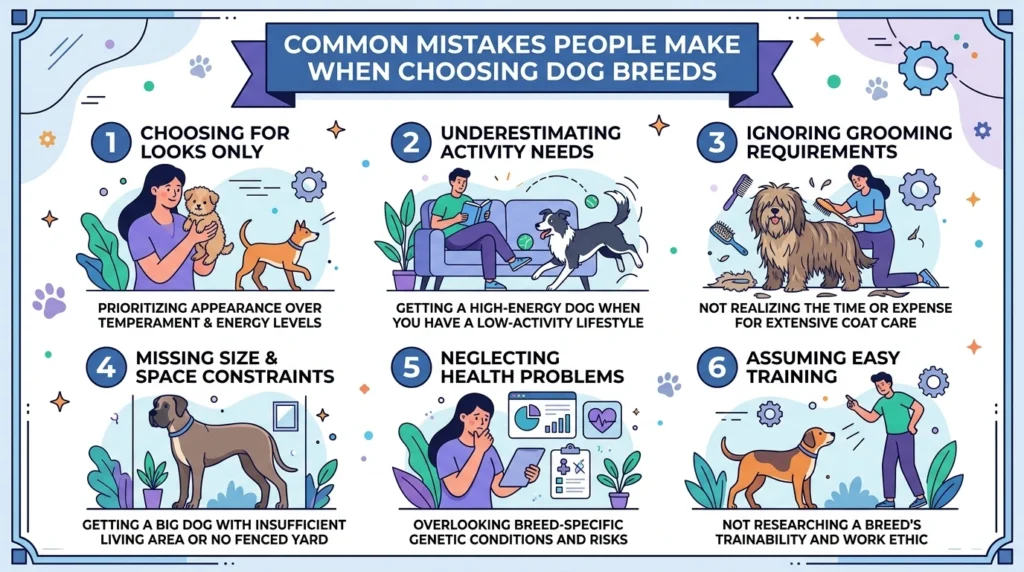
Even well-intentioned owners make these errors. However, knowing them in advance helps you avoid expensive and heartbreaking mistakes.
Choosing Based on Appearance Alone
A Siberian Husky is undeniably beautiful. However, they need up to two hours of vigorous exercise every single day. Without it, they become destructive and unhappy. Many Huskies end up in shelters because owners fell in love with the look but couldn’t handle the reality.
Underestimating Energy Requirements
High-energy breeds like Border Collies, Vizslas, and Dalmatians need more than a daily walk. They need running, mental challenges, and active play sessions. Therefore, these breeds aren’t suitable for owners with limited time or mobility.
Ignoring Breed-Specific Health Costs
Some breeds carry significant health expenses. For example, Bulldogs frequently need surgery for breathing issues. Dachshunds are prone to back problems. Great Danes have shorter lifespans and higher vet bills. As a result, always research the lifetime health costs of any breed before committing.
Buying From Irresponsible Breeders
Puppy mills and backyard breeders prioritize profit over animal welfare. Dogs from these sources often have serious health and behavioral problems. Instead, always buy from a reputable breeder registered with the AKC, or better yet adopt from a rescue organization.
The first 12 weeks of a puppy’s life are critical for socialization. Missing this window leads to fearful, anxious, or aggressive behavior later. Therefore, expose your puppy to different people, sounds, and environments as early as possible.
Frequently Asked Questions About Dog Breeds
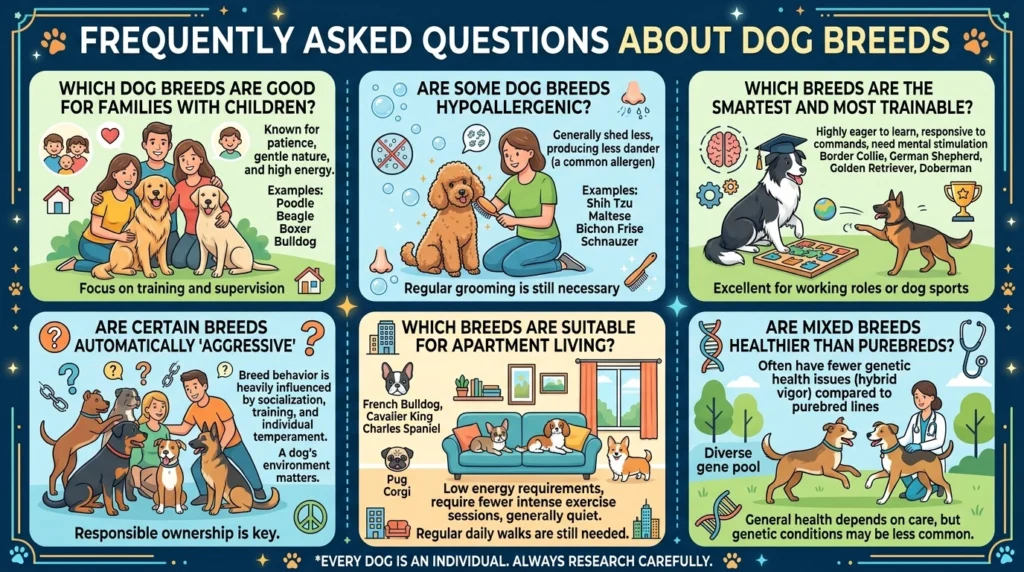
1. Which dog breed is the easiest to train?
Border Collies, Golden Retrievers, and Poodles consistently rank as the easiest breeds to train. They’re highly intelligent and eager to please their owners. However, intelligence also means they get bored quickly so keep training sessions short, fun, and varied for best results.
2. What is the best dog breed for people with allergies?
Hypoallergenic breeds are the best choice for allergy sufferers. Poodles, Bichon Frises, Portuguese Water Dogs, and Maltese dogs shed very little and produce less dander. However, no breed is completely allergy-free. Spending time with the specific dog before adopting is always the smartest approach.
3. Which dog breeds are best for seniors or older adults?
Cavalier King Charles Spaniels, Shih Tzus, Pugs, and Bichon Frises are wonderful companions for seniors. They’re gentle, low-energy, and genuinely love spending time quietly with their owners. In addition, smaller breeds are easier to handle physically and typically have lower exercise requirements.
4. Are mixed-breed dogs healthier than purebred dogs?
Mixed-breed dogs often benefit from what’s called “hybrid vigor” meaning they may have fewer inherited genetic health problems. However, purebred dogs from responsible breeders with health-tested parents are also very healthy. Therefore, the quality of breeding matters more than whether a dog is purebred or mixed.
5. How do I know if a dog breed is right for my home?
The best approach is honest self-assessment. Consider your living space, daily activity level, household members, budget, and time availability. Then research breeds that match those factors specifically. Also, spending time with adult dogs of that breed gives you the clearest real-world picture of what daily life will look like.
6. What is the most low-maintenance dog breed?
Basset Hounds, Bulldogs, and Greyhounds are among the most low-maintenance breeds available. They’re calm, relatively quiet, and don’t require intense daily exercise. However, every dog still needs basic grooming, regular vet visits, and daily social interaction to stay healthy and happy.
7. Can large dog breeds live in apartments?
Some large breeds actually adapt well to apartment living. Greyhounds, for example, are calm indoors despite their athletic build. Great Danes are surprisingly lazy indoors too. However, they still need daily outdoor walks. Therefore, access to parks or walking areas matters more than apartment size for these breeds.
The Right Dog Breed Changes Everything
Choosing the right dog breed is one of the most rewarding decisions you’ll ever make. When the match is right, your dog becomes a best friend, a loyal companion, and a genuine source of daily joy.
However, a mismatched breed creates stress for both you and the dog. Therefore, take the time to research properly, be honest about your lifestyle, and prioritize the dog’s needs alongside your own.
Start with your lifestyle. Then narrow down to breed groups. Finally, meet real dogs before making your final decision. Follow this process and you’ll find a companion that fits your life perfectly.