
Introduction
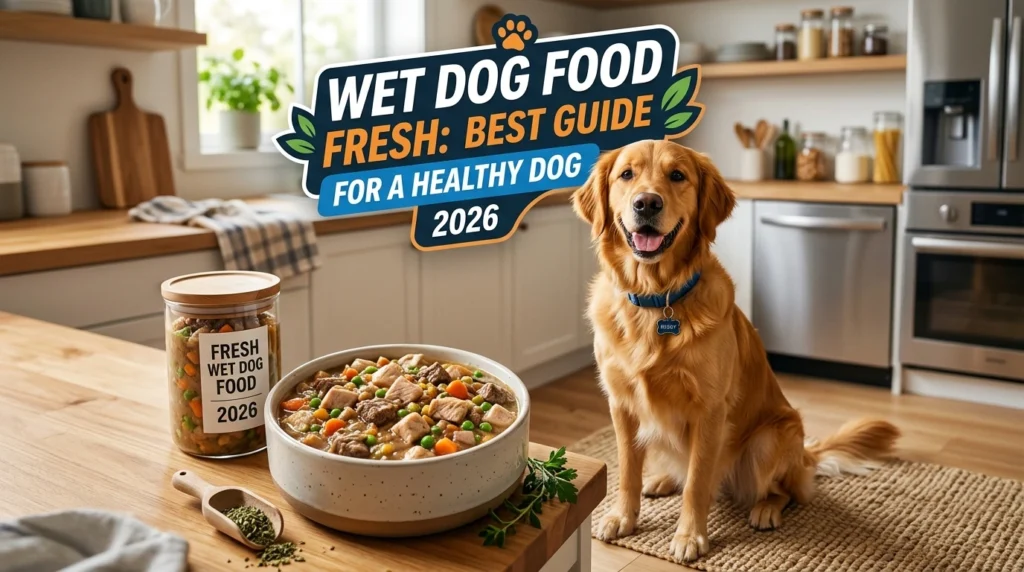
Your dog deserves the best meal every single day. But are you sure the food in their bowl is truly fresh and nutritious? Wet dog food fresh options are becoming incredibly popular and for very good reason.
Many dog owners are switching from dry kibble to fresh wet food. They’re noticing real differences fast. Shinier coats, better digestion, and dogs who actually get excited about mealtime again.
However, with so many products on the market, choosing the right one feels overwhelming. Some brands look amazing on the outside but don’t deliver real nutrition inside.
Don’t worry this guide covers everything you need. You’ll learn what fresh wet dog food really is, why it benefits your dog, and which options are genuinely worth your money. In addition, you’ll get practical tips, common mistakes to avoid, and honest answers to the questions most owners ask. Let’s get started.
What Is Wet Dog Food Fresh and Why Does It Matter?
Fresh wet dog food is made from real, whole ingredients. Think actual chicken, beef, salmon, vegetables, and healthy fats not mystery fillers or artificial preservatives.
Unlike standard dry kibble, fresh wet food contains 75–85% moisture. That high water content makes a real difference for your dog’s health. It supports hydration, improves digestion, and makes the food far more palatable.
The Difference Between Regular Wet Food and Fresh Wet Food
Not all wet food is equal. Therefore, understanding the difference helps you choose wisely.
- Standard canned wet food cooked at high temperatures, often contains by-products and fillers
- Fresh wet dog food gently cooked or raw, made from whole named ingredients, no artificial additives
- Freeze-dried or dehydrated fresh minimally processed, retains nutrients well, rehydrated before serving
Fresh wet dog food goes through less processing. As a result, more natural nutrients stay intact. Your dog gets better quality protein, healthy fats, and real vitamins not synthetic sprays added back after processing.
Why Moisture Content Matters So Much
Dogs don’t naturally drink enough water. In fact, many dogs on dry-only diets are mildly dehydrated without their owners realizing it.
Fresh wet food naturally boosts hydration through every meal. This is especially important for:
- Senior dogs who drink less water as they age
- Dogs with urinary tract issues (always consult your vet)
- Small breeds who are notoriously poor water drinkers
- Dogs in hot climates with higher hydration needs
Benefits of Feeding Your Dog Fresh Wet Food
Switching to fresh wet dog food brings some genuinely impressive changes. However, results vary based on your dog’s current diet and health.
Better Digestion and Gut Health
Fresh wet food is easier for dogs to digest. Because the ingredients are whole and minimally processed, your dog’s gut doesn’t have to work as hard. Many owners report firmer stools and less gas within just two to three weeks of switching.
Healthier Coat and Skin
Fresh wet dog food typically contains higher levels of omega-3 and omega-6 fatty acids. These healthy fats directly support skin barrier function and coat shine. In my experience, dogs on fresh wet food often develop noticeably glossier coats within six to eight weeks.
Great for Picky Eaters
Does your dog sniff the bowl and walk away? Fresh wet food almost always solves that problem. The strong natural aroma and soft texture are irresistible to most dogs, even the pickiest ones.
Supports Senior Dogs Specifically
Older dogs often lose interest in food. Also, their teeth and gums may make crunching kibble uncomfortable. Fresh wet food is soft, aromatic, and nutrient-dense making it an excellent choice for aging dogs who need encouragement to eat well.
Pro Tip: Warm fresh wet food for 10–15 seconds in the microwave before serving. The enhanced smell dramatically increases palatability especially for picky eaters and senior dogs.
How to Choose the Best Fresh Wet Dog Food: Step-by-Step
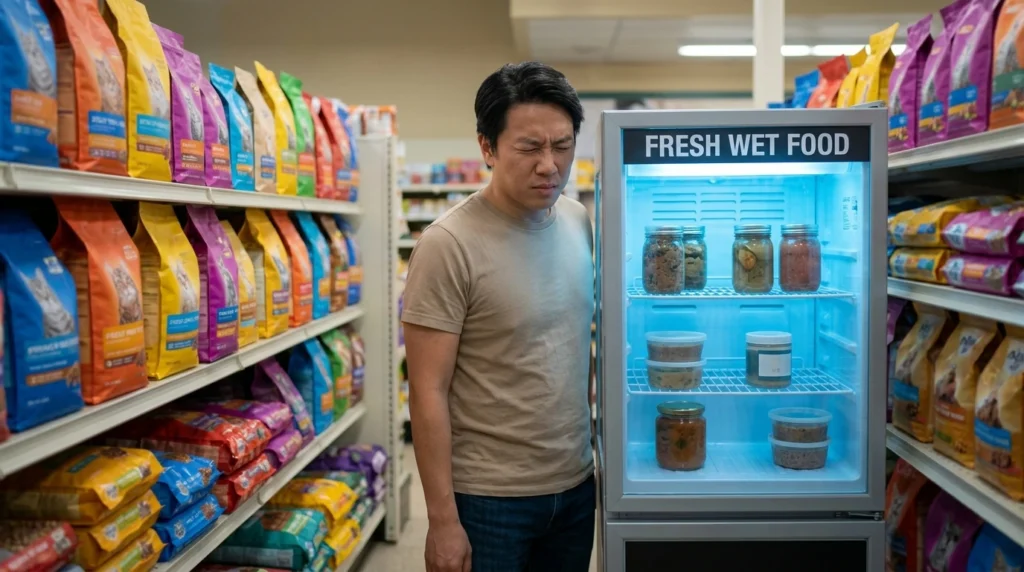
Picking the right fresh wet dog food doesn’t have to be complicated. Follow these steps and you’ll find the right option quickly.
Step 1 Read the Ingredient List First
Always flip the package and read the ingredients before anything else. The first ingredient should be a named animal protein chicken, beef, turkey, or salmon. If you see “meat by-products” or “animal digest” listed first, put it back.
Step 2 Check the AAFCO Statement
Look for the AAFCO nutritional adequacy statement on the label. It should say “complete and balanced.” Even better, look for “based on feeding trials” that means real dogs tested this food, not just a lab formula on paper.
Step 3 Look for Minimal Ingredients
The best fresh wet dog food has a short, clean ingredient list. You should recognize every item listed. Whole vegetables, named meats, healthy oils are what you want to see.
Step 4 Avoid These Red Flag Ingredients
- Artificial colors (Red 40, Yellow 5)
- BHA, BHT, or ethoxyquin (synthetic preservatives)
- Corn syrup or added sugars
- Unnamed “animal fat” or “poultry by-products”
Step 5 Match the Formula to Your Dog’s Life Stage
Fresh wet food formulas differ for puppies, adults, and senior dogs. Therefore, always choose the formula designed for your dog’s specific life stage. Puppies need more DHA and calories. Senior dogs often need fewer calories and more joint support.
Step 6 Introduce Gradually Over 7–10 Days
Never switch food abruptly. Start with 25% new food mixed with 75% current food. Then gradually shift the ratio over the following week. This prevents digestive upset and helps your dog adjust comfortably.
Step 7 Store It Properly
Fresh wet food spoils quickly. Refrigerate opened portions immediately and use them within 2–3 days. Never leave fresh wet food sitting in a bowl for more than two hours at room temperature.
[Best Dog Food Pedigree: Complete Honest Guide 2026]
Top Fresh Wet Dog Food Options Compared
Here’s an honest comparison of the most popular fresh wet dog food options available in 2026:
| Brand | Food Type | First Ingredient | Artificial Additives | Price Range | Best For |
| The Farmer’s Dog | Gently cooked fresh | Real beef/turkey/chicken | None | $$$ | Overall best fresh option |
| Nom Nom (Purina) | Gently cooked fresh | Chicken/beef/pork | None | $$$ | Subscription convenience |
| Ollie | Gently cooked fresh | Chicken/beef/lamb | None | $$$ | Picky eaters |
| Just Food For Dogs | Gently cooked/raw | Chicken/beef/fish | None | $$$ | Retail + subscription |
| Purina Pro Plan Wet | Canned wet food | Real chicken/salmon | None | $$ | Budget-friendly quality |
| Hill’s Science Diet Wet | Canned wet food | Chicken/fish | None | $$ | Vet-recommended option |
| Pedigree Wet Food | Canned wet food | Meat by-products | Some formulas | $ | Budget basic option |
My Top 3 Honest Picks
Best Overall Fresh Wet Dog Food The Farmer’s Dog Real human-grade ingredients. Pre-portioned meals delivered to your door. No fillers, no by-products, no artificial anything. Dogs absolutely love it, and the results in coats and digestion are genuinely impressive.
Best Budget-Friendly Option Purina Pro Plan Wet Not a subscription fresh brand but a high-quality canned wet food with real named protein, no artificial additives, and feeding-trial-validated AAFCO compliance. Outstanding daily value.
Best for Picky Eaters Ollie Gently cooked fresh food with exceptional palatability. If your dog refuses everything else, Ollie’s strong natural aroma and soft texture usually wins them over.
Common Mistakes to Avoid With Fresh Wet Dog Food
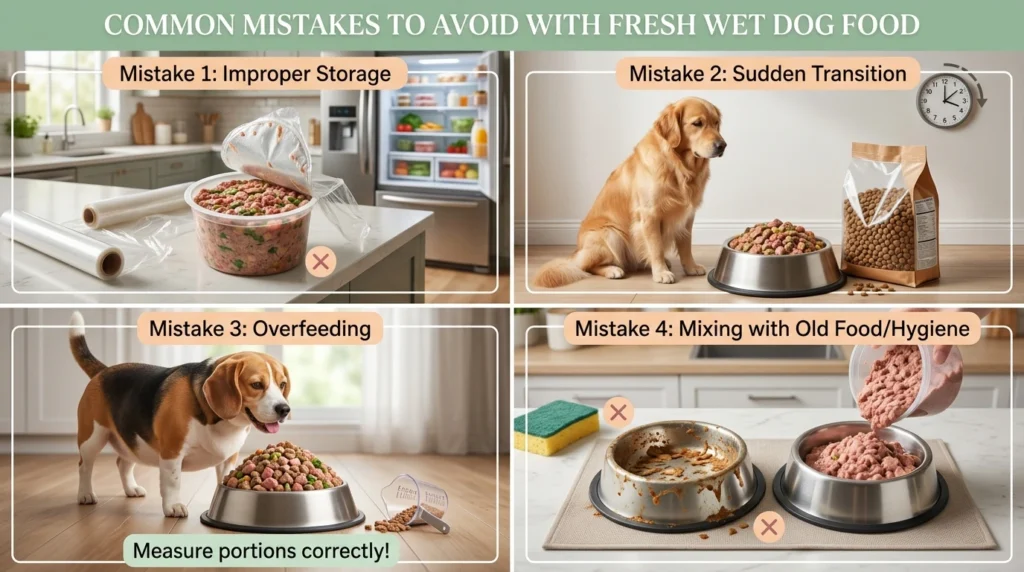
Even experienced dog owners make these errors. Knowing them upfront saves you time, money, and stress.
Leaving Wet Food Out Too Long
Fresh wet food left at room temperature for more than two hours grows bacteria rapidly. Always remove uneaten portions quickly. Wash the bowl after every wet food meal too.
Overfeeding Because It Looks Healthy
Fresh wet food is nutrient-dense. However, it still contains calories that add up quickly. Always follow portion guidelines based on your dog’s weight. When mixing wet and dry food, reduce both portions proportionally to avoid unintentional weight gain.
Skipping the Gradual Transition
Jumping straight to 100% fresh wet food causes digestive upset in most dogs. Even when switching between two quality fresh brands, always transition over seven to ten days. Your dog’s gut microbiome needs time to adjust properly.
Buying “Natural” Without Reading the Label
The word “natural” on pet food packaging is largely unregulated. Therefore, it means very little without reading the actual ingredient list. Always check what’s inside the package rather than trusting front-of-bag marketing language.
Feeding Adult Wet Food to Puppies
Adult fresh wet food formulas don’t contain the DHA levels, calorie density, or calcium ratios that growing puppies need. Always use a puppy-specific fresh wet food formula during the growth phase. Consult your vet if you’re unsure when to transition.
Frequently Asked Questions About Wet Dog Food Fresh
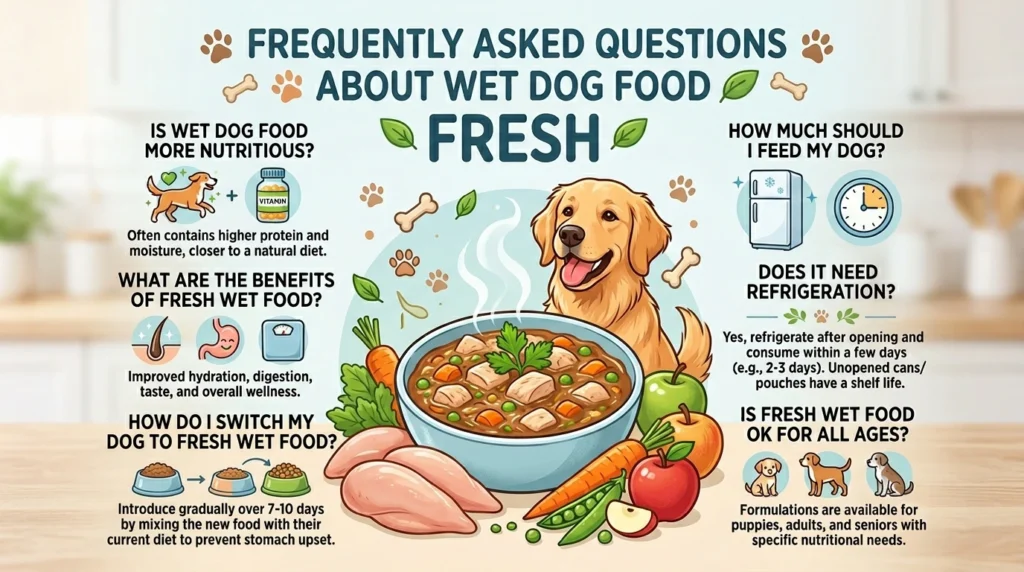
1. Is fresh wet dog food better than dry kibble?
For many dogs, yes. Fresh wet dog food offers higher moisture content, better digestibility, and real whole-food ingredients that dry kibble often can’t match. However, high-quality kibble like Purina Pro Plan still provides excellent nutrition for healthy dogs. Fresh wet food tends to show the biggest benefits in dogs with digestive issues, dull coats, low energy, or picky appetites. Always consult your vet before making a full dietary switch, especially if your dog has health conditions.
2. How long does fresh wet dog food last once opened?
Open fresh wet dog food lasts 2–3 days in the refrigerator when stored in a sealed container. Never store it in the open. You can transfer it immediately after opening. If you’re using a subscription fresh food service like The Farmer’s Dog or Ollie, follow their specific storage instructions. Unopened portions can typically be frozen for up to three months. When in doubt about freshness, trusting your nose off smells means it’s time to discard.
3. Can I mix fresh wet food with dry kibble?
Absolutely and many vets actually support this hybrid approach. Mixing fresh wet food into dry kibble improves palatability, adds moisture, and boosts real-food nutrition without the full cost of an all-fresh diet. The key is adjusting total portions. Adding a fresh wet food topper means reducing your dog’s dry food portion by the equivalent caloric amount to prevent overfeeding and gradual weight gain.
4. Is fresh wet dog food worth the higher cost?
For many dog owners, yes. The daily cost of a fresh food subscription like The Farmer’s Dog runs $3–$8 per day depending on your dog’s size. That’s more than standard kibble, but the ingredient quality, digestibility, and real-world health outcomes often justify the investment. Budget-conscious owners can get many fresh food benefits by using premium canned wet food like Purina Pro Plan or Hill’s Science Diet as a daily kibble topper, rather than committing to a full fresh food subscription.
5. What fresh wet dog food is best for dogs with sensitive stomachs?
Purina Pro Plan Sensitive Skin & Stomach wet food (Salmon formula) is an excellent choice for dogs with digestive sensitivity. The salmon protein reduces sensitivity likelihood, and the formula is specifically designed for gentle digestion. Among fresh food subscriptions, The Farmer’s Dog Turkey Recipe is often recommended for sensitive dogs because of its limited, simple ingredients. Always work with your vet to rule out underlying medical causes before attributing digestive issues to food alone.
6. Can puppies eat fresh wet dog food?
Yes but only formulas specifically designed for puppies. Puppy-formulated fresh wet food contains the right levels of DHA for brain development, appropriate calorie density for growth, and calcium-to-phosphorus ratios that support healthy bone development. Never feed an adult fresh wet food formula to puppies as their primary diet long-term. Some fresh food subscription brands offer puppy-specific recipes to confirm the formula is appropriate for your puppy’s age and expected adult weight with your vet.
7. How do I know if fresh wet dog food is working for my dog?
Look for these positive changes over six to twelve weeks: firm and consistent stools in appropriate volume, a noticeably shinier and healthier coat, stable and healthy body weight, good energy levels appropriate for your dog’s age, and genuine enthusiasm at mealtimes. Negative signs, persistent loose stools, vomiting, dull coat, lethargy, or weight changes warrant a vet consultation rather than another food switch on your own.
Fresh Food, Happy Dog Every Single Day
Switching to wet dog food fresh options is one of the most impactful changes you can make for your dog’s daily nutrition and long-term health.
Real ingredients, higher moisture, better digestibility, and genuine mealtime excitement are the results dog owners see again and again when they make the switch thoughtfully.
Start with a topper approach if budget is a concern. Try a fresh food subscription trial for one month. Add a quality canned wet food to the existing kibble as a daily boost. Every step toward fresher, more whole-food nutrition moves your dog in the right direction.
Always transition gradually. Always store fresh food properly. And always loop in your vet when making significant dietary changes for your specific dog.