
Introduction
If you’ve ever watched a police dog movie or a military K9 video online, chances are you’ve already seen a Malinois dog in action even if you didn’t know the breed’s name. These dogs are absolutely breathtaking. Fast, focused, fearless, and fiercely loyal.
But here’s what most people don’t realize: the Belgian Malinois is not your average family pet. This breed demands experienced handling, serious daily exercise, and consistent mental stimulation. Without these things, a Malinois becomes frustrated and a frustrated Malinois is genuinely a handful.
In my experience, people fall in love with this breed’s appearance and then underestimate what ownership actually involves. That’s why this guide exists. Whether you’re seriously considering adding a Malinois dog to your life, or simply want to understand this remarkable breed better, you’re in exactly the right place.
By the end of this guide, you’ll know everything about temperament, training, exercise needs, health, and whether this incredible breed truly matches your lifestyle. Let’s get into it.
What Is the Malinois Dog? Breed Overview and History
Origins of the Belgian Malinois
The Malinois dog originates from Belgium specifically from the city of Malinois (Mechelen in Dutch), which gives the breed its name. Belgian shepherds were developed in the late 1800s as versatile working dogs. However, the Malinois quickly became the most popular of the four Belgian shepherd varieties due to its extraordinary drive and athleticism.
Today, the Belgian Malinois serves in military and police forces worldwide. The US Navy SEALs famously used a Malinois named Cairo during the 2011 raid that killed Osama bin Laden. As a result, this breed gained enormous public attention virtually overnight.
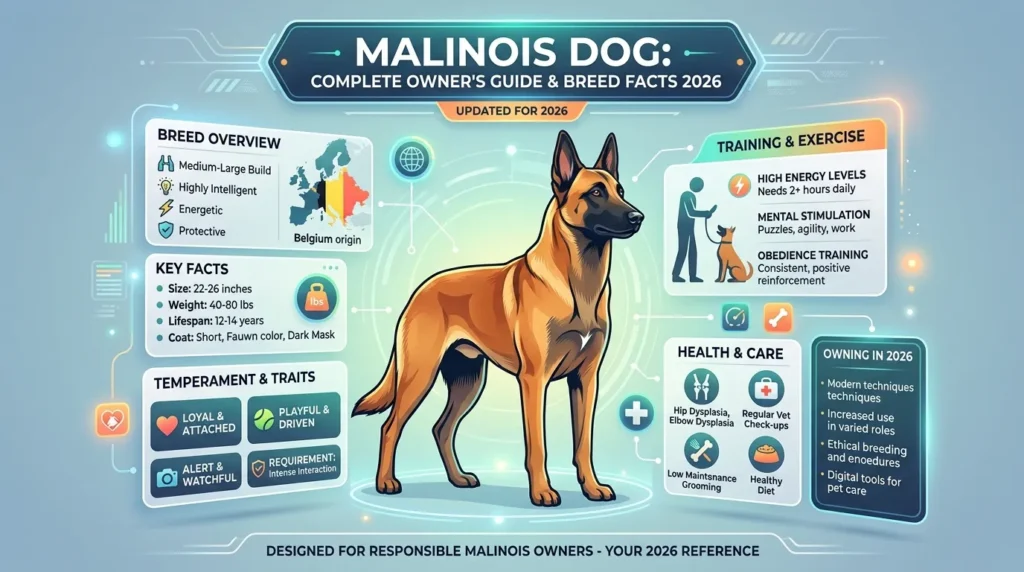
Key Breed Facts at a Glance
Here’s a quick overview of the Malinois dog:
- Official name: Belgian Malinois
- Breed group: Herding Group (AKC)
- Size: Medium to large 40 to 80 pounds
- Height: 22 to 26 inches at the shoulder
- Lifespan: 14 to 16 years
- Coat: Short, dense, fawn to mahogany with black mask
- Energy level: Extremely high
- Trainability: Exceptionally high
- Best for: Experienced, active dog owners
How the Malinois Compares to the German Shepherd
People frequently confuse the Malinois with the German Shepherd. However, they’re distinctly different breeds. Here’s a quick comparison:
| Feature | Belgian Malinois | German Shepherd |
| Build | Leaner, lighter | Heavier, broader |
| Energy Level | Extremely high | High |
| Trainability | Extremely high | Very high |
| Family Suitability | Experienced owners | More family-friendly |
| Working Use | Military, police, sport | Police, service, family |
| Grooming | Low maintenance | Moderate more shedding |
| Weight | 40–80 lbs | 50–90 lbs |
Malinois Dog Temperament: What to Really Expect
The Truth About This Breed’s Personality
The Malinois dog is intensely loyal, deeply intelligent, and extraordinarily driven. These qualities make them exceptional working dogs. However, those same qualities make them challenging pets for unprepared owners.
A Malinois bonds strongly with their primary handler. They’re alert, watchful, and naturally protective of their family. In addition, they have a high prey drive which means cats, small dogs, and running children can trigger their instinct to chase.
Personality Traits You’ll Experience Daily
Here’s what living with a Malinois actually feels like:
- Constant activity a Malinois rarely settles during waking hours without a job
- Intense focus they watch everything and everyone in their environment
- Deep loyalty they attach strongly to their primary person
- High sensitivity they pick up on your mood and energy immediately
- Strong opinions they’re not passive dogs who simply follow instructions
- Incredible work ethic they genuinely love having tasks to complete
Is the Malinois Dog Right for Your Family?
Honestly? A Malinois dog suits a specific type of owner. Therefore, consider these questions before deciding:
- Do you have 2+ hours daily for vigorous exercise?
- Do you have experience training high-drive dogs?
- Can you commit to ongoing training throughout the dog’s life?
- Do you have a securely fenced yard?
- Are you prepared for a dog that’s essentially always “on”?
If you answered yes to all five, a Malinois might be your perfect match. However, if even one answer is no, consider a less demanding breed first.
Pro Tip: Before committing to a Malinois dog, spend time volunteering at a Belgian Malinois rescue or shadowing a trainer who works with this breed. In my experience, hands-on time with the breed before ownership prevents enormous frustration for both you and the dog.
How to Train a Malinois Dog: Step-by-Step Guide
Why Training Is Non-Negotiable
A Malinois without proper training isn’t just difficult, it can become genuinely problematic. Because this breed is so intelligent and driven, they channel their energy somewhere. Without direction, they’ll channel it into destructive behaviors, excessive barking, or anxiety.
Therefore, training starts on day one not week three.
Step-by-Step Malinois Training Approach
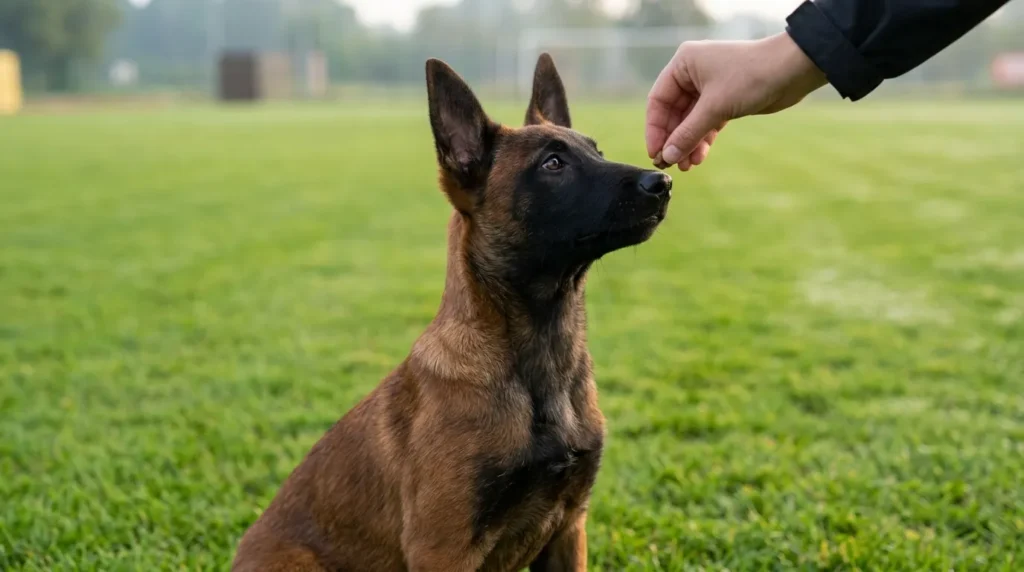
- Start with basic obedience immediately. Sit, stay, come, down, and leave it are your foundation. Because Malinois are fast learners, they’ll master these quickly. However, they also get bored quickly so keep sessions short (10–15 minutes) and varied.
- Use positive reinforcement exclusively. Harsh corrections damage trust with sensitive, intelligent dogs like the Malinois. Therefore, use high-value treats, play rewards, and enthusiastic praise. This breed responds magnificently to reward-based training.
- Socialize extensively from puppyhood. Expose your Malinois to different people, environments, sounds, and animals early. As a result, you build a confident, stable adult dog rather than an anxious or reactive one.
- Add mental stimulation daily. Obedience training alone isn’t enough. Also include puzzle toys, scent work, agility, or trick training. A mentally tired Malinois is a calmer, happier Malinois.
- Consider sport training. Malinois dogs excel in protection sports like Schutzhund (IPO/IGP), agility, and tracking. These activities give them a legitimate outlet for their extraordinary drive. Therefore, connecting with a local dog sport club is one of the best investments you can make.
- Establish consistent rules from day one. A Malinois will test boundaries regularly. Therefore, consistency across all family members is absolutely essential. Mixed signals create confused, anxious dogs.
- Work with a professional trainer. For first-time Malinois owners especially, working with an experienced trainer familiar with high-drive breeds makes a significant difference. Therefore, the budget for professional guidance it’s genuinely worth every penny.
Malinois Dog Care: Exercise, Grooming, and Health
Exercise Requirements This Is Serious
The Malinois dog needs a minimum of 2 hours of vigorous exercise daily. Not walks. Vigorous activity running, fetch, agility, swimming, or sport training. Therefore, this isn’t a breed for occasional joggers or people with busy schedules that limit outdoor time.
Under-exercised Malinois dogs develop:
- Destructive chewing and digging
- Excessive barking and vocalization
- Anxiety and obsessive behaviors
- Redirected aggression toward household items
- Difficulty settling or sleeping
Exercise Ideas That Actually Work
Here are activities that genuinely satisfy a Malinois dog’s energy needs:
- Fetch with a ball launcher covers serious ground quickly
- Agility training combines physical and mental exercise perfectly
- Off-leash running in a secure area allows full-speed sprints
- Bikejoring dog runs alongside you while you cycle
- Swimming excellent low-impact high-intensity exercise
- Scent tracking games mentally exhausting in the best way
Grooming Surprisingly Simple
Despite their impressive appearance, Malinois dogs are actually low-maintenance groomers. Their short, dense coat needs:
- Weekly brushing reduces shedding and keeps the coat healthy
- Bathing every 6–8 weeks or when genuinely dirty
- Regular nail trimming every 3–4 weeks for active dogs
- Ear cleaning check weekly for debris or signs of infection
- Dental care brush teeth 2–3 times weekly or use dental chews
Health Considerations
The Malinois dog is generally a healthy, robust breed. However, like all breeds, they carry some genetic health risks. Common conditions to discuss with your vet include:
- Hip dysplasia especially in lines bred for extreme athleticism
- Elbow dysplasia joint issues that affect mobility
- Progressive retinal atrophy (PRA) an inherited eye condition
- Epilepsy occurs in some lines; consult your vet if you notice seizures
- Thyroid issues relatively uncommon but worth monitoring
Always consult your veterinarian about breed-specific health screenings. Also, choose a reputable breeder who health-tests their breeding dogs for these conditions before producing puppies.
Pro Tip: A raw or high-protein diet works exceptionally well for many Malinois dogs given their extreme activity levels. However, always consult your vet before making significant dietary changes especially for puppies whose nutritional needs differ from adult dogs.
Common Mistakes Malinois Dog Owners Make
Mistake 1: Underestimating Exercise Needs
This is the most common and most damaging mistake. New Malinois owners frequently assume one good walk meets the breed’s needs. It doesn’t. Therefore, be brutally honest about your available exercise time before committing to this breed.
A poorly socialized Malinois becomes reactive, anxious, or even aggressive toward unfamiliar people or animals. Because this breed is naturally alert and protective, early socialization isn’t optional, it’s critical. Therefore, expose your puppy to everything possible in the first 16 weeks of life.
Mistake 3: Using Punishment-Based Training
Harsh corrections, choke chains, or punishment-based methods backfire badly with intelligent, sensitive dogs like the Malinois. As a result, you damage trust and create anxiety without improving behavior. Therefore, stick to consistent, positive reinforcement-based methods throughout the dog’s life.
Mistake 4: Treating Them Like an Off-Switch Dog
Some owners want a dog that’s active during play sessions but completely calm otherwise. A Malinois doesn’t work that way. They stay mentally “on” most of the time. Therefore, owners who want a relaxed couch companion should honestly consider a different breed.
Mistake 5: Not Providing a Job or Purpose
A Malinois dog without a purpose is a frustrated dog. Whether it’s agility, protection sports, search and rescue work, or advanced obedience competition this breed needs a job. In my experience, Malinois owners who engage their dogs in sport training report dramatically calmer, more content animals at home.
Frequently Asked Questions About the Malinois Dog
1. Is a Belgian Malinois a good family dog?
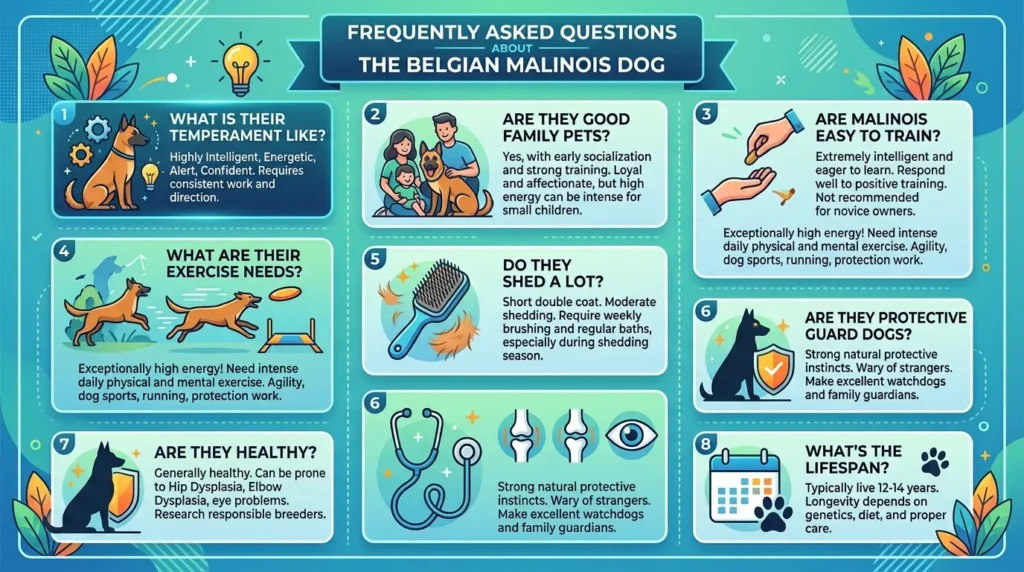
A Malinois dog can work in a family setting but only with experienced owners, older children, and consistent training. Because of their high prey drive and intensity, they’re generally not recommended for families with very young children or first-time dog owners. However, properly trained and socialized Malinois dogs can be devoted, loving family members who bond deeply with every household member. The key is providing adequate exercise, training, and mental stimulation consistently throughout the dog’s life.
2. How much exercise does a Malinois dog need daily?
A Malinois dog needs a minimum of 2 hours of vigorous exercise every single day, not just on weekends. This means running, agility work, fetch, swimming, or sport training not leisurely walks. In addition, they need 30 to 60 minutes of mental stimulation through training, puzzle toys, or scent work. Therefore, this breed genuinely suits only owners with highly active lifestyles and flexible schedules that accommodate serious daily exercise commitment.
3. Are Malinois dogs aggressive?
A well-bred, properly trained, and well-socialized Malinois dog is not inherently aggressive. However, they are naturally protective, alert, and have a strong prey drive. Without proper socialization and training, these traits can develop into reactive or problematic behavior. Therefore, early socialization, consistent obedience training, and working with an experienced trainer are non-negotiable for this breed. Always consult a professional dog trainer if you notice any concerning behaviors in your Malinois.
4. How long do Malinois dogs live?
The Malinois dog enjoys an impressive lifespan of 14 to 16 years longer than many large breeds. Because they’re generally athletic and healthy, they maintain energy and vitality well into their senior years. However, regular veterinary check-ups, appropriate exercise, and a high-quality diet all contribute to longevity. Therefore, committing to a Malinois means planning for potentially 15 or more years of active ownership which is a long and deeply rewarding journey with the right owner.
5. What’s the difference between a Malinois and a German Shepherd?
The Malinois dog is leaner, faster, and typically more intense than the German Shepherd. Both breeds are intelligent and trainable but the Malinois operates at a higher drive level that demands more from their owners. German Shepherds are generally more adaptable to family life with less experienced owners. Also, Malinois shed significantly less than German Shepherds due to their shorter coat. Therefore, if you’re drawn to shepherd-type dogs but want lower grooming commitment and maximum athletic performance, the Malinois is the stronger fit.
6. Can a Malinois dog live in an apartment?
Technically yes but practically speaking, it’s very challenging. A Malinois dog can live in an apartment only if their owner provides 2+ hours of vigorous outdoor exercise daily without exception. However, a house with a securely fenced yard makes daily exercise management significantly easier. Also, apartment Malinois need careful management around neighbors due to their alert, vocal nature. Therefore, apartment living with a Malinois requires extraordinary commitment and is generally not recommended for this breed.
7. How much does a Belgian Malinois puppy cost?
A Belgian Malinois puppy from a reputable breeder who health-tests their dogs typically costs between $1,500 and $3,500 in the United States. However, dogs from titled sport or working lines with proven genetics can cost significantly more, sometimes $5,000 or above. Therefore, be wary of puppies priced well below market value, as reputable breeders invest heavily in health testing, socialization, and quality breeding programs. Adoption from a Malinois rescue organization is also a wonderful option and typically costs $200 to $500.
Is the Malinois Dog Your Perfect Match?
The Malinois dog is one of the most extraordinary breeds in the world. Athletic, intelligent, loyal, and driven they’re genuinely remarkable animals that thrive when given purpose, structure, and an owner who matches their energy.
However, they’re also one of the most demanding breeds you’ll ever encounter. Therefore, honest self-assessment matters more with this breed than almost any other. If you have the time, experience, and commitment this breed deserves, a Malinois will reward you with a bond unlike anything you’ve ever experienced with a dog.
Also, if you’re not quite ready for a Malinois right now, consider starting with a German Shepherd or Australian Shepherd to build your experience with high-drive herding breeds first.