
Introduction
Take a moment and think about the last time you looked closely at your dog’s teeth. If the answer is “never” you’re definitely not alone. Most dog owners focus on food, exercise, and grooming. Dental health, however, often gets completely overlooked.
Here’s the thing: bad dog teeth are far more common than most people realize. In fact, studies show that around 80% of dogs show signs of dental disease by age three. That’s not a minor statistic. Also, poor dental health doesn’t just cause bad breath. It can lead to pain, tooth loss, and even serious organ damage if left untreated.
The good news? Bad dog teeth are largely preventable and even existing problems are very treatable when caught early. In this guide, you’ll learn exactly what causes dental problems in dogs, how to spot the warning signs, and what you can do starting today to protect your dog’s mouth and overall health.
Let’s get into it.
What Causes Bad Dog Teeth? The Full Picture
Understanding Canine Dental Disease
Bad dog teeth don’t happen overnight. They develop gradually, usually starting with plaque buildup, then progressing through several stages if left untreated.
Here’s how the process typically works:
- Plaque forms bacteria in your dog’s mouth mixed with food particles and saliva. As a result, a sticky film called plaque coats the teeth daily.
- Plaque hardens into tartar within 72 hours, plaque hardens into tartar (also called calculus). Tartar bonds tightly to tooth enamel and can’t be removed by brushing alone.
- Gingivitis develops tartar that irritates the gums, causing inflammation. Therefore, gums become red, swollen, and tender.
- Periodontitis sets in if gingivitis goes untreated, infection spreads below the gumline. This stage causes bone and tissue loss around the teeth.
- Tooth loss occurs when advanced periodontitis destroys the supporting structures. As a result, teeth become loose and eventually fall out.
Key Risk Factors for Bad Dog Teeth
Some dogs are more prone to dental problems than others. Therefore, knowing your dog’s risk level helps you take action sooner.
High-risk factors include:
- Small and toy breeds Chihuahuas, Pugs, and Yorkshire Terriers are especially prone to overcrowded teeth and early dental disease
- Brachycephalic breeds flat-faced dogs like Bulldogs and French Bulldogs have misaligned teeth that trap food easily
- Age dental disease progresses with age, so older dogs face higher risk
- Diet soft food diets contribute more to plaque buildup than crunchy kibble
- Genetics some breeds carry a genetic predisposition to weak enamel or misaligned bites
- Lack of dental care dogs who never receive brushing or dental cleanings accumulate disease faster
Warning Signs of Bad Dog Teeth You Should Never Ignore
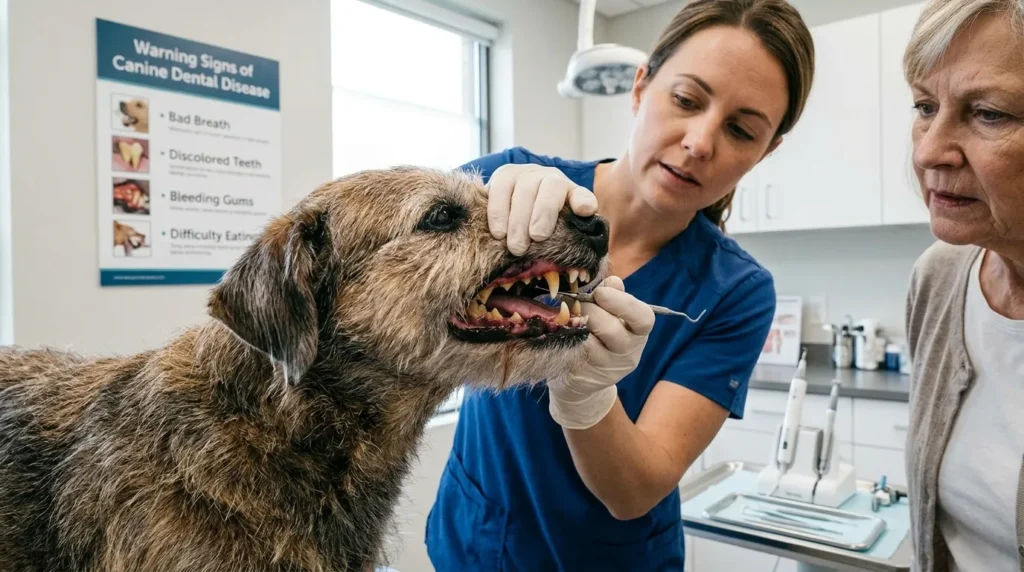
How to Spot Dental Problems Early
Ever wondered how you’d know if your dog’s teeth were causing problems? Dogs can’t tell you their mouth hurts. However, they do show clear signs if you know what to look for.
Watch for these warning signs:
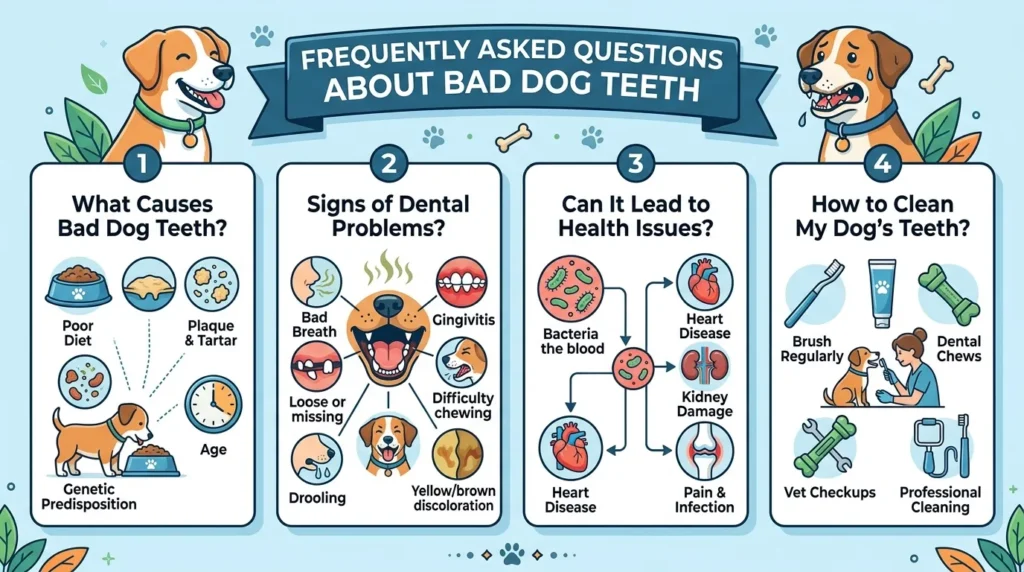
- Persistent bad breath not just “dog breath” but a genuinely foul, rotten smell
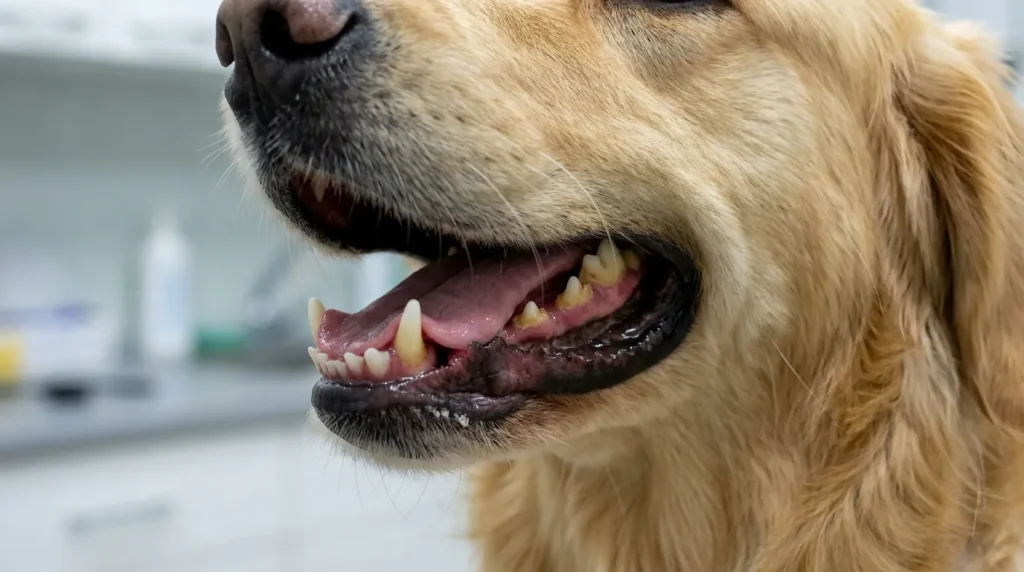
- Yellow or brown buildup on teeth visible tartar coating the tooth surface
- Red, swollen, or bleeding gums early signs of gingivitis
- Pawing at the mouth your dog may paw at their face because of mouth pain
- Reluctance to eat or chew especially hard food or chew toys
- Dropping food while eating pain makes chewing difficult
- Loose or missing teeth a sign of advanced periodontal disease
- Swelling around the mouth or jaw may indicate abscess or infection
- Excessive drooling especially if accompanied by other dental symptoms
- Behavioral changes irritability or withdrawal can result from chronic pain
When to See Your Vet Immediately
Some symptoms require urgent veterinary attention. Therefore, don’t wait for the next scheduled appointment if you notice:
- Severe facial swelling
- Visible tooth abscess or pus
- Complete refusal to eat for more than 24 hours
- Extreme pawing at the mouth with visible distress
Always consult your vet as soon as you notice any of these serious warning signs. Bad dog teeth can escalate quickly and dental infections can spread to vital organs including the heart, kidneys, and liver.
How to Treat and Prevent Bad Dog Teeth: Step-by-Step Guide
Your Complete Home Dental Care Routine
The best treatment for bad dog teeth is consistent prevention. Therefore, build a simple daily routine using these steps:
- Start with a vet dental check. Before beginning any home care routine, have your vet examine your dog’s teeth. They’ll assess the current condition and recommend whether a professional cleaning is needed first.
- Choose the right toothbrush. Use a soft-bristled dog toothbrush or a finger brush. Human toothbrushes work in a pinch but dog-specific designs reach the mouth more comfortably.
- Always use dog-safe toothpaste. Human toothpaste contains xylitol and fluoride both toxic to dogs. Dog toothpastes come in flavors like chicken, beef, and peanut butter. Most dogs accept these flavors enthusiastically.
- Introduce brushing gradually. First, let your dog lick the toothpaste off your finger. Then gently touch their gums with your finger. Finally, introduce the brush slowly starting with just 30 seconds daily.
- Brush at least 3 times per week. Daily brushing is ideal. However, even three times per week significantly reduces plaque buildup and slows the progression of dental disease.
- Add dental chews and toys. Dental chews like Greenies and Dentastix help mechanically remove plaque. Also, rubber chew toys like Kong products massage the gums while your dog chews.
- Use dental water additives. These products add plaque-fighting enzymes directly to your dog’s water bowl. Therefore, they work passively even on days when brushing isn’t possible.
- Schedule annual professional cleanings. Home care slows disease but professional cleaning under anesthesia removes tartar that brushing can’t touch. Therefore, annual cleanings are essential for maintaining good dental health long-term.
Pro Tip: Start dental care when your dog is a puppy. In my experience, dogs introduced to brushing early accept it as a normal part of life. Adult dogs can also learn to accept brushing but the process takes more patience and consistency. Start slow, stay positive, and use high-value treats as rewards.
Dental Products That Help With Bad Dog Teeth
Comparing the Best Dental Care Options
Not all dental products deliver equal results. Therefore, here’s an honest comparison of the most effective options available:
| Product Type | Effectiveness | Ease of Use | Cost | Best For |
| Toothbrushing | ⭐⭐⭐⭐⭐ | Moderate | Low | Best overall prevention |
| Dental Chews (Greenies) | ⭐⭐⭐⭐ | Very Easy | Moderate | Daily supplement to brushing |
| Water Additives | ⭐⭐⭐ | Very Easy | Low | Passive daily support |
| Dental Sprays | ⭐⭐⭐ | Easy | Moderate | Dogs who resist brushing |
| Raw Bones (vet-approved) | ⭐⭐⭐⭐ | Easy | Variable | Natural mechanical cleaning |
| Dental Wipes | ⭐⭐⭐ | Easy | Moderate | Puppies or sensitive dogs |
| Professional Cleaning | ⭐⭐⭐⭐⭐ | N/A (vet only) | High | Removing established tartar |
What the VOHC Seal Means
Look for products carrying the Veterinary Oral Health Council (VOHC) seal. This seal confirms the product has been scientifically tested and proven to reduce plaque or tartar. Therefore, choosing VOHC-approved products gives you confidence that what you’re buying actually works.
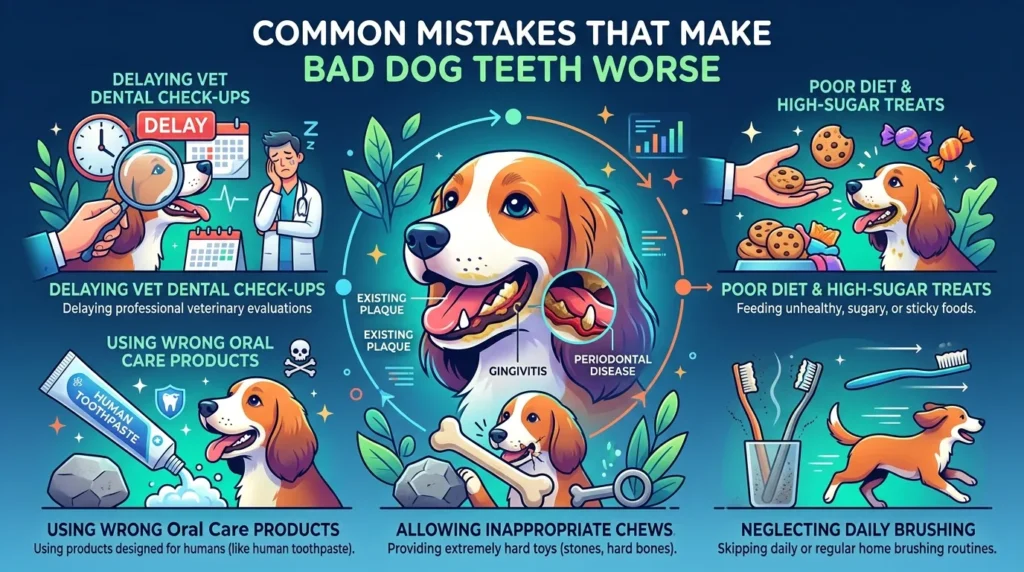
Common Mistakes That Make Bad Dog Teeth Worse
Mistake 1: Waiting for Obvious Pain Signs
Dogs instinctively hide pain. Therefore, by the time your dog shows visible signs of mouth discomfort, dental disease is often already advanced. Don’t wait for your dog to cry or refuse food before acting. Instead, schedule regular dental check-ups even when everything seems fine.
Mistake 2: Using Human Toothpaste
This mistake can be genuinely dangerous. Human toothpaste contains xylitol, an artificial sweetener that’s highly toxic to dogs. Even a small amount can cause serious health complications. Therefore, always use toothpaste specifically formulated and labeled safe for dogs.
Mistake 3: Relying Only on Dental Chews
Dental chews help but they don’t replace brushing. Because chews only contact certain tooth surfaces, they leave other areas vulnerable to plaque buildup. Also, some dogs gulp chews without chewing properly, which eliminates any dental benefit entirely. Therefore, use chews as a supplement not a replacement for brushing.
Mistake 4: Skipping Professional Cleanings
In my experience, many owners avoid professional dental cleanings because they require anesthesia. However, anesthesia-free cleanings only address visible surfaces; they miss the critical area below the gumline where disease actually develops. Therefore, follow your vet’s recommendation for professional cleanings under appropriate anesthesia. It’s genuinely the only way to address deep tartar and periodontal pockets effectively.
Mistake 5: Giving Unsafe Chews
Not all chewing options are safe for teeth. Hard items like real bones, antlers, ice cubes, and hard nylon toys can fracture teeth. As a result, broken teeth create pain and infection risk. Therefore, follow the “thumbnail test” if you can’t indent the item with your thumbnail, it’s too hard for your dog’s teeth.
Pro Tip: Check your dog’s teeth every week during grooming time. Lift their lips and look at the outer surfaces of the back molars that’s where tartar builds fastest and where bad dog teeth problems typically begin. Catching early buildup means simpler treatment and lower vet bills.
Frequently Asked Questions About Bad Dog Teeth
1. How serious are bad dog teeth really?
Bad dog teeth are far more serious than most owners realize. Untreated dental disease causes chronic pain that affects eating, playing, and quality of life. More seriously, oral bacteria from infected gums can enter the bloodstream. As a result, this bacteria travels to the heart, kidneys, and liver causing potentially life-threatening organ damage. Therefore, dental health is a genuine medical priority not just a cosmetic concern. Always consult your vet if you notice any signs of dental disease in your dog.
2. At what age do dogs typically develop bad teeth?
Dental disease can begin surprisingly early. Many dogs show early signs of gingivitis by age two. By age three, studies suggest around 80% of dogs have some degree of dental disease. Small breeds tend to develop problems even earlier because of overcrowded teeth. Therefore, starting dental care in puppyhood ideally before six months gives your dog the strongest possible protection against early dental disease.
3. How much does professional dog dental cleaning cost?
Professional dog dental cleaning costs vary by location, clinic, and the extent of disease present. However, most routine cleanings in the United States range from $300 to $700 when anesthesia and X-rays are included. More advanced cases requiring extractions can cost significantly more. Also, dental insurance or pet health plans sometimes cover a portion of dental cleaning costs. Therefore, ask your vet about payment plans or preventive care packages that include annual dental services.
4. Can bad dog teeth be fixed without going to the vet?
Home care including brushing, dental chews, and water additives can slow the progression of dental disease and maintain healthier teeth. However, existing tartar buildup, gingivitis, and periodontal disease genuinely require professional veterinary treatment. No home remedy removes hardened tartar or treats infection below the gumline effectively. Therefore, while home care is essential for prevention, it doesn’t replace professional dental care for dogs who already have established problems.
5. What breeds are most prone to bad dog teeth?
Small and toy breeds face the highest risk of dental disease. Chihuahuas, Yorkshire Terriers, Dachshunds, Maltese, and Pugs are particularly vulnerable because their small jaws cause teeth to crowd together creating perfect conditions for plaque accumulation. Also, brachycephalic breeds like Bulldogs, French Bulldogs, and Shih Tzus face additional challenges because of their misaligned bites. Therefore, owners of these breeds should prioritize dental care from puppyhood and schedule more frequent professional check-ups.
6. Is bad breath always a sign of dental problems in dogs?
Not always but it’s the most common sign. Mild “dog breath” is normal and usually related to diet. However, a persistently foul, rotten, or unusually strong odor typically indicates bacterial buildup from plaque, tartar, or infection. Also, in some cases, bad breath can signal kidney disease, diabetes, or gastrointestinal problems. Therefore, if your dog’s breath suddenly becomes much worse or smells unusually sweet or chemical-like, consult your vet promptly for a full examination.
7. How can I brush my dog’s teeth if they resist?
Patience and positive reinforcement are your best tools. First, let your dog taste the toothpaste from your finger without any brushing. Then gently touch their gums with your finger for a few days. After that, introduce the brush very briefly just a few teeth at a time. Also, always follow each session with high-value treats and enthusiastic praise. Over two to four weeks, most dogs accept brushing as a normal routine. However, if your dog remains extremely resistant, ask your vet about alternative dental care options like sprays, wipes, or water additives.
Protecting Your Dog’s Smile Starts Today
Bad dog teeth are one of the most common and most preventable health problems affecting dogs worldwide. The progression from plaque to serious periodontal disease happens quietly and gradually. Therefore, waiting for obvious symptoms means waiting too long.
Start with a simple habit: lift your dog’s lips and check their teeth once a week. Add brushing three times per week. Provide VOHC-approved dental chews daily. Also, schedule a professional dental check-up at every annual vet visit.
These simple steps genuinely make an enormous difference. Healthy teeth mean a pain-free mouth, better overall health, and a happier dog who lives longer by your side.