
Introduction
There’s something absolutely magical about very small dogs. they fit in your lap perfectly. They travel easily. They fill an entire room with personality despite weighing less than most house cats. If you’ve ever been charmed by a tiny dog trotting confidently down the street, you already understand the appeal completely.
However, very small dogs come with specific needs that many owners don’t fully understand before bringing one home. Their tiny size affects everything from how much they eat to how carefully you need to handle them around larger animals and young children.
In my experience, owners who research small dog care before committing have dramatically happier outcomes. Therefore, this guide covers everything you need to know the best breeds, essential care tips, common health concerns, training advice, and honest answers to the questions owners ask most.
Whether you’re choosing your first tiny dog or looking after one you already love, this guide gives you practical, trustworthy information every step of the way. Let’s get started.
What Are Very Small Dogs and Why Are They So Popular?
Defining “Very Small” in the Dog World
Very small dogs sometimes called toy breeds or teacup dogs typically weigh between 2 and 12 pounds at full adult size. However, some definitions stretch this category up to 15 pounds. These dogs stand anywhere from 6 to 12 inches tall at the shoulder.
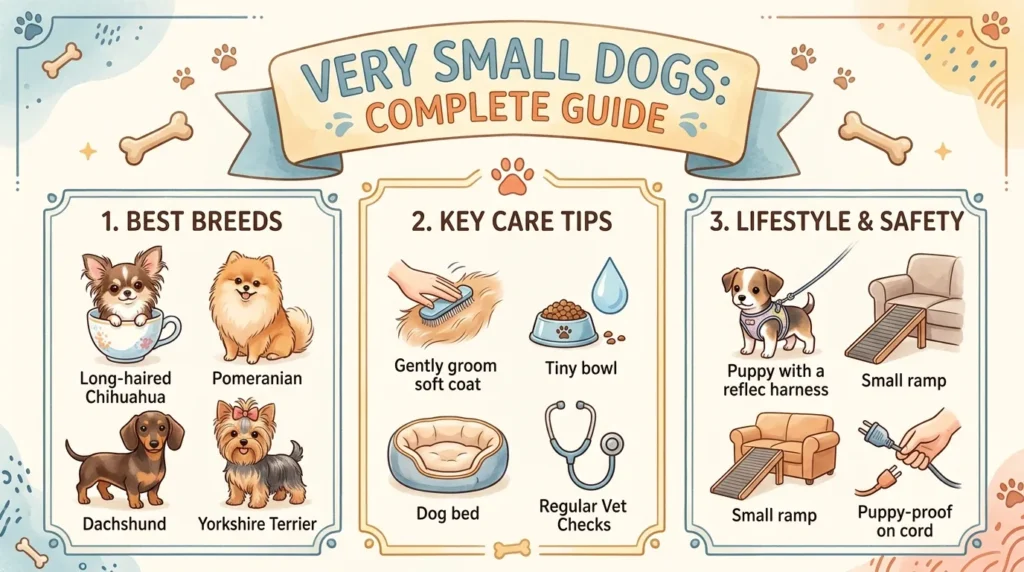
The most recognized very small dog breeds include:
- Chihuahua often under 6 pounds, the world’s smallest breed
- Yorkshire Terrier typically 4 to 7 pounds
- Pomeranian usually 3 to 7 pounds
- Maltese generally under 7 pounds
- Toy Poodle typically 4 to 6 pounds
- Shih Tzu usually 9 to 16 pounds
- Papillon generally 5 to 10 pounds
- Brussels Griffon typically 8 to 10 pounds
- Italian Greyhound usually 7 to 14 pounds
- Affenpinscher generally 7 to 10 pounds
Why Do People Choose Very Small Dogs?
Very small dogs suit modern lifestyles in several important ways. First, they adapt beautifully to apartment living. Also, they cost less to feed than larger breeds. In addition, many airlines allow tiny dogs to travel in-cabin which makes them ideal travel companions.
Here’s why so many people fall in love with very small dogs:
- Space-efficient perfect for apartments and smaller homes
- Lower food costs a tiny dog eats a fraction of what large breeds need
- Long lifespans many small breeds live 14 to 18 years
- Portable easy to take on trips, visits, and errands
- Great for seniors manageable size and lower exercise demands
- Deeply affectionate most toy breeds bond intensely with their owners
How to Care for Very Small Dogs: Step-by-Step Guide

Why Small Dogs Need Specialized Care
Very small dogs aren’t just miniature versions of large dogs. Their bodies work differently. Therefore, their care needs differ significantly from medium and large breed guidelines. Nutrition, exercise, handling, and veterinary care all require a tailored approach.
Complete Care Guide Step by Step
- Feed a breed-appropriate small dog formula. Very small dogs have faster metabolisms than large breeds. Therefore, they need calorie-dense food in small, frequent portions. Choose a dry food specifically formulated for toy or small breeds the kibble size is smaller, and the caloric density is higher. Feed two to three small meals daily rather than one large serving.
- Monitor for hypoglycemia carefully. Low blood sugar is a genuine risk for very small dogs, especially puppies. Because their tiny bodies store less glycogen, they can crash quickly between meals. Watch for signs like shaking, weakness, or confusion. If you notice these symptoms, consult your vet immediately.
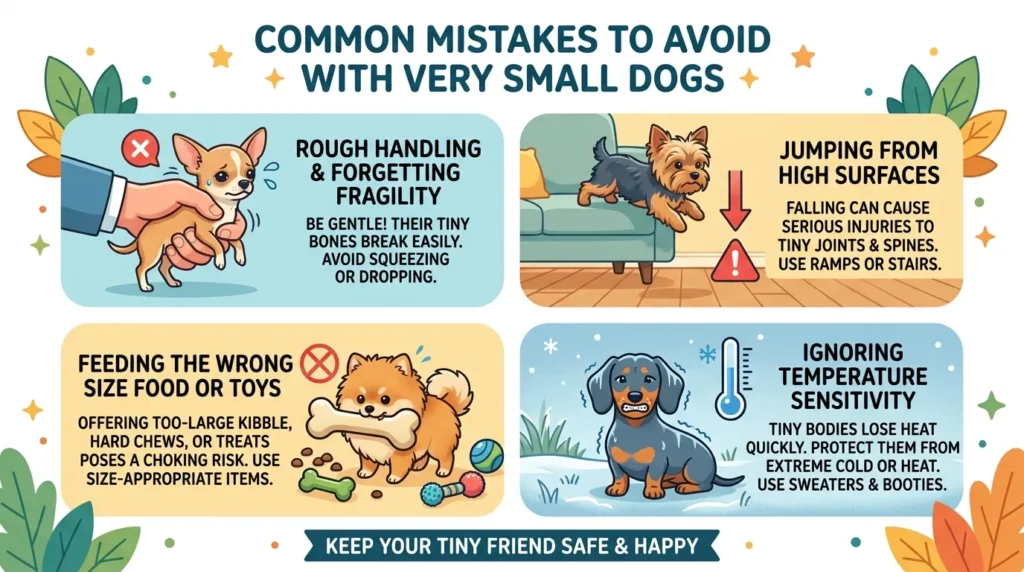
- Handle with care always. Very small dogs have fragile bones. A fall from sofa height can cause serious injury. Therefore, always supervise children around tiny dogs, and teach kids to sit on the floor when holding them. Never allow small dogs to jump from high furniture unsupervised.
- Exercise gently but consistently. Very small dogs still need daily exercise. However, intense activity or long runs aren’t appropriate. Short walks of 15 to 20 minutes twice daily suit most toy breeds perfectly. Also, indoor play sessions count toward their daily activity needs.
- Prioritize dental care from day one. Small dogs are significantly more prone to dental disease than large breeds. Their teeth crowd together in tiny jaws, creating perfect conditions for plaque buildup. Therefore, brush your dog’s teeth daily using dog-specific toothpaste. Also, schedule annual professional dental cleanings with your vet.
- Keep them warm in cold weather. Very small dogs lose body heat quickly because of their size. Therefore, invest in a well-fitted dog coat for cold walks. Also, never leave a tiny dog outside in cold temperatures; their risk of hypothermia is much higher than larger breeds.
- Socialize early and consistently. Small dogs can develop fearfulness or aggression when under-socialized. Therefore, expose your tiny dog to different people, sounds, and environments from puppyhood. Early socialization produces confident, well-adjusted adult dogs regardless of size.
Pro Tip: Feed very small dogs three times daily instead of twice especially during the puppy stage. This keeps blood sugar stable and reduces the risk of hypoglycemic episodes. Once your dog reaches adulthood, ask your vet whether two meals per day is appropriate for their specific breed and weight.
[Small Dog Breeds: Complete Guide to Tiny Dogs 2026]
Top Very Small Dog Breeds: Full Comparison Guide
Finding the Right Tiny Breed for Your Life
Not all very small dogs have the same personality or care needs. Therefore, comparing breeds side by side helps you find the best match for your home and lifestyle.
| Breed | Weight | Energy | Grooming | Kid-Friendly | Lifespan |
| Chihuahua | 2–6 lbs | Moderate | Low | Older kids only | 14–16 yrs |
| Yorkshire Terrier | 4–7 lbs | Moderate | High | Older kids | 13–16 yrs |
| Pomeranian | 3–7 lbs | Moderate-High | High | Older kids | 12–16 yrs |
| Maltese | Under 7 lbs | Moderate | High | Gentle kids | 12–15 yrs |
| Toy Poodle | 4–6 lbs | Moderate | High | All ages | 10–18 yrs |
| Papillon | 5–10 lbs | High | Medium | All ages | 14–16 yrs |
| Shih Tzu | 9–16 lbs | Low-Mod | High | All ages | 10–18 yrs |
| Brussels Griffon | 8–10 lbs | Moderate | Medium | Older kids | 12–15 yrs |
| Italian Greyhound | 7–14 lbs | High | Low | Gentle kids | 14–15 yrs |
| Affenpinscher | 7–10 lbs | Moderate | Medium | Older kids | 12–15 yrs |
Best Very Small Dogs for Different Lifestyles
Choosing by lifestyle matters enormously. Therefore, here’s a quick guide:
- Best for apartment living: Chihuahua, Shih Tzu, Maltese
- Best for active owners: Papillon, Toy Poodle, Italian Greyhound
- Best for seniors: Shih Tzu, Cavalier King Charles Spaniel, Maltese
- Best hypoallergenic options: Toy Poodle, Maltese, Yorkshire Terrier
- Best for first-time owners: Shih Tzu, Toy Poodle, Papillon
- Most trainable: Toy Poodle, Papillon, Yorkshire Terrier
What About “Teacup” Dogs?
You’ve probably seen ads for “teacup” Chihuahuas or “micro” Pomeranians. However, “teacup” isn’t an official breed designation, it’s a marketing term. These dogs are simply very small individuals within an already small breed, often bred from runts.
As a result, teacup dogs frequently face serious health challenges. They’re more prone to heart defects, bone fragility, organ issues, and hypoglycemia than standard-sized toy breeds. Therefore, be very cautious about purchasing so-called teacup dogs, and always consult your vet about specific health risks before committing.
Common Mistakes to Avoid With Very Small Dogs
Mistake 1: Treating Them Like Accessories
Very small dogs are real dogs with real needs not fashion accessories. However, because of their size, many owners carry them constantly and never let them walk or socialize normally. As a result, these dogs develop anxiety, fearfulness, and behavioral problems. Therefore, let your tiny dog walk on their own four legs regularly and interact with the world at their own pace.
Mistake 2: Skipping Training Because They’re Small
“It’s just a tiny dog, what damage can it do?” This mindset leads to serious behavioral issues. Small dogs who bite, bark excessively, or act aggressively are just as problematic as large dogs with the same issues. Therefore, train your very small dog with the same consistency and commitment you’d apply to any size dog. Positive reinforcement works beautifully for toy breeds.
Mistake 3: Overfeeding
Very small dogs need very small portions. However, those pleading eyes are almost impossible to resist. Overfeeding a tiny dog causes obesity quickly and obesity in very small dogs creates serious joint, heart, and breathing problems. Therefore, measure every meal precisely and resist the urge to share too many table scraps.
Mistake 4: Ignoring Dental Health
By age three, the majority of small dogs show signs of dental disease. This leads to pain, tooth loss, and even systemic infections affecting the heart and kidneys. Therefore, daily tooth brushing and regular professional cleanings aren’t optional for very small dogs, they’re essential preventive care. Always consult your vet about a complete dental care plan.
Mistake 5: Assuming Small Means Low Maintenance
Some very small dogs like Pomeranians, Yorkshire Terriers, and Maltese require extensive daily grooming. Their beautiful coats mat quickly without consistent brushing. Also, many toy breeds need regular professional grooming every 6 to 8 weeks. Therefore, factor in grooming time and cost honestly before choosing a high-maintenance tiny breed.
Pro Tip: Use a harness rather than a collar for very small dogs on walks. Collars put pressure on the trachea and small breeds are already prone to collapsed trachea, a painful condition that worsens with collar pressure. A well-fitted harness distributes pressure across the chest instead, protecting your tiny dog’s delicate neck and airway.
Frequently Asked Questions About Very Small Dogs
1. What is the smallest dog breed in the world?
The Chihuahua holds the official title of world’s smallest dog breed. Adult Chihuahuas typically weigh between 2 and 6 pounds, though some individuals weigh even less. The smallest dog ever recorded by Guinness World Records was a Chihuahua named Miracle Milly, who stood just 3.8 inches tall. However, extremely tiny individuals within any breed often face significant health challenges. Therefore, choosing a Chihuahua from a reputable breeder who prioritizes health over extreme miniaturization is essential.
2. Are very small dogs good for families with children?
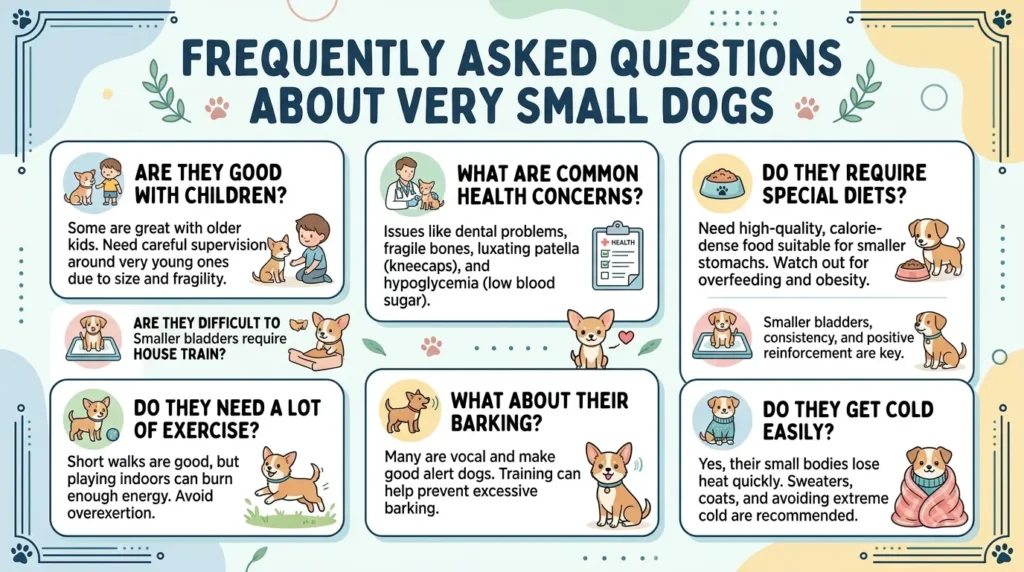
It depends on the children’s age and temperament. Very small dogs can be injured easily by young children who handle them too roughly. Therefore, toy breeds generally suit families with older, calmer children who understand how to interact gently with animals. Breeds like the Shih Tzu, Toy Poodle, and Papillon tend to be more tolerant of children than breeds like the Chihuahua or Brussels Griffon. Also, always supervise every interaction between very small dogs and young children without exception.
3. How long do very small dogs live?
Very small dogs typically enjoy some of the longest lifespans in the dog world. Many toy breeds live 14 to 18 years with proper care. For example, Chihuahuas regularly reach 16 years. Toy Poodles and Papillons also frequently live past 15 years. Therefore, choosing a very small dog means committing to potentially 15+ years of companionship which is a genuinely beautiful long-term relationship worth planning for carefully. Regular vet check-ups, good nutrition, and dental care all contribute significantly to a long, healthy life.
4. What health problems do very small dogs commonly face?
Very small dogs face specific health challenges because of their size. The most common include:
- Hypoglycemia low blood sugar, especially in puppies
- Dental disease crowded teeth create plaque buildup quickly
- Collapsed trachea more common in toy breeds, often worsened by collar pressure
- Luxating patella kneecap slipping out of place
- Heart conditions some small breeds are genetically predisposed
- Bone fragility higher fracture risk from falls and rough handling
Therefore, regular veterinary check-ups are especially important for very small dogs. Always consult your vet about breed-specific preventive care strategies.
5. What’s the best food for very small dogs?
Very small dogs need calorie-dense food in small, appropriately sized kibble pieces. Therefore, always choose a formula specifically labeled for toy or small breeds. Look for a named protein source as the first ingredient: chicken, turkey, or salmon. Also, avoid foods with excessive fillers like corn or wheat as primary ingredients. Feed two to three small meals daily to maintain stable blood sugar. Brands like Purina Pro Plan Toy Breed, Royal Canin Toy Breed, and Hill’s Science Diet Small Paws consistently receive strong recommendations from veterinary professionals for very small dogs.
6. Do very small dogs need less exercise than larger breeds?
Very small dogs need less total exercise than large breeds but they still need daily physical activity. Most toy breeds do well with two short walks of 15 to 20 minutes each day, plus indoor play sessions. However, don’t skip exercise entirely because they’re small. Under-exercised very small dogs develop anxiety, destructive behaviors, and weight problems just like larger dogs do. Also, mental stimulation through puzzle toys and training sessions is just as important as physical exercise for intelligent toy breeds.
7. Are very small dogs hard to train?
Very small dogs can absolutely be trained successfully. However, some toy breeds like Chihuahuas and Pomeranians have a stubborn streak that requires patient, consistent training. The key is using positive reinforcement exclusively. Small dogs respond beautifully to praise, treats, and play rewards. Also, keep training sessions short 5 to 10 minutes because tiny dogs lose focus quickly. In my experience, owners who start training on the very first day home have the best results, regardless of how small the dog is.
Give Your Tiny Dog the Big Life They Deserve
Very small dogs bring enormous joy, deep loyalty, and genuine companionship all packaged in the most portable, apartment-friendly form imaginable. However, they do need owners who understand their specific needs and take their care seriously.
Feed them appropriately. Train them consistently. Protect their dental health. Handle them carefully. Keep them warm. And above all treat them like the real dogs they are, not accessories or toys.
When you get the care right, very small dogs reward you with a bond that’s genuinely extraordinary. Also, with lifespans reaching 16 to 18 years, that bond lasts a beautifully long time.