Introduction
Your dog is your best friend. However, did you know that some illnesses can pass between dogs and humans? These are called zoonotic diseases and dog diseases transmitted to humans are more common than most people realize.
Don’t panic, though. Owning a dog is still one of life’s greatest joys. Most healthy, vaccinated dogs pose very little risk. However, understanding these diseases helps you protect your entire family including your furry one.
In my experience, most dog owners simply don’t know which conditions can spread from pets to people. As a result, they miss simple prevention steps that make a huge difference. This guide covers the most important dog diseases transmitted to humans: what they are, how they spread, who’s most at risk, and how to stay safe.
You’ll also find a practical prevention checklist, a comparison table, and answers to the most common questions dog owners ask. Let’s get into it because knowledge really is the best protection here.
Understanding Dog Diseases Transmitted to Humans
What Are Zoonotic Diseases?
Zoonotic diseases are illnesses that animals pass to humans. Therefore, when we talk about dog diseases transmitted to humans, we’re specifically discussing zoonoses that dogs carry or spread.
These diseases don’t always make your dog visibly sick. In fact, many dogs carry certain parasites or bacteria without showing any symptoms at all. However, those same organisms can cause serious illness in people especially children, elderly individuals, and anyone with a weakened immune system.
How Do These Diseases Spread?
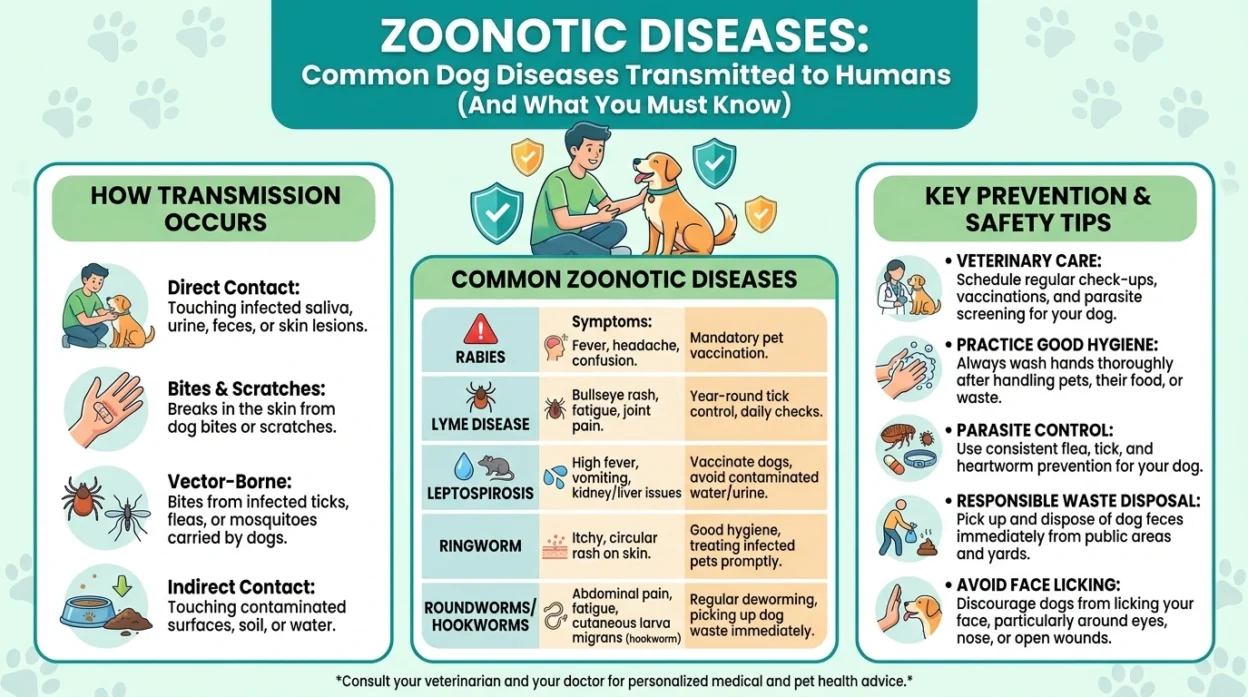
Dog diseases can reach humans through several routes. Knowing these routes helps you break the transmission chain effectively.
Here are the main ways transmission happens:
- Direct contact bites, scratches, licks on open wounds or mucous membranes
- Indirect contact touching contaminated surfaces, soil, or water
- Fecal-oral route contact with infected dog feces, then touching your face
- Insect vectors fleas and ticks that first feed on an infected dog then bite a human
- Respiratory droplets rare, but possible with certain infections like kennel cough
Who Is Most at Risk?
Some people face higher risks than others. Therefore, extra caution matters for:
- Young children especially those who play on the ground or haven’t learned hygiene habits
- Pregnant women certain infections pose serious risks to developing babies
- Elderly individuals immune systems weaken naturally with age
- Immunocompromised people those on chemotherapy, with HIV, or taking immunosuppressants
- People with open wounds cuts and abrasions provide easy entry points for bacteria
The Most Common Dog Diseases Transmitted to Humans
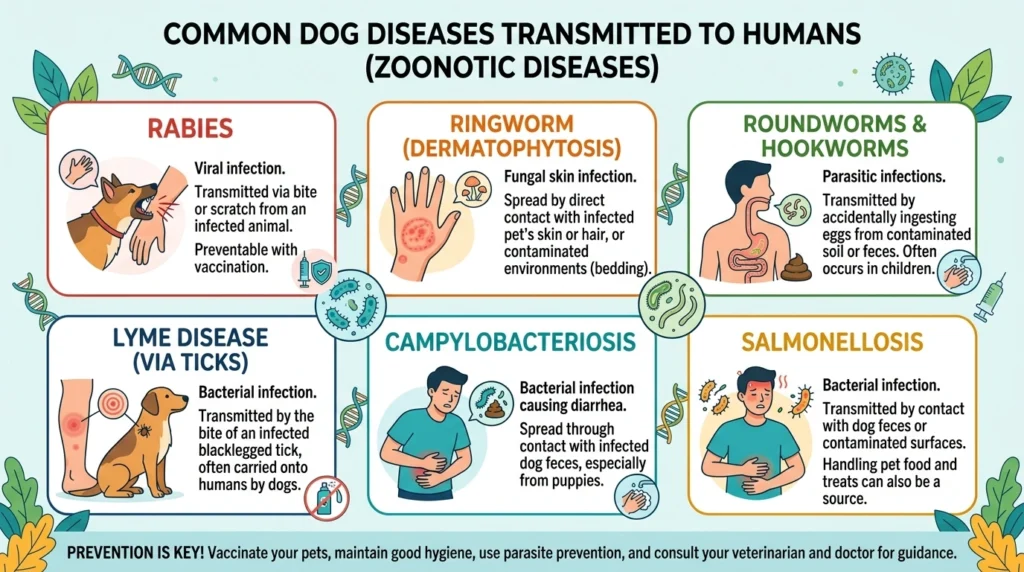
1. Rabies
Rabies is the most serious dog disease transmitted to humans. It spreads through the bite or scratch of an infected dog. Also, contact with infected saliva on broken skin can transmit the virus.
Fortunately, rabies is preventable through vaccination. Therefore, keeping your dog’s rabies vaccination up to date is non-negotiable. If a dog bites you, seek medical attention immediately, don’t wait for symptoms to appear.
Key facts:
- Incubation period: 1–3 months in humans
- Symptoms: fever, headache, confusion, paralysis, coma
- Prevention: dog vaccination + post-exposure treatment for humans
2. Ringworm
Despite the name, ringworm isn’t a worm, it’s a fungal infection. Dogs frequently carry the fungus Dermatophyte, and it transmits easily through direct skin contact or touching contaminated bedding and furniture.
Symptoms in humans include circular, scaly, itchy patches on the skin. However, ringworm is highly treatable with antifungal creams. If you notice these patches after contact with your dog, consult your doctor promptly.
3. Salmonella
Dogs can carry Salmonella bacteria without appearing sick. However, they shed it through their feces. As a result, handling dog waste without proper handwashing can expose you to infection.
Raw dog food diets increase Salmonella risk significantly. Therefore, if you feed your dog a raw diet, practice strict hygiene protocols, always wash hands thoroughly after handling raw meat or dog bowls.
Salmonella symptoms in humans:
- Diarrhea and stomach cramps
- Fever and nausea
- Symptoms typically appear 6–72 hours after exposure
4. Campylobacter
Campylobacter is one of the most common bacterial infections dogs transmit to humans. Dogs often acquire it from contaminated food or water, then pass it through their feces. In addition, puppies from pet stores or shelters carry it more frequently than adult dogs.
Symptoms include diarrhea (sometimes bloody), abdominal pain, and fever. Most healthy adults recover without treatment. However, young children and immunocompromised individuals may need medical attention.
5. Toxocariasis (Roundworm)
Dogs carry roundworms (Toxocara canis) , especially puppies. These worms shed eggs in feces, which then survive in soil for years. Children playing in contaminated soil and then touching their mouths face the highest infection risk.
Symptoms range from mild to serious, including:
- Coughing and wheezing
- Eye inflammation (in severe cases, vision loss)
- Abdominal pain and fatigue
Therefore, regular deworming of your dog is essential not just for their health, but for your family’s safety too.
6. Leptospirosis
Leptospirosis is a bacterial infection dogs pick up from contaminated water or contact with infected wildlife. Dogs then shed bacteria in their urine. Humans can become infected through contact with contaminated water, soil, or directly through a dog’s urine entering cuts or the eyes.
Symptoms in humans:
- High fever and chills
- Muscle aches
- Vomiting and jaundice in severe cases
- Kidney or liver damage if untreated
Vaccination is available for dogs in high-risk areas. Therefore, ask your vet whether your dog needs the Leptospirosis vaccine based on your local environment.
7. MRSA (Methicillin-Resistant Staphylococcus Aureus)
MRSA can transmit between dogs and humans in both directions. Dogs that live with infected humans can carry the bacteria and then pass it back. However, direct transmission from dog to human through skin contact is also possible.
This is especially concerning because MRSA resists many common antibiotics. Therefore, if you or a family member has a MRSA infection, keep close contact with your dog limited until treatment is complete.
8. Capnocytophaga
Capnocytophaga bacteria live in dogs’ mouths naturally. Most healthy adults handle exposure without problems. However, people without a spleen, those with compromised immune systems, or heavy alcohol users face serious risk of infection through bites or even close contact with dog saliva.
Symptoms develop within 3–5 days of exposure and include:
- Blistering near the bite wound
- Fever and vomiting
- Muscle pain and confusion in severe cases
Consult your doctor immediately after any dog bite especially if you fall into a high-risk group.
Pro Tip: Always wash any dog bite or scratch immediately with soap and warm water for at least five minutes. Then apply an antiseptic and seek medical advice even for minor-looking wounds. Early treatment prevents serious complications.
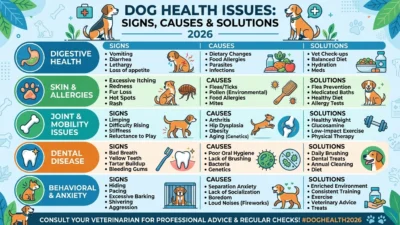
[Dog Diseases and Symptoms Every Owner Must Know 2026]
Disease Comparison Table: Dog Diseases Transmitted to Humans
Quick Reference Guide
| Disease | How It Spreads | Main Symptoms in Humans | Prevention |
| Rabies | Dog bites/scratches | Fever, confusion, paralysis | Dog vaccination |
| Ringworm | Skin contact | Circular itchy skin patches | Antifungal treatment |
| Salmonella | Fecal contact | Diarrhea, fever, cramps | Handwashing, avoid raw meat |
| Campylobacter | Fecal contact | Diarrhea, abdominal pain | Hygiene, clean water |
| Toxocariasis | Contaminated soil | Cough, eye issues | Regular deworming |
| Leptospirosis | Contaminated urine/water | Fever, muscle aches, jaundice | Dog vaccination |
| MRSA | Skin contact | Skin infections, resistance | Hygiene, limit contact if infected |
| Capnocytophaga | Dog bites/saliva | Blistering, fever, vomiting | Wound cleaning, medical care |
How to Prevent Dog Diseases Transmitted to Humans
Your Complete Prevention Checklist
Prevention is straightforward when you know what to do. Therefore, follow these steps consistently to keep your family safe:
- Keep vaccinations current. Schedule annual vet visits and keep rabies, Leptospirosis, and other relevant vaccines up to date. This single step eliminates some of the most serious risks entirely.
- Deworm your dog regularly. Ask your vet how often your specific dog needs deworming. Puppies need it more frequently, typically every two weeks until 12 weeks old, then monthly until six months.
- Practice handwashing after contact. Always wash hands with soap and water after handling dog feces, raw pet food, or after your dog licks your hands. This breaks the fecal-oral transmission route effectively.
- Clean up feces promptly. Remove dog waste from your yard and public spaces immediately. As a result, you reduce soil contamination and protect both children and the wider community.
- Avoid dog licks on wounds or faces. Dogs lick their own bodies including areas with bacteria and parasites. Therefore, discourage licking of open wounds, eyes, or mouths especially in children.
- Use flea and tick prevention. Fleas and ticks carry diseases that affect both dogs and humans. Monthly preventatives significantly reduce transmission risk. Ask your vet for the most appropriate product for your dog’s size and lifestyle.
- Handle dog bites seriously. Clean any bite wound immediately with soap and water. Then seek medical advice even for minor-seeming wounds. Report bites to local health authorities if the dog’s vaccination status is unknown.
- Feed dogs safely. If feeding raw food, handle it like raw meat for humans, clean surfaces, wash hands, and store it separately. However, consider the increased Salmonella risk carefully before choosing a raw diet.
Protecting High-Risk Family Members
If your household includes young children, pregnant women, or immunocompromised individuals, take these extra steps:
- Supervise all interactions between young children and dogs
- Keep dogs out of bedrooms of vulnerable individuals if possible
- Schedule more frequent vet check-ups to monitor dog health
- Consult your doctor about any specific concerns related to your health condition
Mistakes to Avoid With Dog Disease Prevention
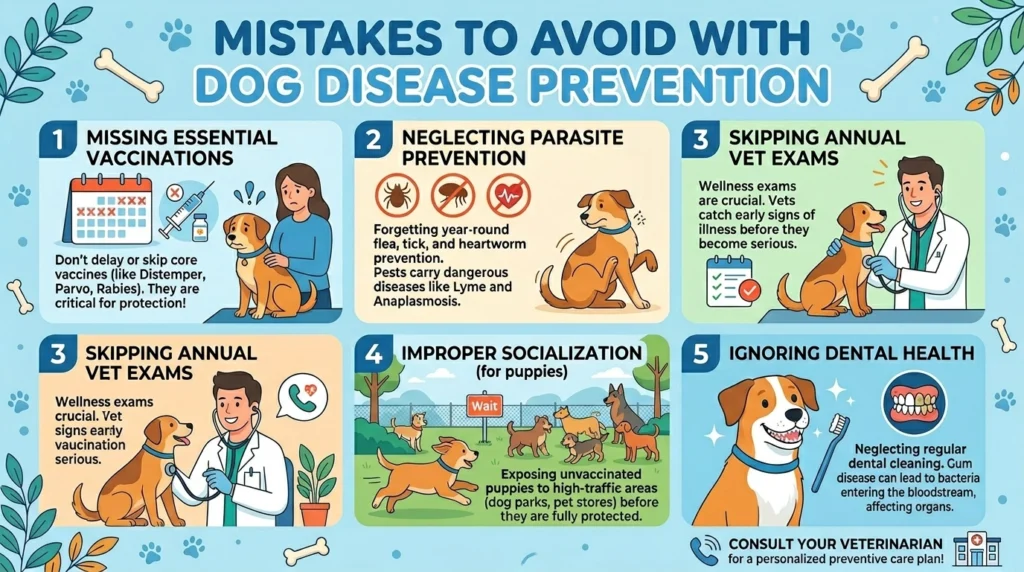
Mistake 1: Skipping Regular Vet Check-Ups
Many dog owners only visit the vet when their dog appears sick. However, regular check-ups catch parasite burdens, bacterial infections, and other issues before they become transmission risks. Therefore, schedule wellness visits at least once a year twice for puppies and seniors.
Mistake 2: Ignoring Handwashing After Dog Contact
It’s easy to forget especially when you’re just giving your dog a quick pat. However, pathogens like Salmonella and Campylobacter transfer from surfaces to hands with minimal contact. As a result, inconsistent handwashing is one of the most common reasons infections occur.
Mistake 3: Assuming Healthy-Looking Dogs Are Risk-Free
This is a dangerous assumption. Many dogs carry zoonotic organisms without showing any symptoms. For example, a perfectly healthy-looking puppy may be shedding Campylobacter or roundworm eggs. Therefore, hygiene practices matter regardless of how healthy your dog appears.
Mistake 4: Delaying Medical Attention After Dog Bites
Even small bites can introduce serious bacteria into your bloodstream. Waiting to see if symptoms develop is not a safe strategy especially for Capnocytophaga infections, which can progress rapidly. Therefore, always clean bites thoroughly and consult a doctor or urgent care provider the same day.
Mistake 5: Not Treating the Environment
Washing your dog is important. However, cleaning their environment matters just as much. Wash dog bedding regularly, disinfect food and water bowls daily, and treat your yard and home for fleas if an infestation occurs. Also, replace sandpits regularly and keep covers on them to prevent cats and dogs from using them as litter areas.
Pro Tip: Talk to your vet about a parasite prevention calendar. A simple schedule of deworming dates, flea treatments, and vaccine reminders makes it far less likely you’ll miss a critical prevention step. Most vets offer reminder systems via text or email that make this effortless.
Frequently Asked Questions About Dog Diseases Transmitted to Humans
1. What is the most dangerous dog disease transmitted to humans?
Rabies is the most dangerous dog disease transmitted to humans. Without treatment after exposure, it is almost always fatal. However, it’s also one of the most preventable regular dog vaccinations that eliminates the risk entirely in domestic settings. If a dog bites you and you’re unsure of its vaccination status, seek medical attention immediately for post-exposure prophylaxis. Don’t wait for symptoms, because by the time symptoms appear, treatment options are extremely limited.
2. Can I get sick from my dog licking me?
In most cases, a healthy vaccinated dog licking intact skin poses very little risk. However, dog saliva contains bacteria including Capnocytophaga that can cause serious illness in vulnerable people. Therefore, discourage your dog from licking open wounds, cuts, your face, or your mouth. Also, people without a spleen, those on immunosuppressant medications, and heavy drinkers face significantly higher risks from dog saliva contact and should take extra precautions.
3. Can children catch worms from dogs?
Yes children can catch roundworms (Toxocariasis) from dogs, primarily through contact with soil contaminated by infected dog feces. Children playing in sandpits or gardens and then touching their mouths face the highest risk. Therefore, regular deworming of your dog, prompt cleanup of feces, and teaching children basic handwashing habits after outdoor play effectively reduce this risk. Cover sandpits when not in use to prevent contamination.
4. How do I know if my dog has a disease I could catch?
Many zoonotic infections show no visible signs in dogs. Therefore, you can’t always tell by looking at your dog. Regular vet check-ups, fecal testing for parasites, and up-to-date vaccinations are your best tools for knowing your dog’s health status. If you develop unexplained symptoms after close contact with your dog, especially fever, skin rashes, or digestive issues, mention your dog ownership to your doctor. This context helps them consider zoonotic causes they might otherwise overlook.
5. Is ringworm from dogs dangerous?
Ringworm from dogs is uncomfortable and contagious, but it’s rarely dangerous for healthy individuals. It causes circular, itchy, scaly patches on the skin. However, it spreads easily through direct contact or shared surfaces like bedding and brushes. Treatment with antifungal creams or oral medication clears it effectively in most cases. If you notice symptoms, consult your doctor and treat your dog simultaneously with veterinary antifungal medication to prevent reinfection between you and your pet.
6. What hygiene steps matter most for dog owners?
The three most impactful hygiene habits for dog owners are: first, washing hands thoroughly after handling dog feces, raw food, or after your dog licks your hands; second, keeping your dog’s vaccinations and parasite prevention up to date; and third, cleaning up dog waste promptly from your home and garden. These three habits alone significantly reduce your family’s risk of contracting dog diseases. In addition, regular vet visits give you professional monitoring and early intervention if any concerns arise.
7. Should pregnant women avoid dogs?
Pregnant women don’t need to avoid dogs entirely. However, they should take extra precautions because certain infections pose risks to developing babies. Specifically, Toxoplasmosis which dogs can carry after eating infected prey raises concern during pregnancy. Also, Listeria from contaminated dog food and Salmonella from raw diets warrant caution. Therefore, pregnant women should avoid handling raw dog food, ask someone else to clean up dog waste, and consult their doctor or midwife about any specific concerns related to pet ownership during pregnancy.
Keep Your Family Safe Without Losing the Joy of Dog Ownership
Dog diseases transmitted to humans are a real consideration but they’re also highly preventable. Regular veterinary care, consistent hygiene habits, up-to-date vaccinations, and parasite prevention cover the vast majority of risks effectively.
You don’t need to fear your dog. However, you do need to respect the importance of basic precautions especially if your household includes young children, elderly relatives, or anyone with a compromised immune system.
Therefore, schedule that vet visit, stock up on hand soap, and keep those parasite prevention treatments on schedule. Your dog brings immeasurable joy to your life and a few simple habits ensure that joy comes with zero health compromise.