
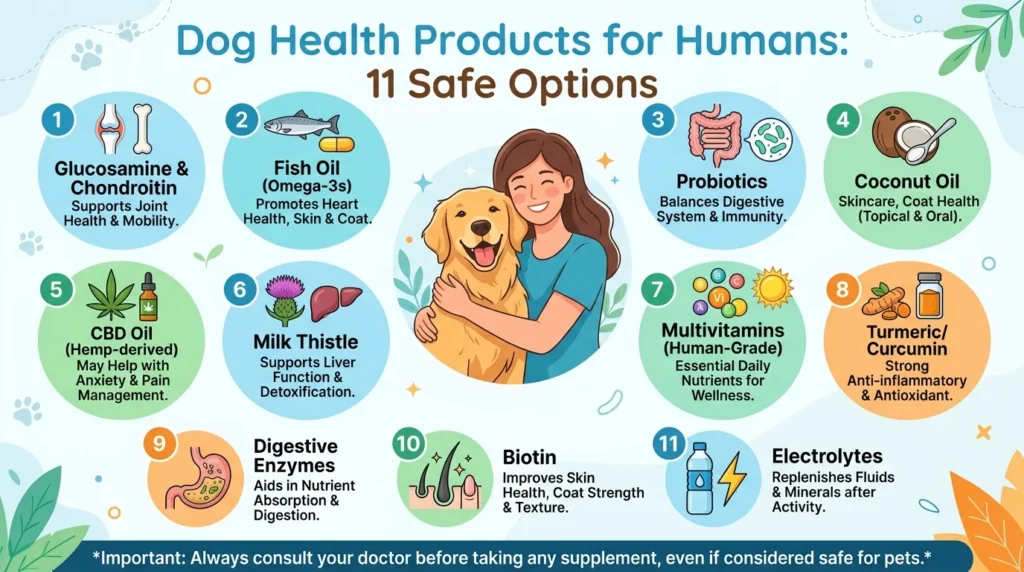
Introduction
Ever reached into your medicine cabinet during a pet emergency and wondered, can I actually give this to my dog? You’re not alone. Many dog owners face this exact moment.
The truth is, some dog health products for humans are genuinely safe to share with your pup. However, others can be dangerous, even deadly in the wrong dose. Therefore, knowing the difference matters enormously.
In my experience, this confusion happens most often late at night. Your dog seems uncomfortable, the vet clinic is closed, and you’re staring at your medicine cabinet wondering what’s okay. As a result, panic often leads to guesswork and guesswork with medication is risky.
This guide breaks it all down clearly. You’ll learn which human products are genuinely safe for dogs, which ones to avoid completely, and how to use them correctly. Also, you’ll get practical tips for building a dog-safe first aid kit at home. Let’s get started.
Understanding Dog Health Products for Humans
Why This Topic Matters So Much
Many dog owners assume “natural” or “over-the-counter” automatically means safe. However, that assumption can be dangerous. Dogs metabolize medications very differently than humans do.
For example, a single ibuprofen tablet can cause serious kidney damage in a small dog. Therefore, understanding which products genuinely work for both species is essential knowledge for every pet owner.
The Key Difference: Dosage and Formulation
Here’s what makes certain dog health products for humans safe while others aren’t:
- Active ingredient safety some compounds work similarly in dogs and humans
- Dosage requirements dogs often need much smaller amounts based on body weight
- Added ingredients many human products contain xylitol, which is toxic to dogs
- Absorption rates dogs process certain drugs faster or slower than humans
Because of these differences, never assume a product is automatically dog-safe just because it’s safe for you. Always check with your vet first.
How to Safely Use Human Health Products for Dogs: Step-by-Step
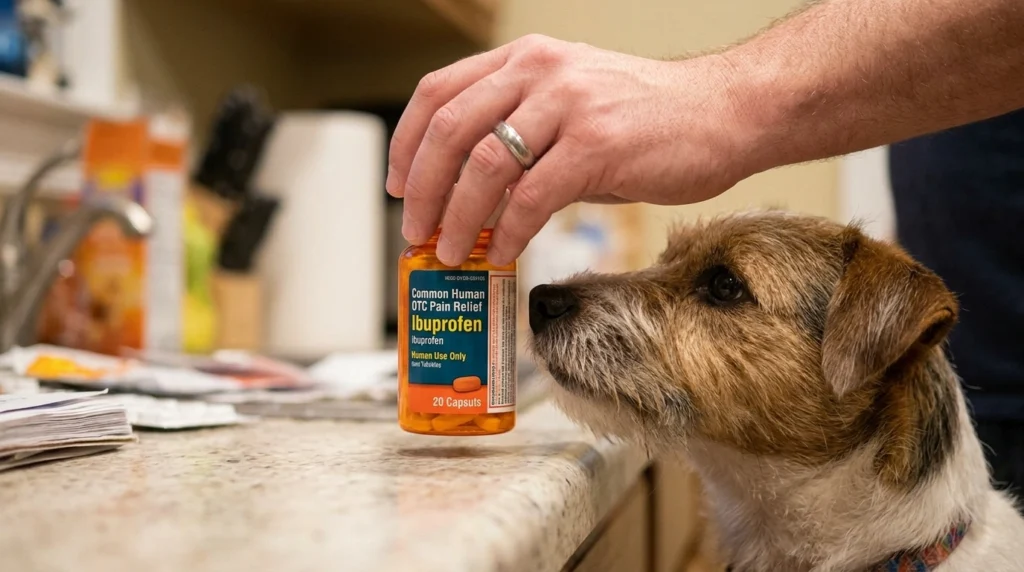
Follow this step-by-step process whenever you’re considering a human product for your dog:
- Call your vet first. Before giving anything, describe your dog’s symptoms and ask specifically about the product you’re considering. Most vet clinics offer phone consultations for exactly this purpose.
- Check the active ingredient only. Look past brand names. For example, “Benadryl” is a brand whose active ingredient is diphenhydramine. Your vet needs to know the ingredient, not the brand.
- Confirm there’s no xylitol. This sweetener is extremely toxic to dogs, even in tiny amounts. Therefore, always check ingredient labels on liquid medications, gels, and chewable tablets.
- Calculate dosage by weight. Human doses are based on adult human body weight typically 150 pounds. Dogs need dramatically different amounts based on their actual weight. Never estimate.
- Use plain formulations only. Avoid “extra strength,” “multi-symptom,” or combination products. These often contain additional ingredients that are unsafe for dogs.
- Watch for reactions for the first hour. After giving any human product, monitor your dog closely. Signs of trouble include vomiting, excessive drooling, unusual lethargy, or difficulty breathing.
- Document everything. Write down what you gave, when, and how much. As a result, if you need to call poison control or your vet later, you’ll have accurate information ready.
Pro Tip: Save the ASPCA Animal Poison Control number (888-426-4435) in your phone right now. This simple step could save precious time during a real emergency.
[Small Dogs Health Issues: Complete Guide for 2026]
Safe vs. Unsafe Dog Health Products for Humans: Quick Reference
What’s Generally Safe (With Vet Guidance)
Here’s a comparison table of common human health products and their dog-safety status:
| Product | Active Ingredient | Dog-Safe? | Notes |
| Benadryl | Diphenhydramine | Often yes | For allergies; check dosage with vet |
| Plain Pepto-Bismol | Bismuth subsalicylate | Sometimes | Avoid in cats; ask vet for dogs |
| Hydrogen Peroxide 3% | Yes (limited use) | Only for inducing vomiting vet-directed only | |
| Plain Pedialyte | Electrolytes | Often yes | Helps with mild dehydration |
| Coconut Oil | Often yes | Small amounts for coat/skin | |
| Plain Oatmeal Baths | Yes | Great for itchy skin | |
| Saline Eye Drops | Saline solution | Yes | Safe for rinsing irritation |
What’s Dangerous and Should Be Avoided
However, these common human products are dangerous for dogs:
- Ibuprofen (Advil, Motrin) causes kidney failure and stomach ulcers
- Acetaminophen (Tylenol) toxic to dogs, especially in cats
- Aspirin (long-term use) risk of stomach bleeding
- Xylitol-containing products toothpaste, gum, some medications
- Essential oils (concentrated) many are toxic if ingested or applied undiluted
- Naproxen (Aleve) extremely dangerous, narrow safety margin
Because the line between safe and dangerous is often razor-thin, this table should never replace professional veterinary guidance. Always consult your vet before giving any human product to your dog.
Common Mistakes to Avoid With Dog Health Products for Humans
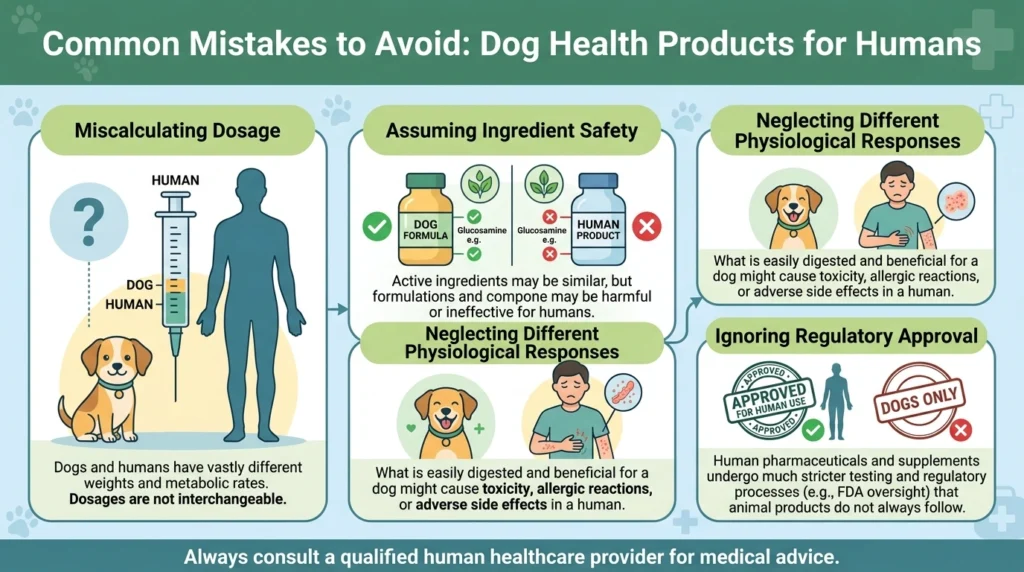
Mistake 1: Assuming “Natural” Means “Safe”
Many owners believe natural products are automatically gentle and harmless. However, “natural” doesn’t mean non-toxic. Essential oils, certain herbs, and even some “natural” supplements can cause serious reactions in dogs. Therefore, always research thoroughly before using any product labeled as natural.
Mistake 2: Using Expired Medications
Expired medications can become less effective or in some cases, chemically unstable. As a result, using old medications from your cabinet poses unnecessary risks. Check expiration dates before considering any product for your dog.
Mistake 3: Guessing the Dose
This is perhaps the most dangerous mistake of all. A dose that’s perfectly safe for a 150-pound adult human could be fatal for a 10-pound dog. Therefore, never estimate. Always get a vet-confirmed dosage based on your dog’s exact weight.
Mistake 4: Ignoring Drug Interactions
If your dog already takes medication for an ongoing condition, adding a human product without checking interactions can cause serious problems. For example, combining certain pain relievers with existing medications can amplify side effects dangerously. Always disclose your dog’s current medications to your vet first.
Mistake 5: Delaying Professional Help
Human products can buy time in genuine emergencies. However, they’re rarely a complete solution. If your dog’s symptoms persist or worsen, don’t keep experimenting with home remedies. Seeking veterinary care promptly delays can turn manageable situations into serious ones.
Pro Tip: Keep a small, labeled “pet emergency” section in your medicine cabinet. Include only vet-approved items with dosage notes written directly on each bottle. This simple system prevents dangerous guesswork during stressful moments.
Frequently Asked Questions About Dog Health Products for Humans
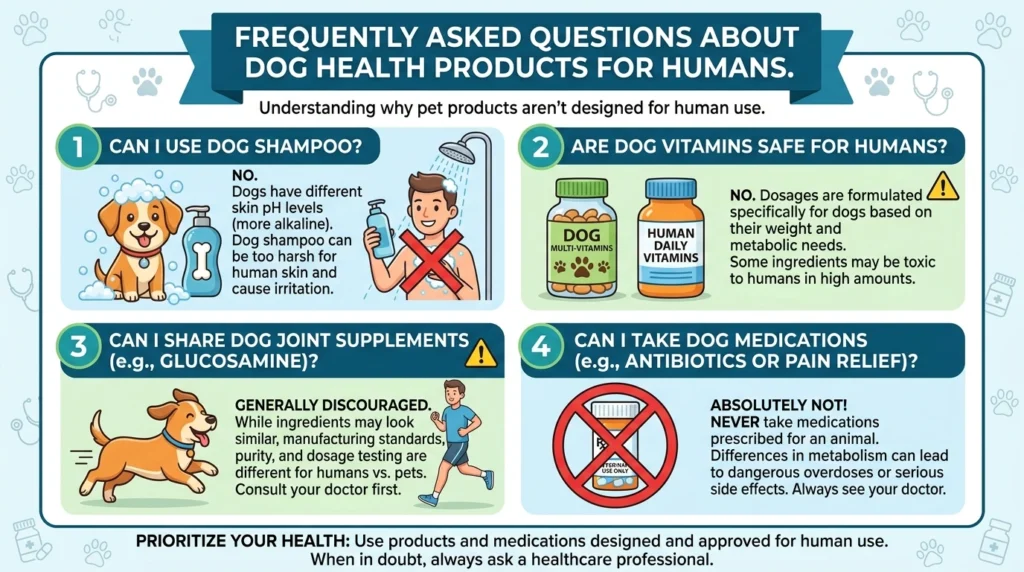
1. Can I give my dog human Benadryl?
Diphenhydramine, the active ingredient in Benadryl, is often considered safe for dogs in vet-approved doses. It’s commonly used for mild allergic reactions, itching, or motion sickness. However, dosage depends entirely on your dog’s weight. Always confirm the exact amount with your vet before giving it and only use plain Benadryl, never combination formulas with decongestants.
2. Is human toothpaste safe for dogs?
No human toothpaste is safe for dogs. Most contain xylitol or fluoride, both of which are toxic to dogs in concentrated amounts. Therefore, always use toothpaste specifically formulated for dogs. These come in dog-friendly flavors like poultry or peanut butter, and they’re completely safe if swallowed during brushing.
3. Can dogs use human sunscreen or insect repellent?
No. Human sunscreen often contains zinc oxide, which is toxic if licked off and ingested. Similarly, many insect repellents contain DEET, which can cause neurological symptoms in dogs. Therefore, always use pet-specific sun protection and pest control products. Consult your vet for recommendations suited to your dog’s breed and coat type.
4. Is hydrogen peroxide safe to use on dogs?
Hydrogen peroxide has two very different uses for dogs. Topically, it’s sometimes used for minor wound cleaning, though many vets now prefer saline solution instead. Orally, it can induce vomiting in poisoning emergencies but only under direct veterinary guidance. Never give hydrogen peroxide internally without consulting your vet first, as incorrect use can cause serious stomach damage.
5. What human foods or products help with a dog’s upset stomach?
Plain, unflavored Pedialyte can help with mild dehydration from vomiting or diarrhea. Plain canned pumpkin (not pie filling) can help firm up loose stools. Also, plain, unseasoned bone broth can encourage appetite in dogs feeling under the weather. However, if symptoms last more than 24 hours or worsen, contact your vet promptly. These home remedies address mild symptoms only, not underlying causes.
6. Can I use human shampoo on my dog?
It’s not recommended. Human shampoo has a different pH balance than dog skin requires. As a result, regular use can cause dryness, irritation, or skin problems. In emergencies, a single use of gentle, fragrance-free baby shampoo is sometimes acceptable. However, always switch to a dog-specific shampoo for regular bathing, and ask your vet for recommendations if your dog has skin sensitivities.
7. Are vitamins and supplements made for humans safe for dogs?
Generally, no not without veterinary guidance. Many human vitamins contain doses far too high for a dog’s body weight. For example, excess vitamin D can cause serious toxicity in dogs. Some supplements also contain xylitol as a sweetener. Therefore, always choose dog-specific vitamins and supplements, and consult your vet before adding anything new to your dog’s routine, even products that seem harmless.
Final Thoughts on Dog Health Products for Humans
Knowing which dog health products for humans are genuinely safe can make a real difference during stressful moments. Some products like plain Benadryl, saline solution, and Pedialyte can be helpful with proper vet guidance. However, many common household items are surprisingly dangerous for dogs.
Therefore, the safest approach combines preparation with professional guidance. Build a labeled pet emergency kit. Save your vet’s number and the ASPCA Poison Control line. Also, always confirm dosages before giving anything to your dog, even products you consider harmless.
Your dog depends on you to make smart, informed choices on their behalf. With this guide, you’re better equipped to handle those tricky moments with confidence.