
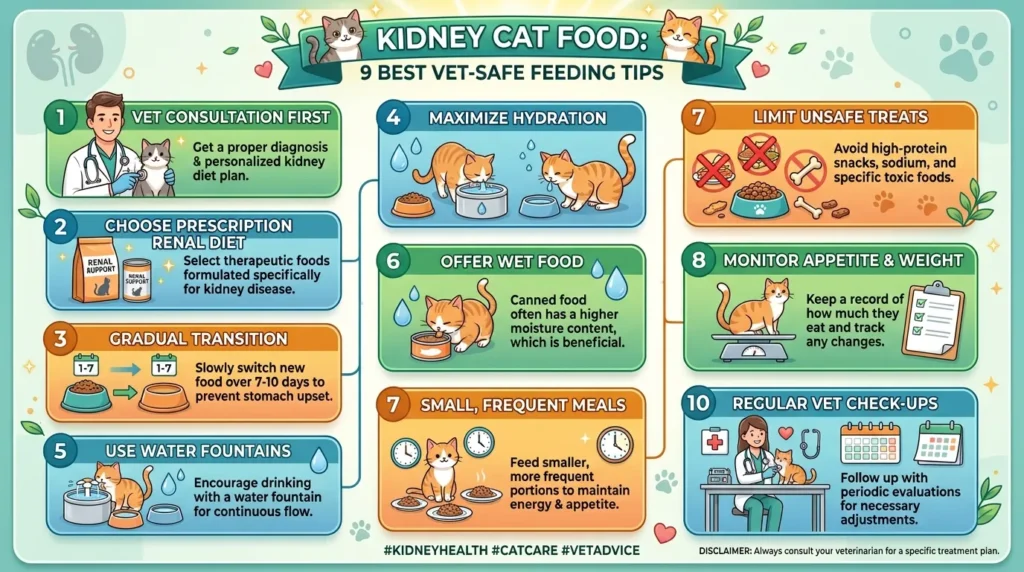
If your cat has kidney problems, food can feel confusing fast. You may see bags, cans, labels, lab numbers, and scary words from the vet. That’s a lot to take in.
The good news is simple. Kidney cat food can help support your cat’s daily comfort when you use it the right way. It won’t cure kidney disease. However, it may help manage key diet needs, especially phosphorus, protein quality, sodium, and moisture.
In my experience, many cat parents worry most about one thing: “What if my cat won’t eat it?” That’s a real concern. Cats can be picky, and sick cats can be even pickier. So, this guide will help you choose food wisely, switch slowly, avoid common mistakes, and work with your vet.
Before changing your cat’s diet, consult your vet. Kidney disease needs blood tests, urine checks, and ongoing care.
What Is Kidney Cat Food?
Kidney cat food is a special type of food made for cats with kidney disease. Most formulas focus on controlled phosphorus, moderate high-quality protein, lower sodium, and extra nutrients that support cats with chronic kidney disease.
Your vet may call it a renal diet for cats. You may also see terms like prescription kidney diet, renal support food, or therapeutic kidney food. These foods are usually different from normal adult cat food because they target kidney-related needs.
Cats with kidney disease often need help with hydration, appetite, and waste buildup. Therefore, food becomes part of daily care. It supports the body while your vet handles the medical side.
However, not every cat needs the same food. A cat in an early stage may need a different plan than a cat in a later stage. That’s why your vet’s advice matters.
Why the Right Food Matters
Your cat’s kidneys help remove waste from the blood. They also help balance water, minerals, and blood pressure. When kidneys weaken, your cat may drink more, pee more, lose weight, or feel less hungry.
A good kidney cat food plan can help in several ways:
- It may reduce phosphorus stress.
- It can support better hydration.
- It may help your cat keep weight on.
- It can make mealtimes easier.
- It may support a better quality of life.
Also, wet food often helps because it adds moisture. Many cats don’t drink enough water on their own. So, canned kidney food can be helpful for hydration support.
How to Choose Kidney Cat Food Safely
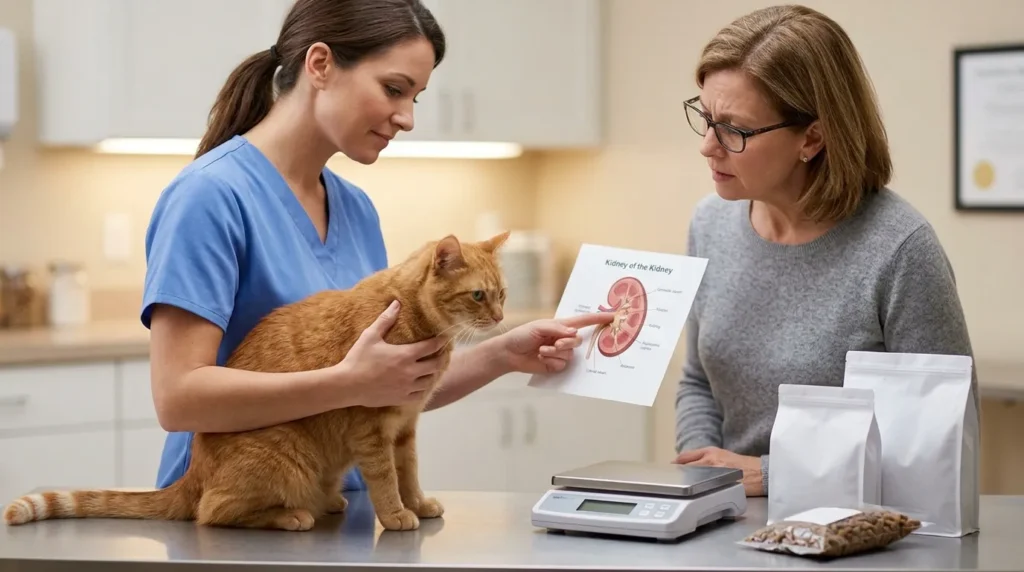
Choosing kidney cat food isn’t about buying the most expensive can. Instead, it’s about matching the food to your cat’s stage, appetite, weight, and lab results.
Here’s a simple step-by-step guide.
1. Start With Your Vet’s Diagnosis
First, confirm what your cat actually needs. Kidney disease can look different from cat to cat. Your vet may check creatinine, SDMA, BUN, phosphorus, potassium, urine concentration, blood pressure, and weight.
These details matter because they guide the food plan. For example, a cat with high phosphorus may need stronger phosphorus control. A cat losing muscle may need careful protein planning.
So, don’t guess from symptoms alone. Always consult your vet before starting kidney cat food.
2. Look for Controlled Phosphorus
Phosphorus is one of the biggest diet concerns for cats with kidney disease. Many renal diets focus on lower phosphorus because high phosphorus can make kidney problems harder to manage.
Low phosphorus cat food may help, but the level should fit your cat’s bloodwork. Some cats also need phosphate binders. However, you should only use binders under vet guidance.
Also, don’t remove protein too much just to lower phosphorus. Cats need protein. The goal is better balance, not starvation.
3. Choose High-Quality Protein
Cats are meat eaters. Therefore, they still need good protein, even with kidney disease. The key is quality and amount.
A good kidney cat food should use digestible protein. This helps your cat get nutrition without adding too much waste load. Your vet may suggest moderate protein, especially if your cat has signs of kidney-related waste buildup.
However, every cat is different. A thin senior cat may need extra calorie support. So, watch weight and muscle closely.
4. Pick Wet Food When Possible
Wet kidney cat food can be a great choice because it adds moisture to every meal. This is helpful because many cats with kidney disease lose more water through urine.
If your cat likes wet food, try different textures. Some cats love pâté. Others prefer gravy, stew, or morsels. Texture can make a big difference.
If your cat only eats dry food, don’t panic. Ask your vet about renal dry food. Then, add water bowls, fountains, or small wet food portions if your cat accepts them.
5. Check Sodium Levels
Kidney support diets often control sodium. This matters because cats with kidney disease can also have blood pressure problems.
Don’t add salty broth, deli meat, tuna brine, or human leftovers to make food tastier. These may harm your cat’s plan.
Instead, ask your vet for safe flavor boosters. Warm water, a small amount of approved topper, or gentle warming may help.
6. Make Calories a Priority
Here’s the honest truth. The “perfect” food doesn’t help if your cat refuses it.
Cats can get sick if they stop eating. Therefore, your first goal is steady food intake. If your cat hates a new renal diet, slow down the change.
You can also ask your vet about appetite support, nausea control, or other food options. Sometimes, a flexible plan works better than a strict one.
7. Switch Slowly
A fast food change can upset your cat’s stomach. It can also make your cat reject the new food.
Try this slow switch:
- Days 1–3: Mix 75% old food with 25% new food.
- Days 4–6: Mix 50% old food with 50% new food.
- Days 7–9: Mix 25% old food with 75% new food.
- Day 10 onward: Feed mostly the new food.
However, move slower if your cat resists. Some cats need three to four weeks.
8. Track Appetite and Weight
Keep a small feeding notebook. It doesn’t need to be fancy.
Write down:
- What food your cat ate
- How much your cat ate
- Any vomiting or nausea signs
- Water intake changes
- Weight changes
- Litter box changes
This helps your vet adjust the plan. Also, it helps you spot problems early.
9. Recheck Labs Regularly
Kidney cat food works best with follow-up care. Your vet may want to repeat bloodwork after a diet change. This shows whether phosphorus, potassium, and kidney values stay stable.
Also, your cat’s needs can change over time. So, don’t treat one food choice as permanent.
Pro Tip: Warm wet kidney food for a few seconds before serving. The smell becomes stronger, and picky cats may show more interest.
Kidney Cat Food Examples and Comparison
There are many kidney cat food options, but most fall into a few simple groups. Your vet can help you choose the best fit.
| Food Type | Best For | Main Benefit | Watch Out For |
| Prescription wet renal food | Cats that eat canned food | Adds moisture and supports kidney needs | Some cats dislike texture |
| Prescription dry renal food | Cats that refuse wet food | Easy to store and measure | Lower moisture than wet food |
| Early kidney support food | Cats in earlier stages | Gentle nutrient control | Must match vet advice |
| Low phosphorus cat food | Cats needing phosphorus control | May support kidney management | Not always complete for CKD |
| Mixed feeding plan | Picky cats | Offers more choice | Needs careful tracking |
Prescription kidney diet options often come in different flavors and textures. So, don’t give up after one failed can. Your cat may dislike chicken pâté but love fish stew.
Also, ask your vet if sample packs are available. This can save money and reduce waste.
Wet vs Dry Kidney Cat Food
Wet food has one clear advantage. It gives your cat more moisture. That can help cats who don’t drink much.
Dry food also has benefits. It costs less per serving, stores well, and works for cats who graze. However, it doesn’t add much water.
A practical plan may include both. For example, you can feed wet kidney cat food twice daily and leave a small amount of dry renal food for snacking. Ask your vet before mixing diets.
Homemade Kidney Cat Food: Is It Safe?
Homemade food sounds caring, and many cat owners consider it. However, it can go wrong fast.
Cats need exact nutrients, including taurine, calcium, vitamins, minerals, and fatty acids. If the balance is off, your cat may develop new health problems.
So, don’t make homemade kidney cat food from random online recipes. If you want homemade meals, ask your vet for a board-certified veterinary nutritionist.
Common Mistakes to Avoid
Even loving cat parents make mistakes. That’s normal. The goal is to learn early and fix them quickly.
Mistake 1: Changing Food Overnight
Cats often hate sudden changes. Also, a fast switch can cause stomach upset.
Instead, transition slowly. If your cat refuses the food, pause and return to a safer mix.
Mistake 2: Focusing Only on Protein
Many people think kidney diets are only about low protein. That’s too simple.
Phosphorus, moisture, calories, sodium, potassium, and appetite all matter. Therefore, your cat needs a complete plan, not just less protein.
Mistake 3: Letting Your Cat Skip Meals
A cat that won’t eat needs attention. Don’t wait too long and hope it passes.
Call your vet if your cat refuses food, vomits often, acts weak, or loses weight. Also, ask about nausea, dental pain, constipation, or other causes of poor appetite.
Mistake 4: Using Human Foods as Toppers
Tuna, salty broth, cheese, deli meat, and table scraps can cause problems. They may add sodium, phosphorus, or fat your cat doesn’t need.
Instead, use vet-approved toppers. You can also try warming the food or changing texture.
Mistake 5: Forgetting Water
Food matters, but water matters too. Cats with kidney disease often need strong hydration support.
Try these easy ideas:
- Place water bowls in several rooms.
- Use a cat water fountain.
- Wash bowls daily.
- Add warm water to wet food.
- Feed canned food if your cat accepts it.
Mistake 6: Buying Food Without Reading Labels
Not every “senior” food is kidney-friendly. Also, not every “natural” food suits CKD cats.
Look for renal support claims, phosphorus information, and complete nutrition. Then, confirm with your vet.
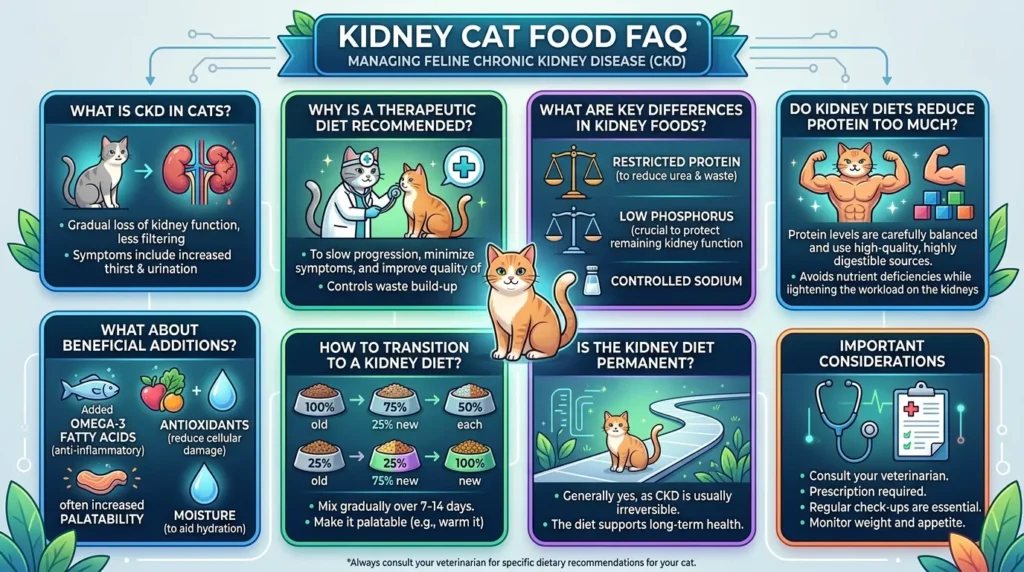
Kidney Cat Food FAQ
1. What is the best kidney cat food?
The best kidney cat food is the one your vet recommends and your cat will actually eat. In many cases, vets suggest a prescription renal diet because it controls phosphorus, sodium, protein, and other nutrients.
However, taste matters too. If your cat refuses one brand or texture, ask for another option. Wet food, dry food, pâté, stew, and mixed feeding may all work.
2. Can kidney cat food cure kidney disease?
No, kidney cat food can’t cure chronic kidney disease. However, it can support your cat’s care plan.
It may help manage diet-related stress on the kidneys. It may also support appetite, hydration, and comfort. Still, your cat needs regular vet checks, lab tests, and medical care.
3. Is wet kidney cat food better than dry food?
Wet kidney cat food often helps because it adds moisture. That’s useful for cats with kidney disease because hydration is a daily concern.
However, dry renal food can still help if your cat refuses wet food. The best choice depends on your cat’s habits, health, and appetite.
4. What foods should cats with kidney disease avoid?
Cats with kidney disease should avoid high-salt foods, random table scraps, and unapproved supplements. Also, be careful with high-phosphorus foods.
Don’t feed tuna brine, deli meat, cheese, salty broth, or dog food. These can upset your cat’s diet plan. Always ask your vet before adding treats or toppers.
5. How do I get my cat to eat kidney cat food?
Start slowly. Mix a small amount of new food with your cat’s current food. Then, increase the amount of new food over time.
Also, try warming wet food, changing texture, or offering small meals. If your cat still refuses, call your vet. Nausea, pain, or dehydration may reduce appetite.
6. Can I mix kidney cat food with regular cat food?
Sometimes, yes. During transition, mixing can help your cat adjust. However, long-term mixing may reduce the benefit of the renal diet.
Ask your vet what percentage is safe. For picky cats, a partial renal diet may still be better than no renal food at all.
7. Do all senior cats need kidney cat food?
No, not all senior cats need kidney cat food. Senior cats should get regular vet checks, though. Kidney disease becomes more common with age.
If bloodwork shows kidney changes, your vet may suggest a renal diet or early kidney support food. Don’t switch a healthy senior cat without advice.
Final Thoughts
Kidney cat food can make daily care easier when your cat has kidney disease. It supports important needs like phosphorus control, hydration, calories, and nutrient balance.
However, your cat is not a label or a lab number. Your cat has tastes, habits, moods, and comfort needs. So, work with your vet, switch food slowly, and track what your cat eats.
If your cat refuses a renal diet, don’t blame yourself. Ask for other textures, flavors, and safe feeding options. A steady, gentle plan can help your cat feel more comfortable at home.