
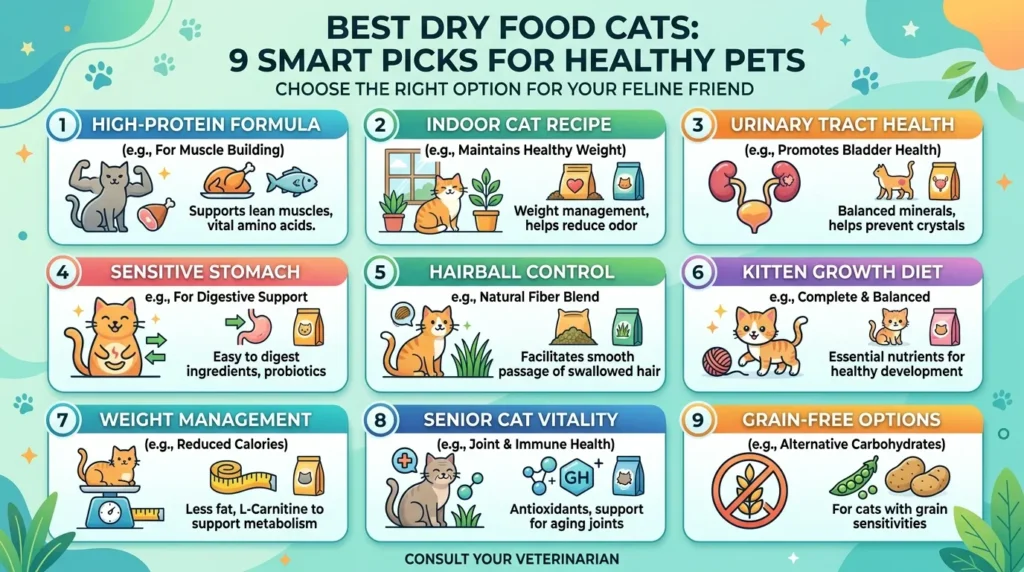
Introduction
Finding the best dry food cats can eat daily feels harder than it should. You walk into a pet store, see dozens of bags, and every label sounds “premium.” However, your cat doesn’t need fancy words. Your cat needs food that supports energy, digestion, coat health, and a healthy weight.
The real problem is simple. Many cat parents choose dry food by price, packaging, or flavor alone. Yet cats need the right balance of animal protein, fat, vitamins, minerals, and water. Therefore, this guide will help you choose dry cat food with more confidence. You’ll learn what to check, what to avoid, and how to match food with your cat’s age and lifestyle.
Also, remember this important rule. Food advice online can help, but your vet knows your cat’s health best. So, consult your vet before changing food, especially if your cat has kidney disease, diabetes, allergies, urinary issues, or weight problems.
What Makes the Best Dry Food Cats Actually Need?
The best dry food cats need should do more than fill a bowl. It should support your cat’s full daily nutrition. That means it should match your cat’s life stage, health needs, and activity level.
Cats are obligate carnivores. In simple words, they need nutrients that mostly come from animal-based ingredients. For example, taurine is very important for cats. They also need enough protein, healthy fats, and key minerals.
However, dry food has less moisture than wet food. Because of that, your cat should always have clean water nearby. Some cats drink less than they should. Therefore, you can also mix wet food into their routine if your vet agrees.
When people search for the best dry food cats, they often expect one perfect brand. But there is no single perfect food for every cat. A kitten, senior cat, indoor cat, and overweight cat all need different support.
A good dry cat food usually has:
- A clear “complete and balanced” statement
- Protein from animal sources
- The right formula for your cat’s life stage
- Clear feeding directions
- Calorie information per cup
- A trusted company with quality control
- No confusing health claims
Pro Tip: Don’t judge cat food by the front of the bag only. Turn it around and read the nutrition statement, calories, and feeding guide first.
How to Choose the Best Dry Food Cats Will Enjoy

Choosing the best dry food cats will eat is not about buying the most expensive bag. Instead, it’s about choosing food that fits your cat’s real needs. Here’s a simple step-by-step guide.
1. Check the Complete and Balanced Statement
First, look for a statement that says the food is complete and balanced. This matters because treats and toppers are not full meals.
A complete food should provide the nutrients your cat needs each day. Also, check the life stage on the label. Some foods are for kittens. Some are for adults. Others are for all life stages.
If your cat is an adult indoor cat, adult maintenance food often makes sense. However, kittens need more calories and nutrients for growth.
2. Match the Food to Your Cat’s Age
Your cat’s age matters a lot. A kitten needs more energy than a calm senior cat. Therefore, don’t feed kitten food to an adult cat unless your vet suggests it.
Use this simple guide:
- Kitten food: for growing cats
- Adult food: for healthy adult cats
- Senior food: for older cats with changing needs
- Weight-control food: for cats that need fewer calories
- Veterinary diet: only when your vet recommends it
In addition, avoid switching foods too often. Cats usually do better with slow changes.
3. Look at Protein Quality
The best dry food cats can thrive on often includes animal-based protein near the top of the ingredient list. Chicken, turkey, salmon, and fish meals are common examples.
However, ingredients alone don’t tell the full story. A long ingredient list doesn’t always mean better food. Also, words like “natural” or “premium” can sound nice but may not prove quality.
Instead, look at the whole food. Check the nutrition statement, calories, brand reputation, and feeding guide.
4. Watch the Calories
Dry food is calorie-dense. That means a small amount can contain many calories. As a result, free-feeding can lead to weight gain in some cats.
Measure your cat’s food with a real measuring cup. Then, adjust the amount based on your cat’s body shape and activity. If your cat begs often, try smaller meals more often.
Also, treats count. Many owners forget this. However, treats can quickly add extra calories.
5. Think About Water Intake
Dry food contains much less water than canned food. Therefore, water intake matters.
You can help your cat drink more by:
- Placing water bowls in quiet spots
- Using a cat water fountain
- Cleaning bowls daily
- Keeping food and water bowls apart
- Adding wet food if your vet agrees
Some cats love fountains because moving water feels fresher. Have you tried one yet?
6. Choose Texture Your Cat Likes
Cats can be picky. Some like small round kibble. Others prefer larger crunchy pieces. Therefore, texture matters more than many people think.
If your cat refuses healthy food, don’t force it. Instead, try a slow transition. Mix a small amount of new food with the old food. Then, increase the new food over 7 to 10 days.
7. Avoid Big Marketing Traps
Many bags use words that sound impressive. However, not every claim helps your cat.
Be careful with claims like:
- “Premium”
- “Holistic”
- “Human-grade”
- “No fillers”
- “Wild diet”
- “Ancient recipe”
These words may not tell you if the food is complete, balanced, or tested. Therefore, focus on facts instead.
Best Dry Food Cats by Need: Simple Comparison Table
The best dry food cats need depends on age, weight, and lifestyle. Use this table as a simple starting point.
| Cat Type | What to Look For | Why It Helps |
| Indoor adult cat | Adult maintenance formula with controlled calories | Helps manage weight and energy |
| Kitten | Growth formula with higher calories | Supports strong growth |
| Senior cat | Easy-to-chew kibble and balanced minerals | Supports aging needs |
| Overweight cat | Weight-management formula | Helps reduce extra calories |
| Sensitive stomach cat | Simple formula and gradual transition | May support digestion |
| Long-haired cat | Hairball-support formula | Helps reduce hairball issues |
| Picky cat | Strong aroma and preferred texture | Makes meals more appealing |
| Active cat | Higher energy adult formula | Supports daily movement |
| Multi-cat home | Food that fits most adult cats | Makes feeding easier |
This table gives general guidance only. However, your vet should guide you if your cat has health issues.
Dry Food vs Wet Food
Dry food is convenient. It stores easily, costs less per meal, and works well in automatic feeders. Also, many cats enjoy the crunch.
Wet food offers more moisture. That can help cats who don’t drink much water. However, it costs more and spoils faster after opening.
Many homes use both. For example, you can feed dry food in the morning and wet food at night. This gives convenience and moisture support.
Grain-Free or Grain-Inclusive?
Many cat parents wonder if grain-free food is always better. The answer is not that simple.
Cats need the right nutrients. They don’t need food just because it follows a trend. Therefore, don’t choose grain-free only because the label sounds cleaner.
If your cat has a true food allergy, your vet can help. Otherwise, focus on complete nutrition, calories, and your cat’s health.
Mistakes to Avoid When Buying the Best Dry Food Cats Need
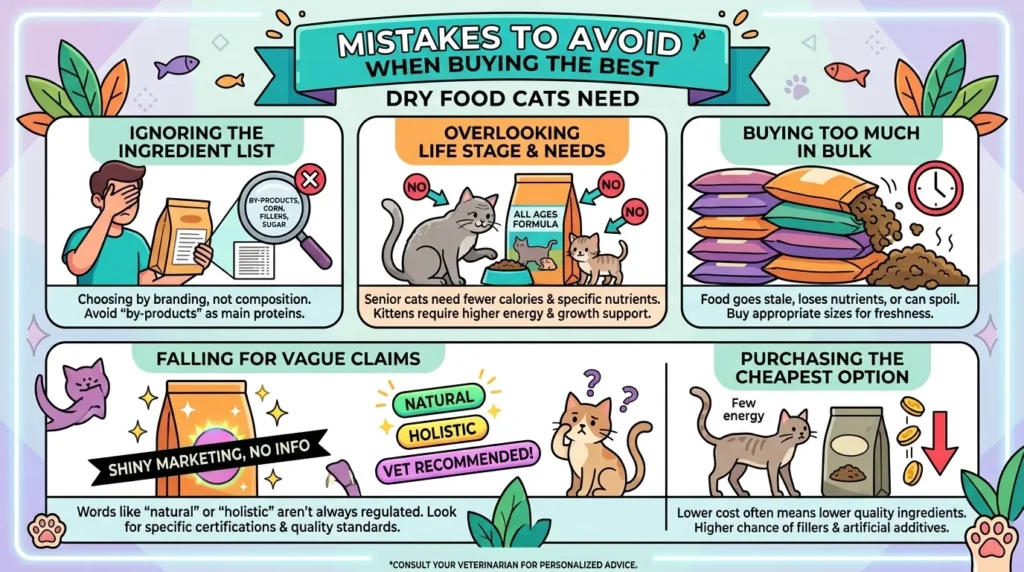
Even caring cat owners make feeding mistakes. I’ve seen many people buy a beautiful-looking bag and miss the feeding guide. So, let’s make this easier.
Mistake 1: Choosing by Flavor Only
Cats may love chicken, salmon, or turkey flavor. However, flavor alone doesn’t make food healthy.
Always check the nutrition statement. Then, check the calories. Finally, check if the food suits your cat’s age.
Mistake 2: Free-Feeding Without Measuring
Leaving food out all day can work for some cats. However, many cats eat too much when food is always available.
Measure the daily amount. Then, divide it into meals. As a result, you can track eating habits better.
Mistake 3: Switching Food Too Fast
Fast food changes can upset your cat’s stomach. Therefore, switch slowly.
Use this simple plan:
- Days 1–2: 75% old food, 25% new food
- Days 3–4: 50% old food, 50% new food
- Days 5–6: 25% old food, 75% new food
- Day 7 onward: 100% new food
If your cat vomits, refuses food, or has diarrhea, call your vet.
Mistake 4: Ignoring Dental Health
Dry food can add crunch. However, it does not replace dental care. Many cats still need dental checks and proper oral care.
Ask your vet about dental treats, brushing, or dental diets. Also, watch for bad breath, drooling, or trouble chewing.
Mistake 5: Buying Huge Bags Too Often
Large bags may save money. However, dry food can lose freshness after opening.
Store food in a sealed container. Also, keep the original bag if possible. It has the batch number and expiry date.
Mistake 6: Feeding Adult Food to Kittens
Kittens need growth support. Adult food may not give enough of what they need. Therefore, choose kitten food until your vet says your cat can switch.
Mistake 7: Ignoring Health Conditions
Food can affect cats with urinary, kidney, digestive, or weight issues. Therefore, don’t guess about medical problems.
Consult your vet before choosing the best dry food cats with any known health condition should eat.
Best Dry Food Cats FAQ
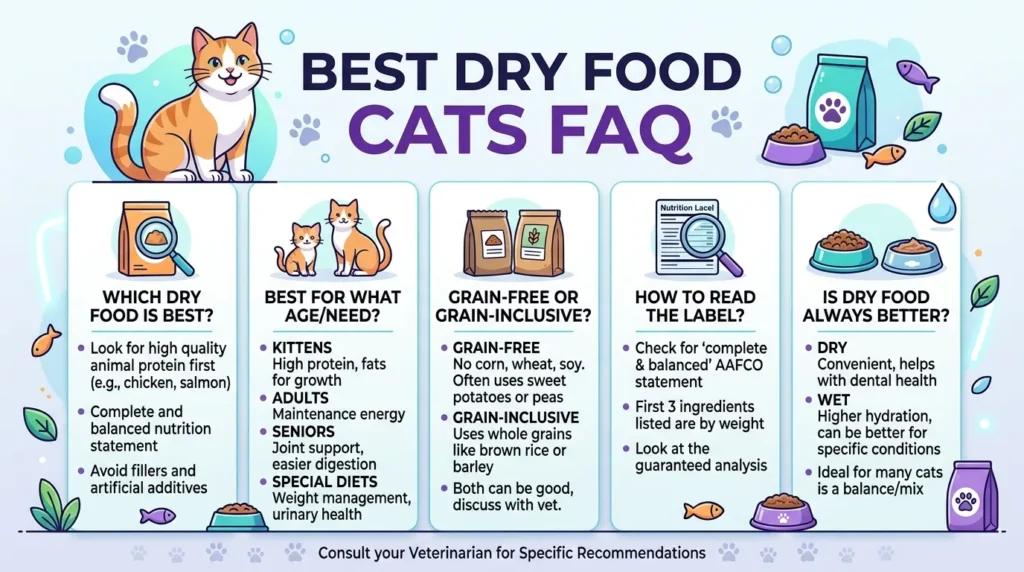
1. What are the best dry foods cats can eat every day?
The best dry food cats can eat daily should be complete and balanced for their life stage. It should also match their age, weight, and health needs.
For most healthy adult cats, an adult maintenance formula works well. However, kittens need growth food. Senior cats may need different support. If your cat has a health problem, ask your vet first.
2. Is dry food healthy for cats?
Dry food can be healthy when it offers complete and balanced nutrition. It is also convenient and easy to store.
However, dry food has low moisture. Therefore, your cat needs fresh water every day. You can also add wet food if your cat needs more moisture and your vet agrees.
3. Should cats eat dry food only?
Some cats do well on dry food only. However, others may benefit from wet food too.
A mixed feeding routine can work nicely. For example, dry food can help with convenience, while wet food adds moisture. Your vet can help you choose the right balance.
4. How much dry food should I feed my cat?
Start with the feeding guide on the bag. Then, adjust based on your cat’s weight, body shape, and activity level.
Also, check calories per cup. Some foods are more calorie-dense than others. Therefore, one cup of one food may not equal one cup of another food.
5. How do I know if my cat likes the food?
Your cat should eat the food happily and keep normal bathroom habits. Also, your cat should have steady energy, a healthy coat, and a stable weight.
However, don’t judge too quickly. Some cats need time to accept a new texture or smell. So, change foods slowly.
6. Is expensive dry cat food always better?
No, expensive food is not always better. Some costly foods use strong marketing but may not fit your cat.
Instead, check the nutrition statement, calories, life stage, and brand transparency. Also, ask your vet if you feel unsure.
7. Can I mix two dry cat foods together?
You can mix foods, but do it carefully. If both foods are complete and balanced, mixing may be fine for many healthy cats.
However, it can make calories harder to track. Also, it may not suit cats on special diets. Therefore, ask your vet if your cat has medical needs.
8. What should I do if my cat stops eating dry food?
First, check the food smell, texture, and expiry date. Then, make sure your cat is not stressed or sick.
If your cat refuses food for more than a day, contact your vet. Cats should not go long without eating.
Final Thoughts
Choosing the best dry food cats can eat doesn’t need to feel stressful. Start with the basics. Check the complete and balanced statement, match the food to your cat’s life stage, watch calories, and keep fresh water nearby.
Also, pay attention to your cat. Your cat’s coat, energy, weight, stool, and appetite can tell you a lot. If something feels off, talk to your vet before making big changes.
Finally, don’t fall for shiny labels alone. The best food is the one that fits your cat’s body, health, and daily routine. Choose with care, measure each meal, and give your cat a healthy start every day.