
Introduction
Ever opened a bag of dry chewy cat food and wondered if it’s actually good for your cat? You’re not alone. Many cat parents want the easy storage of dry food, but they also want a softer bite. That makes sense, especially if your cat is picky, older, or tired of rock-hard kibble.
The tricky part is this: “chewy” can mean different things. Some brands mean soft dry cat food. Others mean tender-center kibble, semi-moist cat food, or dry food you soften at home. So, you need to look past the front label.
In this guide, I’ll walk you through what to check, what to avoid, and how to feed it safely. You’ll also learn when dry chewy cat food may help and when your vet should guide the choice.
What Is Dry Chewy Cat Food?
Dry chewy cat food is usually a dry or low-moisture food with a softer bite than standard kibble. It may feel tender, springy, or easier to chew. Some products stay chewy in the bag. Others become softer when you add warm water or mix them with wet cat food.
However, it’s not always the same as wet food. Traditional dry cat food often has low moisture. Wet food has much more water. Semi-moist cat food sits somewhere in the middle, though each product can be different.
The main goal is simple. You want food your cat enjoys and can chew with comfort. Still, texture should never be the only reason you buy it. Your cat also needs complete and balanced nutrition.
Cats are obligate carnivores. So, they need nutrients that come mainly from animal sources. Because of that, look for a clear animal protein source and a complete diet statement. If your cat has health issues, ask your vet before you switch.
Why Some Cats Prefer Dry Chewy Cat Food
Some cats love crunchy kibble. Others sniff it, glare at you, and walk away like you ruined dinner. In my experience, texture can make a big difference for fussy eaters.
Dry chewy cat food may work well for cats that dislike very hard kibble. It can also help cats that enjoy dry meals but prefer a softer mouthfeel. For example, some senior cats still want dry food, yet they chew more slowly than before.
Here are common reasons cats may prefer it:
- Picky eating: Softer pieces may smell and feel more appealing.
- Senior age: Older cats may like food that takes less effort.
- Small mouths: Tiny bites can feel easier for some cats.
- Mixed feeding: It can bridge the gap between kibble and wet food.
- Texture boredom: Some cats just want variety.
However, don’t ignore sudden chewing trouble. If your cat drops food, drools, paws at the mouth, or avoids meals, call your vet. Dental pain can look like picky eating.
How to Choose Dry Chewy Cat Food Safely
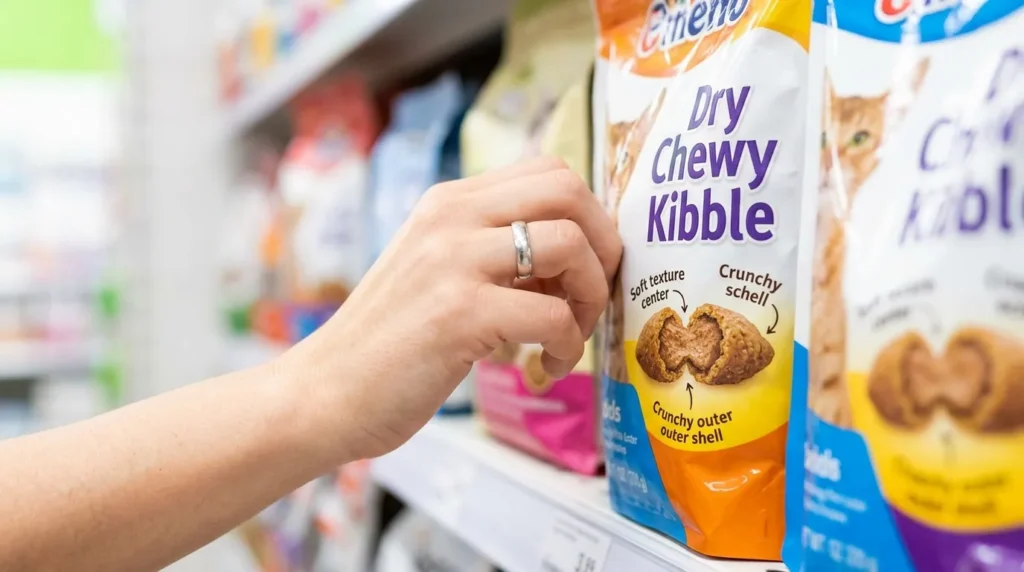
Choosing dry chewy cat food should feel simple. First, start with nutrition. Then, think about texture, calories, and health needs.
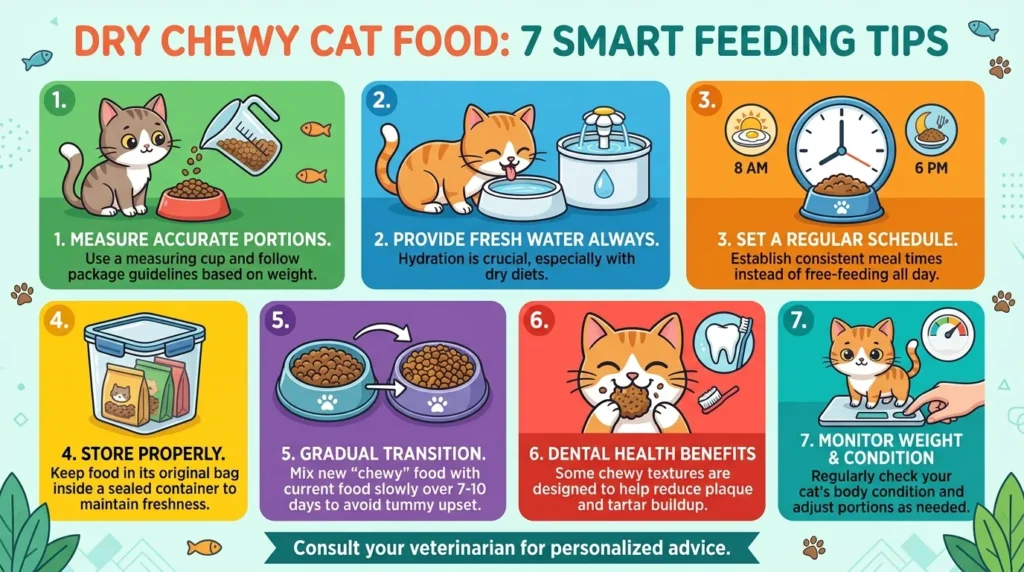
1. Check for complete and balanced nutrition
Look for a label that says the food is complete and balanced for your cat’s life stage. This matters more than fancy words on the front of the bag.
If the food is only a treat or topper, don’t use it as your cat’s main meal. Treats can add calories fast. Also, they may not provide full cat nutrition.
2. Match the food to your cat’s life stage
Kittens, adults, and seniors do not always need the same food. Therefore, choose food made for your cat’s age and condition. If your cat is pregnant, underweight, overweight, or sick, speak with your vet first.
3. Read the first few ingredients
A good cat food should include animal-based ingredients near the top. Chicken, turkey, salmon, beef, and meat meals can all appear in cat food.
Don’t panic over every ingredient you don’t know. Instead, focus on the full nutrition profile. Also, check whether the brand shares feeding guides and support information.
4. Look at texture and kibble size
Texture matters because cats chew in different ways. Some cats swallow small kibble whole, while others bite bigger pieces slowly.
For dry chewy cat food, look for words like tender, soft, easy-chew, or chewy center. However, check real reviews too. One cat’s “soft” can feel too firm for another cat.
5. Think about moisture and water
Dry food can be useful, but it does not replace water. So, keep fresh water nearby at all times. If your cat drinks more from moving water, try a fountain.
If your cat has urinary, kidney, or constipation issues, ask your vet about wet food. Some cats need more moisture than dry meals provide.
6. Watch calories and portion sizes
Dry food is often calorie-dense. As a result, small scoops can add up quickly. This matters for indoor cats, less active cats, and cats that beg often.
Use the feeding guide as a starting point only. Then, adjust based on weight, activity, and your vet’s advice.
7. Switch foods slowly
Cats can have sensitive stomachs. So, don’t change food overnight unless your vet tells you to. A slow switch gives your cat time to adjust.
Try this simple plan:
- Days 1–2: Use 75% old food and 25% new food.
- Days 3–4: Use 50% old food and 50% new food.
- Days 5–6: Use 25% old food and 75% new food.
- Day 7 onward: Use the new food fully.
If vomiting, diarrhea, or appetite loss appears, slow down. Also, call your vet if symptoms continue.
Dry Chewy Cat Food vs Other Cat Food Types
Dry chewy cat food sits in a helpful middle zone. It offers convenience, but it may feel easier to bite than hard kibble.
| Food Type | Texture | Best For | Watch Out For |
| Hard dry cat food | Crunchy and firm | Easy storage and puzzle feeders | Some cats find it too hard |
| Dry chewy cat food | Softer dry bite | Picky cats and soft-chew needs | Moisture may still be low |
| Semi-moist cat food | Tender and flexible | Cats that dislike crunch | Check sugar, salt, and calories |
| Wet cat food | Soft and moist | Hydration and picky eaters | Costs more and spoils faster |
No single type wins for every cat. For example, one cat may thrive on mixed feeding. Another cat may need a special vet diet. Therefore, use your cat’s age, weight, health, and taste as your guide.
Outbound link suggestion: Cornell Feline Health Center article, “Feeding Your Cat.”
Internal link suggestion: Link to related article on your site, “Best Wet Cat Food for Indoor Cats.”
Easy Ways to Make Dry Chewy Cat Food More Appealing
Sometimes your cat likes the food, but not enough to finish the bowl. That’s when small changes can help.
Try these simple ideas:
- Add warm water: Let it sit for a few minutes to soften.
- Mix a little wet food: Start with a small spoonful.
- Serve smaller meals: Fresh food smells better than stale food.
- Use a puzzle feeder: It can make mealtime more fun.
- Warm the bowl slightly: Warmth can boost aroma.
- Keep the bag sealed: Fresh food tastes better.
Pro Tip: Add warm water to dry food, then wait three to five minutes. Test the texture with a spoon before serving it to your cat.
Once you add water or wet food, treat the meal like fresh food. Don’t leave it sitting out for hours. If your cat walks away, remove the leftovers and wash the bowl.
Common Mistakes to Avoid With Dry Chewy Cat Food
Dry chewy cat food can be useful, but only when you use it wisely. Luckily, common mistakes are easy to fix.
Choosing texture over nutrition
A soft bite is nice. However, your cat needs balanced food first. Always check the label before you fall for cute packaging.
Forgetting about water
Dry meals need water support. So, place water bowls in quiet spots. Also, clean them daily because cats dislike stale water.
Free-feeding without measuring
Leaving food out all day can work for some cats. However, it can also lead to weight gain. Measure meals if your cat overeats.
Switching too fast
A sudden food change can upset your cat’s stomach. Therefore, transition slowly. Your cat’s belly will thank you.
Ignoring dental signs
Food texture can’t fix painful teeth. If your cat chews on one side, drops food, or has bad breath, call your vet. Dental disease needs proper care.
Using treats as meals
Chewy treats are not the same as dry chewy cat food. Treats should stay occasional. They should not replace balanced meals.
Dry Chewy Cat Food FAQ
Is dry chewy cat food good for cats?
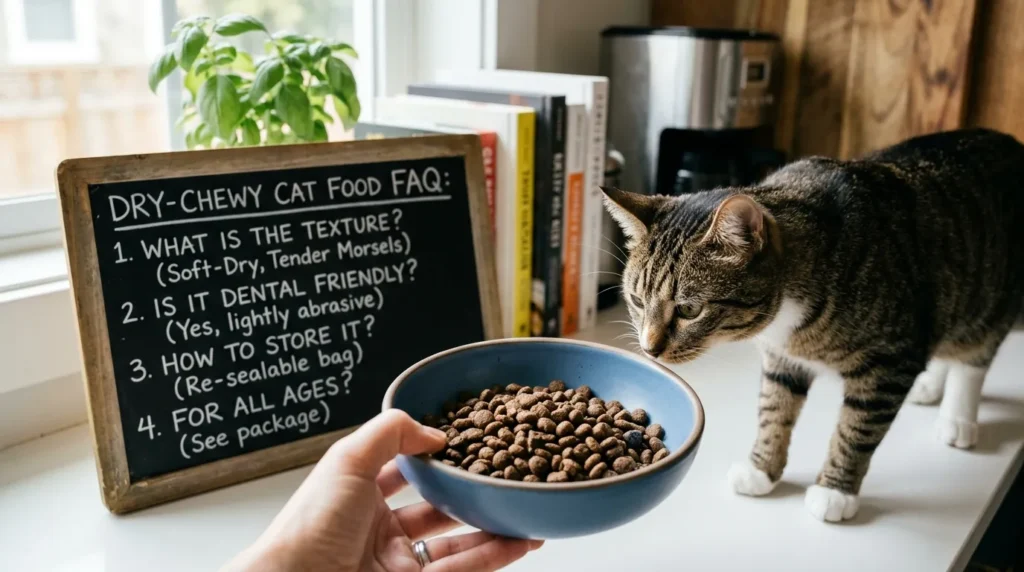
Dry chewy cat food can be good for cats when it is complete, balanced, and suited to their life stage. It should also match your cat’s health needs. However, cats with urinary, kidney, dental, or weight issues may need a different plan. Ask your vet before making a major diet change.
Is dry chewy cat food the same as semi-moist cat food?
Not always. Some chewy foods are semi-moist, while others are softer versions of dry kibble. Semi-moist cat food usually has more moisture than hard kibble. However, labels vary by brand, so always check the package details.
Can senior cats eat dry chewy cat food?
Yes, many senior cats can eat dry chewy cat food if it fits their health needs. The softer texture may feel easier for older cats. However, senior cats often need closer weight, kidney, and dental checks. So, schedule regular vet visits.
How can I soften dry cat food safely?
You can soften dry food with warm water. Add a small amount, wait a few minutes, and stir. Then, serve it fresh. Don’t leave moistened food out for too long because it can spoil.
Does chewy dry food clean a cat’s teeth?
Regular dry food does not replace tooth brushing or dental care. Some special dental diets may help reduce plaque through their shape and texture. However, your vet should guide dental care, especially if your cat has pain or bad breath.
Final Thoughts
Dry chewy cat food can be a smart choice for cats that want dry meals with a softer bite. It may help picky cats, senior cats, and cats that dislike hard kibble. However, texture is only one part of the decision.
Focus on complete nutrition, safe portions, fresh water, and your cat’s comfort. Also, watch for signs of dental pain or stomach trouble. When in doubt, consult your vet before changing your cat’s diet.
Start with a small bag, switch slowly, and see how your cat responds. Your best choice is the food your cat enjoys, digests well, and stays healthy eating every day.