
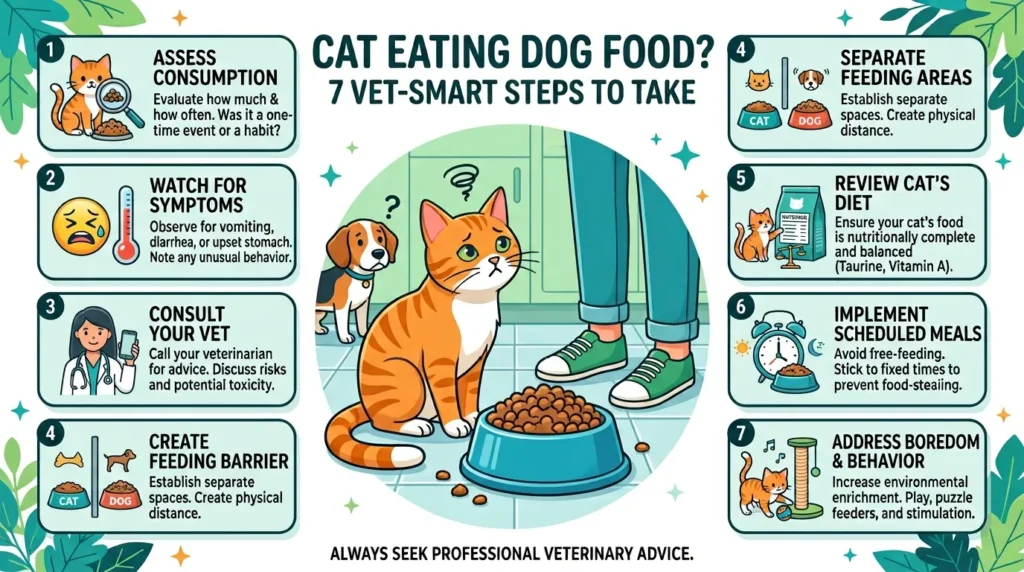
Your cat just pushed the dog aside and buried their face in the wrong bowl. Now you’re wondering whether to laugh or call the vet. A cat eating dog food once will usually be fine. However, dog food should never replace a complete cat diet.
Cats and dogs need different amounts of key nutrients. Therefore, regular bowl stealing can cause health problems over time. The biggest concern is not one crunchy bite. Instead, it’s a pattern that leaves your cat short of vital nutrition.
This guide explains why cats raid dog bowls and what to do next. You’ll also learn how to prevent repeat visits in a multi-pet household. Most importantly, you’ll know when a cat eating dog food needs veterinary advice.
Is a Cat Eating Dog Food in Immediate Danger?
In most cases, a healthy adult cat won’t become ill after a few bites. Dog food is not usually toxic to cats. Still, a cat eating dog food should remain an occasional accident.
First, check how much your cat ate. A few pieces of dry kibble rarely cause a crisis. For a cat eating dog food, a full meal may cause vomiting, gas, or loose stools. Sensitive cats may react sooner.
Next, check the package. Rich recipes may upset your cat’s stomach. Prescription dog food also needs extra care.
Call your vet promptly if your cat shows any of these signs:
- Repeated vomiting or diarrhoea
- Extreme tiredness or weakness
- Swelling, itching, or breathing trouble
- Belly pain or a hunched posture
- Refusal to eat or drink
- Shaking, collapse, or unusual behaviour
Also, call your vet if a kitten, senior cat, or sick cat ate a large amount. Cats with food allergies need close care too. When in doubt, share the brand, recipe, and amount eaten.
Pro Tip: Take a photo of the ingredient list before calling your vet. It saves time and helps them give clearer advice.
Why Is Your Cat Eating Dog Food?
Ever wondered why your cat ignores premium cat food, then steals plain dog kibble? Cats can be wonderfully odd about food. Sometimes, a cat eating dog food simply wants novelty. However, several reasons may explain the habit.
The smell feels new and exciting
Dogs often eat quickly, which leaves strong food smells around the bowl. Your cat may see that scent as an invitation. Also, a new texture can feel more exciting than yesterday’s familiar meal.
Your cat likes the eating spot
Sometimes, the bowl’s quiet or sunny location feels safer than your cat’s usual spot.
The dog gets attention at mealtime
Cats notice routines. Therefore, joining the dog may become a quick way to gain your attention.
Your cat is hungry
A cat eating dog food may simply need more suitable food. Check the feeding guide on your cat’s package. Then consider their age, weight, activity, and health.
Sudden hunger can also signal illness. Contact your vet if appetite rises sharply or your cat loses weight.
Your cat dislikes their own meal
Cats care about smell, shape, texture, and freshness. A dirty bowl can also put them off. In my experience, changing the bowl can work better than changing the food.
Try a wide, shallow dish made from ceramic or stainless steel. Also, wash it after each meal. Finally, serve wet food at room temperature so the aroma is easier to notice.
Why Dog Food Cannot Meet Feline Nutrition Needs
Cats are obligate carnivores. That means their bodies depend on nutrients found in animal-based foods. Dogs have different nutritional needs, so their food follows different formulas. That makes a cat eating dog food regularly a concern.
A complete and balanced cat food should match your cat’s life stage. For example, kittens need growth food, while adults need maintenance food. Your vet may also recommend a special diet for a health condition.
Here are the main differences between cat food and dog food:
| Nutritional need | Cat food | Dog food | Why it matters |
| Taurine | Added at cat-safe levels | May not meet feline needs | Supports the heart, eyes, and normal body functions |
| Protein | Usually higher | Often lower | Cats need more dietary protein than dogs |
| Arachidonic acid | Included for cats | May not provide enough | Cats need this essential fatty acid from their diet |
| Vitamin A | Supplied in a usable form | Formula differs for dogs | Cats cannot rely on plant sources in the same way |
| Life-stage balance | Made for kittens, adults, or seniors | Made for canine life stages | Growth and maintenance needs differ by species |
A long-term dog food diet may cause taurine deficiency and other nutrient shortages. These problems do not appear after one stolen mouthful. However, a cat eating dog food every day may develop serious gaps.
Taurine supports heart and eye health. Cats also need suitable levels of arginine, vitamin A, and arachidonic acid. Therefore, adding a random supplement to dog food does not create a safe cat diet.
Instead, choose food labelled complete for cats and suitable for their life stage. In the United States, look for a nutritional adequacy statement. In other countries, check local pet food standards and ask your vet.
How to Stop a Cat Eating Dog Food: 7 Simple Steps
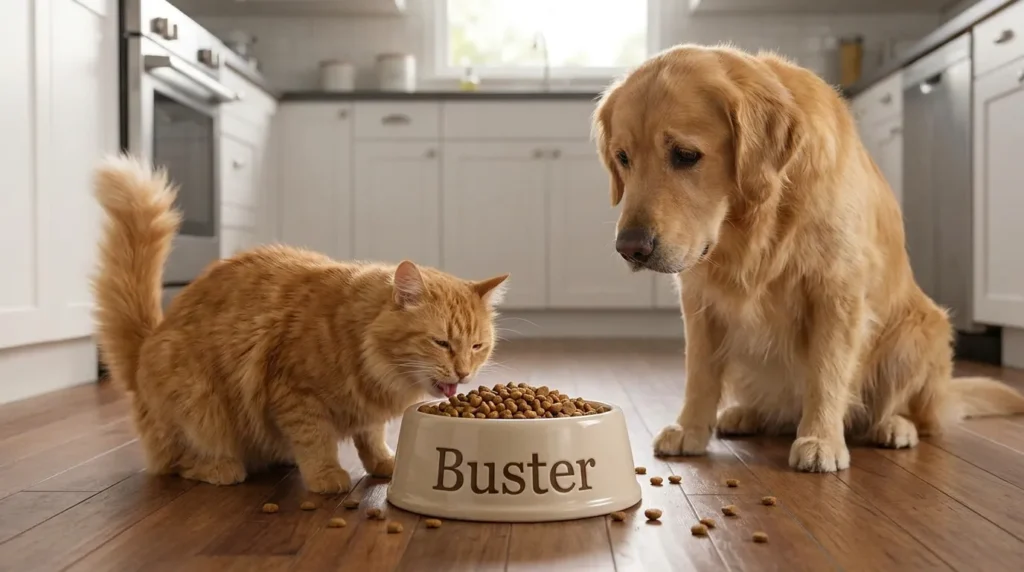
A cat eating dog food can turn bowl theft into a daily sport. Fortunately, you can often stop it with routine changes. Start with the easiest step, then add more control if needed.
1. Feed both pets at set times
Put each meal down for a limited period. Then remove the bowls when your pets finish. This approach prevents all-day grazing. For a cat eating dog food between meals, that simple change can work quickly.
A feeding schedule also helps you track appetite. As a result, you may notice health changes sooner. Ask your vet how often each pet should eat.
2. Use separate rooms
Feed the dog behind a closed door or baby gate. Meanwhile, place your cat’s meal in another calm space. Keep the pets apart until both bowls are empty.
This method also reduces stress. However, make sure neither pet feels trapped or rushed.
3. Put the cat’s bowl up high
Many cats enjoy eating on a stable raised surface. Dogs usually cannot reach a shelf or cat feeding station. Therefore, your cat can eat without guarding their bowl.
Choose a safe surface with easy access. Avoid slippery counters or crowded shelves. Senior cats may need a low step or ramp.
4. Try a microchip feeder
A microchip feeder opens only for the assigned pet. It can help when animals need different diets. It is also useful when one pet eats slowly.
They cost more, but they can solve a stubborn cat eating dog food problem.
5. Make your cat’s meal more appealing
Serve fresh food in a clean, shallow bowl. You can also warm wet food slightly, but never make it hot. A spoonful of warm water may boost the smell.
Don’t add sauces, stock, or seasonings without veterinary approval. Onion and garlic can harm cats. Also, avoid sudden diet changes because they may upset the stomach.
6. Check portions and calories
Your cat may steal because their own portion is too small. However, guessing can lead to weight gain. Use the package guide as a starting point, not a perfect rule.
Ask your vet to assess body condition and suggest a daily calorie target.
7. Reward the right bowl
Praise your cat when they approach their own food. You can offer a tiny cat-safe treat after the meal. However, keep treats within your vet’s recommended limit.
Never shout, spray water, or scare your cat away. Punishment can create stress around food. Instead, block access and reward the behaviour you want.
Cat Food vs Dog Food: A Real-Life Example
Imagine Max the dog eats slowly and walks away. Luna, the cat eating dog food, finishes his leftovers. Soon, she starts leaving part of her own meal.
The simple fix starts with separate rooms. Max gets 15 minutes to eat behind a closed door. Meanwhile, Luna eats on a raised station in the hall.
Their owner removes both bowls afterward. As a result, Luna returns to complete cat food.
This example shows why management beats correction. Change the setup so the wrong bowl stays unavailable.
Common Mistakes When a Cat Eats Dog Food
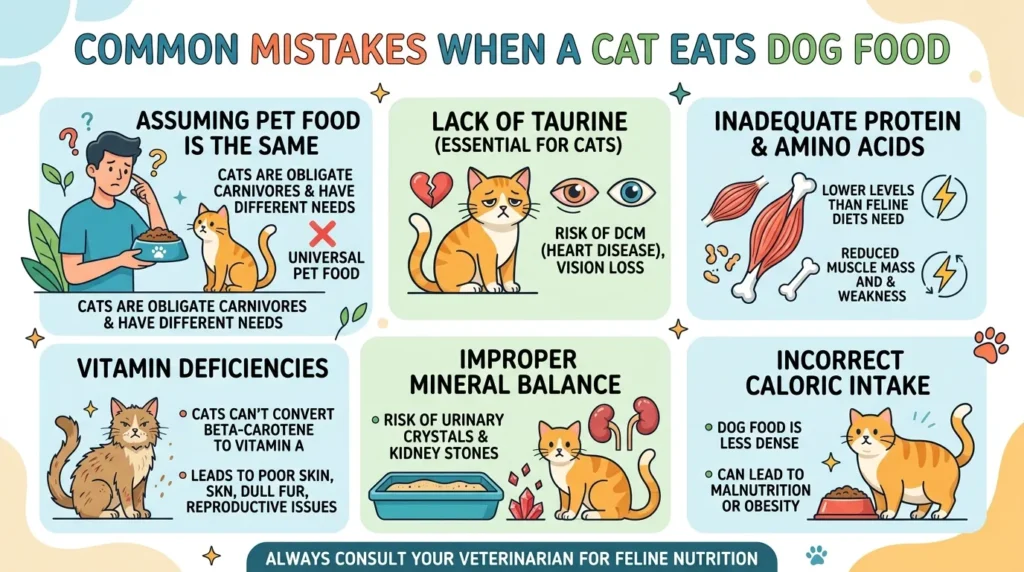
When a cat eating dog food becomes a pattern, caring owners can still make choices that backfire. Here are the most common mistakes in multi-pet homes.
Treating dog food as a cheap cat food substitute
Dog food may look similar, but the nutrient balance is different. Therefore, it should not become a budget replacement. Ask a local pet food bank for help if costs are difficult.
Mixing large amounts into cat food
A few crumbs may tempt a picky cat. Still, regular mixing can unbalance the overall diet. Ask your vet before adding another pet food to every meal.
Using supplements without guidance
Taurine powder alone cannot fix every difference between canine and feline nutrition. Too much of some nutrients can also cause trouble. Therefore, never build a homemade fix without a veterinary nutrition plan.
Ignoring a sudden appetite change
A new cat eating dog food habit may signal hunger, stress, or illness. Watch for weight loss, thirst, vomiting, or behaviour changes. Book a vet visit if the change continues.
Leaving prescription dog food within reach
Prescription diets support specific medical conditions. Your cat may not need their altered nutrient levels. Store the food securely and feed pets apart.
Cat Eating Dog Food FAQ
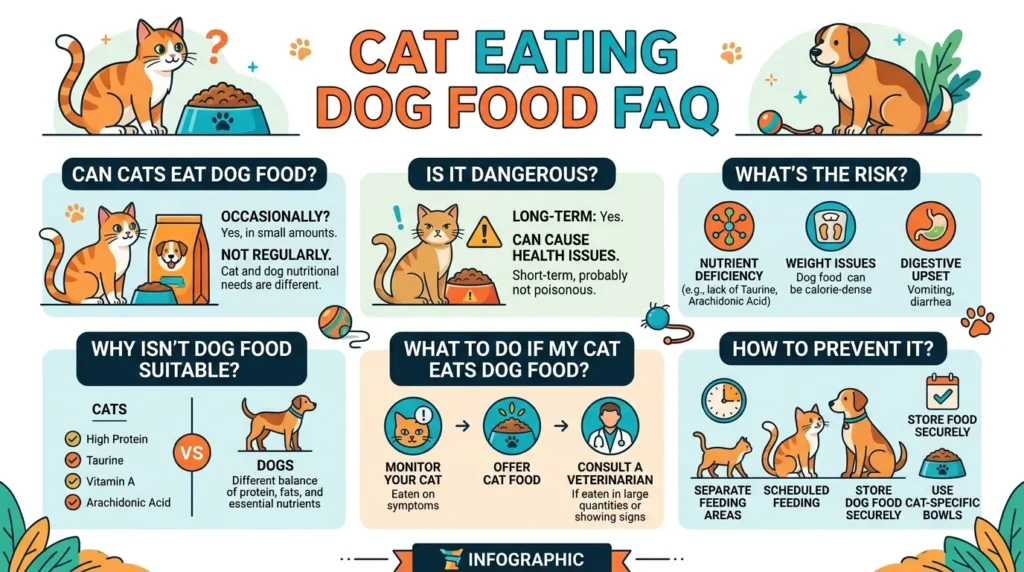
Can cats eat dog food for one day?
A healthy adult cat will often tolerate a small amount for one day. However, return to complete cat food as soon as possible. Call your vet if your cat ate a large amount or seems unwell.
Is dry dog food worse than wet dog food for cats?
Neither type can provide a reliable long-term cat diet. The main issue is the nutrient formula, not only the texture. Wet dog food may also spoil quickly when left out.
What happens if a cat eats dog food every day?
A cat eating dog food every day may leave proper cat food unfinished. Over time, that may cause taurine deficiency and other nutrient gaps. Heart, eye, skin, coat, and general health may suffer.
Can kittens eat dog food?
Kittens need food made for growth and development. Dog food does not meet those specific needs. Contact your vet if a kitten keeps stealing meals or refuses kitten food.
Why does my cat prefer dog food?
Your cat may like the smell, shape, location, or novelty. They may also feel hungry or dislike their bowl. However, sudden intense hunger deserves veterinary attention.
Should I make my cat vomit after eating dog food?
No. Don’t make your cat vomit unless a vet gives direct instructions. Instead, remove the food, check the package, and watch for symptoms. Call your vet with any concerns.
They should have separate bowls and species-appropriate food. Separate bowls reduce food stealing and help you track intake. They can also lower tension during meals.
What to Do Today
A cat eating dog food once is usually a manageable mishap. Remove the dog bowl, offer fresh water, and return to complete cat food. Then watch your cat for stomach upset or unusual behaviour.
However, regular dog food can leave important gaps in a cat’s diet. Use timed meals, separate spaces, and raised or microchip feeders. These small changes protect feline nutrition without turning mealtime into a battle.
Finally, contact your vet if the habit continues or your cat seems unwell. Your vet can check weight, appetite, and diet needs. With the right setup, both pets can enjoy their own meals safely.