
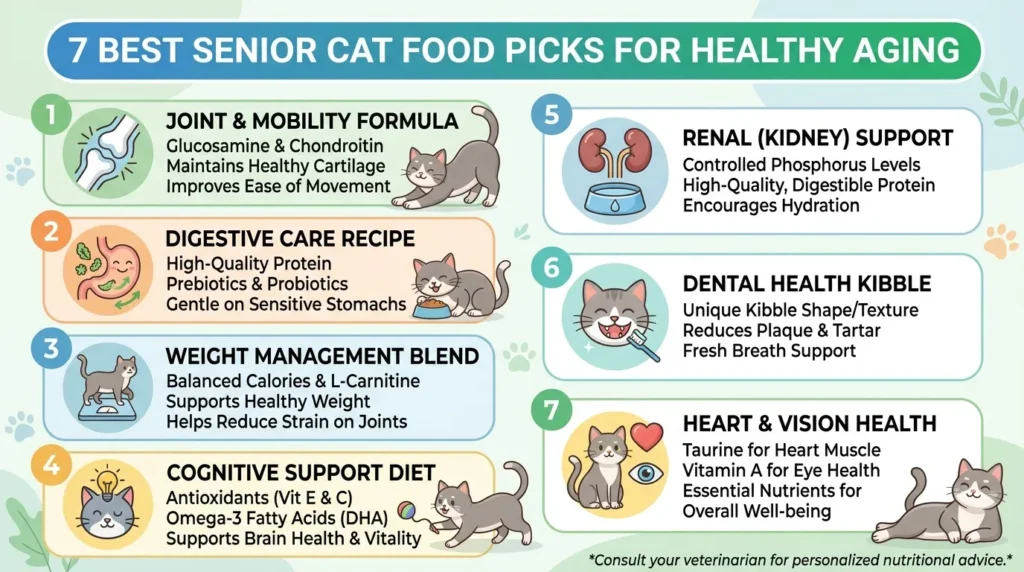
Your older cat may still act like a kitten at breakfast. Yet their body can change quietly with age. The best senior cat food should support strong muscles, steady weight, good hydration, and easy eating. It should also suit your cat’s health, habits, and taste.
Pet food shelves can still feel overwhelming. One bag promotes “natural” ingredients. Meanwhile, your cat may only care about gravy.
This guide makes the choice easier. You’ll learn what matters on a label and which food types fit common senior needs. You’ll also see warning signs that need a vet visit. Most importantly, you’ll know how to choose food your cat will actually eat.
What Makes the Best Senior Cat Food?
The best senior cat food starts with complete and balanced nutrition. Look for a nutritional adequacy statement for adult maintenance. In the United States, this often refers to AAFCO nutrient profiles or feeding tests.
Next, think about your cat as an individual. Age alone doesn’t tell the whole story. A slim 14-year-old cat needs different calories than an overweight 10-year-old cat. Likewise, kidney disease changes the food choice.
A good senior diet usually offers these features:
- High-quality, digestible animal protein
- Enough calories to maintain a healthy weight
- Moisture that supports daily hydration
- A texture your cat can chew comfortably
- Clear feeding guidance and calorie information
- Reliable manufacturing and quality checks
Protein matters because older cats can lose muscle. Therefore, don’t choose a low-protein food only because the label says “senior.” Healthy older cats still need protein. Cats with kidney disease may need a special balance, so consult your vet.
Moisture also deserves attention. Wet food contains far more water than kibble. As a result, it can help cats increase their daily water intake. Still, many cats do well on wet, dry, or mixed feeding.
Finally, watch your cat’s body condition. You should feel the ribs under a light fat layer. However, the spine and hips shouldn’t look sharp. Ask your vet to show you a body condition and muscle score.
Pro Tip: Weigh your senior cat every two to four weeks. A baby scale can reveal small changes before they become obvious.
How to Choose the Best Senior Cat Food Step by Step
Finding the best senior cat food gets easier when you follow a clear process. Don’t start with the front of the bag. Instead, begin with your cat’s needs.
1. Book a senior wellness check
Ask your vet about weight, muscle condition, teeth, kidneys, thyroid health, and blood sugar. Older cats can hide illness well. Therefore, new food should not replace a proper health check.
Bring the current label and note how much your cat eats. This helps your vet give practical advice.
2. Check the nutritional adequacy statement
Choose a food labeled complete and balanced for adult maintenance. Treats, toppers, and complementary foods may not meet full daily needs. Therefore, they should not form most of the diet.
Check the calorie content too. Feeding guides are only a starting point. Your cat’s weight trend shows whether the amount works.
3. Prioritize protein and palatability
Cats are meat-eaters, and protein helps support muscle. Yet the protein percentage can look very different on wet and dry labels. That happens because wet food contains more water.
For a fair comparison, ask for dry-matter values. Don’t judge a food by one number alone.
Palatability matters too. The best senior cat food has little value if your cat refuses it. Try small cans or bags before buying a large supply.
4. Choose a comfortable texture
Dental pain can make crunchy food difficult. However, some cats with few teeth still manage to kibble well. Watch for dropped food, slow chewing, bad breath, or pawing at the mouth.
Soft pâté, minced food, or gravy may feel easier. You can also add warm water to food. Still, persistent eating trouble needs a dental check.
5. Consider moisture and bowl setup
Place fresh water in several quiet spots. Wide or raised bowls may help some stiff senior cats.
For many cats, the best senior cat food includes added moisture. However, total fluid intake matters more than a marketing claim. A water fountain may also encourage drinking.
6. Change food slowly
Switch over seven to ten days unless your vet says otherwise. First, mix a small amount of new food into the old food. Then, increase the new portion every few days.
Slow changes reduce stomach upset. They also give cautious cats time to accept a new smell and texture.
7. Review the results
Track appetite, weight, stool, vomiting, thirst, energy, and coat quality. The best senior cat food should help your cat stay stable and comfortable. However, it cannot fix every medical problem.
Call your vet if your cat loses weight, drinks much more, vomits often, or stops eating. These changes can signal illness, not simple aging.
7 Best Senior Cat Food Types Compared
No single brand suits every older cat. Instead, the best senior cat food depends on the job it needs to do.
| Food type | Best for | Main benefit | Watch for |
| Complete wet food | Cats that drink little | High moisture and soft texture | Refrigerate leftovers promptly |
| Complete dry food | Grazers and puzzle feeders | Easy storage and measured feeding | Lower moisture than wet food |
| Mixed wet and dry plan | Cats that enjoy variety | Flexible texture and hydration | Count calories from both foods |
| Calorie-dense senior food | Thin cats or poor eaters | More energy in a smaller serving | Needs vet guidance for illness |
| Weight-control adult food | Overweight senior cats | Controlled calories and more fullness | Protect muscle during weight loss |
| Veterinary kidney diet | Cats with diagnosed kidney disease | Adjusted phosphorus and other nutrients | Use only with veterinary advice |
| Soft or mousse-style food | Cats with mouth discomfort | Easy licking and chewing | Dental pain still needs treatment |
Best overall choice for many healthy seniors
A complete wet food often makes a strong starting point. However, calories, protein, and preference still matter.
Best choice for picky cats
Try pâté, minced food, or chunks in gravy. Warm the food slightly to release more aroma.
Best choice for thin older cats
Choose calorie-dense food after a vet exam. Weight loss can signal several diseases, so check the cause first.
Best choice for overweight senior cats
Use measured portions and aim for slow loss while protecting muscle. Your vet can set a safe calorie target.
Best choice for kidney disease
A veterinary kidney diet may help diagnosed cats. However, don’t use one for a healthy cat without veterinary advice.
The best senior cat food should fit both medical needs and daily life. For example, a perfect formula won’t help if your arthritic cat can’t reach the bowl. Place food near their favorite resting area.
Common Senior Cat Feeding Mistakes to Avoid
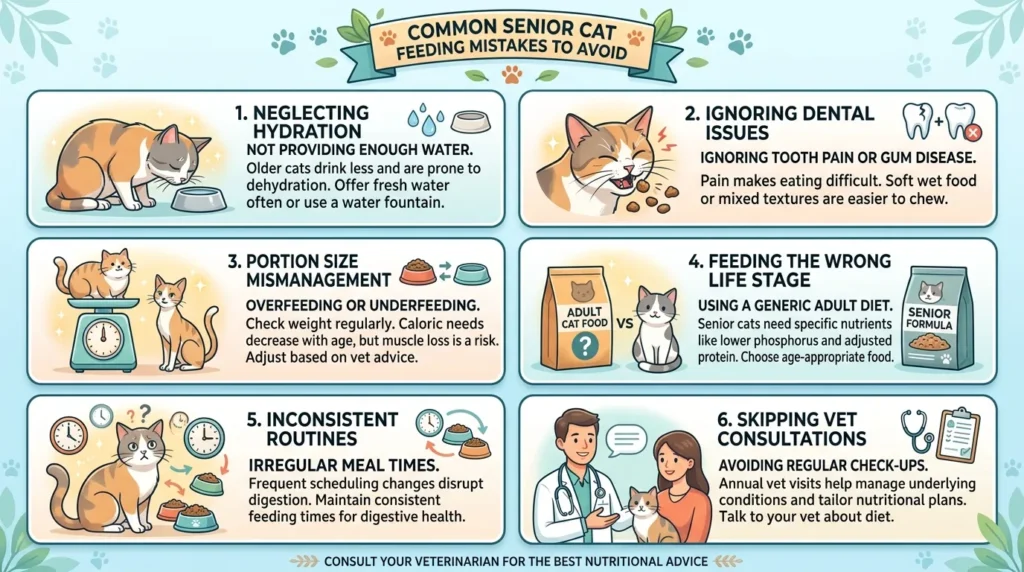
Even caring owners can make small mistakes when choosing the best senior cat food. Fortunately, most are easy to fix.
Choosing food by the ingredient list alone
The ingredient list does not show nutrient quality, digestibility, or manufacturing control. Also, ingredients appear by weight before cooking. Therefore, use the full label and company information.
Look for qualified nutrition experts, strong quality checks, and clear contact details. The best senior cat food comes from a responsive company.
Assuming every senior cat needs fewer calories
Some older cats gain weight because they move less. Others lose weight and muscle. As a result, calorie needs can move in either direction.
Measure portions and check weight often. Don’t rely only on the bowl looking “about right.”
Cutting protein without a diagnosis
Healthy senior cats still need enough protein to maintain muscle. A veterinary diet should match a diagnosed condition.
Ignoring dental pain
A cat may approach food and then walk away. They may chew on one side or drop pieces. These signs need a dental exam, even when soft food helps temporarily.
Changing diets too quickly
A sudden switch can cause loose stool or food refusal. Therefore, transition slowly when possible. Keep the old food available during the early stages.
Feeding too many extras
Treats, tuna, broth, and toppers can crowd out balanced nutrition. Keep extras small unless your vet gives another plan. Also, avoid onions, garlic, and heavily salted human foods.
Missing changes in appetite or thirst
Older cats often hide discomfort. Increased thirst, repeated vomiting, weight loss, or poor appetite need attention. Consult your vet promptly, especially if your cat stops eating.
Best Senior Cat Food FAQ
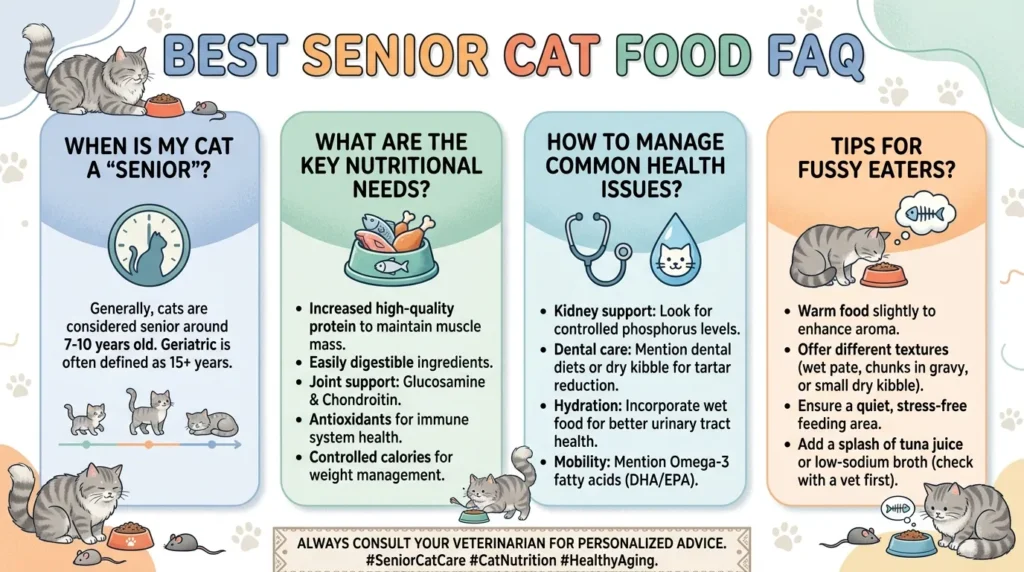
At what age should a cat eat senior food?
Many vets consider cats around 10 years and older to be seniors. However, the right switch depends on health and body condition. A healthy older cat may continue eating a suitable adult food.
Ask your vet during routine checks. They can decide whether a senior formula offers a real benefit.
Is wet food better for senior cats?
Wet food can help hydration because it contains much more water than kibble. It also offers a soft texture. Therefore, it suits many older cats.
Still, dry food can work well for some cats. The best senior cat food may include wet food, dry food, or both.
Does senior cat food need less protein?
Not always. Healthy older cats need protein to support muscle. However, certain medical conditions may require a carefully adjusted diet.
Don’t reduce protein based on age alone. Instead, discuss bloodwork, urine results, weight, and muscle condition with your vet.
How can I tempt a picky senior cat to eat?
Offer small, fresh meals in a quiet place. Warm wet food slightly and try a clean, wide bowl.
However, sudden pickiness can signal pain or illness. Contact your vet if appetite drops or weight falls.
Can senior cats eat regular adult cat food?
Yes, some can. “Senior” is not always a separate regulated nutritional life stage. A complete adult maintenance food may suit a healthy senior cat.
The best senior cat food is the food that meets your cat’s actual needs. The age number on the bag matters less than the full nutrition plan.
Should I buy grain-free senior cat food?
Grain-free does not automatically mean healthier. Cats need specific nutrients, not a fashionable ingredient list. Therefore, focus on complete nutrition, quality control, calories, and your cat’s response.
Choose grain-free food only for a clear reason.
How do I know whether a new food is working?
Check your cat’s weight, muscle, appetite, stool, coat, and energy. Also, watch thirst and litter box habits. Review these signs after two to four weeks.
A stable weight and eager appetite suggest the best senior cat food is doing its job. Ongoing vomiting, diarrhea, or weight loss needs veterinary care.
Choose Food for the Cat in Front of You
The best senior cat food supports your cat’s body, health, and daily comfort. Start with a complete and balanced diet. Then, check protein, calories, moisture, texture, and company standards.
Most importantly, watch your cat rather than chasing label trends. A shiny bag cannot tell you whether your cat feels well. Regular weigh-ins and vet checks give you far better clues.
Choose one suitable food, switch slowly, and track the results. Then, adjust the plan with your vet when your cat’s needs change. Your older companion deserves meals that feel easy, taste good, and support many more happy days.