
Introduction
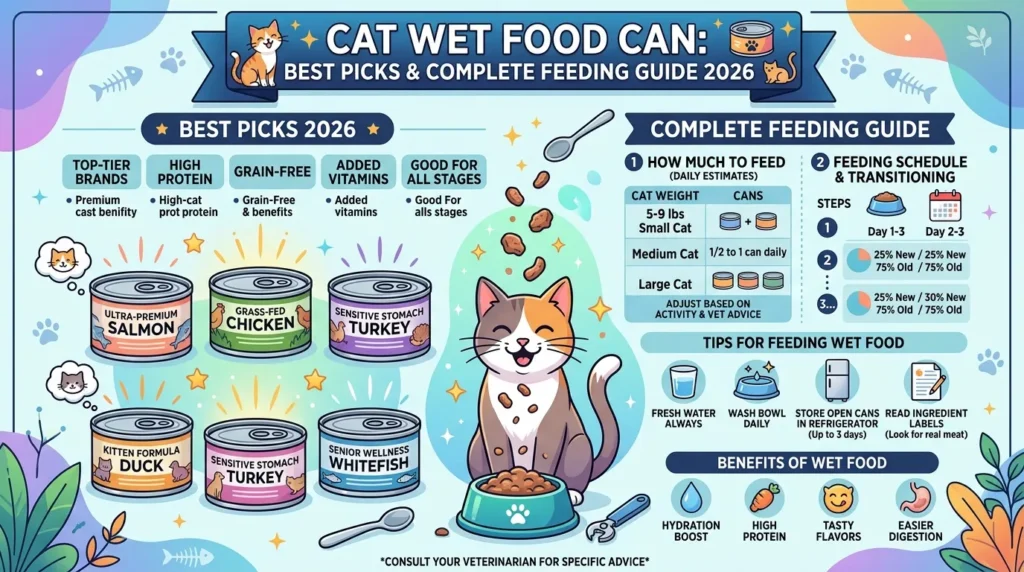
Your cat walks past their dry food bowl without a second glance. Sound familiar? Many cat owners deal with this exact frustration every single day. The good news is that a quality cat wet food can often solve the problem instantly.
Wet food in a can isn’t just more appealing to picky eaters. It delivers real nutritional benefits that dry kibble simply can’t match especially when it comes to hydration, protein content, and digestibility. Cats are obligate carnivores, and canned wet food typically mirrors their natural diet far more closely than dry food does.
However, with hundreds of options on the market, choosing the right cat wet food can feel overwhelming. Which brands actually deliver on their promises? How much should you feed? What ingredients should you avoid?
In my experience, most cat owners make the same few mistakes when switching to canned wet food. Therefore, this guide covers everything from understanding labels to top brand picks to common feeding errors. Let’s make sure your cat gets the nutrition they genuinely deserve.
Why Cat Wet Food Can Is Better Than Dry Food for Many Cats
The Hydration Advantage
Cats evolved in desert environments. As a result, they have a naturally low thirst drive. They’re biologically designed to get most of their moisture from food, not from a water bowl. Dry kibble contains only about 10% moisture. A cat wet food can, however, contain 75 to 80% moisture. That difference is enormous for your cat’s long-term kidney and urinary health.
In my experience, cats who eat primarily wet food drink noticeably less water because they don’t need to drink as much. Their food does the hydrating work for them. Therefore, feeding canned wet food is one of the simplest ways to protect your cat’s kidneys and urinary tract over their lifetime.
Higher Protein, Lower Carbs
Canned wet food generally contains more animal protein and far fewer carbohydrates than dry food. Because cats are obligate carnivores, their bodies aren’t designed to process large amounts of carbohydrates efficiently. Also, high-carb diets in cats contribute to obesity and diabetes over time.
A quality cat wet food can typically features:
- Real named meat as the first ingredient (chicken, salmon, tuna, turkey)
- High protein content usually 8–12% in wet form (equivalent to 40–50% on a dry matter basis)
- Low carbohydrate content usually under 10% on a dry matter basis
- No artificial colors or flavors in premium options
- Added vitamins and minerals to ensure complete nutrition
Benefits at a Glance
Here’s a quick comparison of cat wet food cans versus dry kibble:
| Feature | Cat Wet Food Can | Dry Kibble |
| Moisture Content | 75–80% | 8–10% |
| Protein Level | High | Moderate |
| Carbohydrate Level | Low | High |
| Palatability | Very High | Moderate |
| Kidney Support | Excellent | Limited |
| Cost Per Day | Higher | Lower |
| Shelf Life (opened) | 2–3 days refrigerated | 6 weeks |
| Best For | Picky eaters, senior cats, urinary health | Convenience, budget feeding |
How to Choose the Best Cat Wet Food Can: Step-by-Step Guide

- Named protein source first. The first ingredient should always be a specific animal protein: chicken, turkey, salmon, beef, or tuna. Avoid cans where “meat by-products” or “animal digest” appears at the top without any species named.
- Check for added water or broth. Many canned foods list water or broth as the second ingredient. This is perfectly normal and expected in wet food. However, it also means you need to evaluate protein content on a “dry matter basis” for accurate comparisons.
- Look for the AAFCO statement. Find the nutritional adequacy statement on the label. It should say “complete and balanced” for your cat’s life stage. This confirms the food meets minimum nutritional requirements set by the Association of American Feed Control Officials.
- Avoid these ingredients. Scan the label for items that signal lower quality:
- Artificial colors (Red 40, Yellow 5)
- Artificial preservatives (BHA, BHT, ethoxyquin)
- Excessive thickeners (large amounts of carrageenan)
- Corn syrup or added sugars
- Unnamed meat sources (“meat” without a species)
- Match the formula to your cat’s life stage. Kitten formulas have higher protein and caloric density. Senior formulas often have lower phosphorus to protect aging kidneys. Also, weight management formulas use reduced fat content. Therefore, always buy the formula that matches your cat’s age and health status.
- Consider texture preference. Cat wet food cans come in several textures:
- Pâté smooth, blended texture; easiest to eat
- Chunks in gravy pieces of meat in a savory liquid
- Shredded thin strips of meat in broth or gravy
- Minced finely ground meat in sauce
- Stew chunkier pieces in a thicker sauce
- Factor in your cat’s health needs. Cats with urinary issues need low-magnesium formulas. Cats with kidney disease need low-phosphorus options. Therefore, always consult your vet about specific dietary requirements before choosing a canned food for a cat with health conditions.
Pro Tip: Rotate between two or three different cat wet food brands and flavors regularly. This prevents your cat from becoming addicted to a single food which makes it very difficult to switch when necessary. Variety also ensures a broader range of nutrients over time.
Best Cat Wet Food Can Brands in 2026: Honest Comparison
Top Picks Across Different Budgets
Here’s how the most popular cat wet food can brands compare across key criteria:
| Brand | Price Range | First Ingredient | Grain-Free | Life Stages | Best For |
| Wellness CORE | $$$ | Deboned chicken/turkey | Yes | All | High-protein health focus |
| Purina Pro Plan | $$$ | Real chicken/salmon | Some | All | Vet-recommended daily feeding |
| Royal Canin | $$$ | Chicken/fish | Some | Specific | Breed & condition-specific needs |
| Hill’s Science Diet | $$$ | Chicken | Some | All | Clinically validated nutrition |
| Fancy Feast Classic | $ | Chicken/beef/fish | Yes (most) | Adult | Budget-friendly everyday option |
| Blue Buffalo Wilderness | $$$ | Deboned chicken | Yes | All | Natural high-protein diet |
| Iams Proactive Health | $$ | Chicken | No | Adult/Senior | Affordable quality option |
| Merrick Purrfect Bistro | $$$ | Deboned chicken | Yes | All | Natural ingredients, USA made |
My Honest Top 3 Picks
Best Overall: Purina Pro Plan Wet Cat Food
Purina Pro Plan consistently earns top marks from veterinary professionals. Real chicken or salmon leads the formula. The brand invests heavily in nutritional research. Also, their feeding trial-validated AAFCO compliance gives you confidence that real cats thrived on this food in controlled studies. Available in multiple textures and life-stage formulas, it’s genuinely the most versatile option.
Best Budget Pick: Fancy Feast Classic Pâté
Don’t let the low price fool you. Fancy Feast Classic Pâté (not the gravy varieties) actually has a surprisingly clean ingredient profile, real meat leading the formula, no grains in most recipes, and minimal fillers. In my experience, even picky cats rarely turn it down. However, it doesn’t have the same depth of nutritional research as premium brands, so use it as a complement rather than a sole diet if possible.
Best for Health-Focused Owners: Wellness CORE
Wellness CORE uses high-quality deboned meats, delivers exceptional protein content, and avoids artificial additives entirely. Therefore, it’s an excellent choice for owners who prioritize clean, whole-food ingredients. The price point is premium but the ingredient quality genuinely justifies it.
Common Mistakes to Avoid With Cat Wet Food Can Feeding
Mistake 1: Leaving Wet Food Out Too Long
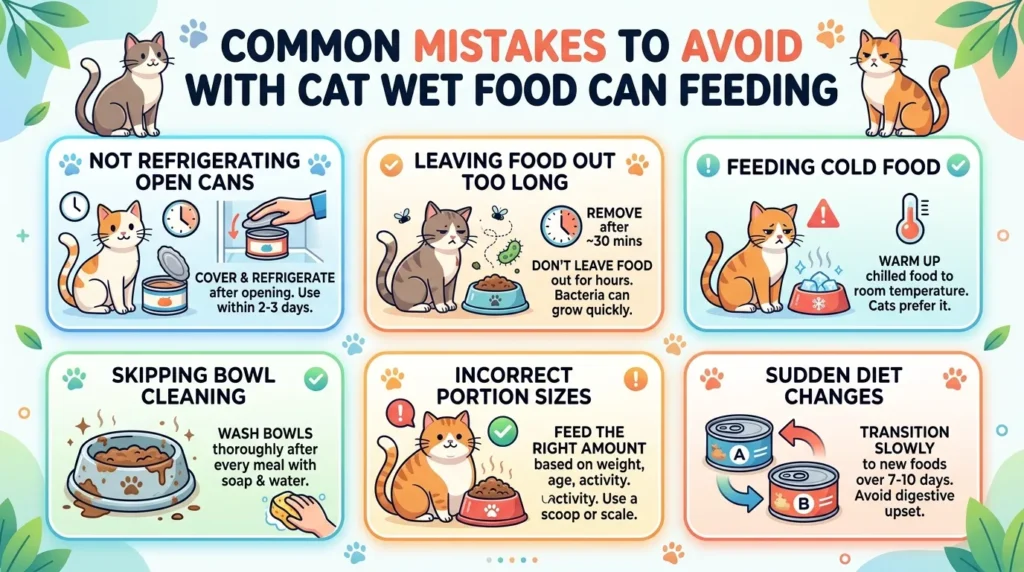
This is the most important mistake to avoid. Wet food left at room temperature for more than two hours grows bacteria rapidly. Therefore, always remove uneaten portions promptly. Refrigerate opened cans immediately and use the food within two to three days. Also, always wash your cat’s bowl after every wet food meal.
Mistake 2: Feeding Only One Flavor or Brand
Cats who eat the same single food for years become “addicted” to that specific taste and texture. As a result, switching foods when necessary due to health changes, recalls, or availability issues becomes extremely difficult. Therefore, rotate between two or three options regularly from an early age.
Mistake 3: Overfeeding Because It Looks Small
Wet food is nutrient-dense despite its high water content. Also, many cat owners mistakenly feel the portions look “too small” compared to dry food. However, following the feeding guidelines on the can prevents obesity, one of the most common health problems in cats today. Measure every meal, especially during the first month of switching.
Mistake 4: Mixing Hot and Cold Food Incorrectly
Serving wet food straight from the refrigerator often results in refusal, especially in picky cats. Cold food has reduced aroma, which dramatically affects palatability. Therefore, always warm refrigerated wet food slightly before serving. A brief 10-second microwave warming (always check the temperature) makes a significant difference in acceptance.
Mistake 5: Not Consulting Your Vet for Cats With Health Issues
Wet food can be genuinely therapeutic for cats with urinary issues, kidney disease, or diabetes. However, the wrong formula can worsen certain conditions. For example, some canned fish-based foods are high in phosphorus problematic for cats with kidney disease. Therefore, always consult your vet before choosing a specific cat wet food can for a cat with an existing health condition.
Pro Tip: If your cat refuses wet food initially, try mixing a tiny amount into their dry food first just a teaspoon. Gradually increase the wet food ratio over two weeks. Also, try warming it slightly and offering it on a flat plate instead of a deep bowl. Many cats dislike their whiskers touching the bowl sides, a real phenomenon called “whisker fatigue.”
Frequently Asked Questions About Cat Wet Food Can
1. How much cat wet food should I feed my cat per day?
The right amount depends on your cat’s weight, age, and activity level. As a general guideline, most adult cats need approximately one 3-oz can per 3 to 3.5 pounds of body weight daily. However, always start with the feeding guidelines printed on the specific can you’re using because caloric density varies between brands and formulas. Also, if you’re mixing wet and dry food, reduce both portions proportionally to avoid overfeeding. Your vet can give you a precise daily caloric target based on your cat’s current weight and body condition score.
2. Is it okay to feed my cat wet food every day?
Yes, feeding wet food daily is not only safe but genuinely beneficial for most cats. The high moisture content supports kidney and urinary health. The higher protein and lower carbohydrate profile aligns with a cat’s natural nutritional needs. Therefore, many veterinary nutritionists actually recommend wet food as the primary diet for cats especially for those prone to urinary issues or obesity. However, always ensure the food carries an AAFCO “complete and balanced” statement to confirm it meets all nutritional requirements.
3. How long does an opened cat wet food last in the fridge?
An opened cat wet food can last two to three days in the refrigerator when stored properly. Transfer unused food to a sealed container rather than storing it in the open can. Also, always check for off smells before serving refrigerated wet food. When in doubt, throwing it out your cat’s digestive health isn’t worth the risk of serving spoiled food. Never freeze wet cat food in the original. You can transfer it to a freezer-safe container first if you want to freeze portions.
4. Can kittens eat the same cat wet food can as adult cats?
Kittens have significantly different nutritional needs than adult cats. They need higher protein, more calories, and specific calcium and phosphorus ratios for healthy growth and bone development. Therefore, always choose a wet food labeled specifically for kittens or “all life stages.” Adult-formula wet food doesn’t provide adequate nutrition for growing kittens when fed as their sole diet. Also, consult your vet about the right transition timeline from kitten to adult food usually around 12 months of age for most breeds.
5. Can grain-free cat wet food be better than grain-inclusive options?
For cats, grain-free wet food is generally considered appropriate because cats are obligate carnivores who don’t need grains in their diet. However, the grain-free versus grain-inclusive debate is more significant in dogs (due to DCM research) than in cats. The most important factors in any cat wet food can be protein quality, moisture content, and overall ingredient transparency, not simply whether grains are present or absent. Therefore, focus on ingredient quality rather than grain-free marketing claims when making your choice.
6. Why does my cat suddenly refuse the wet food they used to love?
Cats can develop food aversions for several reasons. Manufacturers sometimes quietly change formulas and cats often notice before you do. Also, illness, dental pain, or stress can cause sudden food refusal. Try warming the food slightly to enhance its aroma. If refusal continues for more than 24 to 48 hours, especially combined with other behavioral changes, consult your vet to rule out health issues. Never leave a cat without food for more than 24 hours. Hepatic lipidosis (fatty liver disease) can develop quickly in cats who stop eating.
7. What’s the difference between pâté and chunks in gravy cat wet food?
Pâté is a smooth, blended texture with no visible chunks. Most veterinarians recommend pâté formulas because the ingredient ratios are easier to control and what you see on the label more accurately reflects what’s in every bite. Chunks in gravy, however, contain pieces of meat surrounded by a liquid sauce. Also, the gravy itself is often thickened with starches or gums. Therefore, pâté generally offers cleaner nutrition per calorie. That said, texture preference is highly individual; some cats strongly prefer one over the other, and palatability matters most if your cat won’t eat the food at all.
Give Your Cat the Nutrition They Deserve
Choosing the right cat wet food can is one of the most impactful daily decisions you make for your cat’s health. The hydration benefits alone make it worth incorporating into your cat’s diet especially for cats prone to urinary or kidney issues.
Start by reading labels carefully. Look for named proteins, AAFCO compliance, and appropriate life-stage formulas. Rotate between quality brands to prevent food fixation. Also, store opened cans correctly and serve food at a temperature your cat finds appealing.
For cats with specific health conditions, your vet’s guidance on formula selection is always the most important input. Therefore, don’t skip that conversation especially for senior cats or those with diagnosed health issues.