
Introduction
You’ve probably seen it happen. Your dog sneaks over to the cat’s bowl and wolfs down a mouthful of cat food before you can stop them. Then you immediately wonder if dogs can eat cat food, or should you be worried?
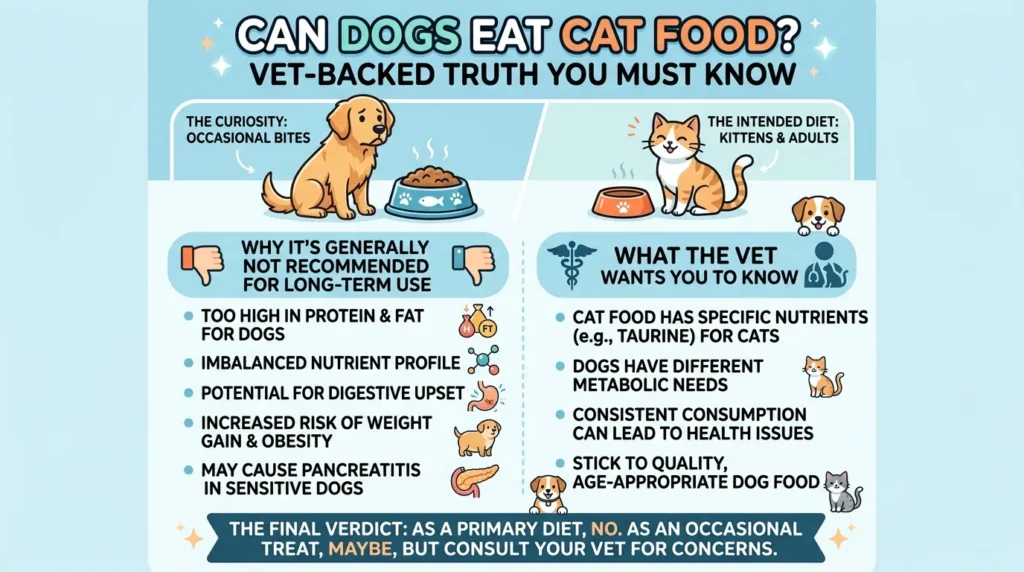
Here’s the short answer: a small accidental bite won’t hurt most dogs. However, feeding cat food to your dog regularly is a completely different story. Cat food and dog food look similar but they’re formulated for very different nutritional needs. As a result, what’s perfectly healthy for your cat can actually cause real problems for your dog over time.
In my experience, this is one of the most common questions dog owners ask especially in multi-pet households. Therefore, this guide gives you the complete, honest answer. You’ll learn exactly what’s in cat food, why it affects dogs differently, what warning signs to watch for, and how to keep your dog safely away from the cat’s bowl going forward.
Let’s get into everything you need to know.
Can Dogs Eat Cat Food? The Science Behind the Answer
Why Cat Food and Dog Food Are So Different
At first glance, both cat food and dog food look pretty similar. Both come in bags or cans. Both smell meaty. However, their nutritional profiles are fundamentally different because cats and dogs have completely different biological needs.
Cats are obligate carnivores. This means they must eat meat to survive. As a result, cat food is much higher in:
- Protein typically 30–45% in dry cat food versus 18–26% in dry dog food
- Fat significantly higher fat content for cats’ energy needs
- Taurine an essential amino acid cats can’t produce themselves
- Arachidonic acid a fatty acid cats need from food directly
Dogs, however, are omnivores. They thrive on a balanced mix of protein, carbohydrates, fats, vitamins, and minerals. Therefore, dog food is formulated very differently from cat food with lower protein and fat levels and added plant-based nutrients.
What Happens When a Dog Eats Cat Food?
So, can dogs eat cat food without any immediate reaction? For a healthy adult dog, one accidental serving usually causes no serious harm. However, the high protein and fat content in cat food can trigger:
- Upset stomach vomiting or loose stools within a few hours
- Diarrhea especially in dogs with sensitive digestive systems
- Pancreatitis a serious inflammation of the pancreas triggered by high fat intake
- Weight gain because cat food is significantly more calorie-dense than dog food
In addition, dogs with pre-existing conditions like kidney disease, liver problems, or pancreatitis face much higher risks. Therefore, always consult your vet if your dog ate a significant amount of cat food and shows any symptoms.
What to Do If Your Dog Ate Cat Food
Immediate Steps to Take
First, don’t panic. One small serving of cat food won’t send a healthy dog to the emergency vet. However, taking the right steps quickly helps you manage the situation safely.
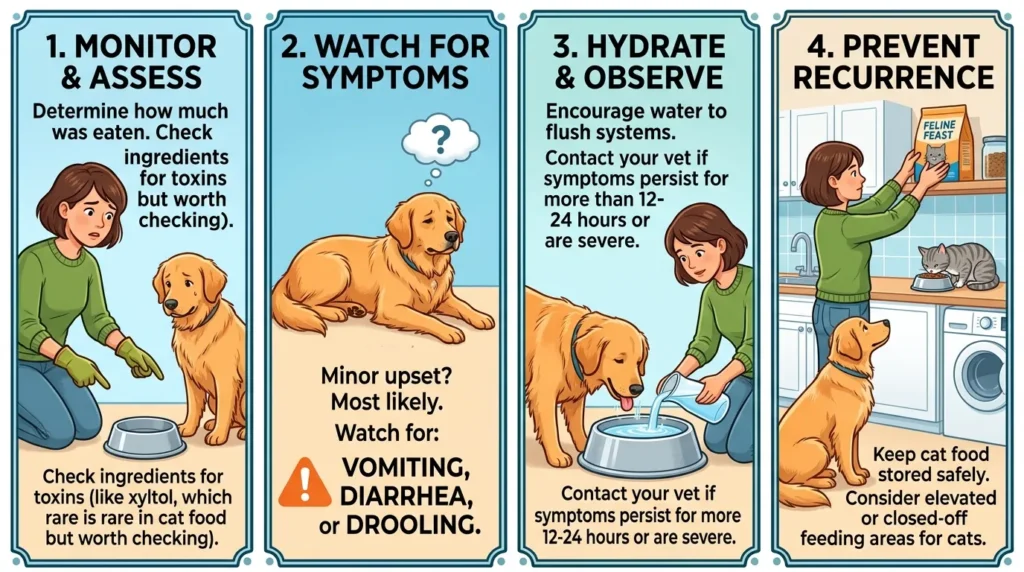
Follow these steps if your dog ate cat food:
- Assess how much they ate. A few bites is very different from finishing the entire cat’s bowl. Therefore, estimate the quantity as accurately as possible.
- Check the ingredients. Some cat foods contain ingredients that are toxic to dogs like onion powder, garlic, or certain preservatives. As a result, read the label carefully and make a note of the ingredients.
- Watch for symptoms. Monitor your dog closely for the next 4–6 hours. Also, look out for vomiting, diarrhea, lethargy, bloating, or loss of appetite.
- Withhold the next meal if needed. If your dog shows mild stomach upset, skipping one meal gives their digestive system time to recover. However, always provide fresh water.
- Call your vet if symptoms appear. Any vomiting that persists beyond 24 hours, bloody stools, extreme lethargy, or signs of abdominal pain require immediate veterinary attention. Therefore, don’t wait to call your vet right away.
- Keep cat food out of reach going forward. Use a pet gate, elevated feeding station, or microchip-activated feeder to prevent repeat episodes.
Signs of Pancreatitis to Watch For
Pancreatitis is one of the most serious risks when dogs eat high-fat foods like cat food. Therefore, knowing the warning signs matters enormously. Watch for:
- Hunched back posture
- Repeated vomiting
- Loss of appetite
- Obvious abdominal pain when touched
- Lethargy and weakness
- Fever
If you notice any of these signs after your dog ate cat food, contact your vet immediately. Pancreatitis requires prompt veterinary treatment; it’s not something to wait out at home.
Pro Tip: In multi-pet homes, feed your cat in a separate room with a baby gate that only the cat can jump over. Alternatively, use a microchip-activated cat feeder that opens only for your cat’s specific chip. This simple setup eliminates the temptation entirely for your dog.
Can Dogs Eat Cat Food Long-Term? The Real Risks
Why Regular Cat Food Feeding Harms Dogs
Some dog owners, especially in multi-pet households, find it easier to feed both pets the same food. However, feeding cat food to dogs long-term creates serious nutritional imbalances. Here’s exactly what goes wrong:
| Nutritional Issue | Why It’s a Problem for Dogs |
| Excess protein | Puts strain on kidneys over time |
| Excess fat | Leads to obesity and pancreatitis risk |
| Too little fiber | Causes digestive irregularity |
| Missing dog-specific nutrients | Creates nutritional gaps over months |
| Wrong vitamin ratios | Can lead to deficiencies or toxicities |
| Too many calories | Causes rapid weight gain |
Specific Health Risks of Long-Term Cat Food Feeding
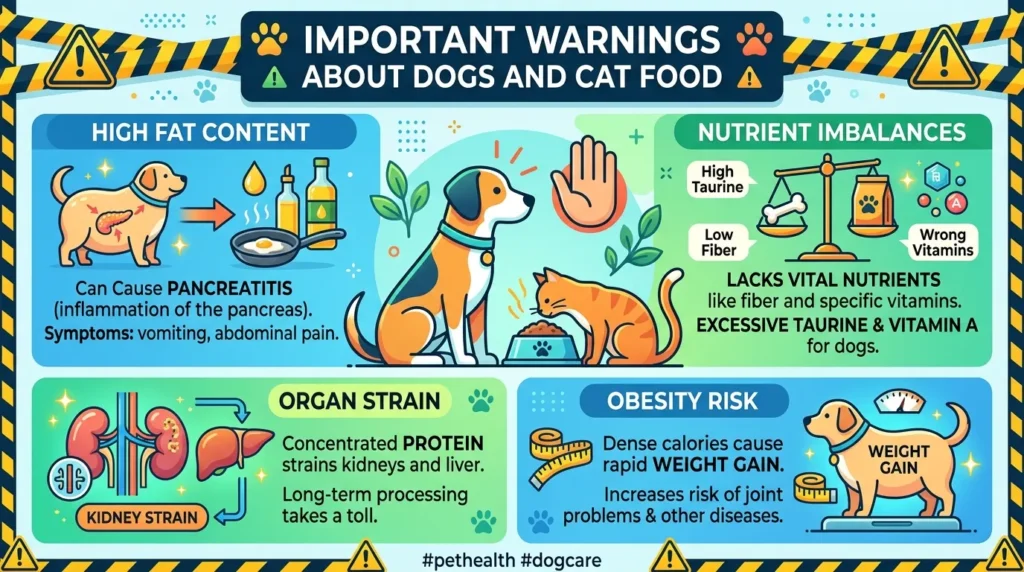
Kidney Strain Dogs’ kidneys process protein differently from cats’ kidneys. Therefore, consistently feeding excess protein stresses the renal system especially in senior dogs or those with existing kidney concerns. As a result, older dogs face the highest long-term risk from regular cat food consumption.
Obesity Cat food contains significantly more calories per cup than equivalent dog food. In addition, the higher fat content accelerates weight gain. Because obesity leads to joint problems, heart disease, and diabetes in dogs, this risk compounds seriously over time.
Nutritional Deficiency Cat food lacks the balanced vitamin and mineral profile dogs need. For example, dogs require specific ratios of calcium and phosphorus for bone health. Also, fiber levels in cat food are too low for healthy canine digestion. Therefore, a dog eating only cat food develops nutritional gaps that affect long-term health significantly.
Important Warnings About Dogs and Cat Food
Toxic Ingredients Sometimes Found in Cat Food
Not all cat food ingredients are safe for dogs. Therefore, always check the label if your dog accesses cat food. Watch specifically for:
- Onion powder or garlic powder toxic to dogs in any amount
- Propylene glycol found in some semi-moist cat foods, harmful to dogs
- High sodium content some cat foods contain salt levels too high for dogs
- Artificial preservatives BHA, BHT levels may differ from dog food standards
- Fish-heavy formulas very high mercury content in some fish-based cat foods
Dogs With Pre-Existing Conditions Face Higher Risks
For most healthy adult dogs, occasional cat food exposure causes temporary digestive upset. However, dogs with the following conditions face much more serious risks:
- Pancreatitis history high fat content triggers flare-ups
- Kidney disease excess protein accelerates kidney decline
- Obesity additional high-calorie food worsens weight problems
- Liver disease excess protein strains liver function
- Food allergies cat food proteins may trigger allergic reactions
Therefore, if your dog has any of these conditions and accessed cat food, contact your vet the same day even if your dog seems fine initially.
What About Cat Treats?
Occasional cat treats pose less risk than full cat food meals. However, the same principles apply: high protein, high fat, and potentially unbalanced nutrients make them unsuitable as regular dog snacks. Also, some cat treats contain fish oils in concentrations that cause digestive upset in dogs. Therefore, stick to dog-specific treats whenever possible.
Pro Tip: If you have both a cat and a dog at home, feed them in completely separate spaces at set meal times. Pick up all food bowls after 20–30 minutes regardless of whether they finished. This eliminates the opportunity for food swapping entirely and actually encourages better eating habits in both pets.
Frequently Asked Questions: Can Dogs Eat Cat Food?
1. Can dogs eat cat food in an emergency?
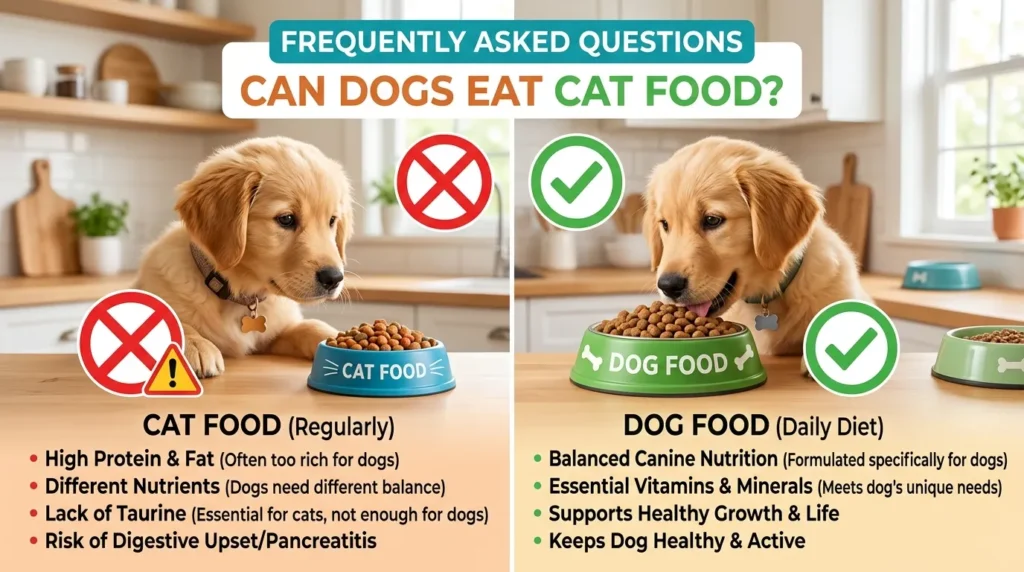
Yes, in a genuine emergency where no dog food is available, a single meal of cat food won’t harm a healthy adult dog. However, it’s not ideal, even short-term. The high protein and fat content may cause mild digestive upset. Therefore, if you must use cat food temporarily, use a small portion and transition back to proper dog food as quickly as possible. Also, consult your vet if your dog has any health conditions before using cat food as a substitute.
2. My dog eats cat food every day. How serious is this?
This is a genuinely serious concern that needs immediate attention. Daily cat food consumption creates progressive nutritional imbalances in dogs. Over weeks and months, the excessive protein strains the kidneys, the high fat increases pancreatitis risk, and the missing dog-specific nutrients create deficiencies that affect long-term health. Therefore, stop the practice immediately and transition your dog back to a complete, balanced dog food. Also, schedule a vet check-up to assess any early impact on kidney or pancreatic health.
3. Can puppies eat cat food?
Puppies should never eat cat food regularly. Their developing systems are especially sensitive to nutritional imbalances. Cat food’s high protein and fat content can disrupt healthy growth patterns and place unnecessary strain on developing organs. Also, puppies need very specific calcium-to-phosphorus ratios for proper bone development ratios that cat food doesn’t provide. Therefore, always feed puppies a formula specifically designed for their life stage and breed size.
4. Why does my dog prefer cat food over their own food?
This is extremely common and the answer is simple. Cat food smells and tastes more intensely meaty than dog food because of its higher protein and fat content. As a result, dogs find it irresistible. However, preference doesn’t equal suitability. Dogs often prefer ice cream over their regular food too but that doesn’t make it a healthy choice. Therefore, if your dog consistently refuses their own food in favor of cat food, discuss the situation with your vet. Your dog’s regular food may need a palatability upgrade rather than a switch to cat food.
5. Can dogs eat wet cat food more safely than dry cat food?
Both wet and dry cat food carry the same core risks for dogs: excessive protein, excessive fat, and nutritional imbalance. However, wet cat food contains significantly more moisture, which is slightly less calorie-dense per gram than dry cat food. As a result, a small accidental amount of wet cat food may cause less immediate digestive upset than the same quantity of dry cat food. That said, neither form is suitable for regular feeding. The risks remain the same regardless of the format.
6. What should I feed my dog instead of cat food?
Feed your dog a complete, balanced dog food formulated for their specific life stage, size, and health needs. Brands like Purina Pro Plan, Hill’s Science Diet, and Royal Canin offer excellent options across all life stages and health conditions. In addition, always look for the AAFCO nutritional adequacy statement on the label that confirms the food meets minimum nutritional standards for dogs specifically. If you’re unsure which formula suits your dog, ask your vet for a personalized recommendation.
7. Is cat food ever recommended by vets for dogs?
No, veterinarians do not recommend cat food as a regular diet for dogs. However, in very specific medical scenarios (such as a dog needing a very high-protein diet for extreme muscle wasting), a vet might consider a modified approach. This would only ever happen under direct veterinary supervision with careful monitoring. Therefore, never self-prescribe cat food for your dog based on information you’ve read online, always follow your vet’s specific dietary guidance.
Keep Your Dog Safe and Well-Fed
So can dogs eat cat food ? The honest answer is this: occasional accidental bites won’t cause lasting harm to healthy adult dogs. However, regular or intentional cat food feeding creates real health risks from digestive upset and obesity to pancreatitis and kidney strain over time.
Therefore, the smartest approach is prevention. Separate feeding areas, microchip feeders, and consistent meal routines keep your dog in their lane nutritionally. Also, choosing a high-quality, balanced dog food eliminates the temptation for your dog to seek out the cat’s bowl in the first place.
Your dog deserves food designed specifically for their body and needs. Therefore, stick to quality dog food, keep the cat’s bowl out of reach, and schedule a vet check-up if you’re concerned about past cat food exposure.