
Introduction
Standing in the pet food aisle staring at fifty different bags of cat food is genuinely overwhelming. Which one is actually good? Which one is just clever marketing? You want the best for your cat, but figuring out what “best” even means feels impossible.
Choosing the right cat food matters more than most owners realize. Your cat’s diet affects their energy, coat health, weight, and even their lifespan. However, with so many brands, formulas, and conflicting opinions online, it’s easy to feel stuck.
In my experience, most cat owners just want simple, honest guidance. Therefore, this guide breaks everything down clearly what to look for, which ingredients matter, and how to choose confidently. You’ll also get practical comparisons and answers to the questions cat owners ask most often.
By the end, you’ll know exactly how to pick cat food that keeps your feline friend healthy and happy for years to come. Let’s get started.
What Makes Good Cat Food? Understanding the Basics
Why Cats Need Different Nutrition Than Dogs
Cats are obligate carnivores. This means they need significantly more animal protein than dogs do. As a result, good cat food always leads with a named meat source chicken, turkey, fish, or beef.
Also, cats need specific nutrients that only come from animal tissue. Taurine, for example, is an essential amino acid found in meat. Without enough taurine, cats can develop serious heart problems. Therefore, always check that your cat food contains added taurine, especially in wet food formulas.
Key Nutritional Requirements
Here’s what quality cat food should include:
- High animal protein at least 30% for dry food, more for wet food
- Taurine essential for heart and eye health
- Moderate fat content for energy and coat health
- Low to moderate carbohydrates cats don’t need much
- Essential vitamins and minerals including vitamin A and niacin
However, not all cat foods are created equal. Some brands cut corners with fillers like corn and wheat gluten. Therefore, reading the ingredient label carefully makes a real difference.
Wet Food vs. Dry Food
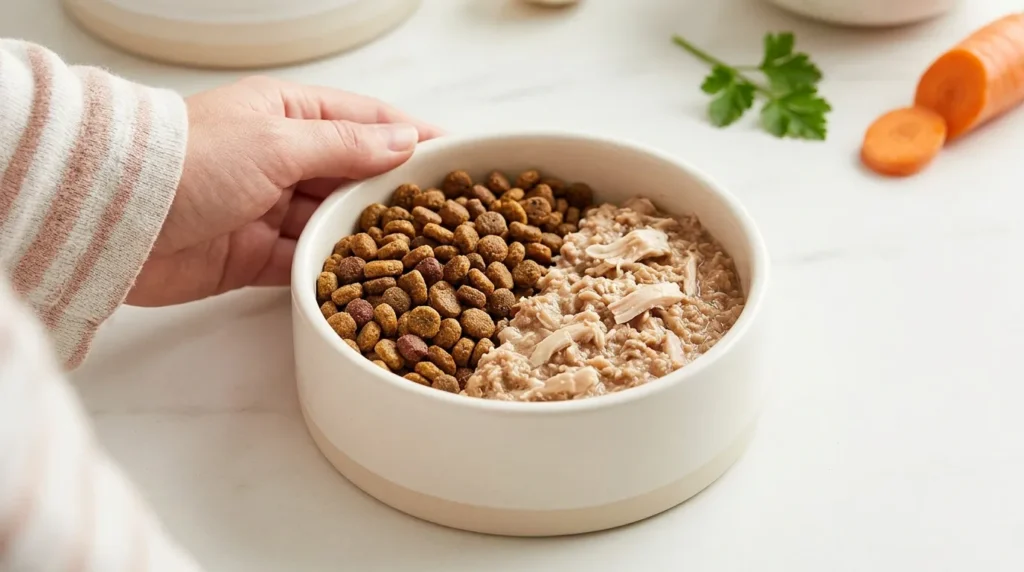
Both options have genuine benefits. Wet food contains more moisture, which supports hydration and kidney health. Dry food, however, is more convenient and can help with dental health through the chewing action.
In my experience, many owners find success combining both. A mix of wet and dry food gives your cat hydration benefits along with dental advantages. Always consult your vet about the right balance for your specific cat.
How to Choose the Best Cat Food: Step-by-Step Guide
A Simple Process Anyone Can Follow
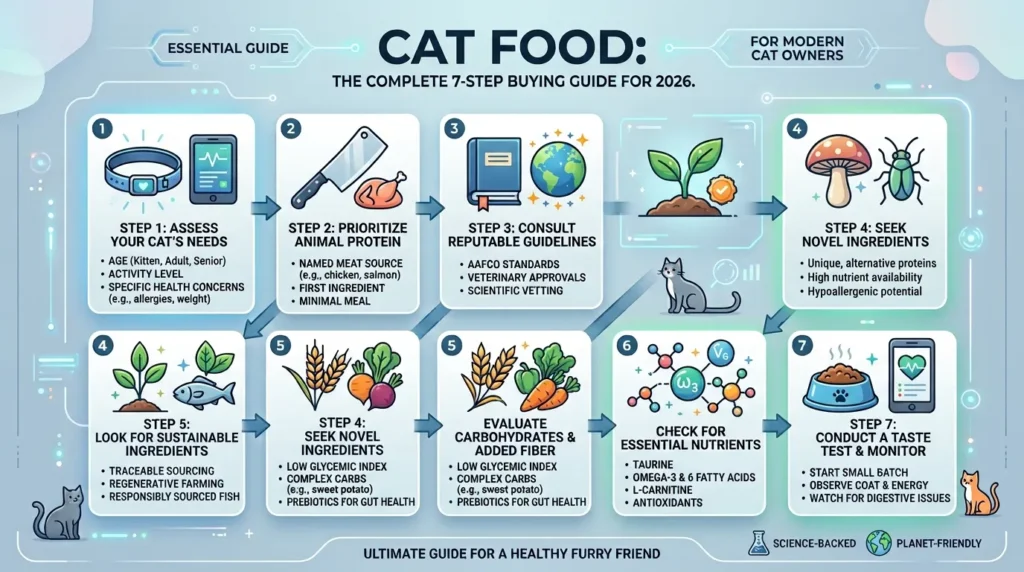
Choosing cat food doesn’t need to be complicated. Follow these steps to make a confident decision:
- Check your cat’s life stage first. Kittens, adults, and senior cats all have different nutritional needs. Therefore, always choose a formula labeled for your cat’s specific age group.
- Read the first five ingredients. The ingredient list is ordered by weight. As a result, you want to see a named protein source like chicken or salmon right at the top.
- Look for the AAFCO statement. This confirms the food meets minimum nutritional standards. Also, look for “feeding trials” language, which means real cats were tested on the formula.
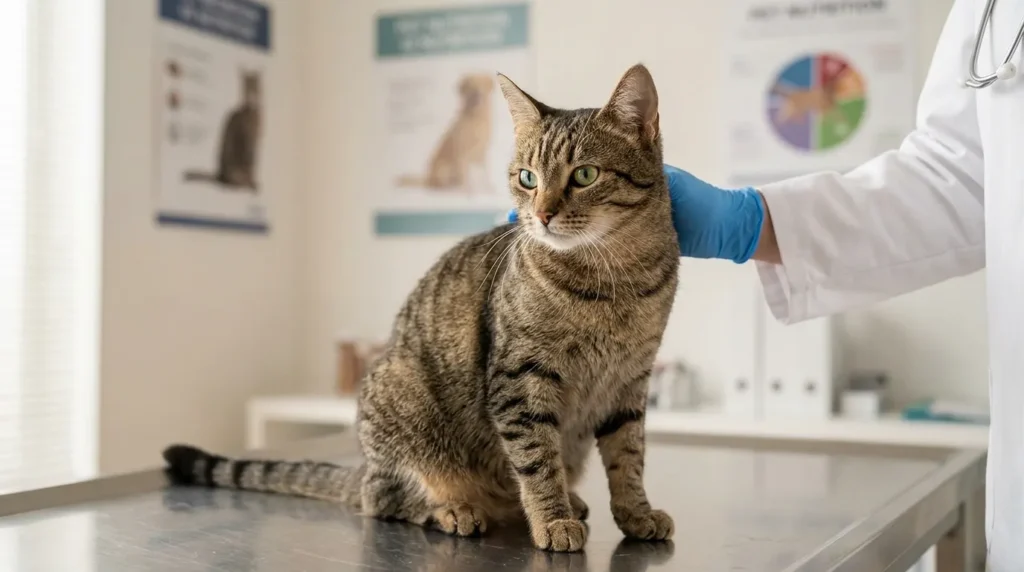
- Consider your cat’s specific health needs. Does your cat have a sensitive stomach? Urinary issues? Weight concerns? Many brands offer specialized formulas for these conditions. However, always consult your vet before switching to a therapeutic diet.
- Check the calorie content. Indoor cats typically need fewer calories than outdoor or highly active cats. Therefore, match the food’s calorie density to your cat’s actual activity level.
- Avoid unnecessary fillers. Corn syrup, artificial colors, and excessive grain content add little nutritional value. As a result, steering clear of these ingredients usually means better quality overall.
- Transition gradually. Switching cat food too quickly causes digestive upset. Therefore, mix the new food with the old food over seven to ten days for a smooth transition.
Pro Tip: Cats are notoriously picky eaters. If your cat refuses a new food, try warming it slightly to enhance the aroma. This simple trick often makes reluctant cats much more interested in mealtime.
Best Cat Food Brands and Types: Honest Comparison
Comparing Popular Cat Food Options
Here’s how some of the most trusted cat food brands compare across key factors:
| Brand | Type | Protein Source | Price Range | Best For |
| Purina Pro Plan | Dry/Wet | Chicken, Salmon | $$$ | Overall best nutrition |
| Hill’s Science Diet | Dry/Wet | Chicken | $$$ | Vet-recommended health needs |
| Royal Canin | Dry/Wet | Chicken by-product | $$$ | Breed-specific needs |
| Blue Buffalo | Dry/Wet | Deboned chicken | $$ | Natural ingredient focus |
| Purina Fancy Feast | Wet | Various | $ | Budget-friendly variety |
| Friskies | Dry/Wet | Various | $ | Tight budget options |
Choosing the Right Formula for Your Cat’s Needs
First, consider any health conditions your cat may have. For example, cats prone to urinary issues often benefit from formulas with controlled mineral content. Also, overweight cats need calorie-controlled options with higher protein and lower fat.
In addition, kittens need significantly more calories and protein for healthy growth. Therefore, always choose a kitten-specific formula until your cat reaches adulthood, typically around twelve months.
Indoor vs. Outdoor Cat Formulas
Many brands now offer specific formulas for indoor cats. These typically contain fewer calories because indoor cats are generally less active. As a result, feeding an outdoor-formula food to an indoor cat can contribute to unwanted weight gain over time.
Common Cat Food Mistakes to Avoid
Mistake 1: Feeding Dog Food to Cats
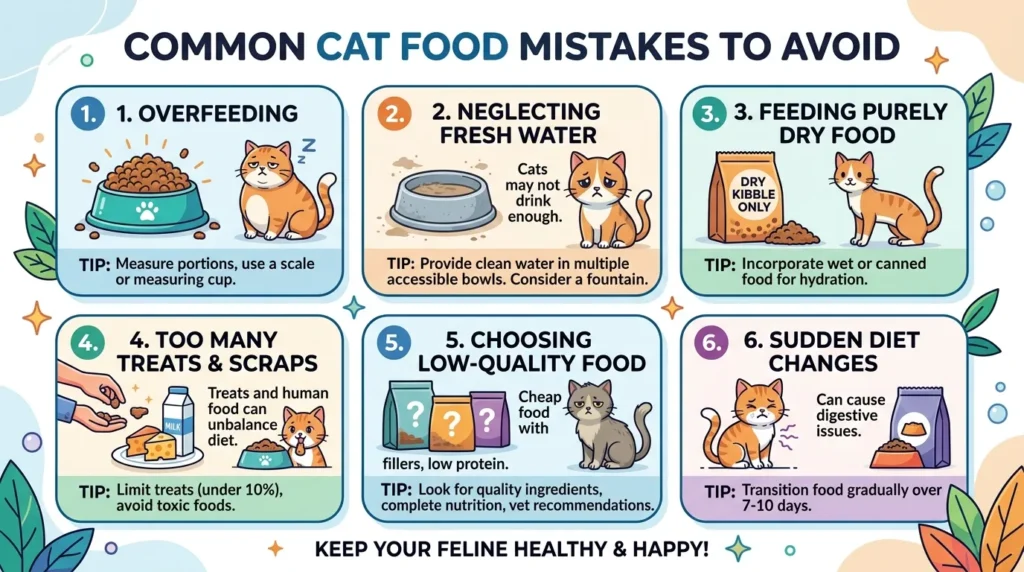
This might sound obvious, but it happens more than you’d think, especially in multi-pet households. Dog food lacks essential nutrients like taurine that cats specifically need. Therefore, always keep cat food and dog food strictly separate.
Mistake 2: Free-Feeding Without Portion Control
Leaving food out all day seems convenient. However, this often leads to overeating and obesity in cats. As a result, measured meal times work much better for most cats’ long-term health.
Mistake 3: Switching Foods Too Quickly
A sudden food change upsets a cat’s digestive system fast. Therefore, always transition gradually over seven to ten days. Mix small amounts of new food with the old food, increasing the ratio slowly each day.
Mistake 4: Ignoring Water Intake
Cats naturally have a low thirst drive. This makes hydration especially important, particularly for cats eating mostly dry food. Also, consider adding a water fountain, since many cats prefer moving water over still water in a bowl.
Mistake 5: Choosing Food Based on Price Alone
The cheapest cat food on the shelf often contains more fillers and fewer quality proteins. However, this doesn’t mean you need the most expensive option either. Therefore, focus on ingredient quality and nutritional adequacy rather than price alone.
Pro Tip: Always consult your vet before making major dietary changes for cats with existing health conditions, such as kidney disease or diabetes. Specific therapeutic diets often require professional guidance.
Frequently Asked Questions About Cat Food
1. What is the best cat food for my cat?
The best cat food depends on your cat’s age, health, and specific needs. However, generally speaking, look for a formula with named animal protein as the first ingredient, added taurine, and an AAFCO nutritional adequacy statement. Brands like Purina Pro Plan and Hill’s Science Diet are widely recommended by veterinarians for their research-backed formulations. Always consult your vet for guidance tailored to your individual cat.
2. How much cat food should I feed my cat daily?
Feeding amounts vary based on your cat’s weight, age, and activity level. Most adult cats need roughly 200 to 300 calories per day, though this varies significantly by individual cat. Therefore, check the feeding guidelines on your specific cat food package, and adjust based on your cat’s body condition. Also, your vet can calculate a precise calorie target based on your cat’s exact weight and lifestyle.
3. Is wet or dry cat food better for cats?
Both wet and dry cat food offer genuine benefits. Wet food provides more moisture, which supports hydration and urinary health. Dry food, however, is more convenient and can offer some dental benefits through chewing. In my experience, many owners find success combining both types for balanced benefits. Always discuss the ideal ratio with your vet, especially if your cat has specific health concerns.
4. Can cats eat grain-free cat food safely?
Yes, grain-free cat food is generally considered safe for cats. Unlike dogs, current research hasn’t shown the same potential link between grain-free diets and heart disease in cats. However, grains aren’t inherently harmful to most cats either. Therefore, the choice between grain-free and grain-inclusive often comes down to your cat’s individual tolerance and any specific allergies. Always consult your vet if your cat shows signs of food sensitivity.
5. How do I transition my cat to new cat food?
Transition gradually over seven to ten days to avoid digestive upset. Start with 25% new food mixed with 75% old food for the first few days. Then, increase the new food ratio gradually until you reach 100% new food. Also, watch for signs of digestive upset like vomiting or diarrhea during the transition. If symptoms persist, slow down the transition and consult your vet.
6. What ingredients should I avoid in cat food?
Look out for excessive corn syrup, artificial colors, and vague ingredient names like “meat by-products” without a named species. Also, avoid foods with very low protein content, since cats need substantial animal protein for optimal health. Therefore, always check that a named protein source like chicken or salmon appears as the first ingredient on the label.
7. Why is my cat refusing to eat their cat food?
Several factors can cause food refusal, including stress, illness, or simply pickiness. First, rule out any health issues with a vet visit, especially if the refusal is sudden or persistent. If your cat is healthy, try warming the food slightly to enhance its aroma, or switch to a different protein flavor within the same quality brand. However, never let a cat go without food for more than 24 hours, as this can lead to a serious condition called hepatic lipidosis. Consult your vet immediately if your cat refuses to eat for an extended period.
Choosing the Right Cat Food for Your Feline Friend
Finding the right cat food comes down to understanding your cat’s specific needs and reading labels carefully. Look for named protein sources, added taurine, and an AAFCO nutritional adequacy statement on every bag or can you consider.
Therefore, take your time comparing options, transition gradually when switching foods, and always loop in your vet for personalized guidance. Every cat is different, and what works perfectly for one cat might not suit another.
Your cat depends on you to make smart nutritional choices every single day. With the knowledge from this guide, you’re now equipped to choose confidently and keep your feline friend healthy for years to come.