
Introduction
Cats are notoriously picky eaters. One day they love something. The next day they walk away from the same bowl like it personally offended them. Sound familiar? Finding the best wet food for cats feels like solving a puzzle especially when every brand claims to be the healthiest, most natural, most complete option available.
Here’s the thing, though. Wet food genuinely matters for your cat’s health. Unlike dogs, cats have a low thirst drive. They evolved to get most of their hydration from their food. Therefore, feeding wet food is one of the most impactful dietary decisions you can make for your cat’s long-term wellbeing.
In my experience, cat owners who switch to quality wet food often notice real improvements. Better coat condition. More consistent energy. Improved digestive health. Sometimes even fewer vet visits.
This guide covers everything you need about what makes wet food genuinely good, which brands consistently deliver, and how to choose the right option for your specific cat. Let’s get into it.
Why the Best Wet Food for Cats Matters So Much
Cats Are Obligate Carnivores
Unlike dogs, cats are obligate carnivores. This means their bodies require nutrients found exclusively in animal tissue. Therefore, a high-quality wet food should always lead with a named animal protein chicken, turkey, salmon, tuna, or beef.
Cats also can’t synthesize certain essential nutrients on their own. Taurine is a perfect example. It’s an amino acid critical for heart and eye health. However, cats can’t produce enough taurine naturally. As a result, their food must supply it directly and quality wet foods always include adequate taurine levels.
The Hydration Factor Is Huge
Here’s something many cat owners don’t fully appreciate. Dry food contains only about 10% moisture. Wet food, however, contains 75–85% moisture. That difference is enormous for a species that instinctively drinks very little water.
Chronic dehydration in cats leads to serious health issues over time including urinary tract problems, kidney disease, and bladder stones. Therefore, wet food acts as a daily hydration supplement that significantly supports long-term organ health. Always consult your vet if your cat shows signs of urinary discomfort.
What “Complete and Balanced” Actually Means
Look for the AAFCO nutritional adequacy statement on any wet food label. This confirms the food meets minimum nutritional standards for cats. Also, look for whether it says “formulated to meet” standards or “based on feeding trials.” Feeding trial validation means real cats ate that specific food and thrived on it which is the stronger standard.
How to Choose the Best Wet Food for Your Cat: Step-by-Step
Start With These Simple Steps
Choosing from dozens of wet food brands feels overwhelming. Therefore, use this step-by-step process to narrow your options quickly and confidently:
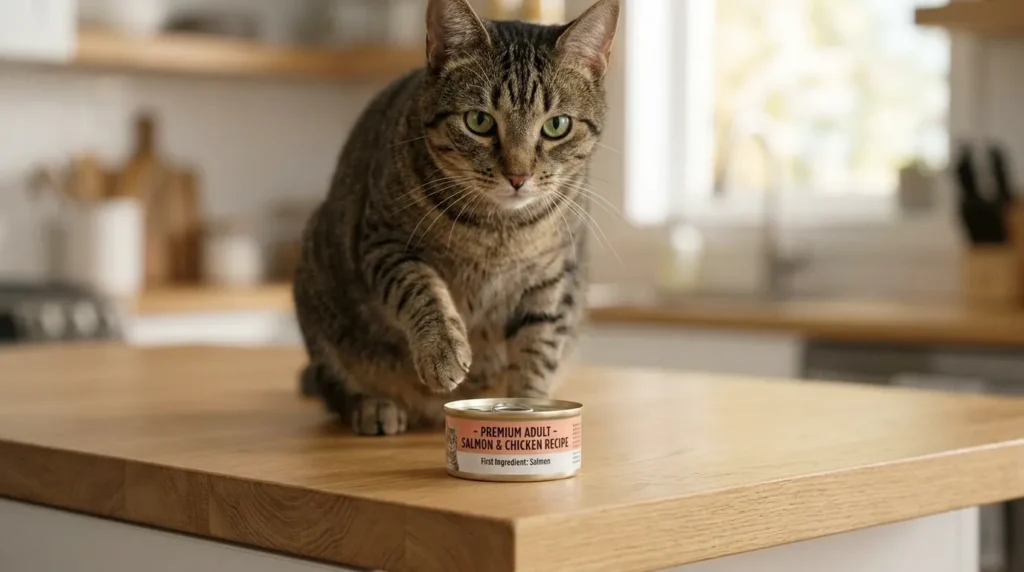
- Check the first ingredient. It must be a named animal protein chicken, turkey, salmon, beef, or tuna. If you see “meat by-products” without a named species, look for a better option.
- Find the AAFCO statement. Every quality wet food carries this statement on the label. Look for “complete and balanced” this confirms the food meets nutritional requirements for your cat’s life stage.
- Match the formula to your cat’s life stage. Kitten formulas have higher protein and calorie density for growth. Senior formulas often have lower calories and kidney-supportive nutrient profiles. Adult formulas serve most healthy cats well.
- Look for taurine on the label. Because cats can’t produce enough taurine independently, it must appear in the ingredient list or guaranteed analysis. This is non-negotiable for heart and eye health.
- Avoid unnecessary additives. The best wet foods avoid artificial colors, artificial flavors, and excessive thickeners. Also, carrageenan, a common thickener, has raised some health concerns in research. Therefore, choosing carrageenan-free formulas is a smart precaution.
- Consider your cat’s specific health needs. Does your cat have kidney disease, diabetes, or food allergies? If so, always consult your vet before selecting any wet food. Therapeutic diets for these conditions require veterinary guidance.
- Introduce new food gradually. Mix 25% new food with 75% current food for the first few days. Then slowly shift the ratio over 7–10 days. Abrupt food changes cause digestive upset even when switching to better quality food.
Pro Tip: Warm refrigerated wet food slightly before serving about 10–15 seconds in the microwave works well. Always check the temperature first. Warming enhances the aroma dramatically, which makes picky cats far more interested in eating.
Best Wet Food for Cats in 2026: Honest Brand Comparisons
Top Brands at a Glance
Here’s how the most popular and well-regarded cat wet food brands compare across key criteria:
| Brand | First Ingredient | AAFCO Validated | Grain-Free | Price Range | Best For |
| Royal Canin Wet | Chicken | Feeding trials | Some | $$$ | Breed/condition specific |
| Hill’s Science Diet Wet | Chicken | Feeding trials | Some | $$$ | Vet-recommended health |
| Purina Pro Plan Wet | Chicken/Salmon | Feeding trials | Some | $$$ | Everyday premium feeding |
| Wellness CORE Wet | Deboned chicken | Formulation | Yes | $$$ | High-protein natural diet |
| Tiki Cat | Chicken/Fish | Formulation | Yes | $$$ | Picky eaters, variety |
| Fancy Feast Classic | Chicken/Fish | Formulation | Some | $ | Budget-friendly option |
| Purina ONE Wet | Chicken | Formulation | No | $$ | Mid-range daily feeding |
| Blue Buffalo Wet | Chicken | Some trials | Yes | $$ | Natural ingredient focus |
My Honest Top Picks
🏆 Best Overall: Purina Pro Plan Wet
Purina Pro Plan wet cat food consistently earns top marks for ingredient quality, research backing, and real-world results. Real chicken or salmon leads every formula. Also, taurine is specifically added to support heart health. The brand invests heavily in nutritional science which shows in the clinical outcomes their foods deliver. Veterinarians recommend this brand more consistently than almost any other wet food option.
💰 Best Budget Pick: Fancy Feast Classic
Fancy Feast Classic pâté formulas are actually more nutritionally sound than their reputation suggests. Real meat or fish leads the ingredient list in classic formulas. Also, they contain no grains, vegetables, or thickeners, just protein and fat in a format cats genuinely love. For budget-conscious owners with healthy cats, the classic line is a surprisingly solid choice.
🌿 Best Natural Option: Wellness CORE Wet
Wellness CORE uses high protein percentages, named proteins first, and no artificial additives. It’s grain-free, which suits cats well given their carnivorous biology. However, if your vet has cardiac health concerns, discuss grain-free diets specifically even though the DCM link established in dogs hasn’t been replicated in cats.
🔬 Best Vet-Recommended: Hill’s Science Diet Wet
Hill’s brings the same clinical rigor to their wet food line as their famous dry formulas. Feeding-trial-validated AAFCO compliance, excellent kidney and urinary health formulas, and a comprehensive prescription diet range for medically managed cats make this the top clinical choice. Always follow your vet’s specific recommendation if your cat has health conditions.
Common Mistakes to Avoid With Wet Cat Food
Mistake 1: Leaving Wet Food Out Too Long
Wet food spoils quickly at room temperature. Bacteria multiply rapidly in moist food especially in warm kitchens. Therefore, remove uneaten wet food after a maximum of two hours. Also, wash your cat’s bowl after every wet food meal to prevent bacterial buildup.
Mistake 2: Feeding Only One Flavor or Protein
Cats can develop food fixations. If your cat eats only one protein for years, they may refuse anything else which becomes a serious problem if that food gets discontinued or recalled. Therefore, rotating between two or three quality proteins keeps your cat adaptable and nutritionally varied.
Mistake 3: Ignoring the Life Stage Label
Kitten food and adult cat food have genuinely different nutritional profiles. Kittens need higher calories and protein for healthy development. Senior cats often benefit from reduced phosphorus levels to support kidney health. Therefore, always match the formula to your cat’s actual life stage and consult your vet about transitions.
Mistake 4: Choosing Based on the Front of the Can
“Gourmet,” “premium,” “natural,” and “wholesome” are largely unregulated marketing terms in pet food. They tell you almost nothing about actual nutritional quality. Therefore, flip the can immediately and read the ingredient list and AAFCO statement. Those two elements reveal far more than any front-label claim.
Mistake 5: Mixing Wet and Dry Without Adjusting Portions
Adding wet food to your cat’s existing dry food diet without reducing the dry food portion leads to gradual weight gain. Both foods contribute calories so the total daily intake must stay within your cat’s needs. Therefore, calculate the combined caloric content and adjust accordingly. Your vet can help you determine your cat’s specific daily caloric target.
Pro Tip: Store opened wet food in a sealed container in the refrigerator not the original can. Canned food stored in open tins absorbs metallic flavors that make cats reluctant to finish their food. A small airtight container keeps the food fresh and appealing for up to 48 hours.
Frequently Asked Questions About the Best Wet Food for Cats
1. Is wet food better than dry food for cats?
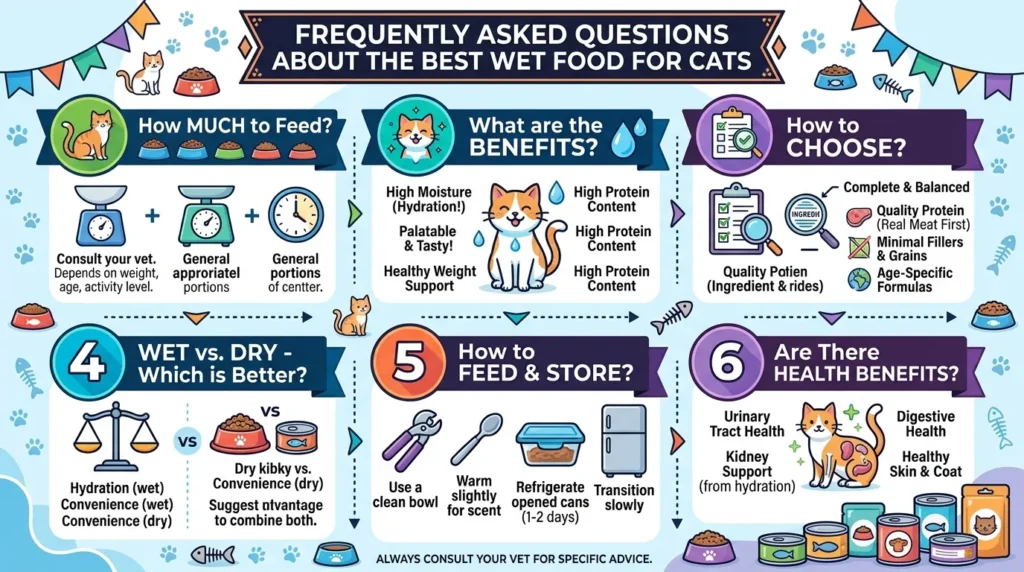
For most cats, wet food offers significant health advantages over dry food alone. The primary benefit is hydration wet food’s 75–85% moisture content naturally supports kidney and urinary tract health in a species with a naturally low thirst drive. However, dry food offers practical benefits including dental support through chewing and easier storage. Therefore, many vets recommend a combination approach primarily wet food with some dry food for dental benefit. Always consult your vet about the best feeding approach for your specific cat’s health needs.
2. How much wet food should I feed my cat per day?
Daily wet food amounts depend on your cat’s weight, age, and activity level. As a general starting point, most adult cats need approximately one 3-oz can per 3–4 pounds of body weight per day. However, this varies significantly between brands because caloric density differs. Always check the feeding guidelines on your specific food’s label and use your cat’s body condition as your guide. A healthy cat should have a visible waist when viewed from above and ribs you can feel but not see. Consult your vet for personalized portion guidance.
3. What ingredients should I avoid in wet cat food?
Avoid these ingredients in any wet food you consider:
- Unnamed meat sources “meat by-products” without a species name
- Artificial colors FD&C Red, Yellow, and Blue dyes serve no nutritional purpose
- Artificial flavors quality food doesn’t need flavor enhancement
- Carrageenan a thickener with potential digestive concerns in some research
- Excessive plant proteins ingredients like pea protein used to inflate protein percentages artificially
- BHA, BHT, or ethoxyquin synthetic preservatives with questionable long-term safety profiles
4. Can kittens eat the same wet food as adult cats?
No kittens need wet food specifically formulated for their growth stage. Kitten formulas contain higher protein levels, more calories per serving, and specific nutrient ratios that support healthy development. Feeding adult formula to a kitten long-term can create nutritional gaps that affect growth and development. Therefore, always use a kitten-specific formula until your cat reaches approximately 12 months of age. Also, large breed kittens may benefit from extending kitten formula use slightly longer consult your vet for personalized guidance.
5. Is grain-free wet cat food better for cats?
Cats are obligate carnivores with no biological need for grains in their diet. Therefore, grain-free wet foods are generally well-suited to feline biology. However, the FDA’s investigation into grain-free diets and DCM (dilated cardiomyopathy) primarily focused on dogs not cats. Current evidence doesn’t show the same concern in cats. That said, high-legume grain-free formulas are still worth discussing with your vet, especially for cats with existing heart conditions. For most healthy cats, grain-free wet food is a nutritionally appropriate choice.
6. How do I get a picky cat to eat wet food?
Picky cats are one of the most common challenges in feline nutrition. Therefore, try these approaches:
- Warm the food enhanced aroma increases appeal significantly
- Try different textures some cats prefer pâté while others prefer chunks in gravy
- Rotate proteins variety prevents food fixation and keeps interest high
- Transition gradually mix a small amount of wet food into dry food and increase slowly
- Feed at set times timed meals rather than free feeding often increases appetite at mealtime
If your cat refuses food for more than 24 hours, consult your vet promptly. Prolonged food refusal in cats can lead to hepatic lipidosis, a serious liver condition.
7. What is the best wet food for cats with kidney disease?
Cats with chronic kidney disease (CKD) need wet food with reduced phosphorus levels and high moisture content. The moisture content of wet food is actually critically important for kidney cats; hydration directly supports remaining kidney function. Brands with specific kidney health formulas include Hill’s Prescription Diet k/d, Royal Canin Renal Support, and Purina Pro Plan Veterinary NF Kidney Function. These are prescription diets requiring veterinary authorization. Never select a therapeutic diet for a cat with kidney disease without explicit veterinary guidance; the wrong phosphorus level can accelerate kidney decline.
Feed Your Cat Well Every Single Day
Finding the best wet food for cats doesn’t have to be complicated. Start with a named protein first. Look for the AAFCO feeding trial statement. Match the formula to your cat’s life stage. Avoid unnecessary artificial additives. Then give your cat’s system time to respond, usually four to eight weeks, showing meaningful coat, energy, and digestive improvements.
Brands like Purina Pro Plan, Hill’s Science Diet, and Wellness CORE consistently deliver on quality and nutritional integrity at different price points. However, your vet’s personalized recommendation for your specific cat is always the most valuable guidance of all.