
Introduction
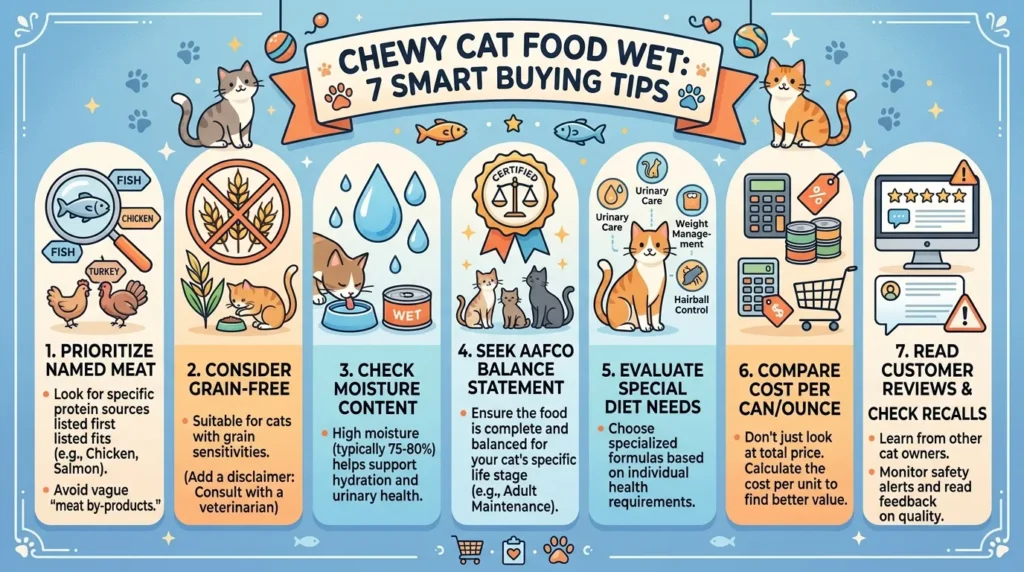
Buying chewy cat food wet options can feel simple at first. Then you open Chewy and see hundreds of cans, trays, pouches, textures, flavors, and prices.
So, what should you pick for your cat?
Your cat may love gravy. However, another cat may only eat smooth pâté. Some cats need kitten food, while others need senior cat food or a vet diet. Because of that, the “best” wet food is not one single brand. It’s the food that fits your cat’s age, health, taste, and daily routine.
In my experience, cat parents often overthink the label and forget the basics. Your cat needs safe food, enough moisture, the right calories, and a taste they’ll actually eat.
This guide will help you choose chewy cat food wet products with more confidence. You’ll learn what to check, what to avoid, and how to compare wet cat food without wasting money.
What Is Chewy Cat Food Wet?
Chewy cat food wet means wet cat food you can buy through Chewy’s online pet store. It includes canned food, trays, pouches, gravy meals, broth meals, minced meals, shredded recipes, and smooth pâté.
Wet cat food usually contains more water than dry kibble. Therefore, it can support daily hydration. This matters because many cats don’t drink much water from a bowl. If your cat eats wet food often, they may take in more moisture through meals.
Chewy offers many types of wet food for cats. For example, you can find adult cat food, kitten food, senior formulas, grain-free meals, limited ingredient diets, and prescription foods. Some recipes focus on taste. Others focus on weight control, digestion, urinary care, or sensitive stomach support.
However, you should not choose only by flavor. First, check the life stage. Then check whether the food says “complete and balanced.” This tells you whether the food can work as a main daily diet.
Also, remember this simple rule. Treats, toppers, and broths are not always full meals. They may taste great, but they may not give your cat full nutrition.
How to Choose Chewy Cat Food Wet the Smart Way
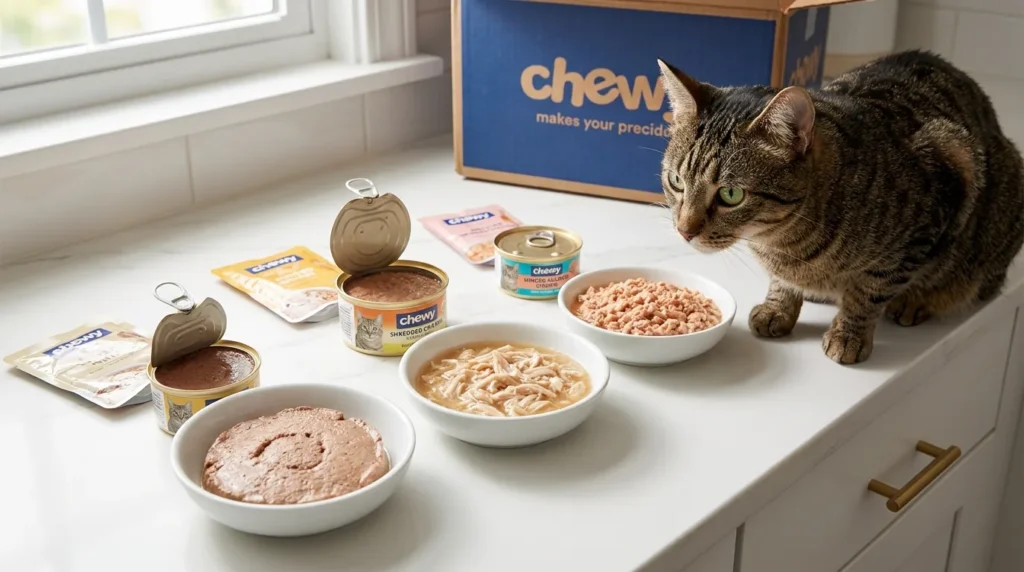
Choosing chewy cat food wet products becomes easier when you use a simple checklist. Don’t start with the cutest label. Instead, start with your cat’s real needs.
1. Match the Food to Your Cat’s Life Stage
First, check your cat’s age.
A kitten needs different nutrition than an adult cat. Also, a senior cat may need easier chewing, fewer calories, or a softer texture. Because of that, the life stage label matters a lot.
Look for these words on the product page:
- Kitten
- Adult
- Senior
- All life stages
- Growth and reproduction
- Adult maintenance
If you have a kitten, don’t feed adult-only food as the main diet. Kittens need more support for growth. However, adult cats may gain weight on calorie-rich kitten food.
2. Look for “Complete and Balanced”
Next, check the nutrition statement. A good main meal should say it is complete and balanced for your cat’s life stage.
This matters because cats need the right mix of protein, fat, vitamins, minerals, and taurine. Taurine is especially important for cats.
Some wet cat food looks like a full meal, but it may only be a topper. Therefore, read the label before you buy.
A complete meal works for daily feeding. A topper works best as an add-on.
3. Pick the Right Texture
Ever bought a full case, only to watch your cat sniff it and walk away?
Texture can be the reason.
Many cats have strong texture preferences. Some love pâté because it feels smooth. Others want chunks in gravy because it smells rich. Also, some cats like shredded food because it feels closer to real meat.
Common wet cat food textures include:
- Pâté
- Minced
- Shredded
- Flaked
- Chunks in gravy
- Bits in broth
- Mousse
If your cat is picky, try a variety pack first. Then buy a full case after you know what works.
4. Compare Protein and Moisture
Cats are meat-focused eaters. Therefore, wet cat food should offer quality animal protein.
Check the first few ingredients. Chicken, turkey, beef, salmon, tuna, duck, or rabbit may appear first. However, don’t judge only by the first ingredient. You should also check the full label and feeding guide.
Moisture also matters. Wet food can help cats who don’t drink enough. Still, it does not replace fresh water. Always keep clean water nearby.
5. Think About Your Cat’s Health Needs
Some cats need special care. For example, a cat with urinary issues may need vet-approved food. A cat with allergies may need a limited ingredient diet. A cat with kidney disease may need a prescription formula.
Don’t guess about health issues. Always consult your vet before changing food for a medical reason.
This is especially important for:
- Kidney disease
- Diabetes
- Urinary crystals
- Food allergies
- Obesity
- Chronic vomiting
- Senior cat health problems
Your vet can guide you toward the safest choice.
6. Read Reviews, But Use Them Carefully
Reviews can help, but they don’t tell the whole story.
For example, one cat may love food while another refuses it. Also, some reviews focus on shipping damage, not the food itself. So, use reviews to spot common patterns.
Look for comments about:
- Smell
- Texture
- Cat acceptance
- Can condition
- Digestive response
- Recent formula changes
However, don’t treat reviews like medical advice. If your cat reacts badly, talk to your vet.
7. Start Small Before Buying a Case
Finally, avoid buying a large case too soon. Cats can be dramatic about food changes.
Start with a few cans or a variety pack. Then watch your cat’s appetite, stool, energy, and comfort. If everything looks good, you can buy more.
Pro Tip: Introduce new wet cat food slowly over 7 to 10 days. Mix a little new food with the old food, then increase it each day.
Chewy Cat Food Wet Comparison: Types, Uses, and Best Fit
There are many chewy cat food wet choices. So, here’s a simple table to make your decision easier.
| Wet Food Type | Best For | What to Watch |
| Pâté | Picky cats, senior cats, easy chewing | Some cats dislike smooth texture |
| Chunks in gravy | Cats who love strong smell | May be higher in carbs, so check label |
| Shredded food | Cats who like meat-like texture | Can dry out faster in bowl |
| Minced food | Cats who want small pieces | Some cats still prefer pâté |
| Broth-based meals | Extra moisture and aroma | Not always complete meals |
| Kitten wet food | Growing kittens | Too rich for some adult cats |
| Senior wet food | Older cats | Check calories and protein needs |
| Prescription wet food | Medical conditions | Use only with vet guidance |
As you compare options, think about your cat’s daily habits. Does your cat lick gravy and leave chunks behind? Then pâté may work better. Does your cat hate smooth food? Then flaked or shredded recipes may help.
Also, think about your schedule. If you feed small meals often, 3-ounce cans may be easier. However, larger cans may cost less per ounce if you have several cats.
Wet Food vs Dry Food
Wet food and dry food both have benefits. Wet food adds moisture and can smell more appealing. Dry food costs less in many cases and stores easily.
However, many cat parents use both. For example, you can feed wet food in the morning and dry food later. This gives your cat variety while keeping your routine simple.
Still, don’t mix foods without checking total calories. Cats can gain weight quickly when meals become too generous.
Budget-Friendly Buying Tips
Chewy can make shopping easier, especially when you buy repeat items. However, you should still compare prices.
Here are simple ways to save:
- Try variety packs before full cases.
- Compare price per ounce.
- Check Autoship savings.
- Watch for brand promotions.
- Choose larger cases for multi-cat homes.
- Avoid waste by buying only flavors your cat eats.
Cheaper food is not always worse. Also, expensive food is not always better. The best choice is complete, safe, suitable, and accepted by your cat.
Common Mistakes to Avoid With Chewy Cat Food Wet
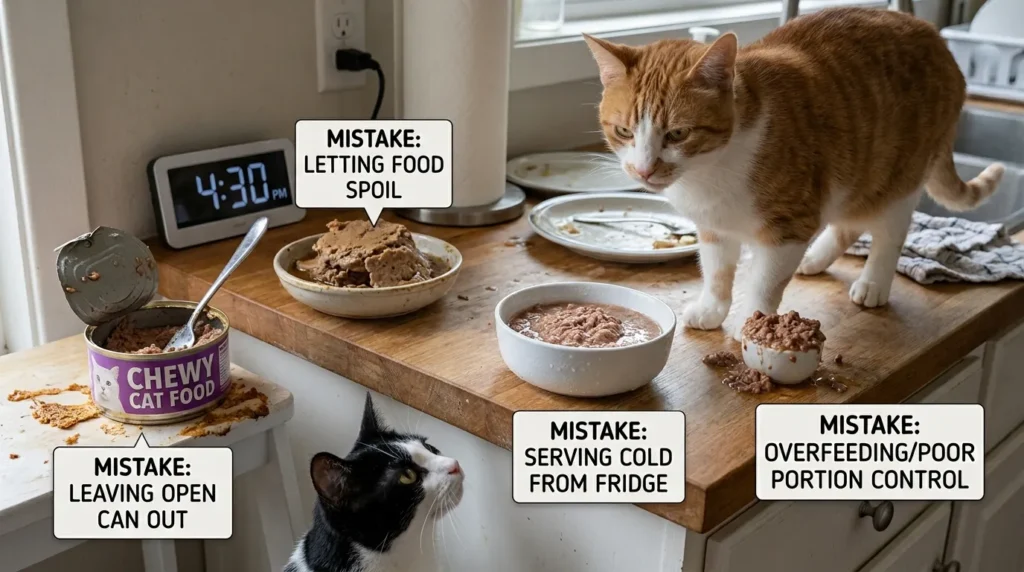
Buying chewy cat food wet products is easy. However, feeding them the right way takes care.
Mistake 1: Buying Only by Flavor
Your cat may love tuna. Still, flavor should not be your only guide.
Check the life stage, calories, feeding guide, and nutrition statement. Also, seafood-heavy diets may not suit every cat. If your cat has health concerns, ask your vet before making fish-based food the main diet.
Mistake 2: Ignoring Calories
Wet food portions can look small. However, calories add up fast.
Read the calories per can or tray. Then follow the feeding guide as a starting point. If your cat gains or loses weight, adjust with your vet’s help.
Mistake 3: Leaving Wet Food Out Too Long
Wet food can spoil faster than dry food. Therefore, don’t leave it out all day.
Serve a fresh portion. Then refrigerate leftovers in a covered container. If the food smells odd, looks spoiled, or the can is damaged, don’t feed it.
Mistake 4: Switching Food Too Fast
Cats have sensitive stomachs. A sudden food change may cause vomiting, gas, or loose stool.
Instead, transition slowly. Start with a small amount of the new food. Then increase it over several days.
Mistake 5: Forgetting Your Cat’s Water Bowl
Wet food adds moisture, but cats still need water. Keep fresh water available at all times.
Some cats drink more from a fountain. Others like wide bowls because their whiskers don’t rub the sides.
Mistake 6: Treating Online Reviews Like Vet Advice
Reviews are useful for real-life feedback. However, they can’t replace a vet.
If your cat has health problems, don’t rely on comments alone. Ask your vet what diet fits your cat’s condition.
FAQ About Chewy Cat Food Wet
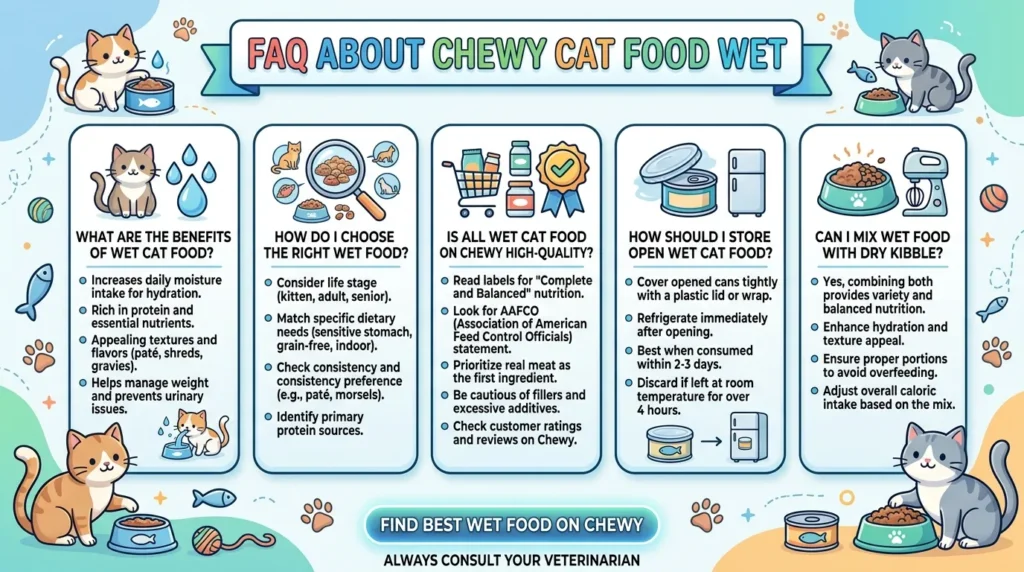
1. Is chewy cat food wet good for cats?
Chewy cat food wet options can be good for cats when you choose the right food. Look for a complete and balanced formula that matches your cat’s life stage.
Wet food may also help with moisture intake. This can be helpful because many cats don’t drink enough water. However, every cat is different, so ask your vet if your cat has medical needs.
2. What type of wet cat food should I buy from Chewy?
Start with your cat’s age, health, and texture preference. For example, kittens need kitten food. Adult cats need adult maintenance food. Senior cats may need softer food or special nutrition.
Then choose a texture your cat enjoys. Pâté works well for many cats. However, gravy, shredded, and flaked foods may tempt picky eaters.
3. How often should I feed wet cat food?
Many cats do well with wet food once or twice daily. However, the right amount depends on your cat’s weight, age, activity level, and total calories.
Read the feeding guide first. Then adjust based on your cat’s body condition. If you’re unsure, ask your vet for a daily calorie target.
4. Can I mix wet and dry cat food?
Yes, many cat parents mix wet and dry food. This can add moisture and keep meals interesting.
However, watch the calories. If you add wet food without reducing dry food, your cat may gain weight. So, measure both foods and adjust portions.
5. Is gravy wet cat food healthy?
Gravy wet cat food can be fine if it is complete and balanced. Many cats love gravy because it smells strong and feels tasty.
However, some gravy foods may contain more starch or calories. Therefore, check the label before making it your cat’s main meal.
6. What should I do if my cat refuses new wet food?
First, don’t panic. Cats often reject sudden changes.
Try warming the food slightly, adding a spoon of old food, or switching texture. Also, introduce new food slowly. If your cat stops eating for more than a day, call your vet.
7. Does wet cat food help with hydration?
Wet food can support hydration because it contains more moisture than dry food. This is one reason many cat owners like it.
Still, your cat needs clean water every day. A water fountain may help if your cat avoids bowls.
Final Thoughts
Choosing chewy cat food wet products does not need to feel stressful. Start with your cat’s life stage, then check the complete and balanced statement. After that, compare texture, protein source, calories, and price.
Also, keep your cat’s habits in mind. Some cats love pâté. Others want gravy or shredded pieces. So, test small packs before buying big cases.
Most importantly, watch your cat after any food change. If your cat seems sick, loses appetite, or has a medical condition, consult your vet. With a little care, you can find wet food your cat enjoys and your routine can handle.