
Introduction
You let your dog outside for a perfectly ordinary bathroom break and within seconds, they’re grazing like a small furry cow. Sound familiar? If you’ve ever watched your dog deliberately munch on grass and wondered what on earth is going on, you’re asking one of the most common dog behavior questions around.
Why do dogs eat grass? It’s a question that puzzles dog owners worldwide and the answer is more interesting than you might expect. Also, it’s more nuanced than the popular “they eat grass because they feel sick” explanation that gets repeated constantly.
Many pet owners don’t realize that grass eating is an almost universal dog behavior. Surveys suggest that around 79% of dogs eat plants regularly, and grass is by far the most common choice. Therefore, in most cases, it’s a completely normal behavior rather than a sign of illness.
However, certain grass-eating patterns do warrant veterinary attention. This guide separates the facts from the myths covering every known reason dogs eat grass, when it’s normal, when it’s concerning, and what you can actually do about it.
Quick Answer
Dogs eat grass for several reasons including satisfying an instinctive plant-eating behavior, adding fiber to their diet, relieving boredom, addressing nutritional deficiencies, or simply because they enjoy the taste and texture. Less commonly, dogs eat grass to induce vomiting when they feel unwell. Most grass eating is normal and harmless in healthy dogs.
Key Takeaways
- Grass eating is normal approximately 79% of dogs eat plants, with grass being the most common
- Most dogs don’t vomit after eating grass studies show only about 22–25% of grass-eating dogs vomit afterward
- Dogs may eat grass to add fiber to their diet or address mild nutritional gaps
- Boredom and anxiety are significant behavioral drivers of grass eating in some dogs
- Instinct plays a role wild canid ancestors regularly consumed plant material
- Consult your vet if grass eating suddenly increases, is accompanied by vomiting, or seems compulsive
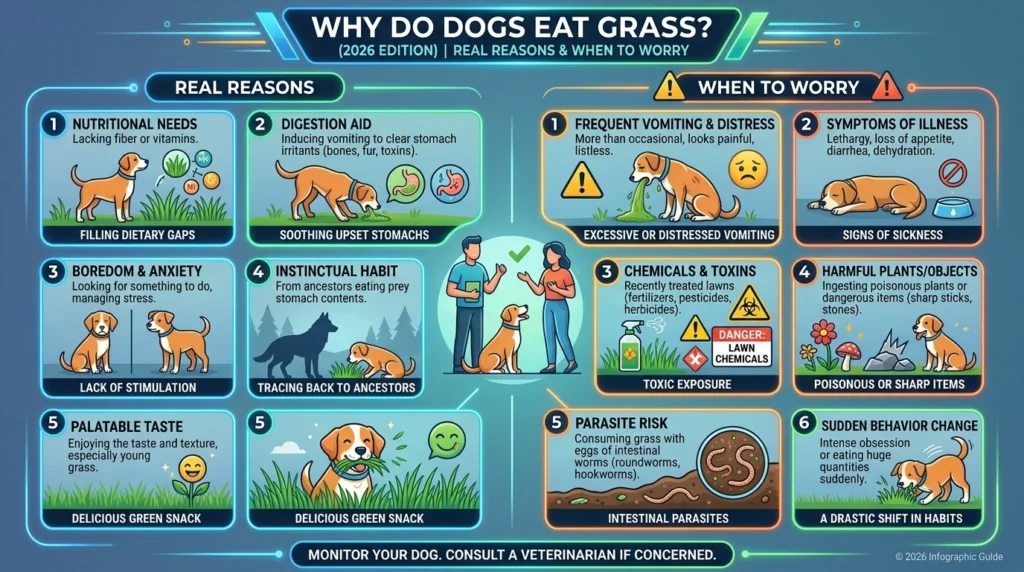
What Are the Real Reasons Dogs Eat Grass?
Dogs eat grass for multiple distinct reasons and not every dog eats it for the same reason. Understanding the specific drivers for your dog helps you determine whether intervention is needed or whether the behavior is completely benign.
Reason 1: Instinct and Evolutionary History
Dogs are omnivores not pure carnivores. Their wild ancestors, including wolves and wild dogs, regularly consumed plant material. Researchers have found plant matter in the stomach contents of wild wolves, suggesting plant consumption is a natural, deeply embedded behavior rather than an aberration.
Also, dogs’ digestive systems contain enzymes capable of processing plant material, further evidence that plant eating is genuinely part of their biological design. Therefore, grass eating may simply reflect an ancient behavioral instinct that domestic dogs have maintained across thousands of years of evolution.
Reason 2: Fiber Supplementation
Dogs on commercial diets sometimes seek additional fiber from grass. Fiber supports healthy gut motility, feeds beneficial gut bacteria, and contributes to well-formed stools. Therefore, a dog eating grass may simply be self-supplementing dietary fiber particularly if their current food is relatively low in plant-based ingredients.
Studies support this theory. One study found that dogs ate significantly more grass when fed a low-fiber diet compared to a high-fiber diet. As a result, many veterinary nutritionists suggest that grass eating decreases when dogs receive adequate dietary fiber.
Reason 3: Taste and Enjoyment
Many people overlook this simple explanation but it’s genuinely valid. Some dogs simply enjoy the taste and texture of grass. Young spring grass in particular is tender, slightly sweet, and texturally satisfying for many dogs.
In my experience, grass eating is most enthusiastic in spring when new growth appears and this timing aligns perfectly with the flavor and texture change in fresh, young grass. Therefore, for many dogs, grass eating is simply enjoyable snacking rather than a response to any physical or psychological need.
Reason 4: Boredom and Mental Stimulation
Dogs left alone in yards without sufficient mental stimulation often engage in repetitive behaviors including grass eating. Also, grass eating provides sensory engagement, smell, taste, texture, and the physical act of pulling and chewing satisfy the need for stimulation.
Therefore, dogs who eat grass primarily from boredom usually stop or dramatically reduce grass eating when given more exercise, interactive play, and mental enrichment. This pattern is an important diagnostic clue that helps distinguish behavioral grass eating from dietary grass eating.
Reason 5: Mild Stomach Discomfort
This is the most popular explanation and while it’s partially correct, it’s widely overstated. Some dogs do eat grass specifically to relieve stomach discomfort, and some do vomit shortly after. However, research suggests this is less common than popular belief suggests.
A study published in Applied Animal Behaviour Science found that only about 22–25% of dogs regularly vomit after eating grass. Also, only about 8% of dogs showed signs of illness before eating grass. Therefore, while grass eating can sometimes indicate stomach discomfort, it’s far from the primary explanation for most grass-eating episodes.
Reason 6: Nutritional Deficiencies
Some grass eating may indicate specific nutritional gaps particularly in vitamins, minerals, or plant-based phytonutrients that dogs may instinctively seek. Dogs fed nutritionally incomplete homemade diets sometimes eat more grass than dogs on balanced commercial diets.
However, dramatic increases in grass eating in dogs previously eating less of it can also signal health changes worth investigating. Therefore, if your dog’s grass eating behavior changes significantly, a veterinary check and nutritional review are worthwhile steps.
When Should You Worry About Your Dog Eating Grass?
Most grass eating is harmless but specific patterns warrant veterinary attention. Knowing the difference protects your dog’s health without unnecessary anxiety.
Signs That Grass Eating Requires Veterinary Attention
Watch for these specific situations:
- Sudden, dramatic increase in grass eating compared to your dog’s usual behavior
- Consistent vomiting after grass eating especially if the vomit contains bile or blood
- Eating grass frantically or urgently gulping rather than grazing casually
- Accompanied by other symptoms lethargy, loss of appetite, weight loss, or diarrhea
- Eating non-grass plants some garden plants are toxic to dogs
- Compulsive behavior appearing unable to stop or displaying anxiety-related patterns
How to Tell Normal Grass Eating From Problematic Grass Eating
| Feature | Normal Grass Eating | Concerning Grass Eating |
| Frequency | Occasional to regular | Sudden dramatic increase |
| Manner | Casual, selective, leisurely | Frantic, urgent, compulsive |
| Vomiting after | Rarely or never | Consistently |
| Symptoms beforehand | None | Lethargy, discomfort, nausea |
| Overall health | Normal | Other changes present |
| Plant selection | Grass only | Any available plants |
| Response to enrichment | Reduces with exercise/play | Continues regardless |
How to Manage Your Dog’s Grass Eating: Practical Guide

For most dogs, grass eating requires no intervention at all. However, if the behavior is excessive, sudden, or occurring in potentially dangerous environments, these steps help manage it effectively.
Step-by-Step Management Guide
- Assess the environment first. Ensure the grass your dog accesses hasn’t been treated with herbicides, pesticides, or chemical fertilizers. Also, verify that no toxic plants grow alongside the grass. Therefore, the first priority is confirming that the grazing environment itself is safe.
- Evaluate your dog’s diet. Consider whether your dog’s current food provides adequate fiber and a broad nutritional profile. Also, talk to your vet about whether a dietary adjustment might reduce grass-eating behavior. Switching to a higher-fiber formula or adding safe vegetables to your dog’s diet may satisfy the plant-seeking behavior indoors.
- Increase daily exercise and mental stimulation. If boredom is driving the behavior, more physical and mental engagement is the most effective solution. Therefore, add a second daily walk, increase play sessions, introduce puzzle feeders, and rotate toys regularly. As a result, many boredom-driven grass eaters significantly reduce their grass consumption.
- Train a “leave it” command. Teaching a solid “leave it” command gives you reliable control over grass eating in high-risk environments like parks where you’re unsure whether the grass has been chemically treated. Also, this command helps redirect your dog before they eat significant quantities.
- Create a safe grass access zone. If your dog enjoys grass and the behavior is benign, consider growing a small patch of pesticide-free, safe grass that your dog can graze on freely. Pet grass kits including oat grass and wheatgrass are available at most pet stores and are completely safe for dogs.
- Schedule a veterinary review if grass eating is new, intense, or accompanied by other symptoms. Also, request a nutritional review if you suspect dietary deficiency may be driving the behavior. As a result, you get professional guidance tailored to your specific dog’s needs.
- Monitor without over-restricting. For most healthy dogs eating pesticide-free grass occasionally, monitoring rather than active intervention is the appropriate response. Also, completely preventing a deeply instinctive behavior often increases anxiety and stress potentially creating new behavioral problems. Therefore, targeted management is more effective than total restriction.
Pro Tip: If your dog regularly eats grass, try adding a tablespoon of cooked, pureed green vegetables like spinach, zucchini, or green beans to their regular food for two weeks. In my experience, many grass-seeking dogs reduce outdoor plant eating when their diet includes more plant variety. Also, this approach is nutritionally beneficial regardless of whether it changes the grass-eating behavior.
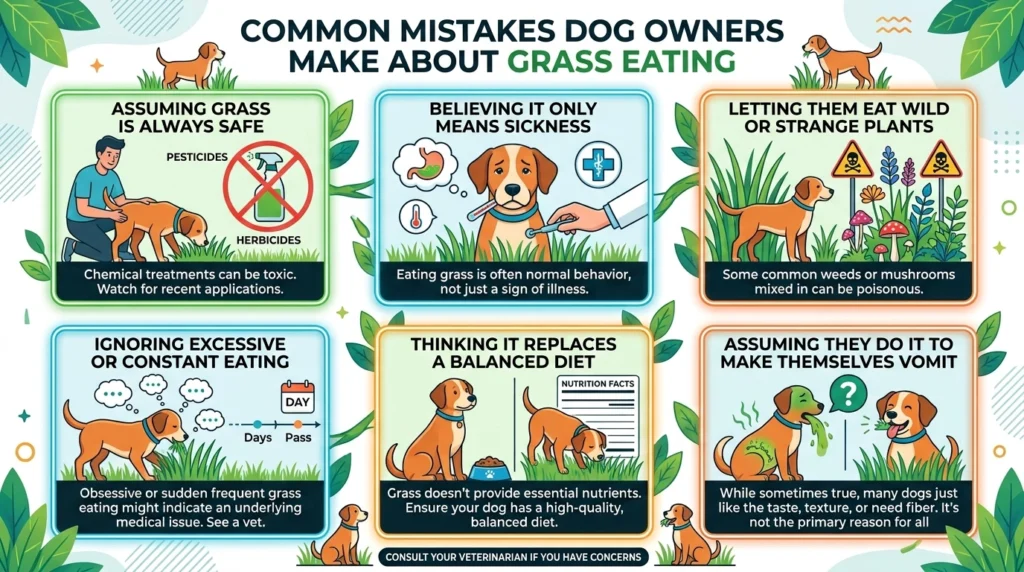
Common Mistakes Dog Owners Make About Grass Eating
Mistake 1: Panicking About Normal Behavior
Many owners genuinely worry every time their dog eats grass. However, in most cases, occasional grass eating in a healthy dog eating a balanced diet is completely normal. Therefore, unless other symptoms accompany the behavior or it increases dramatically, monitoring without alarm is usually the appropriate response.
Mistake 2: Allowing Grass Eating in Chemically Treated Areas
This is the most genuinely dangerous grass-eating mistake. Many lawns, parks, and roadsides receive regular treatment with herbicides, pesticides, and synthetic fertilizers. These chemicals cause real health problems when ingested. Therefore, always know whether the grass your dog accesses has been chemically treated, and prevent eating in any area where chemical use can’t be confirmed safe.
Mistake 3: Assuming Grass Eating Always Means Illness
The “dogs eat grass because they’re sick” explanation is so widespread that many owners call their vet in panic every time their dog grazes. However, research consistently shows that most grass eating occurs in dogs showing no prior signs of illness. Therefore, don’t automatically assume sickness, look at the whole picture including behavior, manner of eating, vomiting frequency, and overall health.
Mistake 4: Ignoring a Sudden Change in Grass Eating Behavior
The opposite mistake is equally common dismissing a genuine behavioral change as normal. A dog who has never been interested in grass suddenly grazing intensively and urgently, or a dog vomiting consistently after grass eating, deserves veterinary attention. Therefore, know your dog’s baseline grass-eating behavior and notice significant departures from it.
Mistake 5: Not Checking the Yard for Toxic Plants
Dogs who eat grass don’t always limit themselves to grass; they sometimes consume nearby plants as well. Many common garden plants are genuinely toxic to dogs, including sago palm, rhododendron, azalea, foxglove, and lily of the valley. Therefore, audit your garden for toxic plants regularly and ensure all plants your dog can access are verified safe.
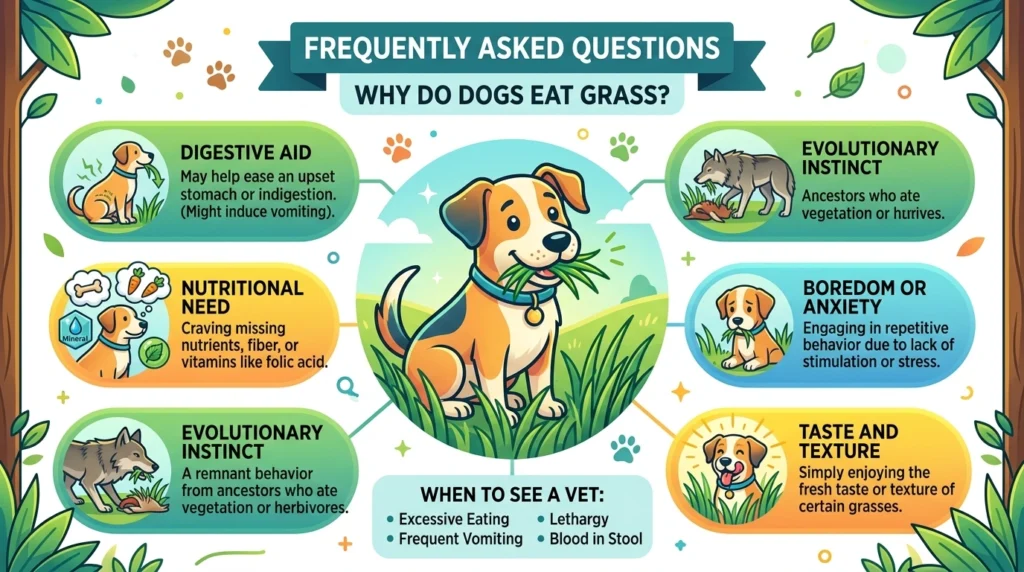
Frequently Asked Questions: Why Do Dogs Eat Grass?
1. Is it normal for dogs to eat grass every day?
Daily grass eating is common in many dogs and is generally considered normal behavior particularly when the dog is otherwise healthy, eating well, and not vomiting consistently after. Surveys of dog owners suggest the majority of dogs eat plants regularly, with grass being the most common choice. However, if daily grass eating is new behavior for your dog meaning they didn’t do it before and have suddenly started or if it’s accompanied by consistent vomiting, lethargy, or other symptoms, a veterinary consultation is appropriate. Also, ensure that any grass your dog eats daily hasn’t been treated with chemicals.
2. Should I stop my dog from eating grass?
For most healthy dogs eating pesticide-free grass occasionally, stopping the behavior isn’t necessary or particularly beneficial. Grass eating is a natural, deeply instinctive behavior that causes no harm in clean environments. However, prevention is important in specific situations: when the grass may be chemically treated, when your dog vomits consistently after eating grass, when the behavior appears compulsive or anxiety-driven, or when your dog is eating other plants alongside grass. In these situations, training a reliable “leave it” command and increasing environmental enrichment are more effective than simply trying to stop the behavior through restriction alone.
3. Why does my dog eat grass and then vomit?
Some dogs eat grass specifically to relieve stomach discomfort and the act of swallowing grass blades triggers the vomiting reflex. Also, grass blades that reach the stomach can irritate the stomach lining directly, causing vomiting. However, research shows this is a less common explanation than most people assume. Only about 22–25% of dogs regularly vomit after eating grass, and only about 8% show prior illness signs. Therefore, occasional grass-then-vomit episodes in otherwise healthy dogs don’t necessarily indicate a problem. However, consistent vomiting after grass eating or vomiting containing blood or bile warrants a veterinary evaluation to rule out underlying gastrointestinal conditions.
4. Can grass eating be a sign of pica in dogs?
Pica is a condition where animals compulsively consume non-food items including dirt, rocks, fabric, and plants. In some dogs, compulsive plant eating including excessive grass consumption may indicate pica rather than simple behavioral grass eating. Signs that suggest pica rather than normal grass eating include frantic or compulsive eating behavior, consuming soil or other non-food items alongside grass, inability to be redirected, and grass eating that persists and intensifies despite dietary adjustments and enrichment. Also, pica sometimes indicates underlying medical conditions including nutritional deficiencies, gastrointestinal disease, or neurological issues. Therefore, consult your veterinarian if you suspect compulsive rather than casual grass eating.
5. Does eating grass mean my dog is missing nutrients?
Grass eating can sometimes indicate dietary fiber insufficiency or mild nutritional gaps particularly in dogs on lower-fiber diets or nutritionally incomplete homemade diets. One study found significantly more grass eating in dogs fed low-fiber compared to high-fiber diets. However, grass eating alone is insufficient to diagnose a specific nutritional deficiency. Also, many nutritionally complete dogs eat grass simply from instinct or enjoyment. Therefore, if you suspect nutritional issues are driving the behavior, discuss a dietary review with your veterinarian rather than making assumptions based on grass eating alone. A complete nutritional assessment provides much more reliable guidance than behavioral observation.
6. Is grass safe for dogs to eat?
Plain, untreated grass is safe for most healthy dogs to eat in moderate quantities. The grass itself is non-toxic and digestible in small amounts, though dogs can’t fully break down grass fiber the way herbivores can. However, grass becomes dangerous in specific circumstances: when treated with herbicides, pesticides, or chemical fertilizers; when it contains other plants that are toxic to dogs; or when contaminated with feces from other animals carrying parasites like giardia. Therefore, the safety of grass eating depends entirely on the cleanliness and chemical treatment status of the specific grass your dog accesses, not on grass eating behavior in general.
7. How can I stop my dog from eating grass?
If you need to reduce or stop grass eating for example, in a chemically treated area the most effective approaches combine training and enrichment. First, teach a reliable “leave it” command through positive reinforcement training and reward your dog generously for disengaging from grass on cue. Also, increase daily exercise and mental stimulation to address boredom-driven grass eating. Additionally, review your dog’s diet with your vet to ensure adequate fiber and nutritional completeness. Finally, if compulsive grass eating continues despite these interventions, a veterinary behavioral consultation can identify whether anxiety, pica, or underlying medical issues are contributing to the behavior and recommend targeted treatment.
Grass Eating Is Usually Nothing to Worry About
Why do dogs eat grass ? The honest answer is for many reasons, most of them completely normal. Instinct, fiber supplementation, taste preference, boredom, mild stomach discomfort, and nutritional interest all play roles depending on the individual dog and situation.
The most important takeaway is context. Casual, occasional grass eating in a healthy dog accessing clean, untreated grass is almost always benign. However, sudden changes in behavior, consistent vomiting, or accompanying symptoms warrant veterinary attention.
Therefore, watch your dog’s grass eating with informed curiosity rather than automatic alarm. Know what’s normal for your dog. Ensure their access areas are chemical-free. Also, use any increase in behavior as a prompt to review diet, enrichment, and overall health.