
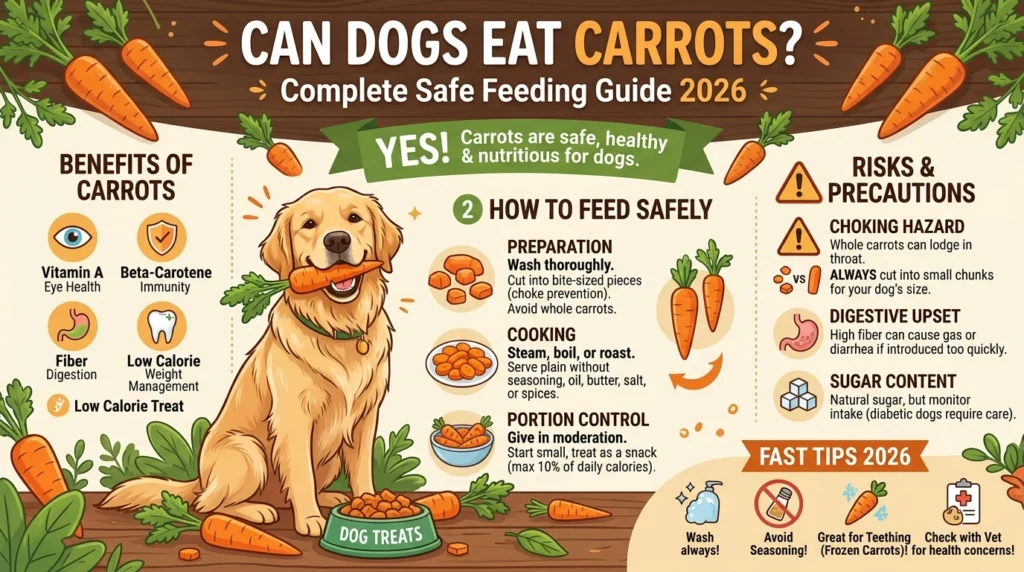
Introduction
You’re chopping carrots for dinner and your dog is watching with that focused, hopeful expression that dog owners know so well. The question arrives naturally: can dogs eat carrots, or is this another vegetable that looks dog-friendly but causes problems?
Here’s genuinely great news: carrots are one of the best vegetables you can share with your dog. They’re safe, nutritious, low in calories, and offer a surprising bonus that most owners don’t expect real dental health benefits.
Many pet owners don’t realize that carrots are one of the few human foods that veterinarians and canine nutritionists actively recommend as a regular treat. They’re endorsed by the American Kennel Club, loved by most dogs, and useful for dogs at virtually every life stage from puppies teething to senior dogs watching their weight.
In my experience, carrots are the treat I recommend most often to owners looking for healthy, affordable alternatives to commercial dog treats. However, a few preparation and portion guidelines make the difference between maximum benefit and potential choking hazard.
This complete guide covers everything nutritional benefits, dental advantages, safe preparation, serving sizes, creative ideas, and the most common mistakes owners make. Let’s get into it.
Quick Answer
Yes dogs can eat carrots safely and they’re one of the best vegetable treats available. Carrots provide beta-carotene, vitamin A, fiber, and potassium at very low caloric cost. The crunching action also supports dental health. Serve raw or cooked, always cut appropriately for your dog’s size, and feed within the 10% treat rule.
Key Takeaways
- Carrots are completely safe and genuinely nutritious for dogs of all ages
- They provide beta-carotene, vitamin A, vitamin K, fiber, and potassium
- Raw carrots offer a real dental health benefit the crunching action helps reduce plaque
- Carrots contain only approximately 25 calories per medium carrot excellent for weight management
- Cut appropriately for your dog’s size whole carrots can be choking hazards for small dogs
- Frozen carrots provide excellent teething relief for puppies and cooling treats for all dogs
Are Carrots Safe for Dogs? Everything You Need to Know
Carrots are completely safe for dogs and are considered one of the most nutritionally beneficial vegetable treats available. They’re non-toxic, naturally sweet, widely available, and appropriate for dogs at every life stage including puppies, adults, and seniors.
What Nutrients Do Carrots Provide for Dogs?
Carrots deliver an impressive nutritional profile in a low-calorie package:
| Nutrient | Benefit for Dogs |
| Beta-carotene (Vitamin A precursor) | Eye health, immune function, skin and coat health |
| Vitamin A | Vision support, immune system, reproductive health |
| Vitamin K | Blood clotting support and bone health |
| Vitamin C | Antioxidant support for immune health |
| Potassium | Heart function, muscle health, kidney function |
| Fiber | Digestive health and gut microbiome support |
| Biotin | Coat health and healthy skin barrier function |
| Folate | Cell growth and metabolic function support |
Why Do Veterinarians Specifically Recommend Carrots?
Carrots stand out among dog-safe foods because they offer something most other treats don’t have a mechanical dental cleaning benefit. When dogs chew raw carrots, the firm, fibrous texture physically scrubs tooth surfaces. Also, the chewing action stimulates saliva production, which helps neutralize acid and wash food particles from the mouth.
Therefore, carrots are one of the few treats that simultaneously provide nutrition and active dental health support. This combination is why many veterinarians specifically recommend carrots as a between-meal treat rather than just acknowledging their safety.
Are Carrots Safe for All Dogs?
Carrots are safe for the vast majority of dogs. However, a few individual considerations apply:
- Diabetic dog carrots contain more natural sugar than cucumbers or green beans. Feed in smaller amounts and consult your vet about appropriate frequency
- Overweight dog carrots are low-calorie but not zero-calorie. Count them within daily caloric allowance
- Dogs with sensitive digestion introduce gradually; the fiber content can cause loose stools if introduced too quickly
- Very small dogs and puppies cut into appropriately small pieces to prevent choking
How to Feed Carrots to Dogs Safely: Step-by-Step Guide
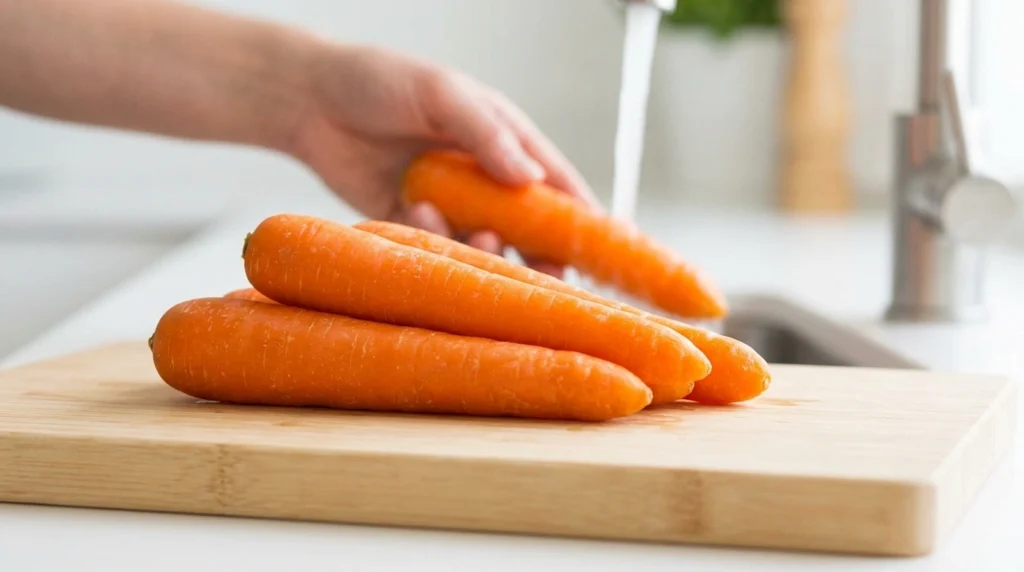
Feeding carrots safely is genuinely straightforward. However, a few specific preparation steps maximize both safety and nutritional benefit.
Step-by-Step Safe Carrot Feeding Guide
- Choose fresh, plain carrots only. Always use plain, fresh carrots, never carrot products containing added salt, sugar, butter, or seasonings. Glazed carrots, carrot cake, carrot juice with additives, and pickled carrots all contain ingredients inappropriate for dogs. Therefore, plain fresh or frozen carrots are always the right choice.
- Wash thoroughly before preparation. Rinse carrots under cold running water before cutting. Also, consider choosing organic carrots when possible to minimize pesticide exposure particularly important for smaller dogs where residue concentrations have proportionally greater impact.
- Decide whether to peel. Carrot skin is safe for dogs. However, the skin carries the highest concentration of pesticide residue on conventionally grown carrots. Therefore, peeling conventionally grown carrots before serving is a sensible precaution particularly for regular feeding rather than occasional treats.
- Cut into appropriate sizes for your dog. This is the most critical safety step. Whole carrots are excellent for large dogs who chew thoroughly. However, whole carrots can be choking hazards for small dogs and dogs who gulp food without chewing. Therefore, match carrot size to your dog’s mouth and eating habits:
- Very small dogs thin rounds or small sticks, no larger than pea-sized
- Small dogs coin-sized rounds or thin sticks
- Medium dogs regular rounds or carrot sticks
- Large dogs whole baby carrots or halved regular carrots
- Giant breeds whole carrots work well for these powerful chewers
- Choose raw or cooked based on your purpose. Raw carrots provide better dental benefits because of their firm texture. However, cooked carrots are softer and easier to digest, useful for older dogs with dental pain, dogs recovering from illness, or as a food mixer. Note that cooking reduces beta-carotene bioavailability slightly but makes other nutrients more accessible. Both formats are genuinely beneficial.
- Introduce gradually for first-time carrot dogs. If your dog has never eaten carrots before, start with just one or two small pieces. Then wait 24 hours and observe for any digestive reaction before offering more. As a result, you identify any individual sensitivity without causing significant discomfort.
- Apply the 10% treat rule. All treats including carrots should account for no more than 10% of your dog’s total daily caloric intake. A medium carrot contains approximately 25 calories, while a baby carrot contains about 4 calories. Therefore, calculate your dog’s daily caloric allowance and keep carrot portions well within the treat threshold.
Safe Carrot Serving Sizes by Dog Size
| Dog Size | Weight | Suggested Serving |
| Extra Small (Toy) | Under 10 lbs | 2–3 baby carrots or thin slices |
| Small | 10–25 lbs | 3–5 baby carrots or half a regular carrot |
| Medium | 25–60 lbs | 1 medium carrot or 5–8 baby carrots |
| Large | 60–100 lbs | 1–2 medium carrots |
| Giant | Over 100 lbs | 2–3 medium carrots |
[Link to related article: Why do dogs eat grass real reasons and when to worry]
Creative Ways to Serve Carrots to Dogs
Carrots are one of the most versatile dog-safe foods available. Because they work raw, cooked, frozen, or pureed, they adapt to many different treat formats and purposes.
Fun and Nutritious Carrot Treat Ideas
1. Raw Carrot Chew Sticks Cut carrots into long sticks and serve raw. This format provides maximum dental benefit and satisfies the urge to chew. Also, carrot chew sticks work well as a low-calorie alternative to commercial chews for dogs who love extended chewing sessions.
2. Frozen Carrot Treats Freeze whole baby carrots or carrot sticks for 2–3 hours before serving. Frozen carrots provide extended chewing satisfaction and natural cooling on hot days. Also, frozen carrots are excellent for teething puppies. The cold temperature soothes inflamed gums while the texture satisfies the need to chew.
3. Carrot Kong Stuffing Puree cooked carrots and mixed with plain, unsweetened peanut butter (xylitol-free) or plain yogurt. Then stuff into a Kong toy and freeze. As a result, you create a nutritious, long-lasting enrichment toy that keeps your dog engaged for 20–30 minutes.
4. Carrot Training Treats Cut carrots into very small, pea-sized pieces for training sessions. Because carrots are low-calorie and palatable to most dogs, they work well as training rewards allowing high-repetition training without significant caloric impact.
5. Carrot Food Topper Grate or finely chop carrots and sprinkle over your dog’s regular meal. This adds fiber, vitamins, and palatability to everyday feeding, particularly useful for picky eaters or dogs who need more fiber in their diet.
Carrots vs. Other Common Dog Vegetable Treats
| Vegetable | Calories Per Cup | Dental Benefit | Sugar Level | Key Nutrient |
| Carrot | 52 calories | High | Medium | Beta-carotene, Vitamin A |
| Cucumber | 16 calories | Low | Very Low | Hydration, Vitamin K |
| Green beans | 31 calories | Low | Very Low | Fiber, Vitamin C |
| Broccoli | 31 calories | Low | Very Low | Vitamin C, K |
| Celery | 16 calories | Moderate | Very Low | Vitamin K, freshens breath |
| Sweet potato | 103 calories | Low | High | Vitamin A, fiber |
| Onion | Any amount | TOXIC never feed |
Common Mistakes When Feeding Carrots to Dogs
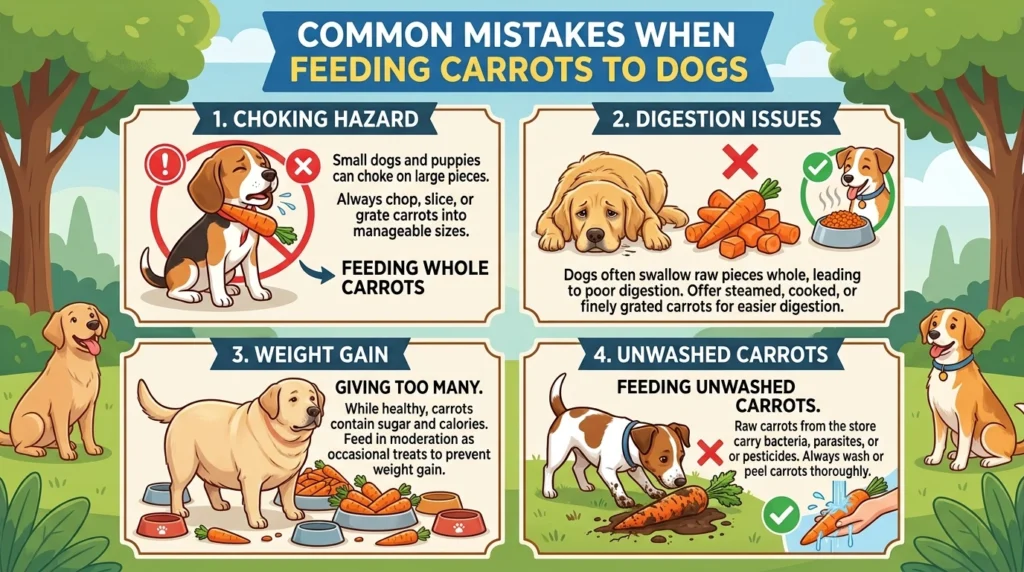
Mistake 1: Giving Whole Carrots to Small Dogs
This is the most common and most dangerous carrot mistake. Many owners give their small dog a whole regular carrot thinking the size of the vegetable makes it safe. However, firm whole carrots break into large chunks that small dogs can choke on particularly if the dog gulps rather than chews carefully. Therefore, always cut carrots into appropriately small pieces based on your dog’s size and eating habits. When in doubt, cut smaller.
Mistake 2: Serving Seasoned or Processed Carrot Products
Glazed carrots from dinner, carrot cake, carrot muffins, jarred baby carrots with added salt, carrot soup with onion and garlic all contain ingredients that are harmful or outright toxic to dogs. Also, many packaged carrot products include preservatives and additives inappropriate for dogs. Therefore, only serve plain, fresh, or frozen carrots, never anything seasoned, glazed, or processed for human consumption.
Mistake 3: Replacing a Balanced Diet With Carrots
Because carrots are healthy, some owners start substituting them for complete meals particularly for overweight dogs. However, carrots don’t provide adequate protein, fat, or complete nutrition to replace a balanced commercial or veterinary-approved diet. Therefore, carrots are treats and supplements, never meal replacements. Also, consult your vet about appropriate weight management strategies rather than substituting treats for complete nutrition.
Mistake 4: Not Accounting for Carrot Calories in the Daily Budget
Many owners add carrots to their dog’s routine without adjusting other treat calories leading to gradual weight gain over weeks and months. Even though a medium carrot contains only 25 calories, multiple daily carrots combined with other treats adds up meaningfully. Therefore, count all treats including carrots within the 10% treat rule and adjust accordingly.
Mistake 5: Skipping Carrots for Puppies During Teething
Many puppy owners don’t realize that frozen carrots are one of the most effective and safest teething tools available. Also, commercial teething treats often contain unnecessary additives. Therefore, frozen carrot sticks cut appropriately for your puppy’s size provide safe, natural, and soothing teething relief that’s far healthier than most commercial alternatives.
Pro Tip: For dogs who struggle with weight management, replace all commercial treats with plain carrots and baby carrots during training and enrichment periods. Because a baby carrot contains only about 4 calories compared to 15–40 calories in most commercial treats you can reward your dog dozens of times daily without meaningfully affecting their caloric balance. In my experience, most dogs adapt happily to carrot treats within 2–3 days, and the caloric savings over a month are genuinely significant.
Frequently Asked Questions: Can Dogs Eat Carrots?
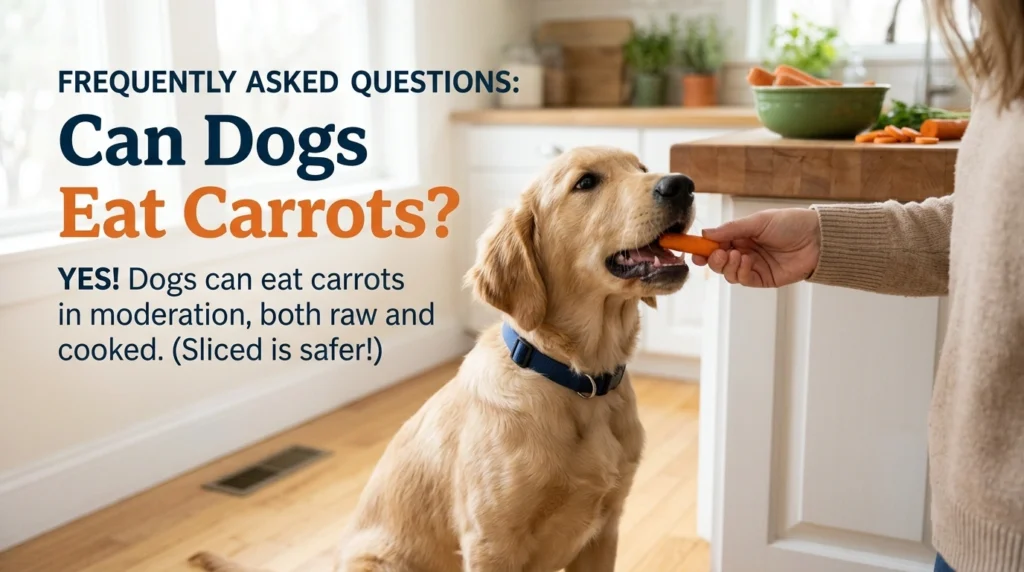
1. Are carrots good for dogs’ teeth?
Yes, raw carrots provide real dental benefits for dogs. The firm, fibrous texture of raw carrots physically scrubs tooth surfaces during chewing, helping to remove plaque and tartar buildup. Also, the mechanical chewing action stimulates saliva production which helps neutralize acid and wash food particles from between teeth. However, carrots are not a replacement for regular teeth brushing and professional dental cleanings. Think of them as a helpful supplement to your dog’s dental care routine rather than a complete solution. For dogs with severe dental disease or missing teeth, discuss with your vet whether softer cooked carrots or alternative enrichment is more appropriate.
2. Can puppies eat carrots?
Yes puppies can eat carrots safely, and they’re especially beneficial during the teething phase. Frozen carrot sticks provide natural, safe teething relief that soothes inflamed gums while satisfying the need to chew. However, cut carrots into very small pieces appropriate for your puppy’s size and chewing ability. Whole carrots pose a choking risk for young puppies. Also, introduce carrots gradually alongside a complete, balanced puppy diet. Because puppies need precise nutrition during growth, treats should account for no more than 10% of daily caloric intake. Consult your vet about appropriate treat amounts for your puppy’s specific breed and age.
3. Can dogs eat cooked carrots?
Yes, cooked carrots are safe for dogs. However, only serve plain, unseasoned cooked carrots, never carrots cooked with butter, salt, garlic, onion, or other human seasonings. Steamed or boiled carrots are the safest cooking methods. Cooked carrots are softer and more easily digestible than raw ones making them a good option for senior dogs with dental issues, dogs recovering from illness, or dogs with sensitive digestion. However, cooking reduces the dental benefit of raw carrots and changes the texture that makes chewing so engaging. Therefore, raw carrots are preferable for most healthy adult dogs, while cooked carrots serve specific situations better.
4. How many carrots can a dog eat per day?
Daily carrot amounts depend on your dog’s size, weight, and overall diet. As a general guideline using the 10% treat rule: small dogs (under 25 lbs) can enjoy 2–3 baby carrots or half a medium carrot daily. Medium dogs can have 1 medium carrot or 5–8 baby carrots. Large dogs can enjoy 1–2 medium carrots. Giant breeds can handle 2–3 medium carrots. However, these are general maximums not daily targets. Count carrot calories alongside all other treats your dog receives that day. Also, dogs new to carrots should start with smaller amounts until their digestive system adjusts to the added fiber.
5. Are baby carrots safer than regular carrots for dogs?
Baby carrots are generally safer for smaller dogs and dogs who tend to gulp food because their smaller size reduces choking risk. However, the nutritional profile is essentially identical to regular carrots. Therefore, the choice between baby and regular carrots should be based primarily on your dog’s size and eating habits rather than any nutritional consideration. Large dogs can safely eat whole regular carrots and benefit from the extended chewing time. Small dogs are safer with baby carrots or appropriately sliced regular carrots. Also, baby carrots require no slicing making them more convenient for owners who want quick, portion-appropriate serving.
6. Can diabetic dogs eat carrots?
Diabetic dogs can eat small amounts of carrots with appropriate monitoring but should do so with veterinary guidance rather than freely. Carrots contain moderate amounts of natural sugar and have a moderate glycemic index. Therefore, they’re not the ideal first-choice vegetable treat for diabetic dogs cucumbers and green beans, which are much lower in sugar, are generally better choices for dogs managing blood glucose. However, a small amount of carrot one or two thin slices is unlikely to cause significant blood glucose disruption for most diabetic dogs. Always consult your veterinarian about appropriate treat choices and quantities for your specific diabetic dog’s management plan.
7. Can dogs eat carrot tops (the green leaves)?
Carrot tops (the feathery green leaves attached to carrot bunches) are technically safe for dogs in small amounts; they’re not toxic. However, carrot tops are very bitter and most dogs show little interest in them. Also, they contain compounds called alkaloids that can cause mild stomach upset in larger quantities. Therefore, there’s no meaningful nutritional reason to feed carrot tops to your dog, and some potential for mild digestive irritation. Stick to the carrot root, the orange part which is nutritionally beneficial, well-tolerated, and genuinely enjoyed by most dogs.
Carrots and Dogs A Perfect Natural Partnership
Can dogs eat carrots ? Without question, yes and they absolutely should. Carrots represent one of the most nutritionally complete, affordable, and genuinely useful additions to any dog’s treat routine. Real dental benefits. Exceptional nutritional value. Low calorie count. Safe for virtually every dog. Easy to prepare and widely available.
The preparation takes seconds to wash, peel if conventional, cut to appropriate size, and serve. Raw for dental benefit. Frozen for teething puppies or summer cooling. Cooked and mashed for seniors or picky eaters. Stuffed in a Kong for enrichment. The versatility is genuinely impressive.
Therefore, add carrots to your regular grocery list as a dog treat staple. Also, let them replace higher-calorie commercial treats during training sessions. Your dog gets a healthier snack and you get the satisfaction of treating them well without guilt.