
Introduction
You’re enjoying shrimp for dinner and your dog is making absolutely sure you notice. That focused, hopeful stare is hard to ignore but before you share, the question matters: can dogs eat shrimp, or is seafood something better kept strictly on your plate?
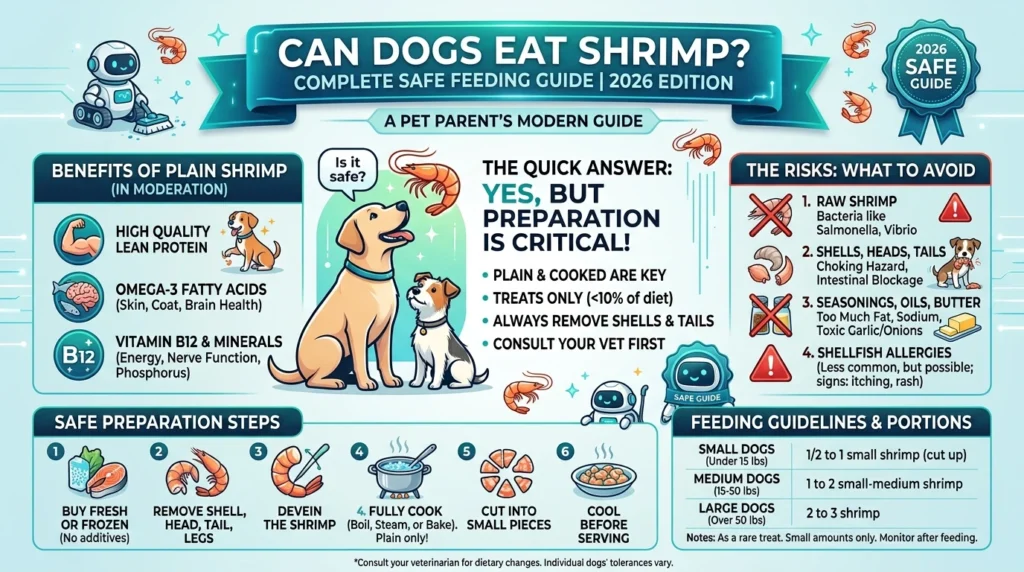
The honest answer is yes dogs can eat shrimp safely, and many genuinely love the taste. However, shrimp requires more careful preparation than most dog-safe foods. The shell, tail, and veins need removing. The cooking method matters significantly. Seasoning is a non-starter. And portion size needs real consideration.
Many pet owners don’t realize that plain, properly prepared shrimp is actually a nutritionally impressive treat for dogs. It’s high in protein, low in calories, and contains beneficial compounds including antioxidants that support brain and immune health.
In my experience, shrimp makes an excellent high-value training treat when prepared correctly dogs respond enthusiastically to the smell and taste, making it particularly useful for challenging training exercises. However, the preparation steps are genuinely important and skipping any of them creates real risk.
This guide covers everything that makes shrimp safe or dangerous, how to prepare it correctly, portion sizes, creative serving ideas, and the most common mistakes that send dogs to the vet unnecessarily.
Quick Answer
Yes dogs can eat shrimp safely when properly prepared. Remove the shell, tail, and vein completely. Cook thoroughly and never serve raw shrimp. Use no seasoning, butter, garlic, or oil. Shrimp provides protein, phosphorus, and antioxidants at low caloric cost. Feed in small amounts as an occasional treat due to cholesterol content.
Key Takeaways
- Shrimp is safe for dogs only when fully cooked, peeled, deveined, and completely unseasoned
- Raw shrimp is dangerous it carries bacteria and parasites that cooking eliminates
- Shrimp shells and tails are choking hazards and must be completely removed
- Shrimp is high in cholesterol feed as an occasional treat, not a daily staple
- Seasoned shrimp with garlic, butter, salt, or spices is genuinely dangerous for dogs
- Dogs with shellfish allergies should not eat shrimp consult your vet if unsure
Is Shrimp Safe for Dogs? The Complete Breakdown
Shrimp is safe for dogs but the preparation conditions matter more than with almost any other dog-safe food. Understanding exactly what makes shrimp safe or dangerous is the most important knowledge any dog owner needs before sharing this seafood.
What Nutrients Does Shrimp Provide for Dogs?
Plain cooked shrimp delivers impressive nutrition in a very low-calorie package:
| Nutrient | Benefit for Dogs |
| Protein | Muscle maintenance, tissue repair, immune function |
| Phosphorus | Bone and tooth health, kidney function support |
| Antioxidants (astaxanthin) | Brain health, anti-inflammatory support |
| Vitamin B12 | Neurological function and red blood cell production |
| Niacin (Vitamin B3) | Energy metabolism and enzyme function |
| Iodine | Thyroid function support |
| Omega-3 fatty acids | Coat health, inflammation reduction |
| Selenium | Antioxidant function and thyroid health |
What Makes Shrimp Potentially Dangerous for Dogs?
While shrimp flesh is safe, three specific dangers apply:
1. Raw shrimp carries bacteria including Vibrio and Salmonella, as well as potential parasites. These organisms cause serious gastrointestinal illness in dogs and can spread to human household members handling contaminated surfaces. Therefore, never feed raw shrimp to your dog under any circumstances.
2. Shells and tails are choking hazards and can cause intestinal obstruction particularly in smaller dogs. Also, shell fragments can scratch and irritate the digestive tract lining. Therefore, always remove shells and tails completely before serving.
3. Seasoning is the most common cause of shrimp-related illness in dogs. Garlic and onion present in most shrimp preparations are toxic to dogs. Also, butter, salt, chili flakes, lemon pepper, and cocktail sauce all contain ingredients ranging from unhealthy to dangerous. Therefore, only plain, unseasoned shrimp is appropriate for dogs.
What About Shrimp Cholesterol?
Shrimp is notably high in dietary cholesterol approximately 166mg per 100g serving. While dietary cholesterol affects dogs differently than humans, dogs with pancreatitis, high-fat diet sensitivities, or obesity may not tolerate shrimp well. Therefore, feed shrimp as an occasional treat rather than a daily addition and consult your vet if your dog has any lipid metabolism concerns.
How to Feed Shrimp to Dogs Safely: Step-by-Step Guide
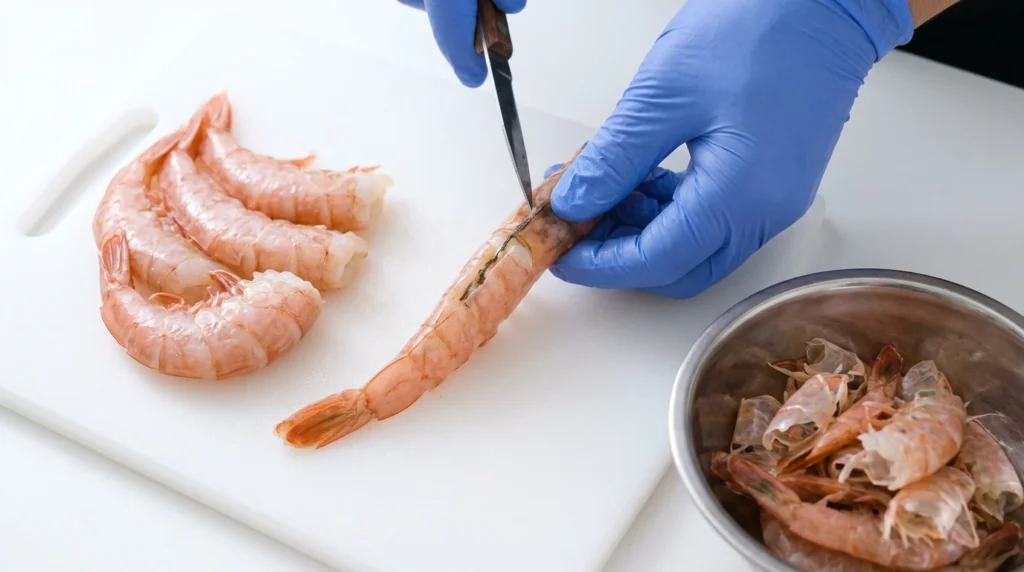
Preparing shrimp for your dog correctly eliminates all the significant risks associated with this seafood. Here’s the complete preparation process.
Step-by-Step Safe Shrimp Preparation
- Start with fresh or properly frozen raw shrimp. Choose plain shrimp with no added seasoning, sauce, or marinade. Also, avoid pre-cooked restaurant or store-bought shrimp that may have been seasoned. Always start with plain raw shrimp that you control the preparation of completely.
- Remove the shell completely. Peel away the entire shell including the legs before cooking. Also, check for any remaining shell fragments after peeling, as small pieces can hide along the edges of the flesh. Therefore, thorough peeling before cooking is more reliable than trying to peel after.
- Remove the tail. The tail is a choking hazard particularly for small dogs. Therefore, always snap off the tail completely before serving, even if you leave tails on shrimp for human consumption.
- Devein the shrimp. The dark vein running along the back of the shrimp is the digestive tract. While not toxic, it’s unpleasant and potentially gritty. Therefore, make a shallow cut along the back of each shrimp and remove the vein with the tip of a knife or your finger.
- Cook thoroughly using a safe method. The safest cooking methods for dog-safe shrimp are:
- Boiling plain water, no added salt or seasoning; cook until pink and opaque throughout
- Steaming excellent option; preserves nutrition without adding anything
- Baking plain, no oil, butter, or seasoning; 350°F until pink throughout
- Never use butter, oil, garlic, onion, salt, or any seasoning. Never use the same pan or oil used for seasoned human shrimp without thorough cleaning first.
- Allow to cool completely. Never serve freshly cooked shrimp while still hot; this burns your dog’s mouth and throat. Also, cooling time gives you an opportunity to check for any remaining shell fragments or veins you may have missed.
- Cut into appropriate pieces. Large shrimp should be cut into small, bite-sized pieces for smaller dogs and puppies. Also, even for large dogs, cutting shrimp into pieces prevents gulping whole pieces that could cause choking. Serve a small portion first when introducing shrimp for the first time.
Safe Shrimp Serving Sizes by Dog Size
| Dog Size | Weight | Safe Occasional Serving |
| Extra Small (Toy) | Under 10 lbs | 1 small shrimp, cut into pieces |
| Small | 10–25 lbs | 1–2 shrimp |
| Medium | 25–60 lbs | 2–3 shrimp |
| Large | 60–100 lbs | 3–5 shrimp |
| Giant | Over 100 lbs | 4–6 shrimp |
Shrimp vs. Other Protein Treats for Dogs: Full Comparison
How does shrimp compare to other protein-based treats dogs commonly enjoy?
| Protein Treat | Calories Per Serving | Cholesterol | Preparation Required | Allergy Risk | Frequency |
| Plain cooked shrimp (3) | ~25 calories | High | Significant | Moderate | Occasional |
| Plain cooked chicken (30g) | ~50 calories | Low | Moderate | Low | Regular |
| Plain cooked salmon (30g) | ~60 calories | Low | Moderate | Low | Regular |
| Hard-boiled egg (half) | ~40 calories | Moderate | Low | Low | Regular |
| Plain cooked turkey (30g) | ~45 calories | Low | Moderate | Low | Regular |
| Commercial dog treat | 15–50 calories | Varies | None | Low-Moderate | Regular |
Benefits of Shrimp as an Occasional Dog Treat
High motivation value: The strong smell and rich flavor of shrimp makes it an exceptionally high-value training treat. Because dogs respond so enthusiastically to shrimp, it works well for challenging new commands, recall training, and desensitization exercises.
Impressive nutritional density: Shrimp provides excellent protein, B12, phosphorus, and antioxidants in very few calories. Therefore, it’s a genuinely nutritious occasional treat rather than empty calories.
Novel protein option: For dogs with chicken or beef sensitivities, shrimp provides a novel protein source that may be better tolerated. Also, this makes it useful in elimination diet situations under veterinary guidance.
Pros and Cons of Feeding Dogs Shrimp
Pros:
- High-value training treat dogs respond enthusiastically
- Low in calories despite high protein content
- Contains beneficial antioxidants (astaxanthin)
- Novel protein option for sensitive dogs
- Rich in B12, phosphorus, and selenium
Cons:
- High in dietary cholesterol occasional only
- Requires significant preparation (peeling, deveining, cooking)
- Raw shrimp poses real bacterial and parasite risks
- Shellfish allergy possible in some dogs
- Seasoned shrimp (the most common form) is dangerous
Common Mistakes When Feeding Shrimp to Dogs
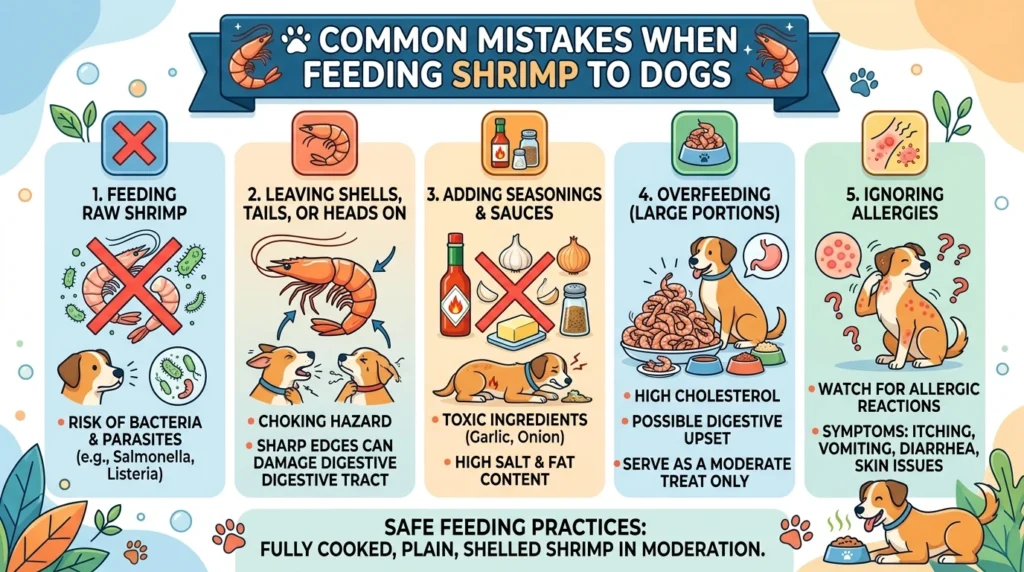
Mistake 1: Feeding Seasoned Shrimp From Your Own Plate
This is by far the most common and most dangerous shrimp mistake. Shrimp prepared for human consumption almost always contains garlic, butter, salt, lemon pepper, cocktail sauce, or other seasonings. Garlic is toxic to dogs and causes red blood cell damage. Butter and oil cause digestive upset and pancreatitis risk. Salt causes sodium poisoning in significant quantities. Therefore, never give your dog shrimp from your plate, takeout order, or restaurant meal.
Mistake 2: Serving Raw Shrimp
Some owners believe that raw seafood is more “natural” or nutritious for dogs. However, raw shrimp carries genuine bacterial and parasitic risks that cooking eliminates. Vibrio bacteria in raw shellfish cause serious gastrointestinal illness. Also, raw shrimp contamination can transfer to kitchen surfaces and affect human family members. Therefore, always cook shrimp thoroughly until completely pink and opaque throughout before offering any to your dog.
Mistake 3: Leaving the Shell or Tail On
This mistake happens when owners quickly pull a piece of shrimp off their plate without properly removing the shell. Shrimp shells are hard, splintery when chewed, and genuinely dangerous particularly for small dogs. Also, tails are similarly hazardous. Therefore, develop the habit of fully preparing any shrimp you plan to share before it reaches your plate, not as an afterthought when your dog is already asking.
Mistake 4: Feeding Too Frequently Because “It’s Healthy”
Shrimp is nutritious but its high cholesterol content means it’s appropriate as an occasional treat, not a daily protein source. Dogs fed shrimp regularly alongside already cholesterol-containing diets may face increased pancreatitis risk, particularly if they’re overweight or have underlying metabolic sensitivities. Therefore, limit shrimp to once or twice per week at most and consult your vet if your dog has any known metabolic or digestive health concerns.
Mistake 5: Ignoring the Possibility of Shellfish Allergy
Food allergies can develop at any point in a dog’s life even to foods they’ve previously tolerated. Also, some dogs have shellfish allergies from the first exposure without prior sensitization. Therefore, introduce shrimp for the first time in a very small amount and monitor carefully for 24 hours. Signs of allergic reaction include itching, hives, facial swelling, vomiting, diarrhea, or difficulty breathing. If any of these occur, contact your vet immediately and don’t offer shrimp again until you’ve discussed the reaction with a professional.
Pro Tip: Use plain cooked shrimp as a high-value training treat for challenging recall training; the strong, distinctive smell carries further outdoors than most other treats, and dogs find it exceptionally motivating. Cut each shrimp into 4–6 small pieces to maximize treat count per shrimp. As a result, you get multiple reward repetitions from a single shrimp while keeping the total amount and cholesterol intake genuinely minimal.
Frequently Asked Questions: Can Dogs Eat Shrimp?
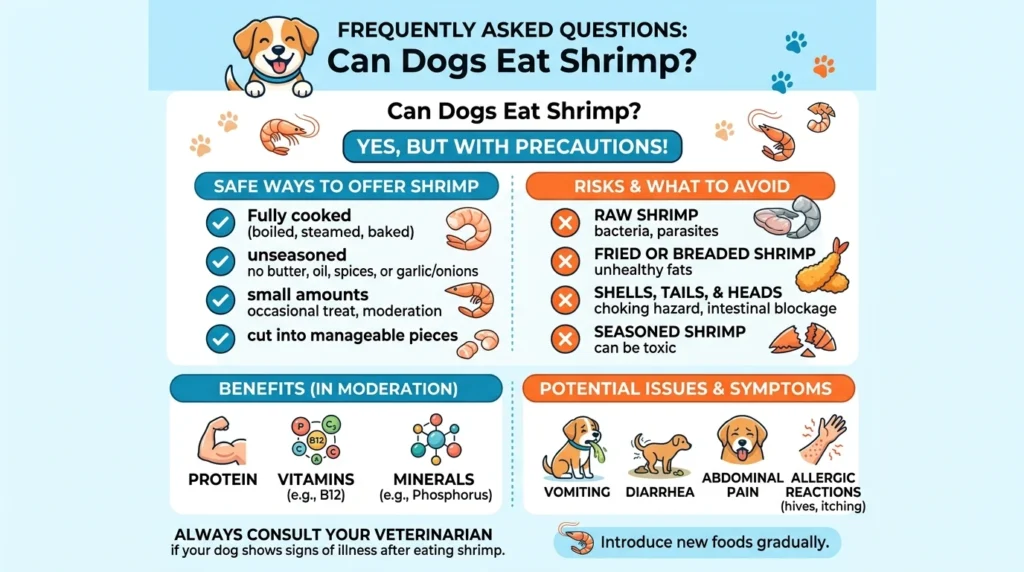
1. Can dogs eat shrimp tails?
No shrimp tails should always be completely removed before feeding shrimp to dogs. Shrimp tails are hard, sharp when broken, and can cause choking particularly in smaller dogs who may try to swallow a piece whole. Also, shrimp tail shells can splinter into sharp fragments that scratch or puncture the digestive tract lining. Therefore, make removing the tail a non-negotiable step in shrimp preparation for dogs. If your dog accidentally eats a shrimp tail, monitor for signs of choking, gagging, or abdominal discomfort, and contact your vet if symptoms develop or persist beyond a few hours.
2. Can dogs eat shrimp shells?
No shrimp shells are not safe for dogs and must be completely removed before serving. Shrimp shells are hard, indigestible, and create several risks: choking hazard for smaller dogs, intestinal obstruction if swallowed whole, and physical irritation of the digestive tract from sharp shell fragments. Also, dogs who eat significant quantities of shell may develop vomiting, diarrhea, or intestinal discomfort requiring veterinary attention. Therefore, always peel shrimp completely before offering any to your dog. If your dog eats shrimp shells accidentally, monitor carefully and contact your vet if you observe choking, lethargy, vomiting, or abdominal pain.
3. Can dogs eat frozen shrimp?
Raw frozen shrimp should be thawed and cooked before serving, never fed frozen or raw. However, cooked shrimp that has been frozen after cooking is safe to serve after thawing. Also, frozen cooked shrimp provides a convenient, shelf-stable option for owners who want to keep plain prepared shrimp on hand for training treats. Always verify that frozen shrimp products are plain with no added seasonings, sauces, or flavor enhancements before purchasing for dog treat use. Also, thaw frozen cooked shrimp in the refrigerator rather than at room temperature to prevent bacterial growth during thawing.
4. Can puppies eat shrimp?
Puppies can eat small amounts of plain, fully cooked, peeled, and divine shrimp but extra caution is warranted. Because puppies have smaller, more sensitive digestive systems than adult dogs, introduce shrimp in a very small initial amount and monitor carefully for 24–48 hours. Also, puppies need precise, balanced nutrition during growth treats including shrimp should account for no more than 10% of daily caloric intake. Cut shrimp into very small pieces appropriate for your puppy’s size. Also, consult your vet before introducing shrimp to very young puppies or breeds with known digestive sensitivities.
5. Can dogs be allergic to shrimp?
Yes dogs can develop shellfish allergies, including to shrimp. Shellfish allergies in dogs cause immune-mediated reactions to proteins in shellfish. Symptoms include itching, skin redness, hives, facial swelling, vomiting, diarrhea, or in severe cases, anaphylaxis. Food allergies can develop at any point even in dogs who have previously eaten shrimp without reaction. Therefore, always introduce shrimp for the first time in a very small amount and observe carefully for 24 hours before offering more. If you observe any signs of allergic reaction, even mild itching or digestive upset, discontinue immediately and consult your veterinarian before trying shrimp again.
6. Is shrimp good for dogs with allergies to common proteins?
Shrimp can serve as a novel protein option for dogs with allergies to common proteins like chicken, beef, or lamb but only under veterinary guidance. Novel protein diets for allergy management require strict protocol to be effective; the dog must have absolutely no prior exposure to the novel protein. Therefore, if your vet recommends a novel protein elimination diet and shrimp hasn’t been part of your dog’s diet history, it may be a suitable option. However, never introduce a novel protein for allergy management without veterinary guidance, as inadvertently cross-contaminating the elimination diet undermines the diagnostic process entirely.
7. What should I do if my dog eats seasoned shrimp?
If your dog eats seasoned shrimp particularly if it contains garlic or onion contact your veterinarian immediately. Also, call the ASPCA Animal Poison Control Center at (888) 426-4435 if your vet is unavailable. The severity of the situation depends on which seasonings were present, how much was eaten, and your dog’s size and weight. Garlic and onion toxicity causes red blood cell damage symptoms that may not appear for several days after ingestion. Therefore, don’t wait for symptoms to develop before seeking guidance. Bring the shrimp packaging or recipe information if possible so your vet can assess the specific ingredients involved.
Shrimp and Dogs Nutritious When Done Right
So can dogs eat shrimp ? Yes when it’s properly prepared, the answer is absolutely yes. Plain, fully cooked, peeled, deveined, and completely unseasoned shrimp provides impressive nutrition, satisfying taste, and genuine training value for most healthy dogs.
Preparation is the key. Remove the shell. Remove the tail. Devein completely. Cook until pink and opaque throughout. Season with nothing. Cool completely before serving. Those six steps transform a potentially risky seafood into one of the most nutritionally impressive occasional treats in your dog’s rotation.
Therefore, the next time you’re cooking plain shrimp for yourself, set aside a few pieces before seasoning, prepare them simply by boiling or steaming and let your dog enjoy a genuinely special treat. Also, keep the portion modest given the cholesterol content, and consult your vet if your dog has any metabolic or digestive health concerns.