Introduction
Picking the right kibble for your dog feels overwhelming. There are hundreds of bags on the shelf. Every single one claims to be the healthiest, most natural, and most complete option available. So how do you actually know which one to trust?
Finding the top 10 best dry dog food options doesn’t have to be a guessing game. In my experience, the best choices come down to a few key things: ingredient quality, nutritional research, and safety record. Get those right, and your dog thrives.
In this guide, I’ve done the hard work for you. You’ll get honest, research-backed picks across every budget and dog size. You’ll also learn what separates great kibble from a cleverly marketed bag of fillers. Let’s find the perfect food for your pup.
What Makes the Top 10 Best Dry Dog Food Worth Buying?
The Qualities That Truly Matter
Not all kibbles are created equal. However, knowing what to look for makes choosing much easier. Here are the key qualities every top dry dog food must have:
- Named protein first chicken, beef, or salmon should lead the ingredient list
- AAFCO feeding trial validation real dogs tested the food, not just lab formulations
- Clean recall history check the FDA database before buying any brand
- No artificial preservatives avoid BHA, BHT, and ethoxyquin
- Life stage appropriateness puppy, adult, and senior formulas differ significantly
Why These Factors Actually Matter
Because your dog eats the same food every single day, quality compounds over time. A food with poor digestibility, low-quality protein, or unnecessary fillers creates cumulative nutritional gaps. Therefore, investing in quality from the start pays off in your dog’s coat, energy, weight, and long-term health.
Pro Tip: Always flip the bag and read the back panel first. The front is marketing. The back is the actual truth about what’s inside.
How to Choose From the Top 10 Best Dry Dog Food Options
Step-by-Step Selection Guide
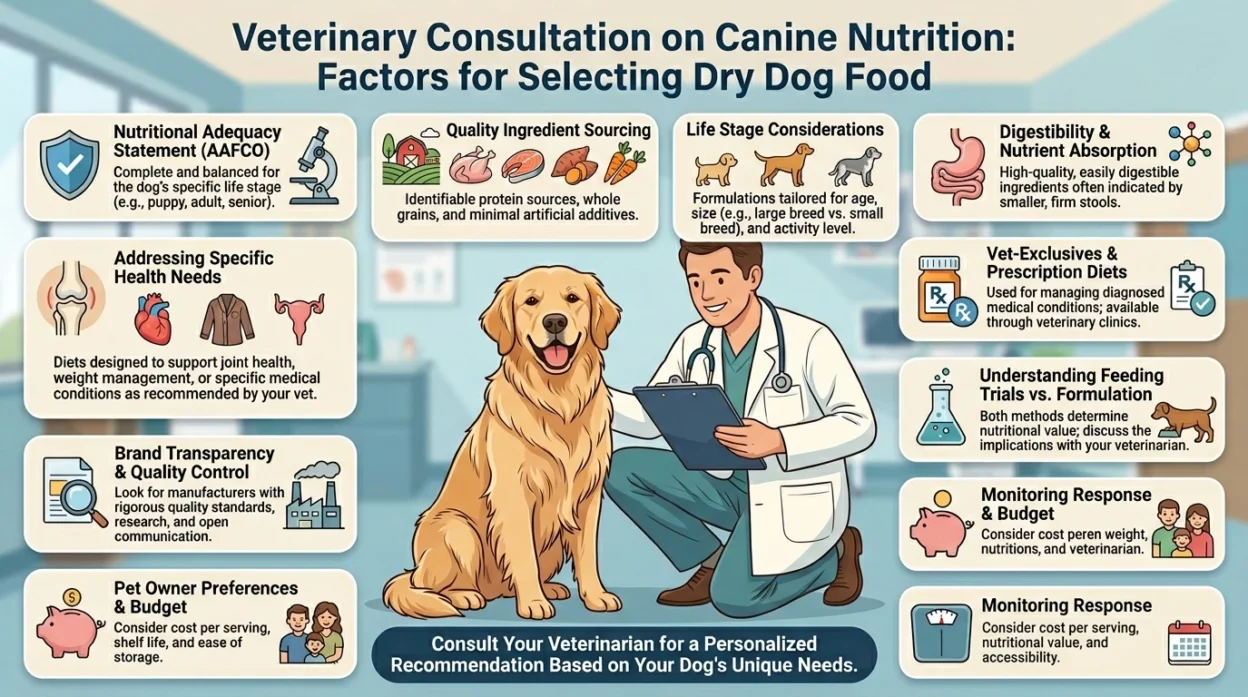
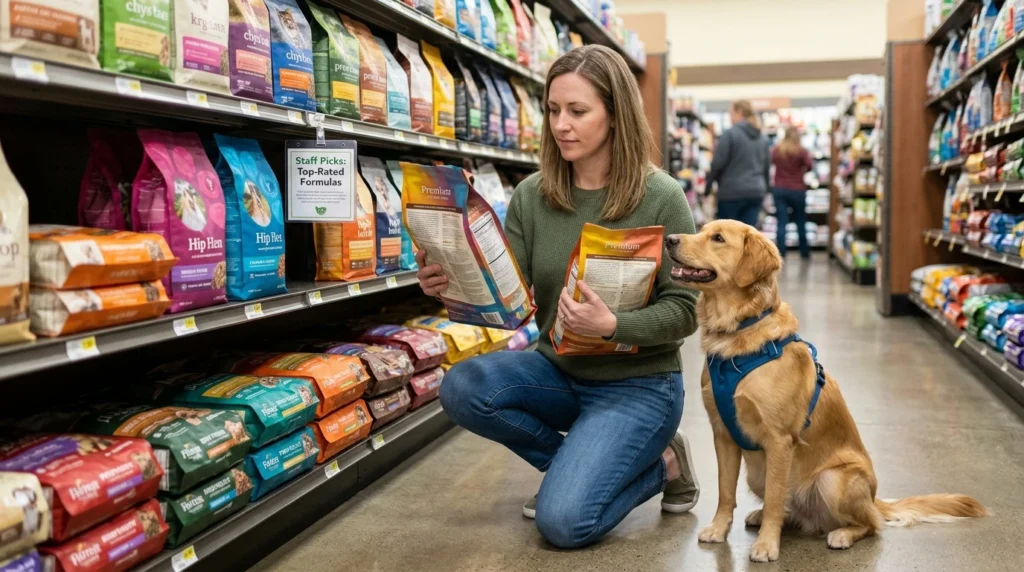
Choosing the right kibble is simpler when you follow a clear process. Here’s exactly how to narrow it down:
- Start with your dog’s life stage. Puppies need DHA and higher calories. Adult dogs need balanced protein and fat. Senior dogs need joint support and fewer calories. Never skip this step.
- Check your dog’s size category. Large breeds need controlled calcium levels. Small breeds need smaller kibble and higher caloric density. Most top brands offer size-specific versions.
- Read the first five ingredients carefully. These make up the bulk of the formula. You want at least one named animal protein in the top three positions.
- Verify the AAFCO statement. Look for “complete and balanced based on feeding trials.” This is stronger than “formulated to meet” standards.
- Research the brand’s recall history. Spend two minutes on the FDA website. A pattern of serious recalls is a genuine red flag.
- Calculate daily feeding cost. Divide the bag price by the number of feeding days. This gives you a true cost comparison across brands.
- Transition slowly over 7 to 10 days. Mix 25% new food with 75% old food at first. Then gradually shift the ratio every few days.
Why Gradual Transitions Matter
Switching food too fast causes digestive upset. As a result, many owners wrongly blame a great food for problems that were actually caused by a rushed switch. Patience during the transition period is one of the most practical things you can do for your dog’s comfort.
[Dry Dog Food Purina: Best Formulas & Complete Guide 2026]
Top 10 Best Dry Dog Food: Full Honest Rankings
Quick Comparison Table
| Rank | Brand | Best For | First Ingredient | Price Range |
| 1 | Purina Pro Plan Adult | Overall best | Chicken | $$$ |
| 2 | Hill’s Science Diet | Vet-recommended | Chicken meal | $$$ |
| 3 | Royal Canin Breed Specific | Breed precision | Chicken by-product | $$$ |
| 4 | Orijen Original | Premium ingredients | Free-run chicken | $$$$ |
| 5 | Purina ONE Adult | Best mid-range | Chicken | $$ |
| 6 | Blue Buffalo Life Protection | Natural focus | Deboned chicken | $$$ |
| 7 | Merrick Grain Free | High protein | Deboned chicken | $$$ |
| 8 | Wellness Complete Health | Holistic nutrition | Deboned chicken | $$$ |
| 9 | Iams Adult Large Breed | Large breeds | Chicken | $$ |
| 10 | Hill’s Science Diet Senior 7+ | Senior dogs | Chicken meal | $$$ |
#1 Purina Pro Plan Adult
This is my top pick and it’s not even close. Real chicken leads the ingredient list. The formula is backed by more peer-reviewed nutritional research than almost any other commercial brand. In addition, vets recommend it more consistently than nearly anything else on the market.
Purina employs over 500 scientists and nutritionists. Therefore, the science behind every bag is genuine, not just marketing language. You get prebiotic fiber, omega-6 fatty acids, and feeding-trial-validated AAFCO compliance in every bag.
Best for: Healthy adult dogs of all sizes needing reliable daily nutrition.
#2 Hill’s Science Diet Adult
Hill brings exceptional clinical rigor to every formula. Also, it sits alongside Purina Pro Plan as the most consistently vet-recommended dry dog food in the US. Chicken meal leads to the formula which is actually a concentrated protein source with significant nutritional density.
The feeding trial data behind this brand is robust. Furthermore, Hill’s has a strong prescription diet line for dogs with medical conditions. This makes it a familiar and trusted name across the entire veterinary profession.
Best for: Owners who prioritize clinical validation and vet endorsement above all else.
#3 Royal Canin Breed Specific
Royal Canin takes a completely different approach. Instead of one-size-fits-all formulas, they create breed-specific and size-specific nutrition. For example, their Labrador Retriever formula addresses joint health and weight management unique to that breed.
The precision here is genuinely impressive. However, it works best for purebred dog owners. If you have a mixed breed, a standard size-based formula may serve you better.
Best for: Purebred dog owners who want breed-targeted nutritional precision.
#4 Orijen Original
Orijen uses around 85% animal-sourced ingredients free-run poultry, wild-caught fish, and cage-free eggs. Therefore, from a pure ingredient quality standpoint, it leads the entire market convincingly.
The price is significant, roughly $5 to $6.50 per day for a 50-pound dog. However, the ingredient quality is proportionally exceptional. If budget isn’t a constraint, Orijen delivers nutrition that’s genuinely hard to match.
Best for: Owners who prioritize maximum ingredient quality and can accommodate premium pricing.
#5 Purina ONE Adult
Purina ONE is the best mid-range value on this entire list. Real chicken leads the formula. There’s no corn or wheat filler. Also, protein and fat percentages are solid for healthy adult dogs.
The daily feeding cost for most dogs runs between $1.75 and $2.25. That’s outstanding value for named-protein-first nutrition with Purina’s manufacturing safety behind it.
Best for: Budget-conscious owners who still want real-meat-first daily nutrition.
#6 Blue Buffalo Life Protection
Blue Buffalo uses deboned chicken as the first ingredient across their Life Protection line. In addition, they add their proprietary “LifeSource Bits” , a blend of antioxidants, vitamins, and minerals cold-pressed to preserve potency.
No artificial colors, flavors, or preservatives appear in the formula. However, some versions use significant pea protein to boost numbers worth noting given ongoing grain-free DCM research from the FDA.
Best for: Owners focused on natural ingredients at a mid-range price point.
#7 Merrick Grain Free Real Chicken
Merrick features deboned chicken as the first ingredient with around 38% protein content. Also, their sourcing transparency is strong; they work with farms they know personally. No artificial additives appear anywhere in the formula.
This formula is best suited for dogs with a confirmed need for grain-free feeding. Therefore, always consult your vet before choosing grain-free, given the FDA’s ongoing DCM investigation.
Best for: Active dogs needing high protein, or those confirmed to need grain-free formulas.
#8 Wellness Complete Health
Wellness uses deboned chicken first, followed by salmon oil for omega-3 fatty acids. Furthermore, blueberries, sweet potatoes, and carrots provide antioxidant support from whole food sources, not just synthetic sprays.
No meat by-products, no artificial anything. As a result, this formula genuinely earns its “holistic” label rather than just wearing it as a marketing badge.
Best for: Owners who want a whole-food, natural ingredient profile at a reasonable premium price.
#9 Iams Adult Large Breed
Iams doesn’t get as much premium attention as other brands on this list. However, for large breed owners on a moderate budget, it delivers solid results. Chicken leads the formula. Controlled calcium levels specifically support large breed joint health.
The daily feeding cost is genuinely accessible, typically $1.50 to $2.00 for large breeds. Also, it’s widely available at most major retailers, which makes restocking simple.
Best for: Large breed owners who want solid, affordable everyday nutrition.
#10 Hill’s Science Diet Senior 7+
Senior dogs have genuinely different nutritional needs. This formula addresses them thoughtfully. Lower calorie density prevents weight gain in less active older dogs. In addition, added glucosamine and chondroitin support aging joints directly.
Antioxidants support immune function, and easy-to-digest proteins help seniors maintain muscle mass. Therefore, if your dog is seven or older and still on an adult formula, this is a conversation worth having with your vet.
Best for: Dogs aged seven and older needing targeted age-appropriate nutritional support.
Mistakes to Avoid When Choosing the Best Dry Dog Food
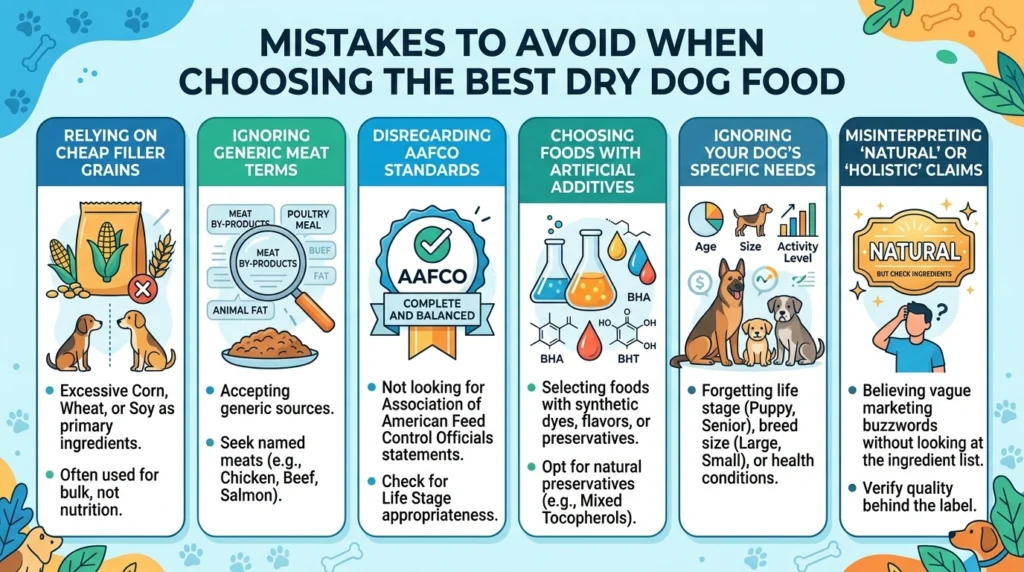
Common Errors That Hurt Your Dog’s Health
Even experienced dog owners make these mistakes. Here’s what to watch for:
Falling for Grain-Free Marketing
Grain-free food sounds premium. However, the FDA has been investigating a potential link between grain-free diets and dilated cardiomyopathy (DCM) since 2018. Most dogs don’t need grain-free food. Therefore, unless your vet specifically recommends it, grain-inclusive formulas are the safer choice.
Ignoring Life Stage Labels
Feeding puppy food to a senior dog or vice versa creates nutritional imbalances over time. Life stage formulas exist for real biological reasons. Always match the food to where your dog actually is in life.
Buying Based on Bag Price Alone
A cheaper bag that runs out faster isn’t always the better deal. Also, a more digestible food often requires smaller portions so daily cost can actually be lower than it first appears. Always calculate cost per day, not cost per bag.
Skipping the Recall History Check
Two minutes on the FDA website can save your dog from serious harm. Therefore, always check before committing to a new brand, especially one you haven’t used before.
Switching Foods Too Frequently
Finding a food your dog thrives on and then switching because you read something new is a common trap. Frequent switching disrupts gut health and makes it impossible to evaluate whether any food is actually working well.
Pro Tip: When you find dry dog food that keeps your dog’s coat shiny, stools firm, and energy strong stick with it. Consistency with a proven quality food is one of the best things you can do for long-term dog health.
Frequently Asked Questions: Top 10 Best Dry Dog Food
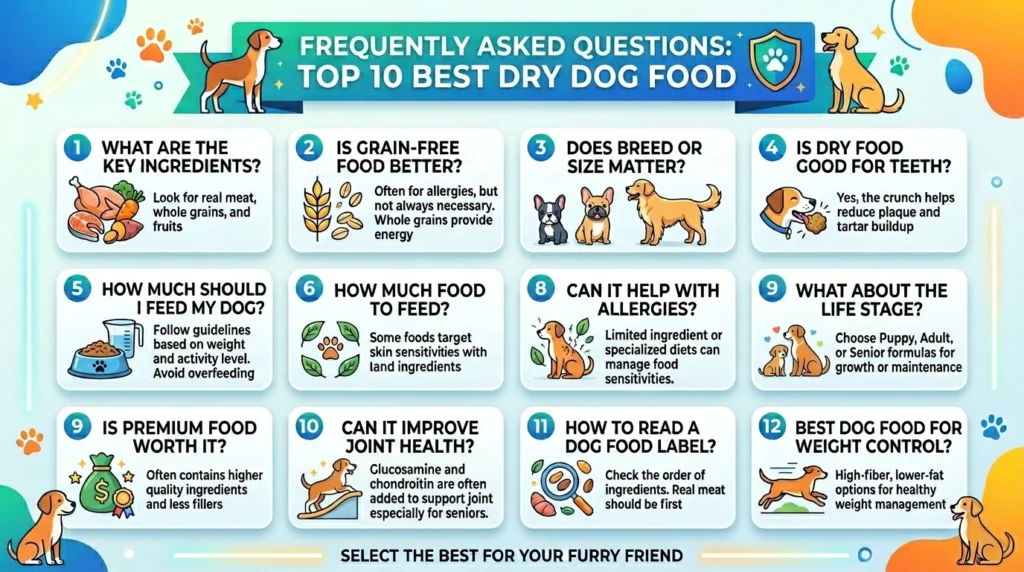
1. What is the single best dry dog food recommended by most vets?
Purina Pro Plan and Hill’s Science Diet are the two most consistently recommended dry dog foods by veterinarians across the United States. Both carry feeding-trial-validated AAFCO compliance and are backed by extensive peer-reviewed nutritional research. In my experience, Purina Pro Plan edges slightly ahead in overall recommendation frequency but both are genuinely excellent choices that deserve full trust. Always confirm the best option for your specific dog with your own vet.
2. Is grain-free dry dog food healthier than regular kibble?
For most healthy dogs no. Grain-free formulas have been associated with a potential cardiac risk (DCM) in ongoing FDA research since 2018. Grains aren’t harmful to most dogs, and grain-inclusive formulas remain the safer, more scientifically supported default. However, if your vet has specifically recommended grain-free for a diagnosed grain sensitivity, that recommendation should absolutely be followed.
3. How do I know if my dog’s current dry food is actually working?
Look for three clear signs over eight to twelve weeks. First, stools should be firm and consistent in appropriate volume. Also, your dog’s coat should be genuinely shiny without excessive shedding or flakiness. Finally, energy levels should be vibrant and appropriate for your dog’s age and breed. If all three are positive, you’ve found a food that genuinely suits your dog.
4. Can I mix two different dry dog foods together?
You can, but there’s rarely a strong nutritional reason to do so when each food is already complete and balanced. Mixing makes it harder to identify a food sensitivity if one develops. However, mixing is useful during a transition period gradually swapping old food for new over seven to ten days. This protects your dog’s digestive system from the shock of an abrupt change.
5. How often should I change my dog’s dry food brand?
Ideally, not often. Dogs thrive on dietary consistency because their gut microbiome adapts to a specific food over time. The main legitimate reasons to change are transitioning between life stages, a diagnosed health condition requiring a different formula, a confirmed food allergy, or an active brand recall. If your dog is doing well on their current food, there’s genuinely no reason to change it regularly.
6. What’s the best dry dog food for a dog with a sensitive stomach?
Purina Pro Plan Sensitive Skin and Stomach (Salmon and Rice) is the most commonly recommended option for digestive sensitivity. Salmon provides a novel protein that’s less likely to trigger reactions. Also, rice is a gentle, easily digestible carbohydrate that supports gut stability. Prebiotic fiber further supports healthy gut bacteria. However, always work with your vet to rule out underlying medical causes before assuming a simple food switch will solve persistent digestive issues.
7. Is the most expensive dry dog food always the best?
Not necessarily. Purina Pro Plan delivers more nutritional research backing than many brands charging significantly more per bag. Therefore, the best consumer value isn’t always the most expensive option; it’s the food that delivers the highest nutritional quality at a daily cost that fits your budget sustainably. Orijen leads on ingredient quality. However, Purina Pro Plan leads on the overall combination of research depth, safety record, vet endorsement, and accessible daily cost.
Your Dog Deserves the Very Best Start Today
Finding the top 10 best dry dog food options doesn’t have to feel overwhelming anymore. Whether you choose Purina Pro Plan for its unmatched research backing, Hill’s Science Diet for its clinical rigor, Orijen for premium ingredient quality, or Purina ONE for outstanding mid-range value you’re making a genuinely informed choice.
Start with your dog’s life stage. Read that ingredient list carefully. Verify the AAFCO feeding trial statement. Calculate your daily cost honestly. Then give the food a proper eight to twelve week trial before evaluating the results.
Also, don’t forget to loop in your vet especially if your dog has any existing health conditions or specific dietary needs. Their personalized input makes every food decision more confident and more effective.
Top 10 best dry dog food ,Top 10 best dry dog food ,Top 10 best dry dog food ,Top 10 best dry dog food,