Introduction
Your dog deserves the very best and choosing the right food is honestly one of the most important decisions you’ll make as a pet owner. Dry dog food Purina offers some of the most trusted, research-backed formulas available anywhere today. However, with so many options on the shelf, it’s easy to feel completely overwhelmed.
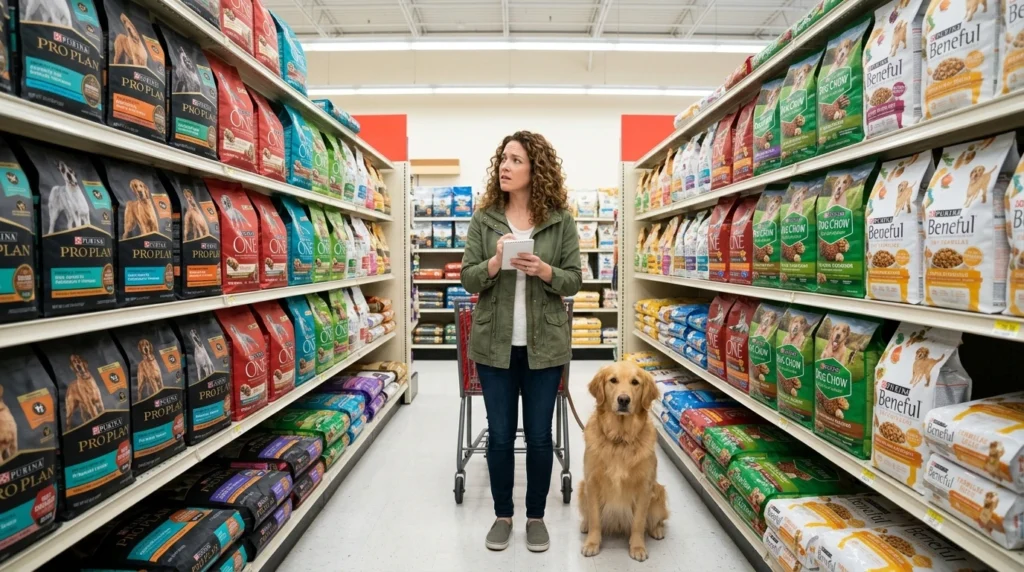
Have you ever stood in the pet food aisle wondering which Purina bag is actually right for your dog? You’re definitely not alone. In my experience, most dog owners pick food based on the packaging, not the nutrition inside.
That ends today. This guide breaks down everything you need to know about Purina dry dog food. You’ll discover the best formulas, learn how to pick the right one, and understand exactly what makes Purina stand out. Let’s get started.
What Makes Dry Dog Food Purina So Popular?
Purina has been feeding dogs for nearly 100 years. That kind of track record doesn’t happen by accident. There are very real, science-backed reasons why vets and dog owners keep coming back to this brand year after year.
A Brand Built on Real Science
Purina employs over 500 scientists, vets, and nutrition experts. These professionals conduct genuine research not just marketing studies. As a result, every formula is backed by peer-reviewed science that most other brands simply can’t match.
Their research facility the Purina Pet Care Center runs long-term feeding studies on dogs living in home-like environments. Therefore, when Purina makes a nutritional claim, it’s supported by real feeding trial data.
AAFCO Feeding Trial Validation
Most brands simply “formulate” food to meet AAFCO standards on paper. Purina, however, takes it further. Many of their formulas carry “complete and balanced based on feeding trials” validation. This means actual dogs ate the food and showed measurable health improvements.
That distinction matters enormously for your dog’s wellbeing.
Consistent Safety Record
Purina manufactures food in their own US-based facilities. Because of this, they maintain tight quality controls that outsourced manufacturing simply can’t guarantee. Their recall history is also notably clean compared to brands of similar size and production volume.
How to Choose the Right Dry Dog Food Purina Formula
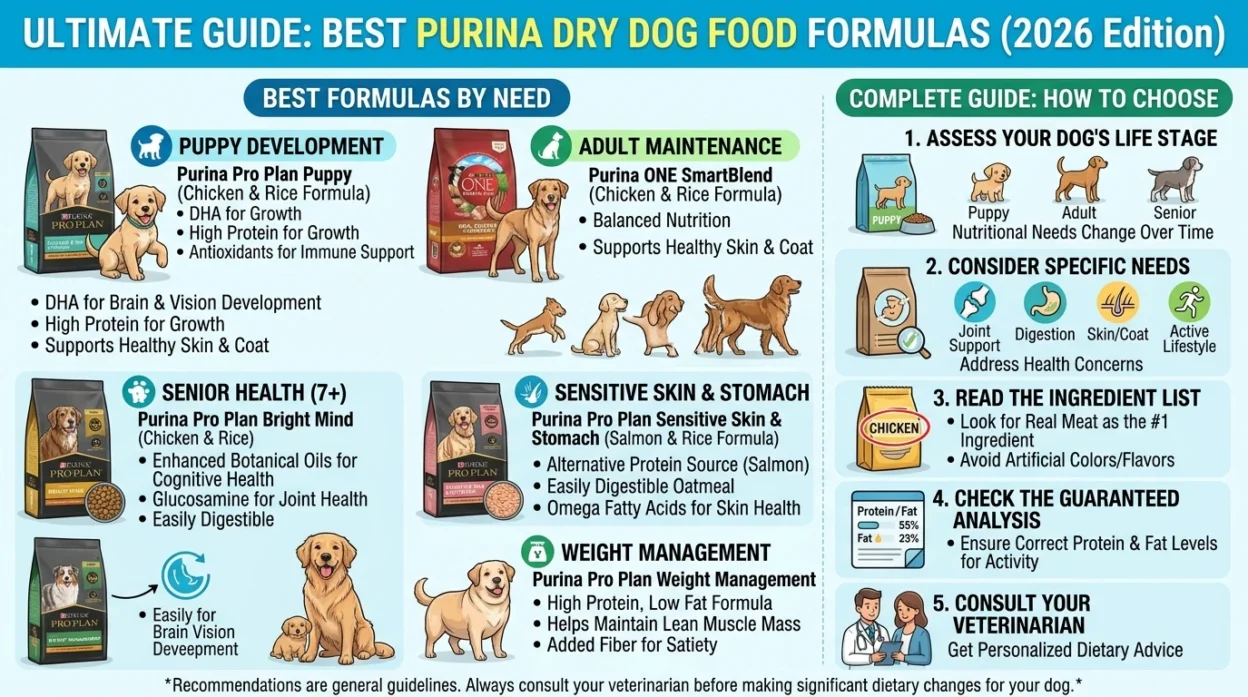
Choosing the right Purina formula feels complicated at first. However, once you understand the key factors, it becomes surprisingly straightforward. Here’s a simple step-by-step approach that works for most dog owners.
Step-by-Step Selection Guide
- Start with your dog’s life stage. Purina makes distinct formulas for puppies, adults, and senior dogs. Each formula has a different nutritional profile. Therefore, always match the formula to your dog’s actual age, not what’s convenient.
- Consider your dog’s size next. Large breeds need controlled calcium levels for healthy joints. Small breeds need higher caloric density in smaller kibble. Purina Pro Plan offers size-specific versions for exactly these differences.
- Factor in any health concerns. Does your dog have a sensitive stomach? Skin issues? Weight problems? Purina has targeted formulas for all of these conditions. However, always consult your vet before switching foods for health-related reasons.
- Read the first five ingredients carefully. The ingredient list is ordered by weight. You want to see a named protein like chicken, salmon, or beef listed first. If corn or wheat appears at the top, that formula leans heavily on fillers.
- Check the AAFCO statement on the back. Look for “feeding trials” rather than just “formulated to meet” standards. This small detail makes a big nutritional difference for your dog.
- Calculate your daily feeding cost. Divide the bag price by the number of feeding days. In many cases, premium Purina formulas cost less per day than budget options that require larger portions due to lower digestibility.
- Transition gradually over 7 to 10 days. Mix 25% new food with 75% old food first. Then slowly shift the ratio every few days. This prevents digestive upset which is the most common mistake new switchers make.
Pro Tip: If your dog is a picky eater, try warming their Purina kibble with a small splash of warm water. It releases the natural aroma and makes even the fussiest dogs suddenly very interested in their bowl.
[Best Fresh Dog Food: Top Picks & Guide for 2026]
Dry Dog Food Purina: Full Product Line Comparison
Understanding the difference between Purina’s product lines saves you time and money. Here’s an honest breakdown of every major option.
Purina Product Range Overview
| Product Line | Price Range | First Ingredient | Best For | Feeding Trial? |
| Purina Pro Plan | $$$ | Chicken / Salmon | Most dogs, all life stages | Yes |
| Purina ONE | $$ | Chicken / Beef | Healthy adults on a budget | Some formulas |
| Purina Dog Chow | $ | Whole grain corn | Budget-conscious owners | Formulation only |
| Purina Beyond | $$ | Chicken / Salmon | Natural ingredient seekers | Some formulas |
| Purina Pro Plan Veterinary | $$$$ | Varies by condition | Dogs with medical conditions | Yes |
Purina Pro Plan The Clear Standout
Real chicken, salmon, or beef always leads the formula. In addition, the range includes targeted formulas for sensitive stomachs, weight management, senior cognitive health, and high-performance dogs.
Vets recommend this formula more than almost any other commercial dog food. That recommendation comes from science not sponsorship.
Purina ONE he Smart Mid-Range Choice
Purina ONE offers real meat as the first ingredient without the premium price tag. Therefore, it’s an excellent option for healthy adult dogs whose owners want meaningful quality improvement without stretching the budget significantly.
Purina Dog Chow The Budget Baseline
Dog Chow lists whole grain corn as the primary ingredient. It meets AAFCO minimum nutritional standards and works for healthy adult dogs with no specific needs. However, it’s not the strongest nutritional choice if better options are within your budget.
Purina Beyond For Natural-Focused Owners
Beyond features simpler ingredient lists and no artificial additives. It’s a good middle-ground option for owners who prioritize natural ingredients but aren’t ready to commit to premium Pro Plan pricing.
Common Mistakes to Avoid With Purina Dry Dog Food
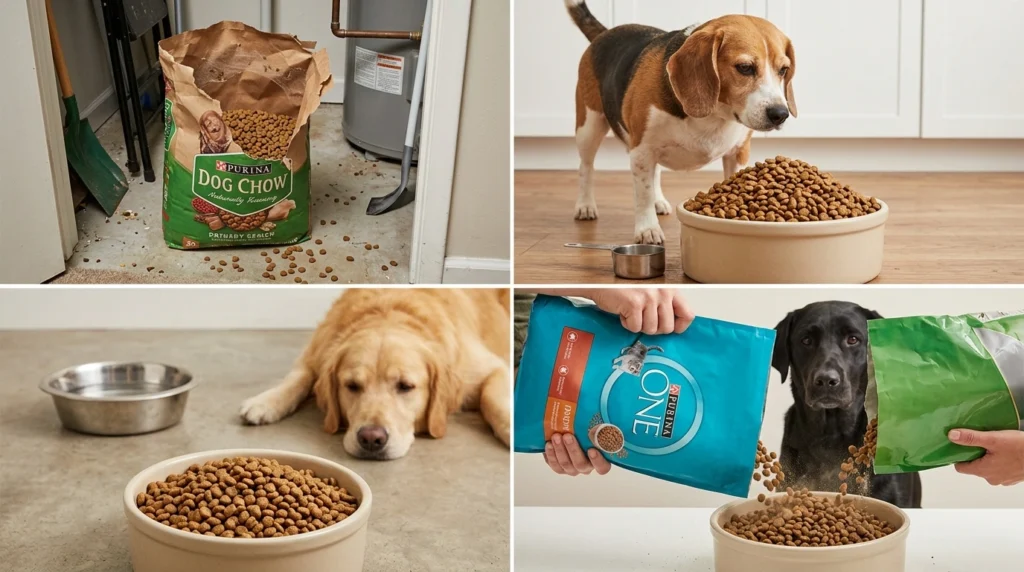
Even experienced dog owners make these errors. Knowing about them in advance saves your dog from unnecessary discomfort and saves you from wasted money.
Feeding the Wrong Life Stage Formula
Adult food fed to puppies creates nutritional gaps during critical growth phases. Puppy food fed to senior dogs delivers excess calories their slower metabolism can’t handle properly. Always match the formula to your dog’s actual life stage, not what’s leftover in the pantry.
Ignoring Portion Sizes
Purina Pro Plan is highly digestible and calorie-dense. As a result, your dog needs less of it per meal than lower-quality alternatives. Many owners feed the same volume they used previously and accidentally overfeed their dog. Always follow the feeding guide on the bag and adjust based on your dog’s body condition.
Skipping the Transition Period
Switching food abruptly even to a better quality option causes loose stools, gas, and stomach upset. Therefore, always transition gradually over 7 to 10 days. Your dog’s gut bacteria need time to adapt to a new formula.
Storing Food Incorrectly
Dry dog food goes stale and rancid faster than most owners realize. After opening, always store the bag clipped shut inside an airtight container. Keep it in a cool, dry spot away from sunlight. Also, avoid pouring kibble directly into a plastic bin fat residue builds up and spoils fresh food faster.
Choosing Grain-Free Without Medical Reason
Many owners choose grain-free Purina formulas assuming they’re healthier. However, the FDA has been investigating a potential link between grain-free diets and dilated cardiomyopathy (DCM) in dogs since 2018. Unless your vet specifically recommends grain-free for a diagnosed condition, grain-inclusive formulas are the safer, better-researched default choice.
Pro Tip: Check the FDA’s pet food recall database every few months and sign up for email alerts. It takes two minutes to set up and gives you instant notification of any safety issues including Purina products.
Frequently Asked Questions About Dry Dog Food Purina
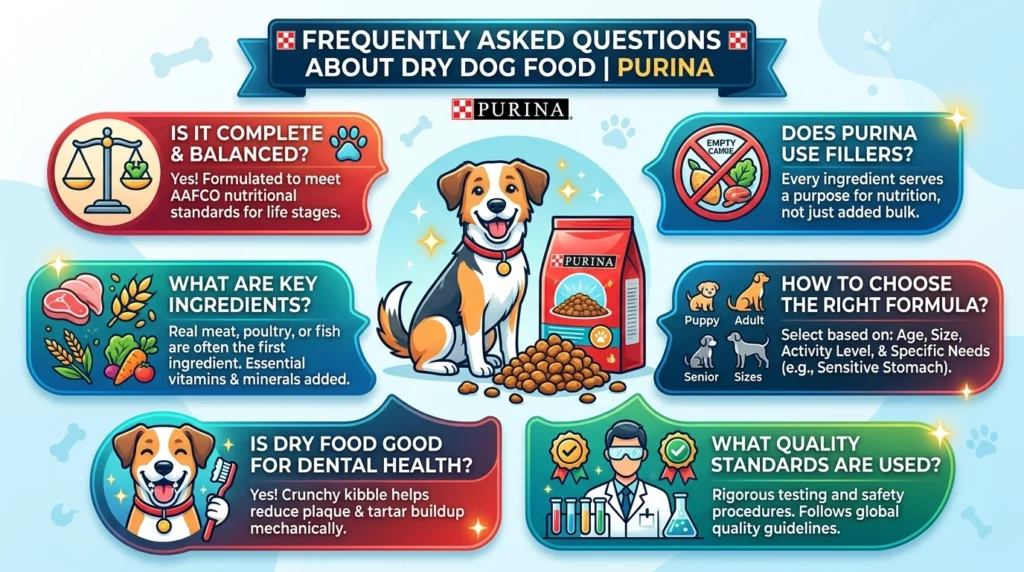
1. Is dry dog food Purina actually recommended by vets?
Yes Purina Pro Plan is one of the two most consistently recommended dry dog food brands by veterinarians in the United States, alongside Hill’s Science Diet. This recommendation comes from the brand’s extensive peer-reviewed nutritional research, feeding-trial-validated AAFCO compliance, and clean manufacturing safety record. Financial relationships don’t explain the recommendation the science does. However, always confirm the best choice for your specific dog with your own veterinarian, who knows your pet’s individual health history.
2. Which Purina dry dog food formula is best for sensitive stomachs?
Purina Pro Plan Sensitive Skin & Stomach (Salmon & Rice formula) is the most commonly recommended option for dogs with digestive sensitivity. Salmon serves as a novel protein that reduces sensitivity likelihood. Rice is a gentle, easily digestible carbohydrate that doesn’t stress the digestive system. In addition, the formula includes prebiotic fiber to support healthy gut bacteria. Always consult your vet if your dog has persistent digestive issues, as underlying conditions may require a prescription diet.
3. How does Purina Pro Plan compare to Purina ONE?
Both are solid options but they serve different needs. Purina Pro Plan carries feeding-trial-validated AAFCO compliance, uses fresh named protein first, and offers a much wider range of specialized formulas. Purina ONE also uses real meat first but relies on formulation-only AAFCO validation for most products. Therefore, Pro Plan is the stronger scientific choice, while ONE offers excellent mid-range value for healthy dogs without specific conditions.
4. Is Purina dry dog food safe? Has it had recalls?
Purina has a notably clean safety record relative to its enormous production volume. Occasional quality issues have occurred as they do with virtually every major pet food brand but serious contamination events are rare in Purina’s history. Because they manufacture in their own US-based facilities, quality control is tighter than brands using contract manufacturers. Always check the FDA’s official pet food recall database at fda.gov for current information on any brand you’re considering.
5. Can I mix Purina dry dog food with wet food?
Absolutely and many vets actually encourage this approach. Mixing a small amount of wet food into dry Purina kibble adds moisture, improves palatability for picky eaters, and can make mealtime more satisfying for your dog. However, you need to adjust total daily portions when mixing. Adding wet food without reducing the kibble amount leads to gradual weight gain over time. Use the caloric content listed on both products to calculate the right combined daily amount for your dog’s weight.
6. How long does an open bag of Purina dry dog food stay fresh?
An opened bag of Purina dry dog food stays fresh for approximately six weeks when stored correctly. Keep the original bag clipped shut inside an airtight hard container in a cool, dry location. Never pour kibble directly into a plastic bin without the bag residual fat from previous batches contaminates the fresh food and accelerates rancidity. Also, always check the best-by date before buying to ensure maximum freshness from the moment you open the bag.
7. Is Purina dry dog food good for large breed dogs?
Yes Purina makes dedicated large breed formulas specifically for dogs over 50 pounds. Purina Pro Plan Large Breed Adult contains added glucosamine and EPA for joint support, appropriate calcium-to-phosphorus ratios for skeletal health, and controlled caloric density to prevent the obesity that puts extra stress on large dogs’ joints. For large breed puppies, Purina Pro Plan Large Breed Puppy specifically controls calcium levels to prevent developmental bone problems. Always consult your vet about the right formula for your large breed dog’s specific needs.
Your Dog Deserves the Best Start With Purina
Dry dog food Purina consistently earns its reputation as one of the most trusted, research-backed options available in 2026. Whether you choose Pro Plan for maximum nutritional science, Purina ONE for smart mid-range value, or Beyond for a more natural ingredient focus you’re working with a brand that genuinely prioritizes your dog’s health over marketing budgets.
The most important steps are simple. Match the formula to your dog’s life stage and size. Check the AAFCO feeding trial statement. Transition gradually. Store the food correctly. Finally, talk to your vet about your dog’s specific nutritional needs before making any major changes.