Introduction
Bringing a new puppy home is one of the most exciting moments of your life. However, figuring out what to feed them can feel overwhelming fast. Walk into any pet store and you’ll find dozens of options staring back at you all claiming to be the best.
That’s exactly why Purina puppy dog food comes up in almost every new dog owner conversation. It’s trusted, widely available, and backed by real nutritional science. But which formula is right for your puppy? And how do you feed it correctly?
In my experience helping dog owners navigate puppy nutrition, Purina consistently earns its reputation. Therefore, this guide gives you everything you need: honest reviews, feeding tips, common mistakes to avoid, and answers to the questions you’re already Googling at midnight.
Let’s get your puppy started on the right paw. 🐾
Why Purina Puppy Dog Food Is a Top Choice for Growing Dogs
The Science Behind the Brand
Purina isn’t just a popular name, it’s a brand backed by genuine research. In fact, Purina employs over 500 scientists, veterinarians, and nutritionists focused entirely on pet health. That’s not marketing fluff. That’s a real commitment to canine nutrition science.
Also, their formulas are tested through AAFCO feeding trials meaning real puppies ate the food and showed measurable health outcomes. Many brands only formulate to meet standards on paper. Purina actually proves it works on living, growing dogs.
What Makes Puppy Food Different From Adult Food
Puppies have very different nutritional needs than adult dogs. Therefore, feeding your puppy adult dog food, even a great one isn’t the right move.
Here’s what puppies specifically need:
- Higher protein to build strong muscles during rapid growth
- DHA from fish oil for healthy brain and vision development
- More calories per cup because puppies burn energy fast
- Controlled calcium levels especially important for large breed puppies
Purina puppy dog food addresses all of these needs in their dedicated puppy formulas. As a result, your puppy gets targeted nutrition, not just a smaller portion of adult food.
Best Purina Puppy Dog Food Products: Which One Should You Choose?
Overview of the Purina Puppy Range
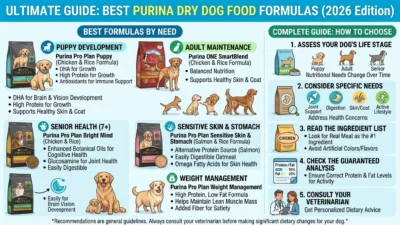
Purina makes several puppy-specific formulas. However, not every formula suits every puppy. Here’s a clear breakdown to help you decide:
| Product | Best For | Key Feature | Price Range |
| Purina Pro Plan Puppy (Chicken & Rice) | Most healthy puppies | DHA + feeding trial validated | $$$ |
| Purina Pro Plan Large Breed Puppy | Large breed puppies 50lb+ | Controlled calcium levels | $$$ |
| Purina ONE Healthy Puppy | Budget-conscious owners | Real chicken first ingredient | $$ |
| Purina Puppy Chow | Tight budgets | Affordable complete nutrition | $ |
| Purina Pro Plan Sensitive Skin Puppy | Puppies with sensitivities | Salmon-based, gentle formula | $$$ |
My Honest Top Picks
🏆 Best Overall: Purina Pro Plan Puppy (Chicken & Rice)
This is the formula most veterinarians recommend for healthy puppies. Real chicken leads the ingredient list. DHA from fish oil supports brain development. The formula is AAFCO feeding-trial validated so real puppies confirmed its effectiveness. In my experience, this is the formula that delivers the most consistent positive outcomes for owners.
💰 Best Value: Purina ONE Healthy Puppy
Real chicken comes first in this formula too. It’s more affordable than Pro Plan, however it still delivers solid nutritional quality. For owners watching their budget, Purina ONE is a genuinely strong mid-range choice.
🐕 Best for Large Breeds: Purina Pro Plan Large Breed Puppy
Large breed puppies need very specific calcium control during development. Therefore, this formula is specially calibrated to support healthy bone growth without accelerating skeletal development too fast. If you have a German Shepherd, Labrador, or Golden Retriever puppy this is the one.
Pro Tip: Always check that the packaging says “Puppy” or “For All Life Stages” not just “Adult.” Feeding your puppy an adult formula long-term can create nutritional gaps during this critical growth phase.
How to Feed Purina Puppy Dog Food the Right Way
Step-by-Step Feeding Guide for New Puppy Owners
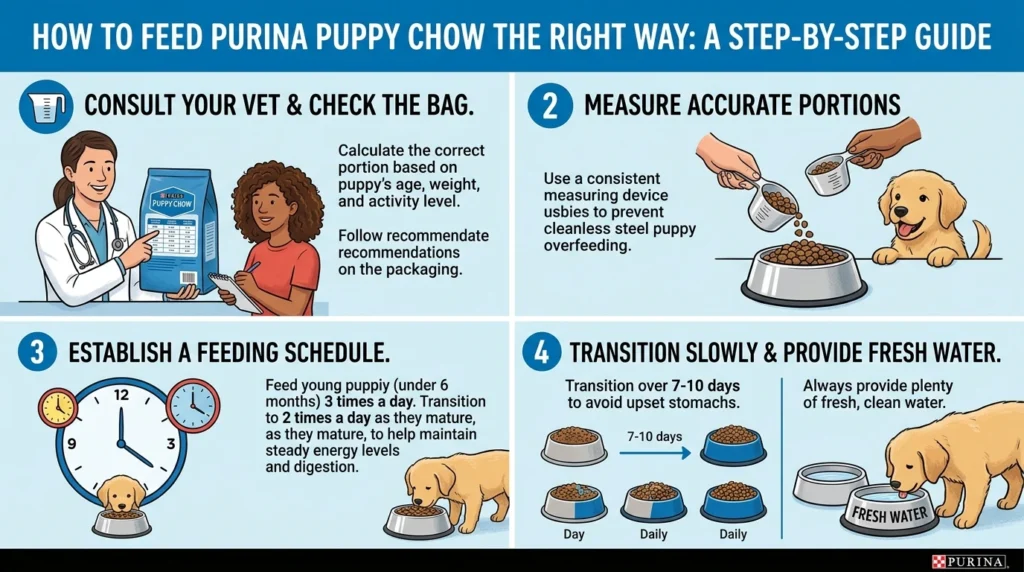
Getting the food right is only half the battle. Feeding it correctly matters just as much. Here’s exactly how to do it:
- Choose the right formula for your puppy’s size. Small breeds and large breeds have different needs. Therefore, always match the formula to your puppy’s expected adult weight, not their current weight.
- Follow the feeding guidelines on the bag. Purina provides clear portion guidelines based on age and weight. However, treat these as a starting point rather than an absolute rule. Every puppy is different.
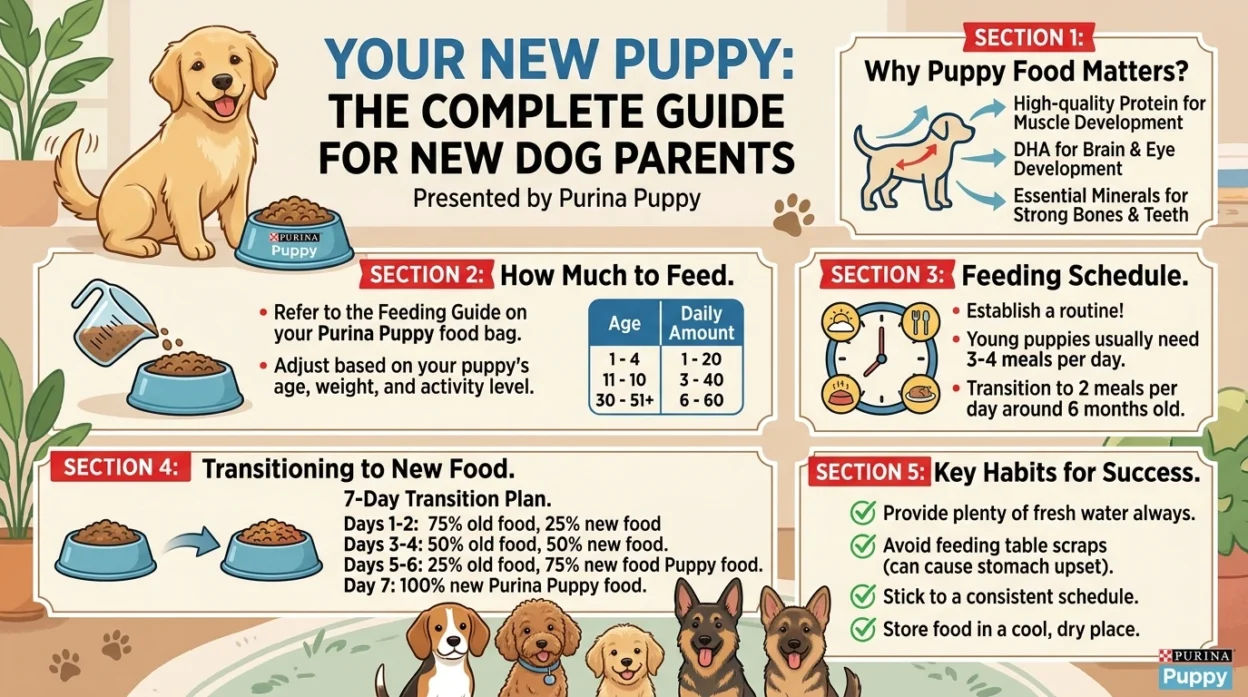
- Feed smaller meals more frequently. Young puppies (under 3 months) do best with 4 small meals per day. From 3 to 6 months, move to 3 meals. After 6 months, 2 meals per day works well for most puppies.
- Transition from your breeder’s food gradually. Mix 25% Purina puppy food with 75% old food for the first 3 days. Then shift to 50/50 for days 4 to 6. Finally, move to 75% new and 25% old before completing the switch by day 10.
- Always provide fresh water alongside dry kibble. Dry food has low moisture content. Therefore, consistent water access is essential especially for active, growing puppies.
- Measure every meal properly. Use a proper measuring cup or kitchen scale. Eyeballing portions leads to gradual overfeeding, which causes unnecessary weight gain in young dogs.
- Reassess portions as your puppy grows. Your puppy’s caloric needs change every few months. Also, consult your vet at each wellness visit about whether portion adjustments are needed.
When to Transition to Adult Food
Most puppies transition to adult food between 12 and 18 months. However, large breed puppies often need to stay on puppy food until 18 to 24 months because they take longer to reach full skeletal maturity. Always ask your vet for the right timing for your specific breed.
[Dog Food Pedigree Adult: Complete Honest Review 2026]
Purina Puppy Dog Food Ingredients: What’s Really Inside
Reading the Label Like a Pro
Ever picked up a bag of puppy food and felt completely confused by the ingredient list? You’re not alone. Here’s a simple breakdown of what to look for in Purina puppy formulas.
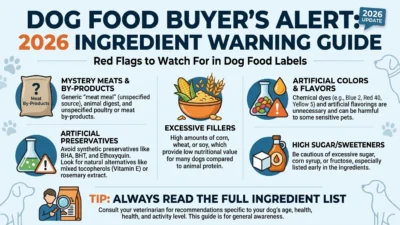
Ingredients that signal quality:
- Named protein first “Chicken,” “Salmon,” or “Lamb” as the very first ingredient
- Fish oil or fish meal a natural source of DHA for brain development
- Whole grains brown rice or oatmeal provide digestible, steady energy
- Natural antioxidants Vitamin E and Vitamin C support immune function
- Live probiotics (in select Pro Plan formulas) support healthy gut bacteria
Ingredients worth noting:
- Poultry by-product meal not harmful, but less transparent than named proteins
- Corn or wheat derivatives not ideal in large quantities, though not dangerous for most puppies
- Artificial colors zero nutritional benefit; purely cosmetic and unnecessary
The AAFCO Statement Why It Matters
Always look for the AAFCO nutritional adequacy statement on the bag. Specifically, look for the phrase “based on feeding trials” rather than just “formulated to meet” standards. Purina Pro Plan carries trial validation as a stronger quality indicator than paper formulation alone.
Common Mistakes to Avoid With Purina Puppy Dog Food
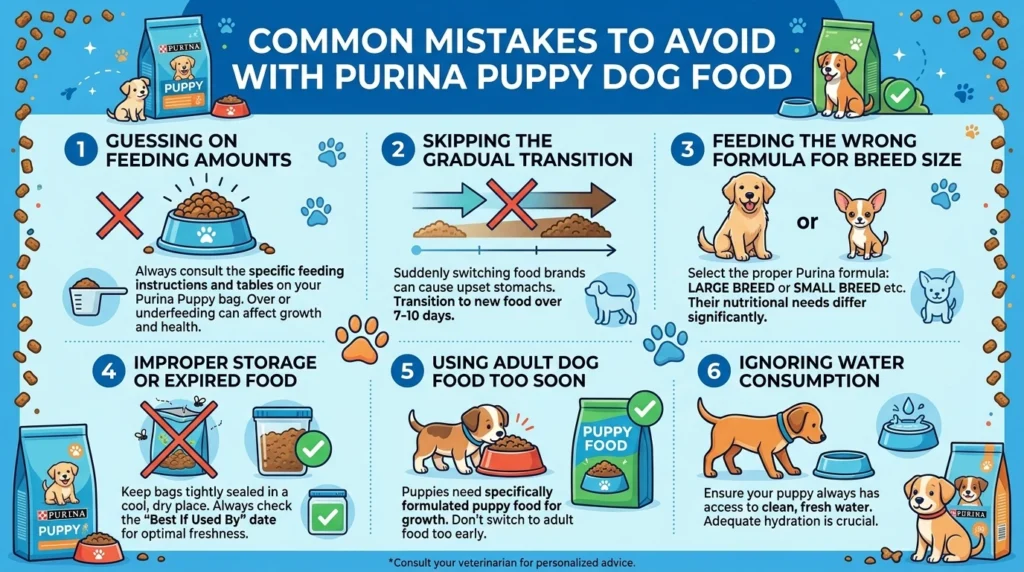
Mistake 1: Feeding Adult Food to a Puppy
This happens more often than you’d think. Adult formulas don’t contain the DHA levels, caloric density, or calcium ratios that puppies need. Therefore, always use a formula specifically labeled for puppies or “all life stages.”
Mistake 2: Skipping the Transition Period
Switching food overnight is one of the fastest ways to cause digestive upset in a puppy. Loose stools, gas, and vomiting are common results. However, a proper 7 to 10 day gradual transition prevents almost all of this discomfort. Don’t skip it even if your puppy seems eager for the new food.
Mistake 3: Overfeeding Because the Puppy Seems Hungry
Puppies are enthusiastic eaters. However, feeding beyond recommended portions causes rapid weight gain that stresses developing joints. Therefore, stick to measured portions and resist the urge to add “just a little more.”
Mistake 4: Using a Large Breed Formula for a Small Breed Puppy
Large breed puppy formulas have controlled calcium levels designed for bigger dogs. Feeding them to a small breed puppy can actually create nutritional imbalances. Always match the formula to your puppy’s expected adult size.
Mistake 5: Ignoring Changes in Your Puppy’s Response
If your puppy develops loose stools, dull coat, low energy, or skin irritation after starting a new food don’t ignore it. These signs suggest the current formula may not suit your individual puppy. In that case, consult your vet before switching to a different formula.
Pro Tip: Keep a simple journal for the first month of feeding any new puppy food. Note stool consistency, energy levels, coat condition, and appetite daily. This record helps your vet give better advice if any issues come up later.
Frequently Asked Questions About Purina Puppy Dog Food
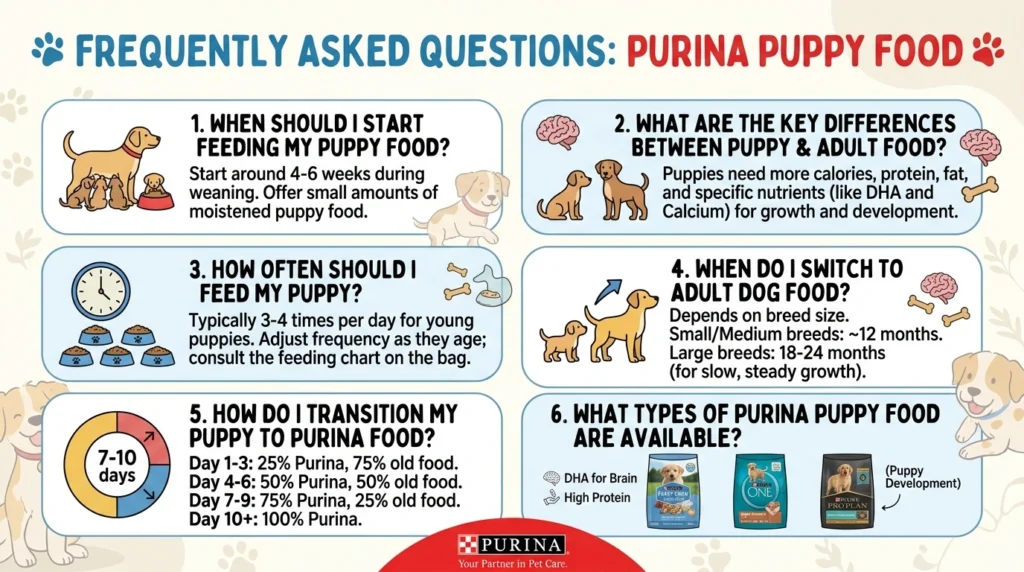
1. Is Purina puppy dog food recommended by vets?
Yes Purina Pro Plan Puppy is one of the most consistently recommended puppy foods by veterinarians in the United States. The recommendation is based on peer-reviewed nutritional research, AAFCO feeding trial validation, and Purina’s long safety track record. However, always confirm the best formula for your specific puppy with your own vet, who knows your dog’s individual health history.
2. How much Purina puppy food should I feed my puppy per day?
Portion size depends on your puppy’s current weight, age, and expected adult size. As a starting point, follow the feeding guidelines printed on your specific Purina bag. Then adjust based on your puppy’s body condition you should be able to feel their ribs without pressing hard, but not see them prominently. Your vet can give you a precise daily caloric target at each wellness visit.
3. Can I mix Purina puppy food with wet food?
Yes, mixing wet food into dry Purina puppy kibble is perfectly fine and many owners do it. In fact, adding a small amount of wet puppy food improves palatability for picky eaters and adds extra moisture to the diet. However, adjust total portions accordingly so you don’t accidentally overfeed. Also, make sure any wet food you use is also labeled for puppies or all life stages.
4. Is Purina Puppy Chow as good as Purina Pro Plan Puppy?
Both are legitimate puppy foods that meet AAFCO nutritional standards. However, Purina Pro Plan Puppy is meaningfully superior in ingredient quality, research backing, and feeding trial validation. Puppy Chow uses whole grain corn higher up in the ingredient list and lacks the same level of clinical research support. For the best nutritional outcomes, Pro Plan is the stronger choice. Puppy Chow is a reasonable option for very tight budgets, but Pro Plan delivers better value when you calculate cost per day of feeding.
5. When should I stop feeding Purina puppy food and switch to adult food?
Most puppies transition to adult food between 12 and 18 months of age. However, large breed puppies often benefit from staying on puppy food until 18 to 24 months because they reach skeletal maturity more slowly. Your vet is the best guide for your specific breed’s transition timing. Switching too early especially for large breeds can affect bone and joint development during the final growth phase.
6. Is Purina Pro Plan Puppy grain-free?
No Purina Pro Plan Puppy formulas are grain-inclusive, not grain-free. This is actually a positive point given ongoing FDA research into a potential link between grain-free diets and dilated cardiomyopathy (DCM) in dogs. Grains are not harmful to most puppies, and grain-inclusive formulas remain the safer, more clinically supported choice. Unless your vet specifically recommends grain-free for a diagnosed sensitivity, stick with grain-inclusive Purina puppy formulas.
7. How do I know if Purina puppy food is working for my dog?
Look for these positive signs over the first 8 to 12 weeks: firm, well-formed stools in appropriate volume, a shiny and healthy coat, good energy levels appropriate for your puppy’s age, consistent weight gain on a healthy growth curve, and enthusiastic appetite at mealtimes. If you notice persistent loose stools, dull coat, low energy, or skin issues consult your vet before switching foods. These signs may indicate the formula isn’t the best match for your individual puppy.
Give Your Puppy the Best Start Possible
Choosing Purina puppy dog food is one of the smartest decisions you can make for your growing dog. The research backing is real. The ingredients are quality. The formula range covers every puppy size and health need.
Start with Purina Pro Plan Puppy for most healthy pups, or Pro Plan Large Breed Puppy if you have a bigger breed. Feed measured portions two to three times daily, transition slowly from your previous food, and check in with your vet at every wellness visit.
Your puppy grows up faster than you’ll believe. Therefore, every meal during this critical phase shapes their long-term health, energy, and vitality. Make each bowl count from day one