Introduction
Your dog trusts you completely. Every single meal, every scoop of kibble your dog depends on you to make the right choice. However, not every dog food brand on American shelves deserves that trust.
The shocking truth is that some popular dog food brands in the USA are still sitting on pet store shelves right now. Many of them have serious safety concerns, low-quality ingredients, and even recall histories that should alarm every dog owner.
In my experience helping dog owners navigate pet nutrition, I’ve seen too many dogs suffer from poor-quality food. Therefore, knowing which brands to avoid is just as important as knowing which brands to choose.
This guide gives you the full picture. You’ll learn exactly which brands raise red flags, why they’re problematic, and what warning signs to look for on any label. Let’s make sure your dog gets the nutrition they truly deserve.
Why Some Dog Food Brands to Avoid in USA Are Still on Shelves
The Pet Food Industry Has a Transparency Problem
The pet food industry in the USA is surprisingly loosely regulated. As a result, many brands can use vague ingredient labels, misleading marketing terms, and low-quality protein sources without facing immediate consequences.
Ever wondered why so many dog food bags look impressive but contain questionable ingredients? The answer usually comes down to profit margins. Cheap fillers, unnamed meat sources, and artificial preservatives cost far less than real, whole-food ingredients.
What the FDA Says About Dog Food Safety
The FDA (Food and Drug Administration) monitors pet food safety in the USA. However, their oversight has limits. For example, brands can use terms like “meat by-products” and “animal digest” without specifying which animal those ingredients come from.
In addition, the FDA’s pet food recall database reveals that some brands have faced multiple serious recalls over the years. Therefore, checking this database before buying any new brand is always a smart move.
Red Flag Ingredients That Signal a Brand to Avoid
Ingredient Labels Tell the Real Story
Before we name specific brands, you need to know what warning signs look like on any dog food label. Because once you understand these red flags, you can evaluate any brand yourself anytime, anywhere.
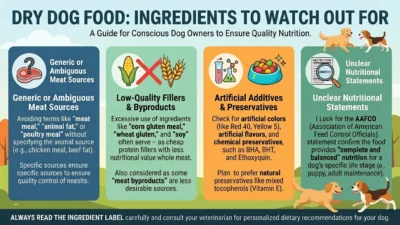
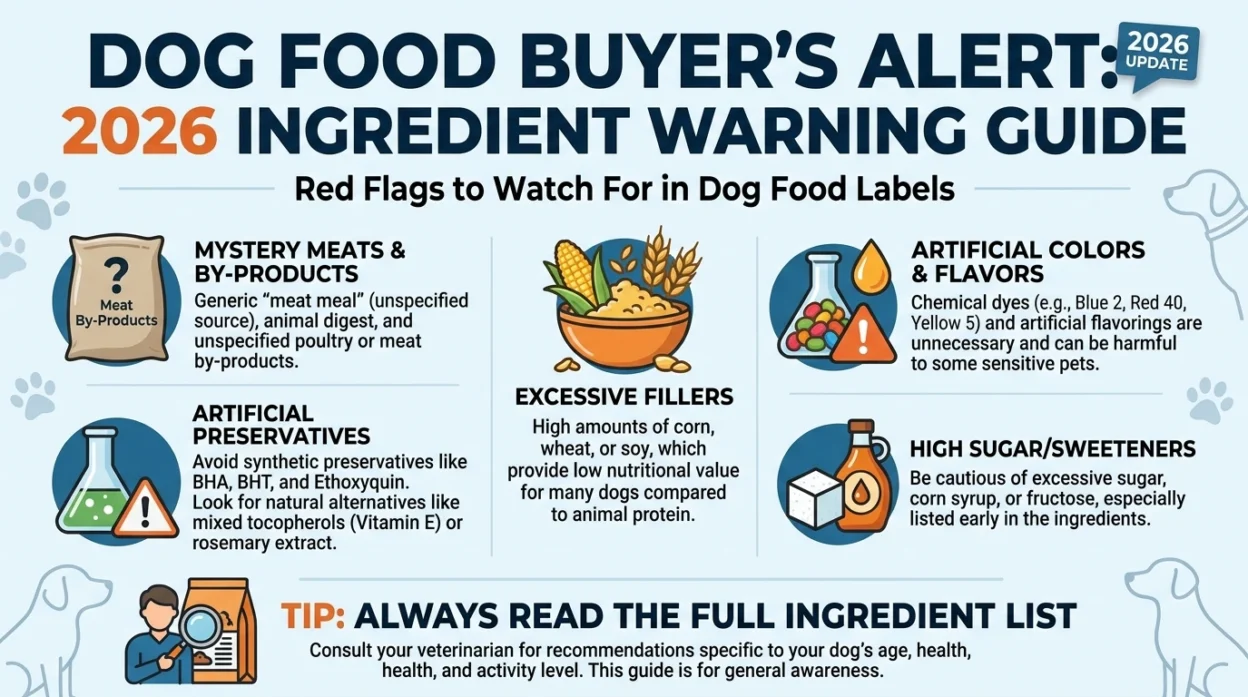
Here are the ingredients that should immediately raise concern:
- “Meat by-products” vague, unspecified animal parts with low nutritional value
- “Animal digest” chemically processed animal material; origin often unknown
- BHA, BHT, and ethoxyquin synthetic preservatives linked to health concerns
- Corn syrup and added sugars zero nutritional benefit, linked to obesity
- Artificial colors (Red 40, Yellow 5, Blue 2) purely cosmetic, no nutritional purpose
- “Poultry meal” without species named unaccountable protein sourcing
- Propylene glycol used to keep semi-moist food chewy; already banned in cat food
The Ingredient Splitting Trick
Some brands use a sneaky tactic called ingredient splitting. They list the same ingredient multiple times under different names, for example, “corn,” “corn gluten meal,” and “corn syrup” appear separately. As a result, each entry looks small individually. However, combined, corn might be the dominant ingredient in the formula.
Always read the full ingredient list, not just the first few items.
Pro Tip: Flip the bag over immediately when evaluating any dog food. The real story is always on the back, not on the colorful front panel with happy dogs and green fields.
Dog Food Brands to Avoid in USA: The Honest List
Brands With Consistent Concerns
The following brands have raised repeated concerns among veterinary nutritionists, independent pet food analysts, and the FDA’s recall records. Therefore, they appear on most “avoid” lists for legitimate reasons.
| Brand | Main Concern | Recall History |
| Ol’ Roy (Walmart) | Vague proteins, heavy corn fillers, artificial preservatives | Yes multiple |
| Kibbles ‘n Bits | Corn and soy dominate, artificial colors, low meat content | Yes |
| Alpo | By-products as primary protein, artificial flavors | Yes |
| Gravy Train | Pentobarbital contamination found in 2018 FDA testing | Yes serious |
| Sportmix | Aflatoxin contamination; linked to dozens of dog deaths in 2021 | Yes serious |
| Ol’ Roy Soft & Moist | High corn syrup content, artificial preservatives | Yes |
| Paws Happy Life | Store brand with low ingredient transparency | Limited data |
The Most Serious Cases Explained
Gravy Train made national headlines in 2018. FDA testing found trace amounts of pentobarbital, a drug used to euthanize animals in wet food products. This strongly suggested euthanized animals entered the food supply chain. That’s not a minor labeling issue. That’s a fundamental failure of food safety.
Sportmix was linked to an FDA investigation in early 2021. Dozens of dogs died across multiple states from aflatoxin poisoning a toxic mold that grows on corn. The brand issued a massive recall, but the damage was devastating for affected families across America.
Both cases are publicly documented and verifiable through the FDA’s official recall records.
What About Popular Budget Brands?
Budget brands aren’t automatically dangerous. However, they consistently cut corners on ingredient quality to keep prices low. For example, Ol’ Roy Walmart’s store brand meets minimum AAFCO standards. But it relies heavily on corn, vague protein sources, and synthetic preservatives.
For a healthy dog with no allergies, Ol’ Roy probably won’t cause immediate harm. However, long-term feeding of low-quality food can contribute to dull coats, digestive issues, low energy, and chronic inflammation over time.
[Best Dry Dog Food Brands Recommended by Vets: 2026 Guide]
How to Evaluate Any Dog Food Brand Before Buying
Your Step-by-Step Evaluation Process
You don’t need a nutrition degree to spot a problematic brand. Therefore, here’s exactly how to evaluate any dog food in five minutes or less:
- Check the FDA recall database first. Visit fda.gov and search the brand name. Look for patterns, not just single incidents. Repeated recalls for contamination signal serious quality control failures.
- Read the first five ingredients carefully. The ingredient list is ordered by weight. You want to see a named animal protein chicken, beef, or salmon listed first. If corn, wheat, or vague “meat” terms appear first, that’s a clear red flag.
- Find the AAFCO statement. Every legitimate dog food includes an AAFCO nutritional adequacy statement. Look specifically for “complete and balanced based on feeding trials” not just “formulated to meet” standards. Feeding trial validation means real dogs tested the food.
- Look for artificial preservatives. Scan the ingredient list for BHA, BHT, and ethoxyquin. Natural preservatives like mixed tocopherols (Vitamin E) or rosemary extract are far safer alternatives.
- Check manufacturer transparency. Does the brand list where the food is made? Do they provide contact information? Brands with strong transparency tend to have stronger quality control standards overall.
- Calculate cost per day not cost per bag. Divide the bag price by the number of feeding days for your dog’s weight. This often reveals that premium brands cost surprisingly little more per day than budget options.
- Cross-reference with independent resources. Dog Food Advisor (dogfoodadvisor.com) evaluates brands based on ingredient quality without accepting advertising from reviewed brands. It’s one of the most genuinely independent resources available.
Pro Tip: Set a monthly reminder to check the FDA pet food recall page. It takes two minutes and could genuinely protect your dog’s life. You can also sign up for FDA recall email alerts at fda.gov free and automatic.
Common Mistakes Dog Owners Make When Avoiding Bad Brands
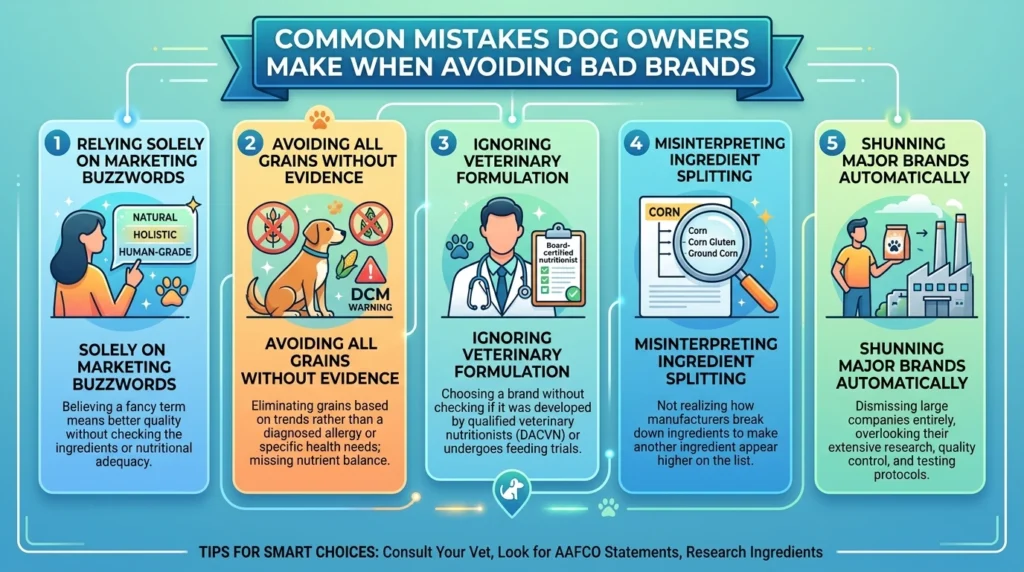
Mistake 1: Trusting Front-of-Bag Marketing
Words like “natural,” “holistic,” “premium,” and “wholesome” are largely unregulated in the pet food industry. Any brand can use them regardless of actual ingredient quality. Therefore, never make buying decisions based on front-of-bag language alone.
Mistake 2: Assuming Price Equals Quality
Some expensive brands charge premium prices for exotic ingredients without the nutritional science to back them up. Also, some budget brands like Purina ONE deliver genuinely solid nutrition at accessible prices. Price is one data point, not the whole story.
Mistake 3: Ignoring Recall History Entirely
One isolated recall doesn’t necessarily disqualify a brand. However, a pattern of recalls especially for serious contamination like salmonella, aflatoxin, or pentobarbital signals systemic quality control failures. Always check the FDA database before committing to any brand long-term.
Mistake 4: Switching Foods Too Frequently
Reading about problematic brands can send dog owners into constant food-switching mode. However, frequent diet changes disrupt gut microbiome stability and make it nearly impossible to identify whether any food is genuinely working. Find a quality brand, give it 8 to 12 weeks, and evaluate based on real observable outcomes.
Mistake 5: Not Consulting Your Vet
If your dog has a health condition kidney disease, food allergies, digestive issues, or weight problems always consult your vet before changing foods. General “avoid” lists can’t replace personalized veterinary guidance for dogs with specific medical needs.
Safer Alternatives to Brands You Should Avoid
What to Choose Instead
Once you know which brands to avoid, the natural next question is what should you actually feed your dog? Here’s a quick comparison of consistently well-rated alternatives:
| Brand | Price Range | First Ingredient | Research Backing | Recall Record |
| Purina Pro Plan | $$$ | Real chicken/salmon | Extensive | Excellent |
| Hill’s Science Diet | $$$ | Chicken/chicken meal | Extensive | Excellent |
| Royal Canin | $$$ | Chicken by-product | Strong | Excellent |
| Purina ONE | $$ | Real chicken | Moderate | Very Good |
| Iams Adult | $$ | Chicken | Moderate | Very Good |
These brands consistently score well across ingredient quality, safety records, nutritional research investment, and veterinary recommendation frequency. Therefore, they represent genuinely safer choices at different price points.
Frequently Asked Questions: Dog Food Brands to Avoid in USA
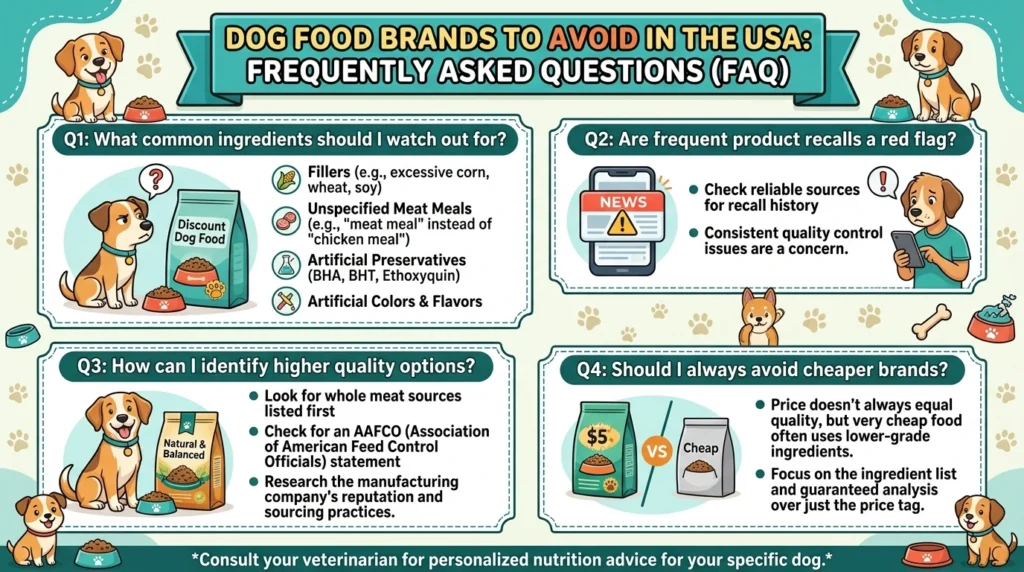
1. Which dog food brands are most commonly flagged as brands to avoid in the USA?
The brands most consistently flagged by veterinary nutritionists, independent reviewers, and FDA recall records include Ol’ Roy, Kibbles ‘n Bits, Gravy Train, Alpo, and Sportmix. Gravy Train and Sportmix have faced the most serious safety incidents, pentobarbital contamination and fatal aflatoxin poisoning respectively. However, other brands raise concerns primarily around ingredient quality rather than direct contamination. Always verify current recall status through the FDA database, as the situation changes over time.
2. How do I find out if a dog food brand has been recalled in the USA?
The most reliable source is the FDA’s official pet food recall database at fda.gov/animal-veterinary. You can search by brand name and view the complete recall history including the reason for each recall, the severity, and the brand’s response. In addition, the Dog Food Advisor website maintains a well-organized recall tracker. Signing up for FDA recall email alerts is also a smart habit; you’ll receive direct notifications whenever a new pet food recall is issued.
3. Is cheap dog food always a brand to avoid?
Not automatically but budget brands deserve much closer scrutiny. Affordable brands often cut corners on ingredient quality, using vague protein sources, heavy grain fillers, and artificial preservatives to keep production costs down. However, brands like Purina ONE deliver genuinely reasonable nutrition at mid-range prices. The key evaluation criteria remain constant regardless of price: named protein first, AAFCO nutritional adequacy statement present, clean recall history, and no artificial preservatives or unnamed ingredient sources.
4. Can my dog eat a recalled brand if they seem healthy right now?
This question deserves a direct answer: stop feeding the recalled brand immediately and consult your vet. Some contamination issues, like aflatoxin or excessive vitamin D, cause slow-building cumulative damage that isn’t immediately visible. A dog that seems fine today may be experiencing liver stress or other internal issues that only become apparent through bloodwork. If you discover your dog has been eating a recalled brand, a veterinary check-up and bloodwork panel is strongly recommended regardless of how healthy your dog appears.
5. Are grain-free brands safer than the brands to avoid in the USA on this list?
Not necessarily and this distinction matters a lot. Grain-free brands are not automatically safer alternatives. Since 2018, the FDA has been investigating a potential link between grain-free diets high in peas and lentils and dilated cardiomyopathy (DCM) , a serious heart condition in dogs. Therefore, switching from a low-quality grain-inclusive food to a trendy grain-free brand doesn’t automatically represent an improvement in safety. Unless your vet has specifically recommended grain-free for a diagnosed grain sensitivity, stick with grain-inclusive formulas from well-researched brands.
6. What ingredients should always make me avoid a dog food brand?
Six ingredients should consistently trigger caution on any dog food label. First, “animal digest” is a chemically processed ingredient of unknown origin. Second, BHA, BHT, or ethoxyquin synthetic preservatives with long-term safety concerns. Third, corn syrup or added sugars contribute to obesity with zero nutritional benefit. Fourth, artificial colors like Red 40, Yellow 5, or Blue 2 are purely cosmetic additions. Fifth, “meat by-products” or “poultry” without a species named unaccountable protein sources. Sixth, propylene glycol is already banned from cat food but still permitted in some dog foods.
7. How do I transition my dog away from a brand I now want to avoid?
Transition gradually over 7 to 10 days to prevent digestive upset. Start by mixing 25% new food with 75% of the old brand for the first three days. Then shift to 50/50 for the next three days. After that, move to 75% new food and 25% old for two to three days. Finally, switch completely to the new food by day ten. Watch for loose stools, gas, or vomiting throughout the process. Some adjustment is normal, but persistent symptoms warrant a slower transition or a conversation with your vet.
Protecting Your Dog Starts With What’s in the Bowl
Knowing which dog food brands to avoid in the USA is genuinely one of the most practical things you can do as a dog owner. It’s not about fear, it’s about making informed decisions with the information that’s available to you right now.
The bottom line is straightforward. Check the FDA recall database before buying. Read the ingredient list from the back, not the front. Look for named proteins, clean recall histories, and AAFCO feeding trial validation. And when in doubt, ask your vet for personalized guidance based on your specific dog’s needs.
Your dog can’t read the label. That responsibility belongs entirely to you and you’re clearly taking it seriously by being here.