Introduction
Your dog depends on you for everything including what goes in their bowl every single day. So here’s a question worth asking: are you absolutely sure the dry dog food you’re buying is actually safe?
Honestly, many dog owners have no idea that some popular dry dog food brands to avoid are sitting right there on grocery store shelves. The packaging looks great. The marketing sounds impressive. However, what’s actually inside the bag tells a very different story.
In my experience helping dog owners navigate pet nutrition, the gap between clever marketing and real ingredient quality is shocking. Some brands use low-quality proteins, harmful preservatives, and misleading labels that put your dog’s health at real risk.
Therefore, this guide is here to help. You’ll learn exactly which warning signs to look for, which brands consistently raise red flags, and how to protect your dog starting today. Let’s get into it.
Why Knowing Dry Dog Food Brands to Avoid Matters So Much
The Real Cost of Poor Quality Dog Food
Feeding your dog the wrong food isn’t just a nutritional issue. It’s a long-term health risk that can lead to:
- Chronic digestive problems
- Dull, flaky coat and skin irritation
- Low energy and weight gain
- Serious organ damage over time
- Food allergies and sensitivities
However, the scariest part is that many dogs seem fine on low-quality food at first. Because the damage often builds up slowly over months or years, owners don’t connect the dots until the problem becomes serious.
What Makes a Dry Dog Food Brand Dangerous?
Not every low-quality brand is dangerous in the same way. Therefore, it helps to understand the different risk categories:
1. Contamination Risks Some brands have faced FDA recalls for contamination. For example, aflatoxin from moldy corn, salmonella, and even pentobarbital (a euthanasia drug) have been found in certain products. That’s not just low quality, it’s a genuine safety crisis.
2. Nutritional Deficiencies Other brands meet minimum AAFCO standards on paper but use ingredients so poorly digestible that your dog absorbs very little actual nutrition. As a result, your dog is technically “fed” but genuinely undernourished.
3. Harmful Additives Artificial preservatives like BHA, BHT, and ethoxyquin have raised health concerns for years. In addition, artificial colors and flavors serve zero nutritional purpose. They’re purely cosmetic and potentially harmful over time.
Red Flag Ingredients in Dry Dog Food Brands to Avoid
How to Read a Dog Food Label Like a Pro
The ingredient list is your single most powerful tool. However, most people never read it carefully. Here’s what to watch for specifically.
Ingredients That Should Raise Immediate Concern
Unnamed Protein Sources
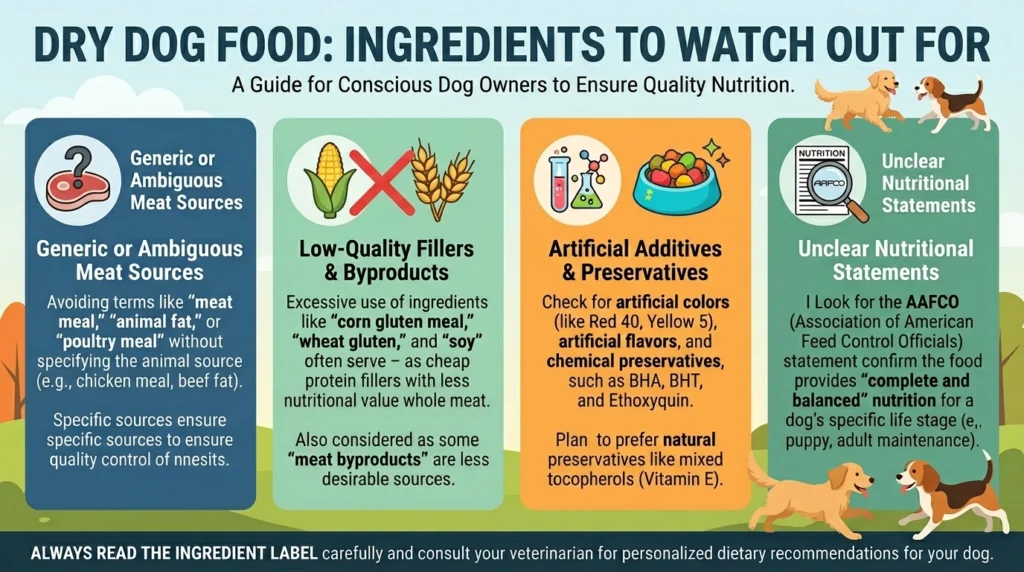
If a bag lists “meat by-products,” “poultry meal,” or “animal digest” without naming the specific animal, that’s a red flag. Quality brands will always say “chicken,” “beef,” or “salmon.” Vague terms hide accountability and lower-quality sourcing.
Corn Dominating the Formula
Corn itself isn’t evil. However, when “corn,” “corn gluten meal,” and “corn syrup” all appear in the top five ingredients separately, that’s ingredient splitting. It’s a deliberate trick to hide how much corn is actually in the formula.
Artificial Preservatives
Watch for:
- BHA (Butylated Hydroxyanisole)
- BHT (Butylated Hydroxytoluene)
- Ethoxyquin originally developed as a pesticide
These synthetic preservatives extend shelf life. However, research has raised concerns about their long-term safety. Quality brands use natural preservatives like mixed tocopherols (Vitamin E) instead.
Artificial Colors
Red 40, Yellow 5, Blue 2 your dog doesn’t care what color their food is. Therefore, there’s absolutely no reason these should be in any quality dry dog food. Their presence signals a brand prioritizing appearance over health.
Pro Tip: Flip the bag immediately when you’re in the store. Ignore everything on the front, it’s all marketing. The real story is in the ingredient list on the back. If you can’t identify what most ingredients are, put it back.
Dry Dog Food Brands That Consistently Raise Red Flags
An Honest Look at Problem Brands
Before we name specific brands, here’s an important note: this section is based entirely on publicly available FDA recall records, independent ingredient analysis, and documented consumer complaints. Always consult your vet about your dog’s specific dietary needs.
Brands With Serious Concern Histories
| Brand | Main Concerns | Recall History |
| Ol’ Roy (Walmart) | Vague proteins, heavy corn fillers, artificial additives | Yes multiple |
| Kibbles ‘n Bits | Corn and soy dominate, artificial colors, low meat content | Yes |
| Alpo | By-products as primary protein, artificial flavors | Yes |
| Gravy Train | Pentobarbital contamination found in 2018 FDA testing | Yes serious |
| Sportmix | Linked to aflatoxin deaths dozens of dogs affected | Yes serious |
| Ol’ Roy Puppy | Same low-quality profile, unsuitable for growing puppies | Yes |
The Most Serious Cases Explained
Gravy Train made national headlines in 2018. Testing revealed traces of pentobarbital a euthanasia drug in wet food products. This strongly suggested euthanized animals entered the supply chain. That’s not a minor quality complaint. It’s a fundamental failure.
Sportmix was linked to an FDA investigation in late 2020 and early 2021. Aflatoxin poisoning caused by mold growing on corn was connected to the deaths of dozens of dogs across multiple US states. The brand issued a massive recall, but the damage to families was devastating and irreversible.
These aren’t scary stories. They’re documented public records. Furthermore, they’re exactly why ingredient sourcing and manufacturing transparency matter so deeply.
[Best Dry Dog Food Brands Recommended by Vets: 2026 Guide]
How to Choose Safe Dry Dog Food Instead
7 Steps to Find a Trustworthy Brand
Now that you know what to avoid, here’s how to find dry dog food you can actually trust.
- Check the first three ingredients. Look for a specifically named animal protein chicken, beef, salmon, turkey. It should always be listed first.
- Find the AAFCO statement. Every quality food carries this. Look for “complete and balanced based on feeding trials” not just “formulated to meet” standards. Feeding trial validation is stronger.
- Research recall history. Visit fda.gov/animal-veterinary and search the brand name. A pattern of serious recalls is a dealbreaker, regardless of current marketing.
- Avoid artificial preservatives. BHA, BHT, and ethoxyquin should not appear anywhere on the label. Natural preservatives are always preferable.
- Look for manufacturing transparency. Quality brands state where their food is made. They own their US manufacturing facilities and disclose their quality controls openly.
- Calculate cost per day not per bag. A premium bag that lasts longer often costs less per day than a cheap bag that runs out faster.
- Ask your vet for a specific recommendation. Your vet knows your dog’s health history. Therefore, their personalized recommendation is more valuable than any general list.
Safer Alternatives Worth Considering
If you’re looking for brands with strong safety records and quality ingredients, these consistently earn high marks:
- Purina Pro Plan research-backed, feeding-trial validated, widely vet-recommended
- Hill’s Science Diet strong clinical research, excellent safety record
- Royal Canin precise formulations, breed-specific options available
- Purina ONE solid mid-range quality, named protein first
Common Mistakes Dog Owners Make With Dry Dog Food
Mistake 1 Trusting the Front of the Bag
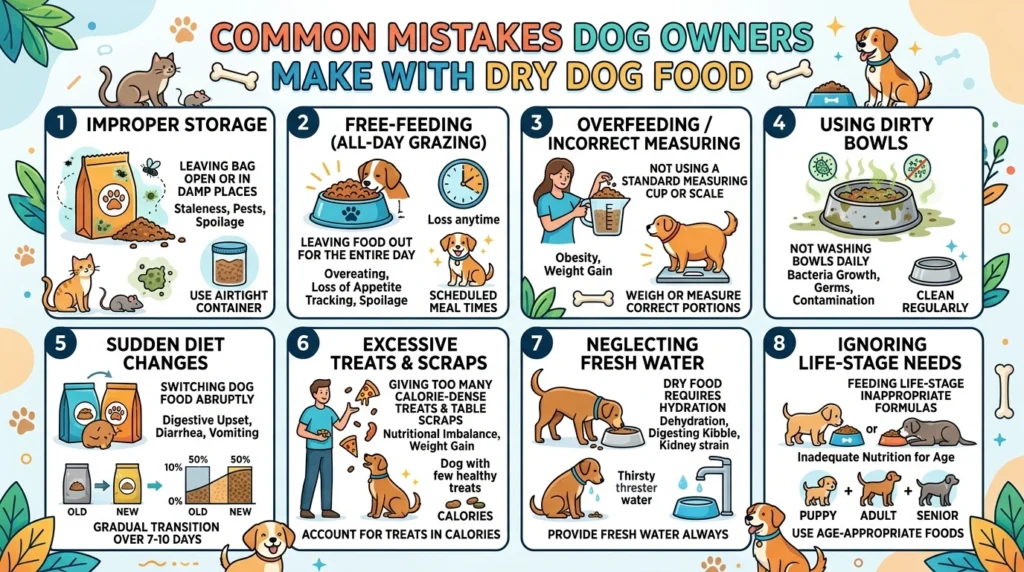
“Natural.” “Premium.” “Wholesome.” These words are largely unregulated in pet food. In fact, a brand can legally use these terms while filling the bag with corn, artificial colors, and unnamed by-products. Therefore, always read the back label, never the front.
Mistake 2 Assuming Expensive Means Safe
Price and quality don’t always align in dog food. Some premium-priced boutique brands have more limited safety testing than mainstream options. Because a bag costs more doesn’t mean it’s better researched or more carefully manufactured.
Mistake 3 Ignoring Recall History
“My dog has eaten this for years and seems fine.” However, some contamination issues particularly liver and kidney toxins build up slowly. By the time symptoms appear, serious damage may already have occurred. Check recall history regularly, not just once.
Mistake 4 Switching Foods Without Transitioning
If you discover your dog’s current food is on a concern list, don’t switch immediately. A sudden change causes digestive upset that can be severe. Instead, transition over 7–10 days by mixing old and new food gradually.
Mistake 5 Going Grain-Free Without Medical Reason
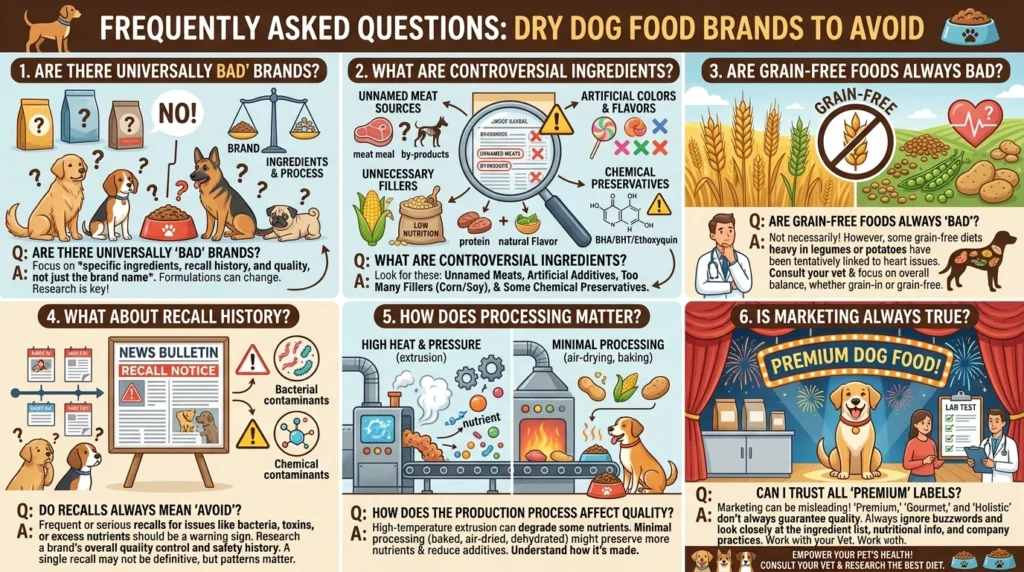
Grain-free dry food has been marketed heavily as “healthier.” However, the FDA has been investigating a potential link between grain-free diets and dilated cardiomyopathy (DCM) , a serious heart condition since 2018. Unless your vet specifically recommends grain-free, grain-inclusive formulas are the safer default choice for most healthy dogs.
Pro Tip: Set a monthly reminder to check the FDA’s pet food recall page. It takes about two minutes and could genuinely protect your dog from a serious health crisis. Prevention is always easier than treatment.
Frequently Asked Questions About Dry Dog Food Brands to Avoid
1. How do I know if a dry dog food brand has been recalled?
The most reliable source is the FDA’s official pet food recall page at fda.gov/animal-veterinary. You can search by brand name and see the full recall history. Dog Food Advisor (dogfoodadvisor.com) also maintains a comprehensive independent recall tracker. Check both resources before committing to any new brand, especially one you haven’t used before.
2. Is cheap dry dog food always bad for my dog?
Not always but budget brands require much more scrutiny. Affordable brands often cut costs by using lower-quality protein sources, more fillers, and synthetic additives. However, brands like Purina Dog Chow manage to be budget-friendly while still meeting solid nutritional standards. The price isn’t automatically the problem, it’s what they sacrifice to reach that price point. Therefore, always read the ingredient list regardless of cost.
3. My dog has eaten a recalled brand for years and seems healthy. Should I be concerned?
This is genuinely worth a vet conversation. Some contamination issues particularly aflatoxin and excess vitamin D cause cumulative damage to the liver and kidneys that isn’t visible until the problem becomes serious. “Seems fine” doesn’t always mean “is fine” internally. A simple wellness blood panel can give you real peace of mind. Please don’t skip that conversation with your vet.
4. What are the most dangerous ingredients found in problematic dry dog food brands?
The most serious documented dangers include aflatoxin (from moldy corn), salmonella contamination, pentobarbital, and excessive vitamin D toxicity. On the ingredient side, chronic long-term concerns include BHA, BHT, ethoxyquin, artificial colors, and unnamed protein sources. Some risks cause immediate illness, others build slowly over time. Therefore, both immediate safety and long-term ingredient quality matter when evaluating any brand.
5. Are grain-free dry dog foods safer than grain-inclusive ones?
For most dogs no. The FDA has been actively investigating a potential link between grain-free diets (particularly those high in peas and lentils) and dilated cardiomyopathy since 2018. This is a serious heart condition. Grain-free diets offer no proven health advantage for dogs without diagnosed grain sensitivities. In addition, many grain-free formulas that replace grains with legumes may actually pose higher cardiac risk. Always consult your vet before choosing grain-free food for your dog.
6. Can I trust star ratings on Amazon or pet store websites when choosing dry dog food?
Online ratings measure whether dogs liked the taste and whether delivery was fast, not whether the food is nutritionally sound or safely manufactured. A dog enthusiastically eating poorly made food is not a health endorsement. Therefore, always verify AAFCO compliance, check FDA recall records, and consult your vet rather than relying on retailer star ratings alone.
7. What should I do immediately if I discover my dog has been eating a recalled brand?
First, stop feeding the recalled product right away. Store it in a sealed bag for potential return or evidence. Then contact your vet especially if your dog has shown any symptoms like vomiting, lethargy, loss of appetite, or jaundice. Report the issue to the FDA using their safety reporting portal. Finally, transition to a safer alternative gradually over 7–10 days while monitoring your dog closely for any changes.
Protecting Your Dog Starts With What’s in the Bowl
Knowing which dry dog food brands to avoid is genuinely one of the most practical things you can do as a dog owner. It’s not about fear, it’s about being informed and proactive on behalf of an animal that trusts you completely.
The short version: read ingredient labels carefully, check FDA recall history regularly, avoid artificial preservatives and unnamed proteins, and choose brands backed by real nutritional research. Purina Pro Plan and Hill’s Science Diet consistently earn the highest marks from independent evaluators and veterinary professionals alike.
Your vet is always your best resource for personalized guidance. Give them a call if you’re unsure about your current food, especially if your dog has shown any changes in energy, coat condition, or digestion recently.