
Introduction
There’s a moment almost every dog owner experiences when you’re at the vet, your dog just got a clean bill of health, and almost as an afterthought you ask, “What food should I actually be feeding them?” Suddenly your vet has a very specific opinion. Maybe it’s a brand you expected. Maybe it completely surprises you.
That moment matters more than most people realize. Finding the best dry dog food brands recommended by vets isn’t just about following professional advice blindly, it’s about understanding why certain brands earn consistent veterinary trust while others, despite impressive marketing, never make the cut.
Here’s something genuinely fascinating: the brands most recommended by vets and the brands most heavily advertised to consumers are often completely different lists. Veterinary recommendations are shaped by nutritional science, feeding trial data, safety records, and clinical outcomes, not by which company spent the most on packaging design.
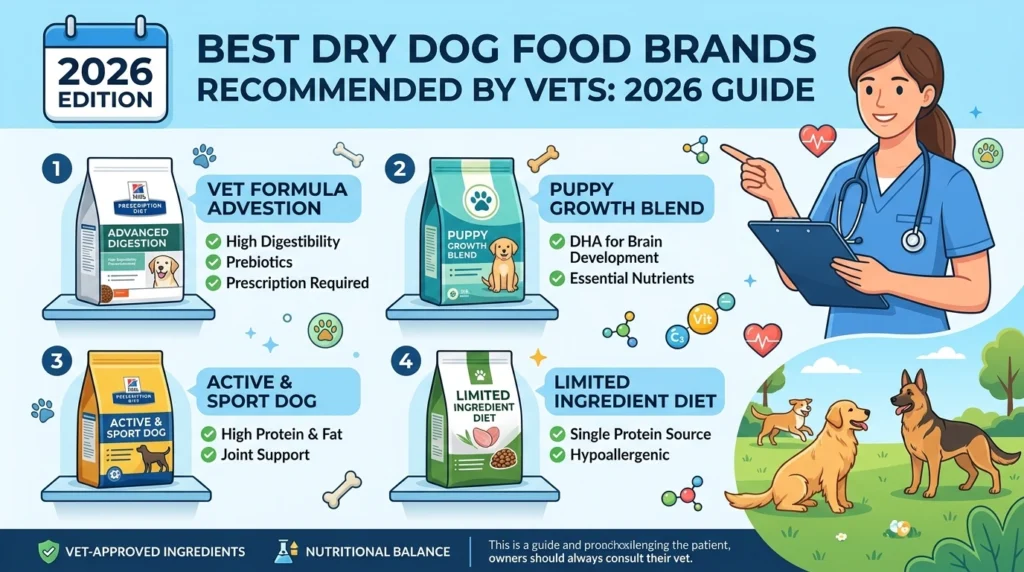
This guide breaks down exactly which dry dog food brands vets recommend most consistently in 2026, why those brands earn that trust, and how to choose the right formula for your individual dog. Whether you’ve always wondered what your vet would say or you’re simply ready to upgrade your dog’s current food let’s get into it.
Why Vet Recommendations for Dry Dog Food Actually Matter
The Difference Between Marketing and Medical Opinion
When a veterinarian recommends a dry dog food brand, they’re drawing on entirely different criteria than what drives consumer advertising. Understanding this distinction changes how you interpret their advice and why it’s worth following.
Veterinary recommendations are built on:
- Nutritional science: does the brand invest in genuine peer-reviewed research on canine nutrition?
- Feeding trial data, has the food been tested on actual dogs with measurable health outcomes?
- Clinical observation: what do vets see in patients who eat this food long-term?
- Manufacturing integrity: where is the food made, and what quality controls exist?
- Safety record: how has the brand performed across FDA recall history over time?
Brands that score consistently high across all these dimensions are the ones showing up on vet recommendation lists year after year not because of advertising spend, but because the science genuinely supports them.
The AAFCO Feeding Trial Distinction
One detail veterinary professionals pay close attention to is how a food achieves its AAFCO nutritional adequacy claim. The label either says “formulated to meet” standards or “complete and balanced based on feeding trials.”
That distinction is significant. Feeding trial substantiation means real dogs ate that specific food and were evaluated for health outcomes over time. Formulation-only claims mean the food was designed to hit nutritional targets on paper without necessarily confirming those targets in living animals.
The most consistently vet-recommended brands carry feeding trial validation not just formulation claims.
How to Use Vet-Recommended Brands Effectively: Step-by-Step Guide
Making the Right Choice Within the Right Brand
Knowing which brands vets recommend is the starting point not the complete answer. Here’s how to translate that knowledge into the right specific food for your dog’s actual needs.
- Start with your vet’s personalized recommendation. This guide covers the brands most commonly recommended across the veterinary profession. Your own vet’s recommendation for your specific dog based on individual health history and needs is always the most valuable guidance. Use this article to understand the landscape, then confirm with your vet directly.
- Match the formula to your dog’s life stage. Every brand on the vet-recommended list makes distinct formulas for puppies, adults, and senior dogs. Nutritional needs differ significantly across life stages; puppy formulas need DHA and higher caloric density, while senior formulas need joint support and adjusted calories. Always use the life-stage-appropriate formula without exception.
- Consider your dog’s size and breed carefully. Most vet-recommended brands offer large breed and small breed specific formulas and these distinctions genuinely matter nutritionally. Large breed puppies in particular have very specific calcium and phosphorus requirements that affect skeletal development if not properly managed from an early age.
- Factor in any specific health conditions. Sensitive stomach? Skin allergies? Weight management needs? Joint issues? Every brand on this list has specialized formulas targeting these conditions, many developed specifically in partnership with veterinary specialists. For dogs with diagnosed health conditions, always consult your vet before selecting any formula.
- Verify the AAFCO statement on the specific formula you’re considering. Don’t assume all formulas from a recommended brand carry equal validation. Check the back of the bag for the feeding trial statement on your exact formula before purchasing.
- Calculate daily feeding cost not bag price. Cost per day for your dog’s weight gives you a meaningful comparison across brands. Many premium brands are closer in daily cost to mid-range options than upfront bag prices suggest.
- Transition properly over 7–10 days. Even switching to an excellent vet-recommended brand causes digestive upset if done abruptly. Starting with 25% new food mixed with 75% old, and shifting the ratio gradually, makes the switch smooth and comfortable for your dog.
- Reassesses at annual vet visits. Your dog’s optimal food changes over time as life stages shift. Making the food question part of every annual wellness conversation, not just a one-time decision, keeps your dog’s nutrition aligned with their current needs.
Pro Tip: When you’re at your next vet appointment, ask specifically: “Which dry dog food do you recommend for my dog’s life stage and health situation and why?” The “why” matters enormously. A vet who explains their reasoning gives you far more useful guidance than one who simply names a brand without context.
[Dental Dog Food: The Complete Guide to Healthier Teeth and Gums for Dogs 1]
Best Dry Dog Food Brands Recommended by Vets in 2026
Full Brand Comparison Table
| Brand | Research Investment | Feeding Trial Validated | Safety Record | Vet Rec. Frequency | Price Range |
| Purina Pro Plan | ⭐⭐⭐⭐⭐ | Yes extensive | Excellent | #1 most recommended | $$$ |
| Hill’s Science Diet | ⭐⭐⭐⭐⭐ | Yes extensive | Excellent | #1 most recommended | $$$ |
| Royal Canin | ⭐⭐⭐⭐ | Yes good | Excellent | Frequently recommended | $$$ |
| Purina ONE | ⭐⭐⭐ | Some formulas | Very Good | Sometimes recommended | $$ |
| Iams | ⭐⭐⭐ | Some formulas | Very Good | Sometimes recommended | $$ |
| Eukanuba | ⭐⭐⭐ | Some formulas | Good | Occasionally | $$ |
| Orijen | ⭐⭐ | Limited | Excellent | Occasionally | $$$$ |
| Blue Buffalo | ⭐⭐ | Some formulas | Good | Rarely by most vets | $$$ |
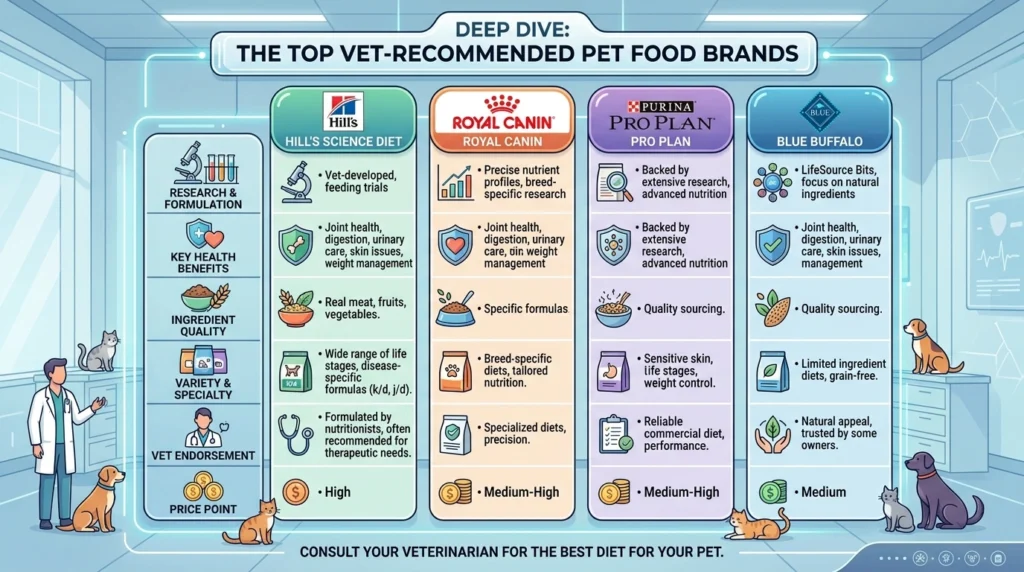
Deep Dive: The Top Vet-Recommended Brands
🏆 Brand #1: Purina Pro Plan
Ask a hundred veterinarians what dry dog food they recommend most and Purina Pro Plan will be the most common answer by a significant margin.
Why Vets Trust It
Over 500 scientists, veterinarians, and pet nutrition experts employed by Purina actively research canine nutrition every day. Peer-reviewed published research backs their formulations rather than just internal testing. Feeding-trial-validated AAFCO compliance runs across their core formula range. Named animal protein (chicken, salmon, beef) leads every major product. Exceptional manufacturing quality controls operate in company-owned US facilities, and a consistently clean FDA recall record demonstrates long-term safety at significant production volume.
What’s in the Bowl
Real chicken, salmon, or beef leads the formula without compromise. Prebiotic fiber supports digestive health every day. Omega-6 fatty acids and fish oil promote coat shine and skin condition. Many formulas include live probiotics for ongoing gut health support. Antioxidants work consistently to support immune function across all life stages.
The Specialized Formula Advantage
Purina Pro Plan’s formula range is one of the most comprehensive in commercial dog food anywhere. From Sensitive Skin & Stomach to Sport Performance, Bright Mind 7+, and a full line of Veterinary Diets for dogs with diagnosed medical conditions this breadth means vets can recommend Pro Plan across virtually any patient profile they encounter.
Best for: Healthy adult dogs of all sizes, puppies, senior dogs, and dogs with sensitivities or specific health needs.
🥈 Brand #2: Hill’s Science Diet
Hill’s Science Diet is functionally tied with Purina Pro Plan for the top veterinary recommendation spot. In certain clinical settings particularly for dogs managing specific health conditions Hill’s actually edges ahead of every competitor.
Why Vets Trust It
Deep investment in clinical nutritional research with genuine veterinary institution partnerships sets Hill’s apart. Feeding-trial-validated formulas run across their Science Diet line without exception. An exceptional prescription diet range (Hill’s Prescription Diet) handles medically managed conditions comprehensively. Rigorous manufacturing standards and quality control protect every bag. A long-term excellent safety record gives vets confidence recommending it across their entire patient base.
The Clinical Specialty Advantage
Hill’s Prescription Diet line covers kidney disease, heart disease, liver disease, diabetes, bladder stones, food allergies, and more. This comprehensive therapeutic range makes Hill’s a familiar and trusted name across the veterinary profession beyond just general wellness feeding which reinforces overall brand confidence significantly.
Best for: Dogs needing clinical nutritional support, owners who prioritize extensive clinical validation, and dogs with specific conditions requiring therapeutic diets.
Brand #3: Royal Canin
Royal Canin takes a genuinely different approach to dog food formulation and that approach earns consistent veterinary respect, particularly for certain patient profiles.
Why Vets Trust It
Breed-specific and size-specific formulas developed with extraordinary precision distinguish Royal Canin from every competitor. Formulas exist for individual breeds like Labrador Retrievers, French Bulldogs, and German Shepherds. Strong investment in veterinary nutrition research and partnerships with veterinary schools builds institutional credibility. Feeding-trial-validated formulas run across their range, and excellent manufacturing quality controls maintain product safety consistently.
The Breed-Specific Advantage
No other major brand offers the level of breed-specific nutritional precision that Royal Canin provides. For purebred dog owners with breeds known for specific health predispositions, hip issues in German Shepherds, respiratory concerns in French Bulldogs, weight management in Labradors, Royal Canin’s targeted formulas are genuinely hard to beat.
Best for: Purebred dog owners, dogs with specific condition-targeted needs, and owners who want the highest level of nutritional precision available.
Brand #4: Purina ONE
Not every vet-recommended brand requires a premium budget and Purina ONE proves that point convincingly. Representing Purina’s mid-range line, it benefits from the same manufacturing infrastructure and quality standards as Pro Plan at a more accessible price point.
Why Some Vets Recommend It
Real chicken or beef leads the ingredient list without compromise. No corn or wheat filler appears in most formulas. Solid protein and fat percentages support healthy adult dogs reliably. Purina’s manufacturing quality controls apply to every bag. More accessible pricing makes quality nutrition achievable for clients with genuine budget constraints.
Best for: Budget-conscious owners with healthy adult dogs who want named-protein-first nutrition without premium pricing.
What Vet-Recommended Brands Warn Against: Critical Cautions
The Grain-Free Warning Every Vet Raises
Virtually every veterinarian will bring up grain-free dog food concerns if you mention it during a consultation. Since 2018, the FDA has been investigating a potential link between grain-free diets (particularly those high in peas, lentils, and legumes) and dilated cardiomyopathy (DCM) in dogs. The investigation remains ongoing, but veterinary consensus is consistent: grain-free diets carry risks that grain-inclusive diets don’t, and they offer no proven nutritional benefit for most healthy dogs.
Notice that Purina Pro Plan and Hill’s Science Diet, the most consistently vet-recommended brands primarily feature grain-inclusive formulas. That alignment with science isn’t coincidental.
The “BEG Diet” Warning
Veterinary nutritionists have specifically flagged what they call “BEG diets” Boutique brands, Exotic proteins, Grain-free formulas as disproportionately represented in DCM cases under FDA investigation. Many trendy small-batch brands with exotic proteins and grain-free formulations have limited or no feeding trial data supporting them. The veterinary recommendation community strongly advises caution with these brands regardless of how premium their marketing appears.
The Marketing Language Trap
Vets consistently caution owners against being swayed by unregulated marketing terms on packaging. “Natural,” “holistic,” “human-grade,” and “premium” carry no regulatory definition in pet food whatsoever. A food can use all of these terms simultaneously and still be nutritionally inferior to a plain-packaged mainstream brand with extensive research backing. Reading the ingredient list and AAFCO statement rather than relying on front-of-bag language is the approach every veterinary professional recommends.
The Protein Rotation Misconception
Some online communities advocate rotating proteins regularly to prevent allergies or provide dietary variety. Most veterinary nutritionists actually advise against this practice for healthy dogs. Constant rotation disrupts the gut microbiome, makes it nearly impossible to identify a food sensitivity if one develops, and provides no proven health benefit for dogs without diagnosed food allergies. Finding a quality formula your dog thrives on and maintaining consistency is genuinely better advice.
Pro Tip: If you want to know which food your specific vet recommends, simply ask directly at your next appointment. Most vets are genuinely happy to give a specific brand recommendation when asked clearly. Many clinics also carry sample sizes of their top recommended formulas, which lets your dog try before you commit to a full bag.
Frequently Asked Questions About Vet-Recommended Dry Dog Food Brands
1. Why do vets recommend Purina Pro Plan and Hill’s Science Diet so consistently?
Both brands have done the science in a way most competitors simply haven’t matched. Peer-reviewed nutritional research, feeding-trial-validated AAFCO compliance, extensive prescription diet lines developed for medical conditions, and clean manufacturing safety records all contribute to this consistent endorsement. Veterinary trust in these brands accumulated over decades of clinical evidence not marketing relationships. Financial incentives don’t explain the recommendation pattern; nutritional science does.
2. Are there affordable vet-recommended dry dog food options?
Yes Purina ONE and Iams are both sometimes recommended by vets for healthy dogs whose owners face budget constraints. Both use named protein sources, meet AAFCO standards, and benefit from the quality infrastructure of their parent companies. Purina ONE in particular benefits from the same US manufacturing facilities as Purina Pro Plan, giving it stronger quality control than many mid-range competitors. Calculating daily feeding cost rather than bag price often reveals that premium brands are more accessible than they initially appear.
3. Do vets receive financial compensation for recommending specific brands?
This question deserves an honest answer. Some veterinary practices do receive educational support, samples, or training materials from pet food companies primarily Hill’s and Purina. However, independent veterinary nutritionists with no financial relationship to any pet food company tend to recommend these same brands consistently. The brands receiving educational support also happen to have the strongest nutritional research and clinical evidence behind them. Always feel free to ask your vet to explain the nutritional reasoning behind their recommendation. A good vet will provide a specific scientific rationale, not just a brand name.
4. Which vet-recommended dry dog food works best for sensitive stomachs?
Purina Pro Plan Sensitive Skin & Stomach (Salmon & Rice) is the formula most commonly recommended by vets for dogs with digestive sensitivity. Salmon as the primary protein reduces the likelihood of triggering existing sensitivities. Rice provides a gentle and easily digestible carbohydrate base. Prebiotic fiber supports healthy gut bacteria throughout daily feeding. Hill’s Science Diet Sensitive Stomach & Skin is equally well-regarded clinically. For dogs with severe or persistent digestive issues, your vet may recommend moving to a prescription therapeutic diet. Hill’s Prescription Diet i/d or Purina Pro Plan Veterinary EN Gastroenteric are frequently used in these situations.
5. Is Royal Canin as vet-recommended as Purina Pro Plan and Hill’s Science Diet?
Royal Canin is genuinely well-regarded in the veterinary community particularly for breed-specific and size-specific formulas, and for its Veterinary Diet therapeutic line. In some specialty veterinary settings (dermatology, internal medicine, cardiology), Royal Canin receives recommendations as frequently as the top two brands. In general practice surveys of most-recommended brands overall, Purina Pro Plan and Hill’s Science Diet appear more frequently likely because their general adult formulas apply more universally across the broadest patient population.
6. What should I do if my dog doesn’t thrive on a vet-recommended brand?
First, ensure you transition gradually over 7–10 days abrupt food changes cause digestive upset that can be mistaken for food intolerance. After proper transition, if persistent issues continue (chronic loose stools, vomiting, skin flare-ups, low energy) beyond eight to twelve weeks, that’s genuinely useful information worth reporting to your vet. Specific observations about which symptoms occur and when typically lead to a different formula recommendation within the same trusted brand, or a referral to a veterinary nutritionist for more targeted dietary guidance.
7. Are vet-recommended dry dog food brands safe from recalls?
No brand is completely immune to recalls including the most recommended ones. Hill’s experienced a significant recall in 2019 related to elevated vitamin D levels, which they addressed transparently and systematically. Purina Pro Plan’s recall history is notably clean for a brand of its production volume. Checking the FDA’s pet food recall database periodically and signing up for email recall alerts ensures you’re informed promptly if anything changes. The most recommended brands have demonstrated strong safety records relative to their production volumes which is itself part of why they earn consistent veterinary trust.
Trust the Science Feed What Vets Actually Recommend
When searching for the best dry dog food brands recommended by vets, the answer is clear and consistent across the veterinary profession: Purina Pro Plan and Hill’s Science Diet lead by every meaningful measure research investment, feeding trial validation, safety record, clinical endorsement, and real-world dog health outcomes that accumulate over decades of practice.
Royal Canin earns strong recommendations for precision nutrition needs and breed-specific formulation. Purina ONE delivers solid vet-endorsed quality at a more accessible price point for budget-conscious owners. For dogs with specific medical conditions, the prescription therapeutic lines from both Purina and Hill’s represent some of the most clinically targeted nutrition available anywhere in the market.
Combining this guide’s knowledge with your own vet’s personalized recommendation for your specific dog creates the most powerful approach to canine nutrition. An informed owner working with a trusted veterinarian is genuinely the gold standard.