
Introduction
Every dog owner asks this question eventually. You’re standing in the pet food aisle, staring at 40 different bags all claiming to be the greatest thing since sliced bread and you just want someone to cut through the noise. What is the #1 best dog food, really?
Here’s my honest take after years of following pet nutrition research: there isn’t one single food that works perfectly for every dog on the planet. Finding the right one, though, is much simpler than the pet food industry wants you to believe.
After tracking veterinary recommendations, analyzing ingredient panels, following FDA safety data, and watching real dogs thrive on different foods, a clear picture emerges. Certain brands consistently rise to the top by every meaningful measure and this guide lays it all out for you honestly.
You’ll understand what makes a food truly the best, which brand earns that #1 spot, and how to confirm it’s right for your individual pup. No fluff. No bias. Just the honest answer you came here for.
What Does “The #1 Best Dog Food” Actually Mean?
Why Most Rankings Get It Wrong
Ask a marketing executive and they’ll point to whichever brand has the highest sales. A blogger running affiliate links will recommend whichever company pays the best commission. Only a veterinary nutritionist with zero financial ties to any pet food brand gives you an answer actually worth listening to.
Real evaluation of the #1 best dog food isn’t based on packaging design, celebrity endorsements, or how many Instagram ads you’ve seen. Genuine ranking comes from a consistent set of measurable criteria that nutrition scientists and veterinary professionals apply consistently across every brand.
The Criteria That Define a True #1
When independent experts evaluate dog food quality, they examine:
- Ingredient quality named protein sources, traceable supply chains, recognizable whole ingredients
- Nutritional completeness AAFCO compliance verified through actual feeding trials on real dogs
- Safety record clean recall history and rigorous manufacturing quality controls
- Research investment peer-reviewed nutritional science backing every formulation
- Digestibility how much nutrition your dog actually absorbs versus passes as waste
- Veterinary endorsement which brands professionals recommend most consistently and why
- Real-world outcomes observable improvements in coat, energy, weight, and digestion
So Which Brand Actually Wins?
Applying every criterion above consistently across the entire market, Purina Pro Plan emerges as the #1 best dog food by the widest margin across the most categories.
Purina employs over 500 scientists, veterinarians, and pet nutrition experts who actively research canine nutrition. Their Purina Pet Care Center conducts long-term feeding studies where dogs live in enriched, home-like environments. Hundreds of peer-reviewed studies support their formulations, and manufacturing happens in company-owned US facilities with exceptional quality controls.
The food itself leads with real chicken, salmon, or beef. No unnecessary fillers pad out the formula. Prebiotic fiber supports digestive health, omega fatty acids support coat and skin condition, and feeding-trial-validated AAFCO compliance confirms real dogs thrived on it, not just paper formulations.
How to Find the #1 Best Dog Food for Your Specific Dog
Why the Brand Is Just the Starting Point
Knowing the top brand is only half the answer. The specific formula within that brand matters just as much and matching it to your dog’s individual profile is what separates good feeding from genuinely excellent feeding.
Step-by-Step Formula Selection Guide
- Identify your dog’s life stage first. Puppy, adult, and senior formulas have meaningfully different nutritional profiles. Puppy versions contain DHA for brain development and higher caloric density for growth. Senior versions feature lower calories and targeted joint support. Skipping this step is the single most common mistake dog owners make.
- Match the formula to your dog’s size. Large breed dogs need carefully managed calcium-to-phosphorus ratios especially during puppyhood. Small breed dogs need higher caloric density and smaller kibble sizes. Purina Pro Plan offers dedicated large breed, small breed, and toy breed versions specifically designed for these differences.
- Consider your dog’s primary health concern. Within the Pro Plan range, specialized formulas target specific conditions:
- Sensitive Skin & Stomach (Salmon & Rice) for digestive and skin sensitivity
- Weight Management for dogs needing caloric reduction
- Sport 30/20 for highly active or working dogs
- Bright Mind 7+ for cognitive support in aging dogs
- Veterinary Diets prescription formulas for diagnosed medical conditions
- Calculate your daily feeding cost honestly. Purina Pro Plan runs roughly $2–$3.50 per day for most dogs. Comparing that figure to your current food’s daily cost often reveals the premium is smaller than the bag price suggests especially when superior digestibility is factored in.
- Verify the AAFCO statement on your chosen formula. Look specifically for “complete and balanced based on feeding trials” not just “formulated to meet” standards. Feeding trial validation means real dogs confirmed this food’s health outcomes over time.
- Transition gradually over 7–10 days. Mix 25% new food with 75% old food initially, then slowly shift the ratio every two to three days. Rushing this step causes digestive upset that can unfairly make a great food seem like a bad fit for your dog.
- Consult your vet before switching if health conditions exist. Kidney disease, diabetes, pancreatitis, and food allergies all require veterinary input before dietary changes. For dogs with diagnosed conditions, this step is non-negotiable.
Pro Tip: Purina’s website has a built-in product finder tool that inputs your dog’s age, size, and health considerations, and it recommends specific formulas. Use it as a starting point before confirming the choice with your vet.
[Best Dog Food Senior Dogs Real-Life Experience With an Older Dog]
The #1 Best Dog Food vs. Top Competitors: Honest Comparison
How the Leading Brands Stack Up
| Criterion | Purina Pro Plan | Hill’s Science Diet | Royal Canin | Orijen | Blue Buffalo |
| Research Investment | ⭐⭐⭐⭐⭐ | ⭐⭐⭐⭐⭐ | ⭐⭐⭐⭐ | ⭐⭐⭐ | ⭐⭐ |
| Feeding Trial Validated | Yes | Yes | Yes | Limited | Some |
| Named Protein First | Yes | Yes (meal) | By-product | Yes | Yes |
| Safety Record | Excellent | Excellent | Excellent | Excellent | Good |
| Vet Recommendation Rate | ⭐⭐⭐⭐⭐ | ⭐⭐⭐⭐⭐ | ⭐⭐⭐⭐ | ⭐⭐⭐ | ⭐⭐⭐ |
| Formula Range | Excellent | Excellent | Excellent | Limited | Good |
| Daily Cost (50lb dog) | ~$2.50–$3.00 | ~$2.75–$3.25 | ~$3.00–$3.50 | ~$5.00–$6.50 | ~$2.50–$3.00 |
| Overall Rating | ⭐⭐⭐⭐⭐ | ⭐⭐⭐⭐⭐ | ⭐⭐⭐⭐ | ⭐⭐⭐⭐ | ⭐⭐⭐ |
The Honest Truth About Hill’s Science Diet

Hill’s Science Diet essentially ties with Purina Pro Plan for the top position and full transparency demands acknowledging that. Both carry feeding-trial-validated AAFCO compliance and meet high nutritional standards. They also receive consistent veterinary endorsement rooted in science rather than marketing. In addition, these brands maintain exceptional safety records and rigorous manufacturing standards that set them apart from most competitors.
Purina Pro Plan edges ahead in most independent evaluations for three specific reasons. Named fresh protein (chicken, salmon) leads to the formula rather than chicken meal. A slightly wider range of specialized formulas covers more life stages and conditions. Marginally broader veterinary recommendation frequency shows up consistently in professional survey data.
If your vet specifically recommends Hill’s Science Diet for your dog follow that recommendation without hesitation. The science behind it is fully legitimate and deserves complete trust.
Why Orijen Doesn’t Claim the #1 Spot
Orijen uses genuinely exceptional ingredients around 85% animal-sourced, minimally processed, biologically appropriate proteins. From a pure ingredient standpoint, it leads the premium segment convincingly. Despite that strength, it doesn’t claim the overall top position.
Ingredient quality is only one evaluation dimension among many. More limited feeding trial data, a daily cost two to three times higher than Purina Pro Plan for most dogs, and a narrower formula range for dogs with specific health needs all factor into the complete picture. Nutritional outcomes, accessibility, and long-term safety data matter just as much as ingredient sourcing when determining a true #1.
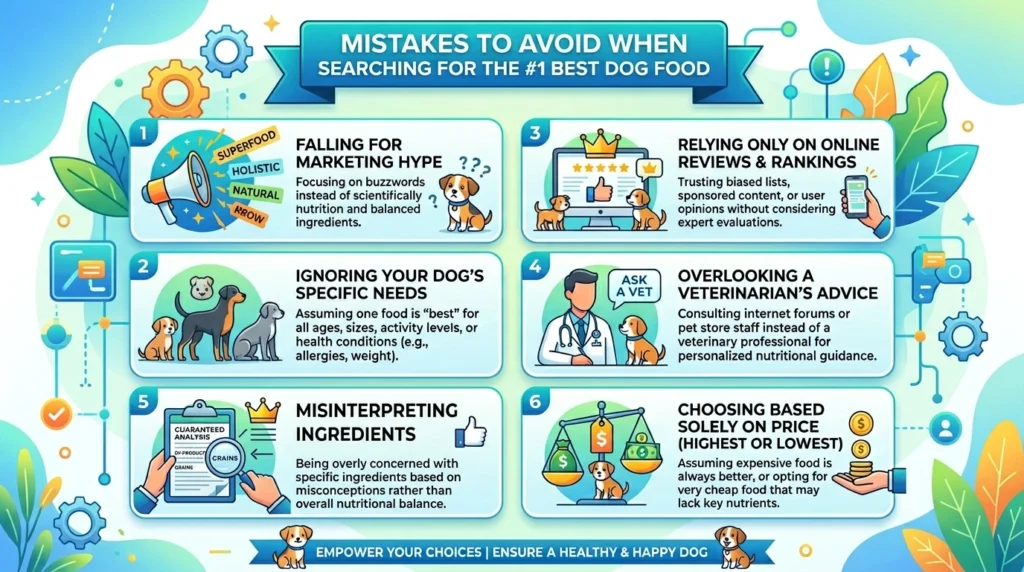
Mistakes to Avoid When Searching for the #1 Best Dog Food
Trusting Affiliate-Driven Review Sites
The vast majority of “best dog food” articles online are written by websites earning commissions when readers click through and purchase. Rankings frequently reflect affiliate program generosity rather than nutritional merit. Always look for disclosure statements, and prioritize recommendations from sources with no financial relationship to the brands they review.
Some expensive brands charge for exotic ingredients and sophisticated packaging rather than superior nutritional science. Price correlates loosely with quality across the market. Purina Pro Plan at mid-premium pricing delivers more nutritional research backing than many brands charging significantly more per bag.
Switching Foods Constantly Chasing “Better”
Reading about dog food can become a genuine rabbit hole. Finding a quality food your dog thrives on, then switching based on every new article you encounter, disrupts gut microbiome stability and makes it impossible to assess whether any food truly works long-term. Consistency with a proven quality food beats constant searching for something marginally “better.”
Ignoring Your Dog’s Individual Needs
Even the highest-rated food isn’t automatically right for every individual dog. A dog with confirmed chicken allergy can’t eat a chicken-first formula regardless of how excellent that formula is. Dogs with kidney disease, diabetes, or other conditions need very specific nutritional profiles that general wellness formulas don’t provide. Always factor your dog’s unique health profile into any food decision.
Rushing the Food Transition Period
Switching to the #1 best food abruptly causes digestive upset that makes an excellent food appear unsuitable. Any food change needs a full 7–10 day gradual transition. Starting with 25% new food mixed with 75% old, then shifting the ratio slowly, prevents false conclusions about a food’s compatibility with your dog.
Pro Tip: The three clearest signs you’ve found the right food for your dog regardless of any ranking are consistently firm stools in appropriate volume, a genuinely shiny coat without excessive shedding, and energy levels that are vibrant and appropriate for your dog’s age and breed.
Frequently Asked Questions About the #1 Best Dog Food
1. Is Purina Pro Plan genuinely the #1 vet-recommended dog food?
Across multiple veterinary professional surveys and independent nutritional consultations, Purina Pro Plan consistently emerges as one of the two most commonly recommended dog foods by veterinarians in the United States alongside Hill’s Science Diet. This recommendation stems from extensive peer-reviewed nutritional research, feeding-trial-validated AAFCO compliance, rigorous manufacturing quality controls, and a clean safety record. Financial relationships don’t explain the recommendation the science does. Always confirm the best choice for your specific dog with your own veterinarian, who knows your pet’s individual health history.
2. What makes a dog food genuinely worthy of the #1 ranking?
The most credible evaluation combines multiple factors simultaneously: AAFCO feeding trial validation rather than formulation-only compliance, a named animal protein as the first ingredient, a clean recall history verified through the FDA database, genuine investment in peer-reviewed nutritional research, consistent veterinary professional endorsement, and observable real-world health outcomes in dogs. No single factor defines the ranking alone. The #1 food excels across all dimensions at once which is what separates it from brands that lead in one category while falling short in others.
Purina ONE is the strongest value alternative for budget-conscious owners. Real chicken or beef leads the ingredient list, no corn or wheat filler appears in the formula, solid protein percentages meet most healthy dogs’ needs, and Purina’s manufacturing quality infrastructure backs every bag. For tighter budgets still, Iams Adult delivers named chicken protein and reasonable nutritional profiles at genuinely accessible pricing. Quality nutrition within your budget is achievable named protein first, an AAFCO nutritional adequacy statement present, and no artificial preservatives are the non-negotiable baseline at any price tier.
4. Can the #1 best dog food still causes problems in certain dogs?
Yes and acknowledging this honestly is important. Even the highest-quality, most thoroughly researched food can cause issues in individual dogs with specific sensitivities, allergies, or health conditions. A dog with confirmed chicken sensitivity won’t thrive on a chicken-first formula no matter how excellent that formula is for other dogs. Dogs with kidney disease, heart conditions, or other diagnosed conditions need very specific macronutrient profiles that general wellness formulas simply don’t provide. The #1 best food is always the #1 best for that specific dog which is precisely why veterinary input on your dog’s individual needs remains irreplaceable in this decision.
5. How long does it take to see results after switching to the #1 best dog food?
Most owners notice initial digestive improvement, firmer, more consistent stools within two to three weeks after completing the gradual transition. Coat quality changes take considerably longer, typically becoming visible at six to ten weeks as new hair growth reflects the improved nutrition your dog is receiving. Energy and weight stability changes vary based on how significantly the new food differs from the previous diet. Giving any food change a full eight to twelve week commitment before evaluating ensures you’re seeing genuine long-term outcomes rather than temporary adjustment responses to the dietary change.
6. Does the #1 best dog food change as my dog ages?
Absolutely and this conversation deserves attention at every annual vet visit without exception. The optimal formula for your dog at age two isn’t necessarily the same formula at age nine. Life stage shifts, reduced activity levels, potential joint concerns, and natural metabolic changes all affect which formula genuinely serves your dog best at any given point. Purina Pro Plan’s broad formula range means following your dog’s evolving needs within the same research-backed brand, maintaining continuity of quality without compromising nutritional precision at any life stage.
7. Is grain-free food ever the #1 best choice for dogs?
For most healthy dogs no. Grain-free formulas have been associated with potential cardiac concerns (dilated cardiomyopathy or DCM) in ongoing FDA research since 2018. Grains aren’t harmful to the majority of dogs, and grain-inclusive formulas remain the safer, more scientifically supported default. Unless your veterinarian has specifically recommended grain-free for a diagnosed grain sensitivity or allergy, a high-quality grain-inclusive formula like Purina Pro Plan represents a safer and better-researched nutritional choice for your dog’s long-term health.
The Straight Answer You Came For
So what is the #1 best dog food? By every meaningful metric that nutritional science and veterinary professional consensus support, Purina Pro Plan earns that top position for most healthy dogs. Real named protein leads the formula. Feeding-trial-validated AAFCO compliance confirms real-dog health outcomes. Exceptional research investment backs every formulation. An outstanding safety record protects your dog every day.
Hill’s Science Diet stands as an equally legitimate top choice for many dogs particularly those with specific health sensitivities and your vet’s preference between the two should always guide your final decision.
Identifying the specific formula within the top brand that matches your dog’s life stage, size, and health profile is the crucial next step. Transition properly, give it a full trial period, and let your dog’s coat, energy, and digestion confirm the choice.