
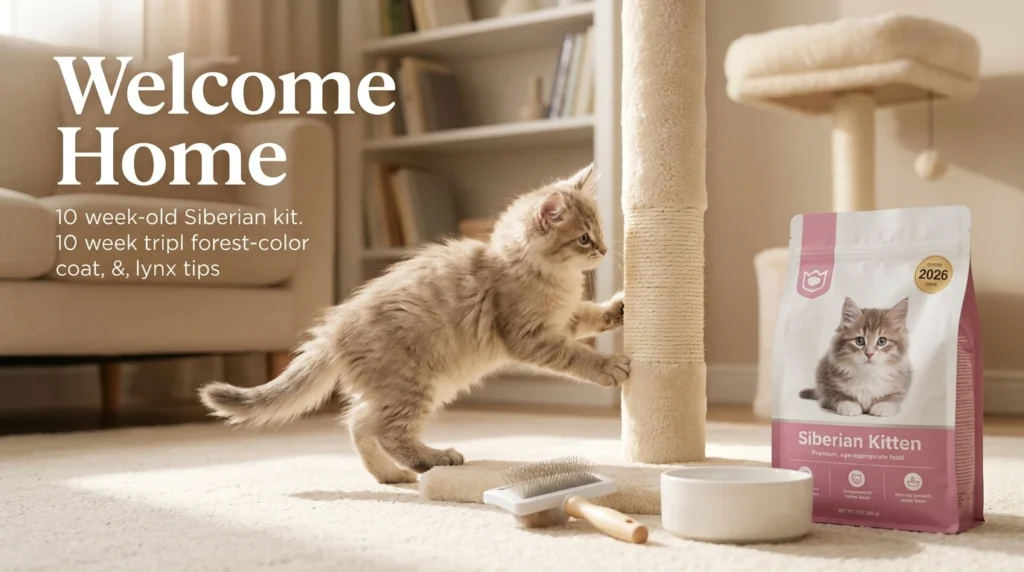
Introduction
Imagine a large, powerfully built cat with a gloriously thick triple coat, playful dog-like energy, and a personality warm enough to melt a Russian winter. That’s the Siberian cat, one of the oldest natural cat breeds in the world and one of the most genuinely impressive companions you’ll ever meet.
Many pet owners don’t realize that Siberian cats have been living alongside humans in Russia for over 1,000 years. They appear in Russian fairy tales and folklore. They survived some of the harshest climates on earth through natural selection and that survival history produced a breed that’s remarkably robust, adaptable, and healthy.
In my experience, Siberian cats attract attention for two reasons. First, their stunning appearance stops people in their tracks. Second, the claim that they’re suitable for allergy sufferers genuinely intrigues people who thought cat ownership wasn’t possible for them.
This guide covers everything honestly: breed history, personality, care requirements, the allergy question, health considerations, and the most common ownership mistakes. Let’s explore this extraordinary breed together.
Quick Answer
The Siberian cat is a large, ancient Russian breed with a thick triple coat, muscular build, and warm, playful personality. Known for producing lower levels of the Fel d 1 allergen than most breeds, Siberian cats are popular with allergy-sensitive owners. They’re family-friendly, intelligent, and surprisingly dog-like in their social behavior.
Key Takeaways
- Siberian cats are one of the oldest natural cat breeds with documented history spanning over 1,000 years in Russia
- They carry a triple-layer coat designed to withstand Siberian winters that requires regular grooming
- Siberian cats produce lower levels of Fel d 1 the primary cat allergen than most breeds
- They’re highly social and dog-like following owners, greeting visitors, and enjoying interactive play
- Siberian cats are generally very healthy one of the most robust purebred cat breeds available
- They reach full maturity slowly physical and emotional development continues until age 5
What Is the Siberian Cat? History and Origins
The Siberian cat is a large, semi-longhaired natural breed originating in Russia, specifically from the forests and farmlands of Siberia. It developed naturally over centuries without deliberate human breeding programs adapting to extreme cold through its remarkable triple coat and robust physical structure.
Ancient Russian Heritage
Siberian cats appear in Russian literature and fairy tales dating back over 1,000 years. Historical records reference large, fluffy working cats in Russian monasteries and homes used as mousers and companions throughout medieval Russia. Therefore, these cats developed through natural selection rather than artificial breeding, producing a genetically diverse and naturally healthy breed.
The breed remained largely unknown outside Russia until the 1980s and 1990s. When the Soviet Union opened to international exchange, Siberian cats began appearing at cat shows in Europe and eventually North America. The International Cat Association (TICA) granted full championship recognition in 1996. As a result, international breeding programs established the Siberian cat as a recognized, documented breed with a formal standard.
Why Siberian Cats Are Russia’s National Cat
Russia considers the Siberian cat its national cat breed, a designation reflecting the animal’s deep cultural significance. Also, the breed appears in Russian folk stories as a magical, protective creature. Therefore, owning a Siberian cat carries genuine cultural weight within Russia that extends far beyond simple pet ownership.
What Does a Siberian Cat Look and Act Like?
The Siberian cat combines impressive physical presence with a warm, balanced personality that surprises most first-time owners. Understanding both dimensions helps you decide whether this breed suits your household.
Physical Characteristics
Siberian cats are large, powerful animals with several distinctive physical features:
- Size: Males 12–17 pounds; females 8–12 pounds
- Body: Large, barrel-chested, and heavily muscled surprisingly solid for their appearance
- Coat: Triple layer dense insulating undercoat, middle layer, and water-resistant glossy outer coat
- Ruff: Full neck ruff that frames the face like a lion’s mane
- Tail: Long and bushy thick enough to wrap around the body for warmth
- Eyes: Large, slightly oval any color accepted including odd-eyes and blue
- Paws: Large and rounded with tufts between the toes
- Ears: Medium-large with ear tufts and furnishings
- Lifespan: 12–15 years with proper care
Siberian cats come in virtually every coat color and pattern. Therefore, you’ll find them in tabby, solid, colorpoint (called Neva Masquerade), tortoiseshell, bicolor, and many other variations.
Siberian Cat Personality and Temperament
Have you ever wondered what it would be like to own a cat with the loyalty of a dog and the grace of a feline? The Siberian cat delivers exactly that experience.
Siberian cats typically:
- Follow their owners from room to room like devoted dogs
- Greet visitors enthusiastically rarely hiding from strangers
- Enjoy being held and carried comfortable with prolonged human contact
- Play actively well into adulthood their playful energy persists for years
- Communicate through chirps and trills rather than demanding loud meows
- Get along well with children patient and gentle with gentle handling
- Adapt quickly to new animals usually accepting dogs and other cats with proper introduction
- Learn their names and respond reliably also learning basic commands in some cases
However, Siberian cats maintain genuine independence alongside their sociability. They choose when they want interaction but when they choose you, the bond feels remarkably deep and meaningful.
Pro Tip: Siberian cats love water, an unusual trait that traces back to their historical role as working cats near Russian rivers and lakes. Don’t be surprised if your Siberian cat investigates running taps, joins you near the bath, or plays enthusiastically with water bowl splashing. Provide a cat water fountain most Siberian cats prefer moving water and drink more consistently from fountains than from still bowls.
How to Care for a Siberian Cat: Complete Step-by-Step Guide
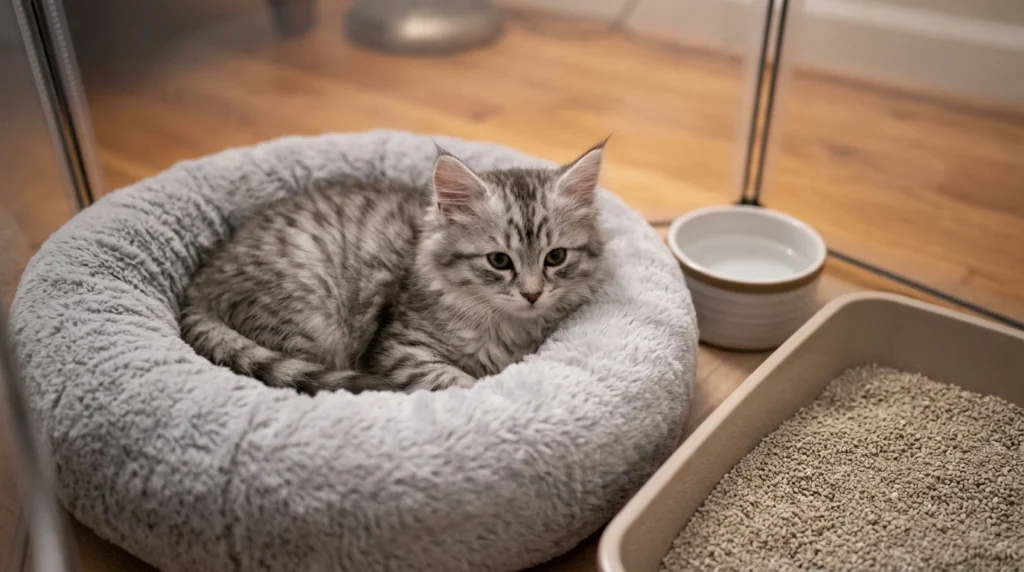
Siberian cat care is genuinely manageable but their triple coat demands consistent attention, and their social needs require daily engagement.
Step-by-Step Siberian Cat Care Guide
- Establish a twice-weekly grooming routine. The Siberian’s triple coat needs thorough brushing at least twice weekly during normal periods to prevent matting and manage shedding. Also, during spring and autumn seasonal shedding when they lose significant amounts of undercoat daily brushing becomes necessary for several weeks. Use a wide-tooth comb for the undercoat and a slicker brush for the outer layers.
- Pay special attention during seasonal sheds. Siberian cats experience two major shedding periods annually: spring and autumn. Because their triple coat is so dense, these shed periods produce significant amounts of loose fur. Therefore, increase brushing frequency proactively at the start of each season rather than waiting for mats to develop.
- Clean ears weekly. Siberian cats have ear tufts and furnishings that can trap debris and wax. Therefore, check and gently clean ears weekly with a vet-approved ear cleanser. Also, monitor for signs of ear mites or infection particularly if your cat shakes its head frequently or scratches at its ears.
- Provide daily interactive play sessions. Because Siberian cats are active and intelligent, they need consistent mental and physical engagement. Schedule at least two 15–20 minute interactive play sessions daily. Wand toys, feather teasers, and puzzle feeders all work well. Also, Siberian cats often enjoy fetching, teaching them this game creates a wonderful shared activity.
- Feed a high-quality, protein-rich diet. Siberian cats are large, muscular cats with above-average energy needs. Therefore, choose a high-quality food with named meat protein as the primary ingredient. Also, monitor weight carefully Siberian cats can trend toward obesity in lower-activity households. Consult your vet about appropriate daily caloric intake for your specific cat’s size and activity level.
- Provide tall climbing structures. Siberian cats are powerful jumpers and natural climbers. Therefore, invest in tall, sturdy cat trees and wall-mounted climbing systems. As a result, your cat has appropriate outlets for climbing instincts without redecorating your bookshelves.
- Schedule annual veterinary check-ups. Siberian cats carry a genetic predisposition to hypertrophic cardiomyopathy (HCM). Therefore, annual cardiac screening especially from age 3 onward is important for this breed. Also, maintain current vaccinations, dental care, and parasite prevention throughout your cat’s life.
Siberian Cat Grooming Schedule
| Grooming Task | Normal Season | Shedding Season |
| Full coat brushing | Twice weekly | Daily |
| Undercoat combing | Weekly | Daily |
| Ear cleaning | Weekly | Weekly |
| Nail trimming | Every 2–3 weeks | Every 2–3 weeks |
| Teeth brushing | 2–3x weekly | 2–3x weekly |
| Eye cleaning | As needed | As needed |
Siberian Cat vs. Similar Large Longhaired Breeds: Full Comparison
iberian cats are frequently compared to Norwegian Forest Cats and Maine Coons. Here’s an honest side-by-side breakdown to help you choose:
| Feature | Siberian Cat | Norwegian Forest Cat | Maine Coon |
| Origin | Russia | Norway | USA |
| Size | Large (8–17 lbs) | Large (9–16 lbs) | Very Large (10–18 lbs) |
| Coat Layers | Triple | Double | Semi-long, single |
| Allergen Level | Lower Fel d 1 | Standard | Standard |
| Personality | Playful, dog-like | Independent, gentle | Social, dog-like |
| Energy Level | Moderate-High | Moderate | Moderate-High |
| Good with Kids | Excellent | Excellent | Excellent |
| Good with Dogs | Yes | Yes | Yes |
| Water Interest | High | Low | Moderate |
| Grooming Needs | High | Moderate-High | High |
| Price Range | $1,200–$4,000 | $800–$1,500 | $800–$2,000 |
| Lifespan | 12–15 years | 14–16 years | 12–15 years |
Pros and Cons of Owning a Siberian Cat
Pros:
- Lower Fel d 1 allergen production genuinely helpful for some allergy sufferers
- Exceptional family-friendly temperament
- Naturally robust health with strong genetic diversity
- Dog-like loyalty and interactive personality
- Adapts well to households with children and other pets
- Fascinating ancient breed with rich cultural heritage
Cons:
- Triple coat requires consistent grooming commitment
- Seasonal shedding can be significant twice annually
- Needs regular interactive play and mental stimulation
- Slow maturation means kittenhood behaviors persist longer than expected
- Higher price than many domestic breeds
- Annual cardiac screening recommended from middle age
Common Mistakes Siberian Cat Owners Make
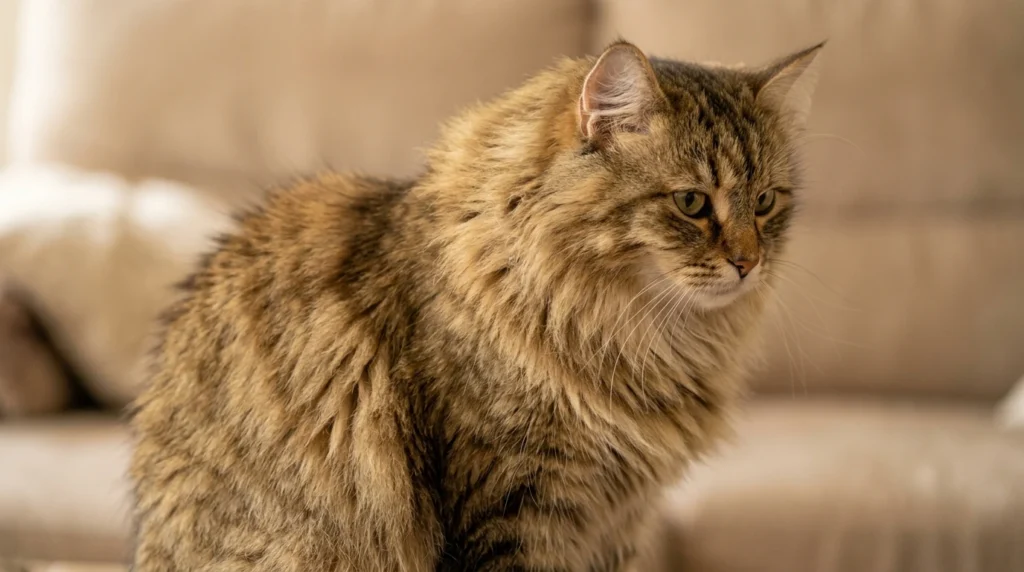
Mistake 1: Assuming They’re Completely Hypoallergenic
This is the most important misconception to address honestly. Siberian cats produce measurably lower levels of Fel d 1 the primary protein triggering cat allergies than most breeds. However, they’re not hypoallergenic. No cat is completely free of allergens. Therefore, allergy sufferers should spend extended time with a specific Siberian cat before adopting, and consult their doctor or allergist about managing expectations realistically.
Mistake 2: Skipping Grooming During Non-Shedding Periods
A simple mistake I often see is owners who intensely groom their Siberian cat during shed seasons and then neglect grooming when shedding slows. However, the triple coat develops mats and tangles year-round without regular maintenance. Therefore, maintain twice-weekly brushing consistently throughout the year, not just during obvious shedding periods.
Mistake 3: Underestimating Their Athletic Ability
Siberian cats are remarkably powerful jumpers. They can reach impressive heights and navigate complex environments with extraordinary ease. Therefore, “cat-proofing” a home for a Siberian requires thinking vertically, securing items on high shelves, ensuring tall furniture is stable, and providing legitimate climbing alternatives. As a result, your valuables stay safe and your cat stays engaged.
Siberian cats are deeply social animals. Extended periods of solitude particularly for single-cat households where owners work long hours can cause genuine stress and behavioral problems. Therefore, consider getting a companion cat, working from home where possible, or hiring a cat sitter for long work days. Also, interactive puzzle feeders provide mental stimulation during periods when direct human interaction isn’t available.
Mistake 5: Purchasing Without HCM Screening Documentation
Siberian cats carry a genetic predisposition to hypertrophic cardiomyopathy. Responsible breeders screen breeding cats annually using echocardiography. Therefore, always ask specifically for HCM screening results for both parents before purchasing a kitten. Also, plan for annual cardiac monitoring from your vet starting around age 3 for your individual cat. Early detection genuinely improves management outcomes for cats with developing HCM.
Pro Tip: If you’re an allergy sufferer considering a Siberian cat, ask a reputable breeder if you can arrange a visit and spend at least 2–3 hours handling adult cats before committing. Because Fel d 1 levels vary between individual Siberian cats not just between breeds, spending time with specific cats from your potential breeder’s lines gives you the most accurate indication of your personal reaction. Some breeders even offer trial fostering arrangements specifically for allergy-testing purposes.
Frequently Asked Questions About the Siberian Cat
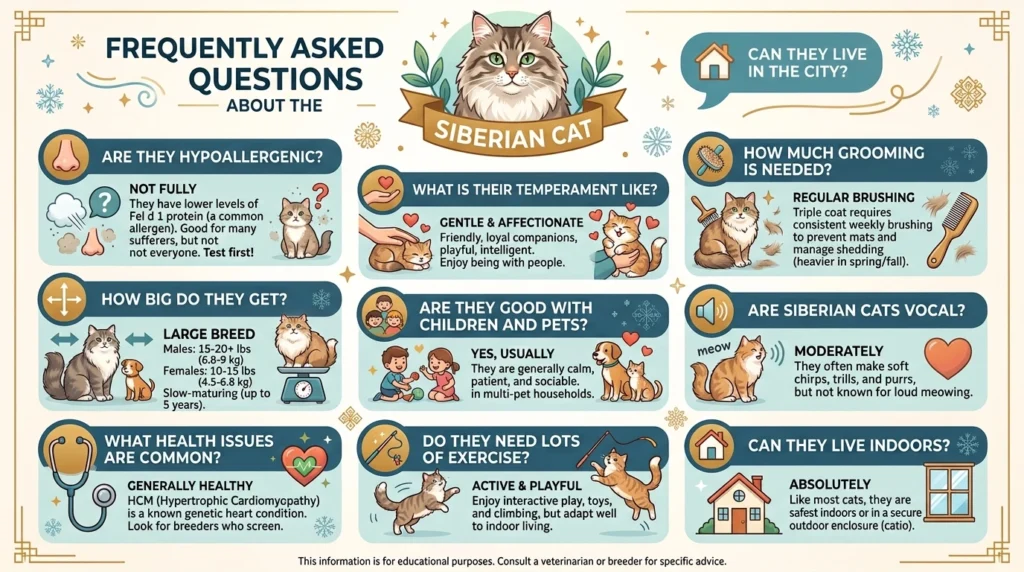
1. Are Siberian cats really hypoallergenic?
Siberian cats produce measurably lower levels of the Fel d 1 protein, the primary allergen responsible for most cat allergy reactions than the majority of domestic cat breeds. Studies suggest Siberian cats produce approximately 2–4 times less Fel d 1 than average cats. However, they’re not completely hypoallergenic, no cat breed is. Individual Siberian cats vary in their Fel d 1 production levels, and individual humans vary in their sensitivity to the allergen. Therefore, allergy sufferers should always spend extended time with specific Siberian cats before adopting, consult their doctor or allergist, and understand that reactions can develop over time even if initial exposure seems manageable.
2. How big do Siberian cats get?
Siberian cats are large cats by any standard. Males typically reach 12–17 pounds at full maturity, while females usually weigh 8–12 pounds. Some larger males exceed 17 pounds with healthy muscle mass making them comparable in size to Maine Coons. Importantly, Siberian cats are slow developers; they don’t reach full physical and emotional maturity until approximately age 5. Therefore, don’t be surprised if your Siberian continues filling out and developing well into its third and fourth years. This slow maturation is entirely breed-typical and reflects the extended development timeline of naturally large, robust cat breeds.
3. Do Siberian cats get along with dogs?
Yes, Siberian cats generally get along very well with friendly, cat-tolerant dogs. Their confident, social nature means they’re less likely to hide from or fear dogs than more timid breeds. Also, their playful energy often translates into genuine friendship with similarly active canine companions. However, successful introductions always require proper management. Keep them separated initially, allow scent exchange through bedding before visual contact, and supervise face-to-face meetings carefully until both animals show relaxed, calm body language. Also, always ensure the cat has elevated escape routes where the dog cannot follow this gives the cat control and reduces defensive stress significantly.
4. How much grooming do Siberian cats need?
Siberian cats need consistent, regular grooming throughout the year more than many owners anticipate before bringing one home. During normal periods, twice-weekly thorough brushing with a wide-tooth comb and slicker brush manages the triple coat effectively. However, during spring and autumn seasonal sheds, daily brushing becomes necessary for several weeks to manage the substantial volume of loose undercoat. Without consistent grooming, the dense undercoat mats rapidly, particularly behind the ears, under the arms, and at the base of the tail. Also, mats that develop close to the skin can become uncomfortable and require professional grooming or even veterinary intervention to remove safely.
5. Are Siberian cats good for families with children?
Yes Siberian cats rank among the most family-friendly large cat breeds available. Their patient, gentle temperament means they tolerate enthusiastic children well. Also, their playful, dog-like energy makes them natural play companions for active children. Because Siberian cats are confident rather than timid, they’re less likely to scratch defensively than more anxious breeds; they typically retreat to elevated spaces when they need a break rather than striking out. However, always teach children to interact respectfully with any cat, no tail pulling, no waking sleeping cats, no chasing. Teaching these boundaries protects both child and cat and creates a genuinely harmonious household dynamic.
6. What health problems do Siberian cats have?
Siberian cats are generally one of the healthiest purebred cat breeds available; their natural development over centuries without intensive selective breeding produced strong genetic diversity and robust constitutions. However, they do carry a genetic predisposition to hypertrophic cardiomyopathy (HCM) , a heart muscle disease affecting many cat breeds. Annual cardiac screening using echocardiography is recommended from approximately age 3 onward. Also, some Siberian cats develop polycystic kidney disease (PKD) though at lower rates than breeds like Persians. Therefore, buy from breeders who screen for both HCM and PKD, and establish annual veterinary monitoring throughout your cat’s life. Early detection of either condition significantly improves long-term management options.
7. How much does a Siberian cat cost?
Siberian cat prices vary based on pedigree, breeder reputation, coat type, and location. From a reputable TICA or CFA registered breeder in the United States, expect to pay $1,200–$4,000 for a pet-quality kitten. Show-quality Siberian cats from champion bloodlines cost more. Neva Masquerade Siberians the colorpoint variety sometimes carry premium pricing due to their striking appearance. In addition to purchase price, budget carefully for quality food (large cats eat more), grooming tools, cat trees, annual veterinary care including cardiac screening, and routine preventive care. Therefore, the true first-year cost of owning a Siberian cat typically ranges from $2,500 to $5,000 or more when all expenses are honestly calculated.
The Siberian Cat Ancient, Beautiful, and Genuinely Extraordinary
The Siberian cat offers something truly rare in the domestic cat world: ancient heritage, extraordinary physical beauty, robust natural health, and a warm, dog-like personality that wins over even committed non-cat-people.
These cats survived 1,000 years of Siberian winters through strength, adaptability, and intelligence. As a result, they bring those same qualities into your home, adapting to family life with remarkable ease while maintaining the quiet dignity of a breed shaped by nature rather than fashion.
Also, for allergy sufferers who’ve dreamed of cat ownership, the Siberian cat offers the most realistic path to enjoying feline companionship. It’s not a guarantee but it’s the closest thing to one that nature currently provides.