
Introduction
Have you ever seen a cat that looks like it’s permanently dressed for a black-tie event? That’s the tuxedo cat and their elegant black-and-white coloring has charmed cat lovers for centuries.
Tuxedo cats appear in art, literature, cartoons, and even history books. Famous tuxedo cats include Sylvester from Looney Tunes, Felix the Cat, and remarkably several cats owned by US presidents. Their distinctive formal appearance gives them an air of sophistication that makes them immediately recognizable anywhere.
Many pet owners don’t realize that “tuxedo” isn’t a breed at all. It’s a coat pattern. That means tuxedo cats can be any of dozens of different breeds or a wonderful mixed-breed domestic cat.
In my experience, tuxedo cats have personalities as distinctive as their markings. They tend to be confident, sociable, and endlessly entertaining companions. However, like any cat, their individual personality depends far more on socialization and environment than coat color.
This guide covers everything what tuxedo cats are, their personality traits, care needs, fascinating history, and the most common ownership mistakes. Let’s explore together.
Quick Answer
A tuxedo cat is a domestic cat with a black-and-white bicolor coat pattern resembling a formal tuxedo suit black body with white chest, paws, and often the muzzle. Tuxedo is a coat pattern, not a breed. It can appear across many different breeds and mixed-breed cats of either sex.
Key Takeaways
- Tuxedo is a coat pattern not a cat breed
- The pattern requires specific piebald genetics that restrict white spotting to certain body areas
- Tuxedo cats appear across many breeds including Maine Coons, British Shorthairs, and domestic mixed breeds
- Both male and female cats can be tuxedo-patterned unlike tortoiseshell coloring
- Tuxedo cats have no breed-specific health concerns health depends on individual breed background
- Famous tuxedo cats include Sylvester, Felix the Cat, and Socks President Clinton’s White House cat
What Is a Tuxedo Cat? Pattern, Genetics, and Facts
A tuxedo cat is any domestic cat displaying a specific black-and-white bicolor coat pattern. The black coloring covers most of the body while white markings appear on the chest, belly, paws, and often the chin or muzzle creating the appearance of a formal tuxedo suit complete with a white shirt front.
The Genetics Behind the Tuxedo Pattern
The tuxedo pattern results from a specific genetic combination involving two key elements. First, the cat must carry the dominant black coat color gene. Second, it must carry the piebald or white spotting gene, a gene that restricts the expression of white markings to specific body areas.
The piebald gene (S gene) works by limiting the migration of pigment-producing cells during fetal development. Because these cells don’t fully reach all body areas in tuxedo cats, white patches appear in the areas with incomplete pigment coverage. Therefore, tuxedo markings always concentrate on the lower body chest, belly, and paws while black dominates the back and head.
Is Tuxedo a Breed?
No tuxedo is purely a coat color pattern. Therefore, tuxedo cats don’t have a single shared breed, temperament, or set of physical characteristics beyond their coloring. You’ll find the tuxedo pattern in:
- Maine Coons large, tufted semi-longhaired cats
- British Shorthairs stocky, calm, plush-coated cats
- American Shorthairs adaptable, family-friendly cats
- Persians long-coated, calm lap cats
- Domestic Shorthairs mixed-breed cats of any background
- Domestic Longhairs mixed-breed long-coated cats
- Scottish Folds round-faced cats with folded ears
Also, unlike tortoiseshell coloring which links to X chromosomes and appears almost exclusively in female cats, tuxedo patterning appears equally in male and female cats. Therefore, you have an equal chance of finding a male or female tuxedo cat.
What Is the Tuxedo Cat’s Personality Really Like?
Tuxedo cats don’t have a single shared personality because they span many different breeds and genetic backgrounds. However, many tuxedo cat owners report surprisingly consistent personality traits and there’s genuine anecdotal evidence worth exploring.
Common Tuxedo Cat Personality Traits
In my experience, tuxedo cat owners describe their cats with remarkably similar language. These cats tend to be:
- Confident and self-assured they carry themselves with natural authority
- Highly sociable comfortable with strangers and new environments
- Intelligent and curious quick to investigate anything new in their space
- Playful well into adulthood many retain kitten-like energy for years
- Vocal communicators they express needs and opinions clearly
- Affectionate on their terms warm but not typically needy or anxious
Does Coat Color Affect Personality?
This is a genuinely interesting question. Some researchers have explored whether coat color genetics correlate with personality traits because the same genes controlling color sometimes influence neurological development.
However, the scientific evidence remains inconclusive for tuxedo cats specifically. A study from the University of California, Davis found personality differences between cats of different coat patterns but tuxedo cats weren’t isolated as a specific category in most research. Therefore, while many owners swear their tuxedo cat has a uniquely bold personality, this observation likely reflects individual genetics, socialization, and environment more than coat color specifically.
Pro Tip: If you’re choosing a tuxedo cat specifically for temperament, focus on the individual cat’s breed background and early socialization history, not just the coat pattern. A well-socialized tuxedo kitten from a calm, people-friendly background will always be a better predictor of adult personality than coloring alone.
How to Care for a Tuxedo Cat: Complete Step-by-Step Guide
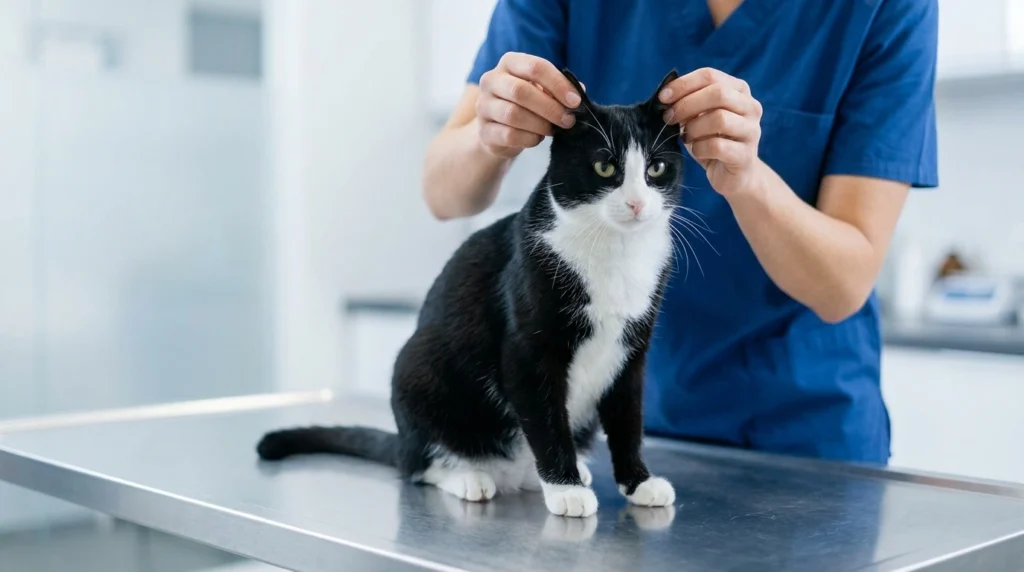
Because tuxedo is a pattern rather than a breed, care requirements depend on which breed your specific tuxedo cat belongs to. However, there are universal care principles that apply to all tuxedo cats regardless of breed background.
Step-by-Step Tuxedo Cat Care Guide
- Identify your cat’s breed background first. A purebred tuxedo Maine Coon has very different care needs from a tuxedo Domestic Shorthair. Therefore, knowing your cat’s breed or closest breed characteristics helps you provide appropriate nutrition, grooming, and enrichment.
- Establish a grooming routine based on coat length. Short-coated tuxedo cats need weekly brushing to remove loose hair. Long-coated tuxedo cats like tuxedo Maine Coons or Persians need brushing several times weekly to prevent matting. Also, pay attention to the white areas of the coat, as they show dirt and staining more visibly than the black portions.
- Keep white markings clean. Tuxedo cats with white chins, chests, and paws sometimes develop visible staining in those areas from food, litter, or general exploration. Also, some white-coated areas near the face can develop “tear staining” from normal eye discharge. Therefore, wipe white areas gently with a damp cloth during regular grooming sessions.
- Feed a high-quality, age-appropriate diet. Provide food appropriate for your cat’s life stage kitten, adult, or senior. Also, choose formulas with named protein sources as the primary ingredient. Because tuxedo cats span many breeds and sizes, portion guidance should come from your specific food’s feeding guidelines adjusted for your cat’s weight and activity level.
- Provide appropriate environmental enrichment. All cats need mental stimulation and physical activity. Therefore, provide cat trees, scratching posts, interactive toys, and window perches. The specific enrichment that best suits your tuxedo cat depends on breed background; a tuxedo Maine Coon needs tall climbing structures while a tuxedo British Shorthair enjoys puzzle feeders and calm play.
- Schedule annual veterinary check-ups. Because tuxedo cats appear across many breeds, health screening needs depend on breed background. Therefore, discuss breed-specific health concerns with your vet at each annual visit. Also, maintain current vaccinations, parasite prevention, and dental care throughout your cat’s life.
- Consider spaying or neutering. Unless you’re a professional breeder, spaying or neutering your tuxedo cat reduces health risks and behavioral concerns. As a result, spayed and neutered cats typically live longer, healthier lives and show fewer stress-related behavioral problems.
Basic Tuxedo Cat Care Checklist
| Care Task | Shorthaired Tuxedo | Longhaired Tuxedo |
| Coat brushing | Weekly | 3–4x weekly |
| White marking wipe-down | As needed | Weekly |
| Ear cleaning | Weekly | Weekly |
| Nail trimming | Every 2–3 weeks | Every 2–3 weeks |
| Teeth brushing | 2–3x weekly | 2–3x weekly |
| Vet check-up | Annually | Annually |
Fascinating Facts About Tuxedo Cats You Probably Didn’t Know
Tuxedo cats have a rich and surprising cultural history that goes far beyond their striking appearance.
Famous Tuxedo Cats Throughout History
Here are some genuinely remarkable tuxedo cat facts:
- Socks the tuxedo cat belonging to President Bill Clinton lived in the White House from 1993 to 2001 and received more mail than the President himself during peak popularity
- Sylvester the iconic Looney Tunes cartoon cat is one of the most recognizable animated characters in history and has been a tuxedo cat since his 1945 debut
- Felix the Cat one of the earliest animated cat characters, first appearing in 1919, established the tuxedo cat as a cultural symbol long before color television
- Several cats belonging to Sir Isaac Newton were reportedly tuxedo-patterned though historical verification is limited
- A tuxedo cat named Sparky inherited a $6.3 million estate in the 1990s reportedly one of the largest inheritances ever left to a pet
The “Tuxedo Cat Intelligence” Myth
Have you ever heard that tuxedo cats are smarter than other cats? This claim circulates widely online with some sites claiming tuxedo cats are 200% more intelligent than other cats. However, no credible scientific research supports this claim. Therefore, treat it as charming cat-lover mythology rather than established fact.
Also, intelligence in cats is genuinely difficult to measure meaningfully, and individual variation far outweighs any pattern-based generalization. Therefore, your tuxedo cat’s intelligence reflects their individual genetics and enrichment, not their coat color.
Common Mistakes Tuxedo Cat Owners Make
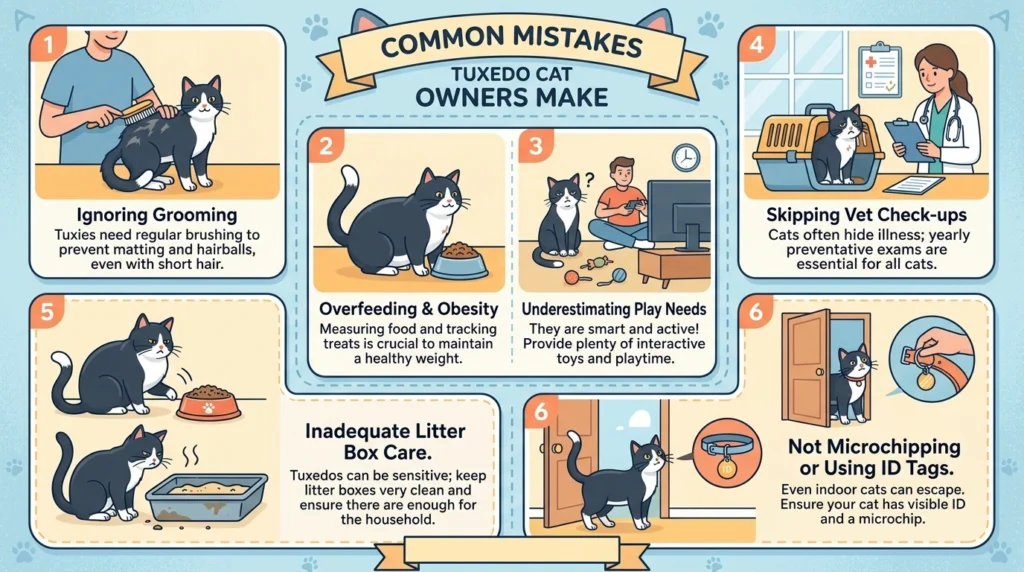
Mistake 1: Choosing Based on Color Alone
The tuxedo pattern is beautiful but choosing a cat solely based on appearance without researching breed background or individual temperament leads to mismatched households. Therefore, always spend time with a specific cat before adopting. Also, research the breed background if you’re considering a purebred tuxedo cat, because personality varies enormously between breeds.
Mistake 2: Neglecting White Coat Areas
White fur shows dirt, food staining, and discoloration more obviously than dark fur. However, many owners focus grooming attention on the black portions of the coat and neglect white areas. As a result, white markings can develop yellowing or staining that’s difficult to address once established. Therefore, include white areas in every grooming session and address staining promptly with gentle, cat-safe cleaning.
Mistake 3: Assuming All Tuxedo Cats Have the Same Needs
Because tuxedo cats span many breeds, their care needs vary significantly. A tuxedo Maine Coon needs extensive grooming, significant climbing space, and moderate-to-high activity. A tuxedo British Shorthair needs calm environments and manageable grooming. Therefore, never assume your tuxedo cat’s needs based on coat pattern alone, always research the specific breed background driving their physical and behavioral characteristics.
Mistake 4: Skipping Veterinary Care Because “They Look Healthy”
Cats hide illness instinctively, a survival behavior inherited from wild ancestors. Therefore, a tuxedo cat that appears perfectly healthy may have underlying conditions developing silently. Annual veterinary check-ups catch developing problems before they become serious. Also, breed-specific health screenings for HCM, dental disease, or other breed-relevant conditions provide important early warning for conditions that respond better to early intervention.
Mistake 5: Underestimating Playtime Needs
Many owners assume adult cats don’t need structured play; they expect cats to entertain themselves. However, adult cats need interactive play sessions to maintain healthy weight, mental sharpness, and emotional wellbeing. Therefore, schedule at least two 15–20 minute interactive play sessions daily using wand toys, feather teasers, or puzzle feeders. As a result, your tuxedo cat stays physically fit, mentally engaged, and significantly less likely to develop boredom-related behavioral problems.
Pro Tip: To keep white tuxedo cat markings bright and clean, use a very slightly damp microfiber cloth during weekly grooming to gently wipe the chest, chin, and paw areas. Also, check the chin area specifically for feline acne, a condition that appears more visibly on white-furred areas and benefits from early treatment. Consult your vet if you notice persistent blackheads or skin changes in white-marked areas.
Frequently Asked Questions About the Tuxedo Cat
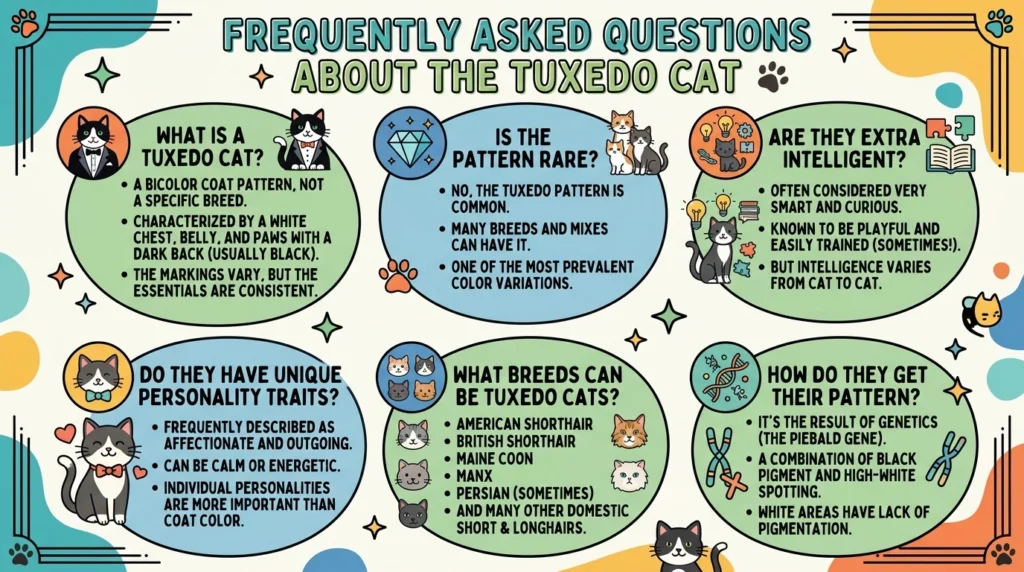
1. Is a tuxedo cat a specific breed?
No tuxedo is a coat color pattern, not a cat breed. The tuxedo pattern can appear across many different cat breeds including Maine Coons, British Shorthairs, American Shorthairs, Persians, Scottish Folds, and many mixed-breed domestic cats. Therefore, tuxedo cats don’t share a single breed standard, temperament profile, or set of physical characteristics beyond their distinctive black-and-white coloring. When you adopt a tuxedo cat, you’re choosing a coat pattern not a specific breed. The cat’s actual breed background (or mix of backgrounds) determines its size, coat length, temperament, and health considerations far more than the tuxedo pattern itself.
2. Are tuxedo cats always black and white?
The classic tuxedo pattern features black and white coloring. However, some cats with similar bicolor patterns in other color combinations such as gray and white, or orange and white are sometimes informally called “tuxedo cats” by their owners. Strictly speaking, a true tuxedo cat displays black as the primary body color with white restricted to the chest, belly, paws, and often the muzzle or chin. Also, the white areas should suggest the appearance of a formal shirt front and white-gloved paws for the pattern to technically qualify as “tuxedo” under most breed enthusiast definitions.
3. Are tuxedo cats male or female?
Tuxedo cats can be either male or female in roughly equal proportions. This is an important distinction from tortoiseshell cats which appear almost exclusively in females due to X-chromosome linked color genetics. The piebald gene producing tuxedo patterning doesn’t link to sex chromosomes. Therefore, tuxedo coloring is distributed equally between male and female cats. As a result, you have an equal chance of finding a male or female tuxedo cat regardless of which sex you prefer. This is one reason tuxedo cats appear so commonly the pattern faces no sex-linked restrictions on its expression.
4. Do tuxedo cats have a special personality?
Many tuxedo cat owners describe their cats as particularly confident, sociable, and intelligent. However, scientific research hasn’t specifically confirmed that tuxedo patterning correlates with distinct personality traits. Because tuxedo cats span many breeds and genetic backgrounds, personality variation between individual tuxedo cats is enormous. Therefore, a tuxedo cat’s personality reflects its breed background, early socialization, environment, and individual genetics far more reliably than its coat color. That said, if you ask most tuxedo cat owners whether their cat has a unique personality, almost all of them will enthusiastically say yes and that consistent observation is worth taking seriously even without hard science to explain it.
5. How long do tuxedo cats live?
Because tuxedo is a pattern rather than a breed, lifespan depends entirely on the individual cat’s breed background and health care. Generally, domestic mixed-breed tuxedo cats which benefit from genetic diversity often live 15–20 years with good care. Purebred tuxedo cats live according to their specific breed’s average lifespan. For example, a tuxedo Maine Coon typically lives 12–15 years, while a tuxedo British Shorthair averages 14–20 years. Therefore, regular veterinary care, healthy nutrition, appropriate exercise, and a safe indoor environment are the factors that most reliably determine your tuxedo cat’s individual lifespan regardless of breed background.
6. Are tuxedo cats rare?
Tuxedo cats are actually quite common; the piebald gene that produces white spotting is widespread across domestic cat populations worldwide. Therefore, you’ll find tuxedo cats in shelters, rescue organizations, and breeder programs without much difficulty. However, specific tuxedo cats within particular rare breeds like a tuxedo Khao Manee or a tuxedo Turkish Van may be rare and difficult to find. Also, extremely precise tuxedo markings with perfectly symmetrical white areas creating a genuinely formal “suit” appearance are less common than approximate tuxedo patterning. If you want a tuxedo cat, check local shelters first; they’re one of the most commonly surrendered coat patterns in rescue populations.
7. What are the most famous tuxedo cats in history?
Several tuxedo cats have achieved genuine cultural fame. Socks, President Clinton’s cat, lived in the White House from 1993–2001 and became one of the most photographed cats in American political history. Sylvester from Looney Tunes has been entertaining audiences since 1945, making him one of the longest-running animated characters in television history. Felix the Cat appeared as early as 1919, making him arguably the oldest iconic tuxedo cat in pop culture. Also, a tuxedo cat named Sparky reportedly inherited $6.3 million in the 1990s, one of history’s largest pet inheritances. Therefore, tuxedo cats have an extraordinary cultural footprint that extends well beyond their striking appearance.
The Tuxedo Cat Dapper, Charming, and Ready to Be Yours
The tuxedo cat combines one of nature’s most elegant coat patterns with the full range of domestic cat personality from bold and sociable to calm and independent, depending on breed background and individual character.
These cats appear in history, mythology, cartoons, and White House photo albums. They’re beloved across cultures and celebrated for both their appearance and their reportedly larger-than-life personalities. Also, because they’re so common in shelter populations, adopting a tuxedo cat gives you an extraordinary companion while supporting animal rescue.
Therefore, if a tuxedo cat has caught your eye, trust that instinct. Visit shelters, meet individual cats, and let the right personality choose you as much as you choose them.