
Introduction
Have you ever noticed that the most common cats you see in neighborhoods, shelters, and living rooms worldwide share a distinctive striped or swirling coat pattern? That’s the tabby cat and despite being the most widespread coat pattern in the domestic cat world, tabbies remain genuinely misunderstood by most people who love them.
Many pet owners don’t realize that “tabby” isn’t a breed. It’s a coat pattern. Also, most people don’t know there are actually five distinct tabby patterns each with its own unique appearance and genetic background.
In my experience, tabby cats are among the most rewarding companions you can own. They’re adaptable, personable, and fascinatingly variable. No two tabby cats look exactly alike even within the same pattern type. Also, their personality ranges from deeply affectionate lap cats to bold, independent hunters depending on breed background and individual temperament.
This guide covers everything you need to know, tabby patterns explained, personality traits, care requirements, fascinating history, and the most common ownership mistakes. Let’s explore the wonderful world of tabby cats together.
Quick Answer
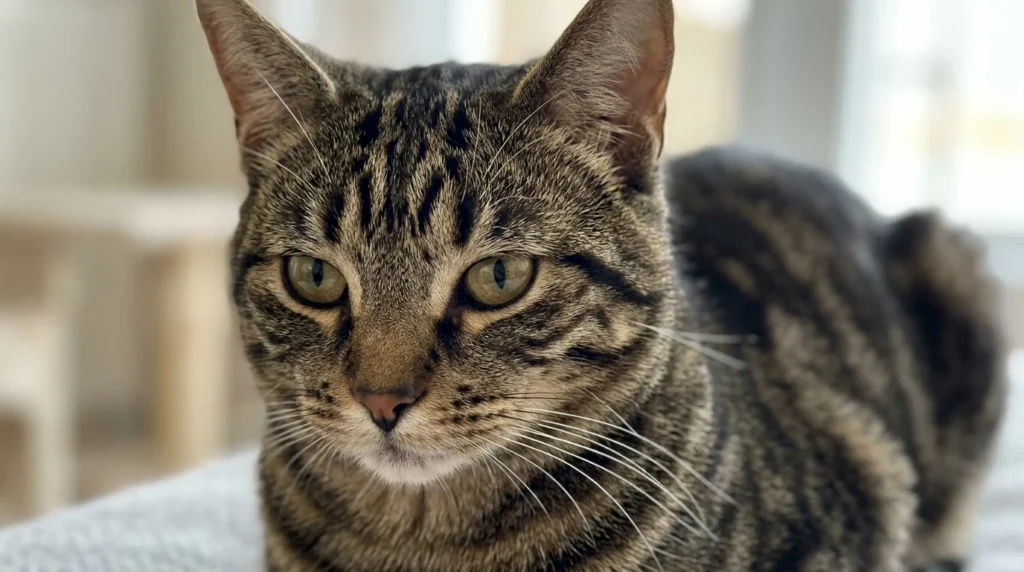
A tabby cat is any domestic cat displaying a coat pattern featuring stripes, swirls, spots, or ticking combined with the distinctive “M” marking on the forehead. Tabby is a coat pattern, not a breed. It appears across hundreds of breeds and mixed-breed cats worldwide, making it the most common cat coat pattern in existence.
Key Takeaways
- Tabby is a coat pattern not a cat breed that appears across many breeds and mixed-breed cats
- There are five distinct tabby patterns: mackerel, classic, spotted, ticked, and patched
- Every tabby cat has a distinctive “M” marking on their forehead linked to ancient mythology and genetics
- Tabby cats are extremely common in shelters making adoption easy and affordable
- Tabby cats have no breed-specific health concerns health depends on individual breed background
- The tabby pattern is one of the oldest domestic cat coat patterns appearing in ancient Egyptian cat depictions
What Is a Tabby Cat? Patterns, Genetics, and History
A tabby cat is any domestic cat carrying the agouti gene, the gene responsible for producing patterned coat markings including stripes, swirls, spots, and ticked fur. The tabby pattern is the default ancestral coat pattern for domestic cats, directly inherited from their wild cat ancestors.
The Five Tabby Patterns Explained
Many people assume all tabby cats look the same. However, there are actually five distinct tabby patterns each with a unique visual appearance:
| Pattern | Appearance | Common Breeds |
| Mackerel | Narrow parallel stripes running vertically down the sides | Domestic Shorthair, Maine Coon |
| Classic (Blotched) | Bold swirling “bullseye” pattern on the sides | British Shorthair, Domestic Shorthair |
| Spotted | Round or oval spots instead of stripes | Bengal, Egyptian Mau, Domestic Shorthair |
| Ticked | Individual hairs banded with alternating colors no stripes | Abyssinian, Somali |
| Patched (Torbie) | Classic or mackerel tabby combined with tortoiseshell patches | Any breed always female |
The Famous “M” Marking
Every tabby cat regardless of pattern displays a distinctive “M” shaped marking on their forehead. This marking appears because of the specific way the tabby gene controls pigment distribution during coat development.
Several folk legends explain the “M.” Islamic tradition says the Prophet Muhammad’s cat Muezza left the marking when he rested his hand on the cat’s forehead. Christian tradition connects the “M” to the Virgin Mary blessing a tabby cat that comforted the baby Jesus. Also, ancient Egyptians connected the markings to the word “Mau” , their name for the cat.
The scientific explanation is more straightforward. The tabby gene creates predictable pigmentation pathways during development and those pathways naturally converge on the forehead to create the “M” shape. Therefore, it’s simultaneously a genetic inevitability and a cultural symbol spanning thousands of years.
The History of Tabby Cats
Tabby cats trace their ancestry directly to the African wildcat (Felis lybica), the wild ancestor of all domestic cats. Because the wildcat carries a mackerel tabby coat naturally, the tabby pattern was the original domestic cat coat. All other coat colors and patterns developed through later genetic mutations.
The word “tabby” itself derives from Attabiy, a district in Baghdad famous for producing a striped silk fabric. Medieval traders compared the distinctive striped fabric to striped cat coats and the name stuck permanently.
What Is a Tabby Cat’s Personality Really Like?
Tabby cats don’t share a single personality because tabby is a pattern appearing across hundreds of different genetic backgrounds. However, many tabby cat owners describe consistently engaging personalities that reflect the pattern’s deep roots in domestic cat history.
Common Tabby Cat Personality Traits
Because most tabby cats are domestic mixed-breeds with broad genetic diversity, they tend to display robust, well-rounded personalities. Tabby cats typically:
- Adapt well to different household environments and routines
- Bond genuinely with their families while maintaining healthy independence
- Communicate clearly through vocalizations, body language, and behavior
- Play actively retaining hunting-inspired play behavior throughout adulthood
- Show curiosity about new objects, people, and changes in their environment
- Tolerate children well when socialized appropriately from kittenhood
Does the “Orange Tabby Personality” Myth Hold Up?
Orange tabby cats have a strong reputation for being particularly friendly, laid-back, and affectionate. Many orange tabby owners enthusiastically confirm this and there’s actually some science worth noting here.
A study from the University of California, Davis, found associations between coat color and certain behavior patterns in cats. Orange cats showed higher social tolerance scores in some categories. However, the scientific evidence remains preliminary. Therefore, while orange tabby friendliness may have some biological basis, individual personality still varies enormously based on socialization, environment, and individual genetics.
Pro Tip: If you’re adopting a tabby cat from a shelter, spend at least 15–20 minutes interacting with the specific cat before deciding not just glancing through a cage. Because tabby cats are so variable in personality, the individual cat’s response to you during a calm, unhurried interaction tells you far more about your future relationship than coat pattern alone.
How to Care for a Tabby Cat: Complete Step-by-Step Guide
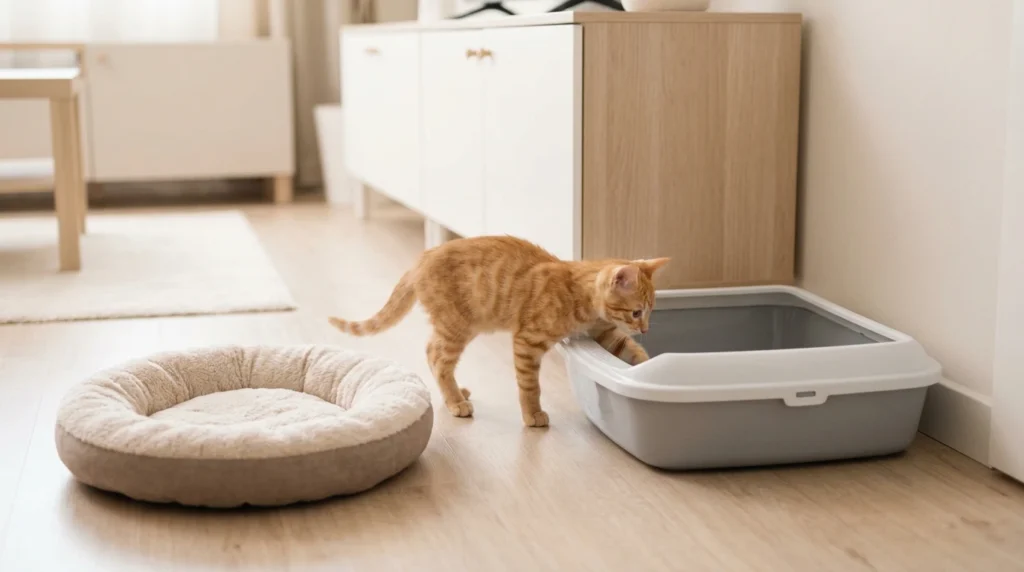
Because tabby is a pattern rather than a breed, care requirements depend on your specific cat’s breed background, coat length, and individual health needs. However, these universal care steps apply to all tabby cats regardless of background.
Step-by-Step Tabby Cat Care Guide
- Establish a grooming routine based on coat length. Short-coated tabby cats need weekly brushing to remove loose hair and distribute natural oils. Long-coated tabby cats like tabby Maine Coons or Norwegian Forest Cats need brushing 3–4 times weekly to prevent matting. Also, pay attention to the tabby pattern during grooming the defined markings show dirt and matting more obviously than solid-colored coats.
- Feed a high-quality, age-appropriate diet. Choose food with a named protein as the primary ingredient. Also, adjust portions carefully based on your cat’s weight and activity level. Tabby domestic shorthairs have highly variable metabolisms and can trend toward obesity in low-activity indoor environments. Therefore, weigh your cat monthly and consult your vet about appropriate caloric intake.
- Provide daily interactive play. Tabby cats, especially younger ones, have strong prey-drive play instincts. Schedule at least two 15–20 minute interactive play sessions daily using wand toys, feather teasers, or laser pointers. As a result, a well-exercised tabby cat is calmer, healthier, and significantly less likely to engage in destructive behavior.
- Create an enriched indoor environment. Provide cat trees, scratching posts, window perches, and puzzle feeders throughout your home. Also, rotate toys regularly to prevent boredom. Tabby cats lose interest in the same toys quickly. As a result, environmental variety keeps their minds active and their behavior manageable.
- Keep up with veterinary care consistently. Annual veterinary check-ups, current vaccinations, parasite prevention, and dental care apply to all tabby cats regardless of breed background. Also, if your tabby cat is a known breed (Maine Coon, Bengal, Abyssinian), ask your vet about breed-specific health screenings relevant to that background.
- Spay or neuter unless you’re a professional breeder. Spaying and neutering reduces health risks significantly including certain cancers and eliminates many behavioral concerns. Therefore, spay or neuter your tabby cat before sexual maturity unless you have specific breeding plans backed by health screening and breed registration.
- Monitor weight proactively. Tabby domestic shorthairs in particular can gain weight gradually in low-activity households. Therefore, weigh your cat monthly and adjust food portions before weight gain becomes significant. Also, consult your vet about weight management strategies if your tabby cat trends overweight obesity in cats leads to diabetes, joint problems, and shortened lifespan.
Tabby Cat Care at a Glance
| Care Task | Shorthaired Tabby | Longhaired Tabby |
| Coat brushing | Weekly | 3–4x weekly |
| Ear cleaning | Weekly | Weekly |
| Nail trimming | Every 2–3 weeks | Every 2–3 weeks |
| Teeth brushing | 2–3x weekly | 2–3x weekly |
| Vet check-up | Annually | Annually |
| Weight monitoring | Monthly | Monthly |
Tabby Cat Types and Breeds: A Full Overview
Understanding which breeds commonly display tabby patterns helps you find the right tabby cat for your specific household and lifestyle.
Popular Breeds That Commonly Show Tabby Patterns
| Breed | Common Tabby Pattern | Size | Temperament | Grooming |
| Domestic Shorthair | All patterns | Varies | Highly variable | Low |
| Maine Coon | Mackerel, Classic | Very Large | Sociable, dog-like | High |
| Bengal | Spotted, Marbled | Medium-Large | Active, intelligent | Low |
| Abyssinian | Ticked | Medium | Energetic, curious | Low |
| British Shorthair | Classic | Large | Calm, independent | Low |
| Norwegian Forest Cat | Mackerel, Classic | Large | Gentle, independent | High |
| Egyptian Mau | Spotted | Medium | Active, loyal | Low |
| American Shorthair | Classic, Mackerel | Medium | Adaptable, friendly | Low |
The Domestic Shorthair Tabby The World’s Most Common Cat
The most common tabby cat is simply the domestic shorthair, a mixed-breed cat of no specific documented pedigree. These cats fill shelters worldwide. Also, they often live extraordinarily long, healthy lives because of their broad genetic diversity.
In my experience, domestic shorthair tabbies are among the most rewarding cats to own. Their personality is genuinely shaped by their upbringing and environment rather than strict breed characteristics. Therefore, early socialization and consistent, loving care produce wonderfully balanced adult cats from shelter kittens.
Common Mistakes Tabby Cat Owners Make
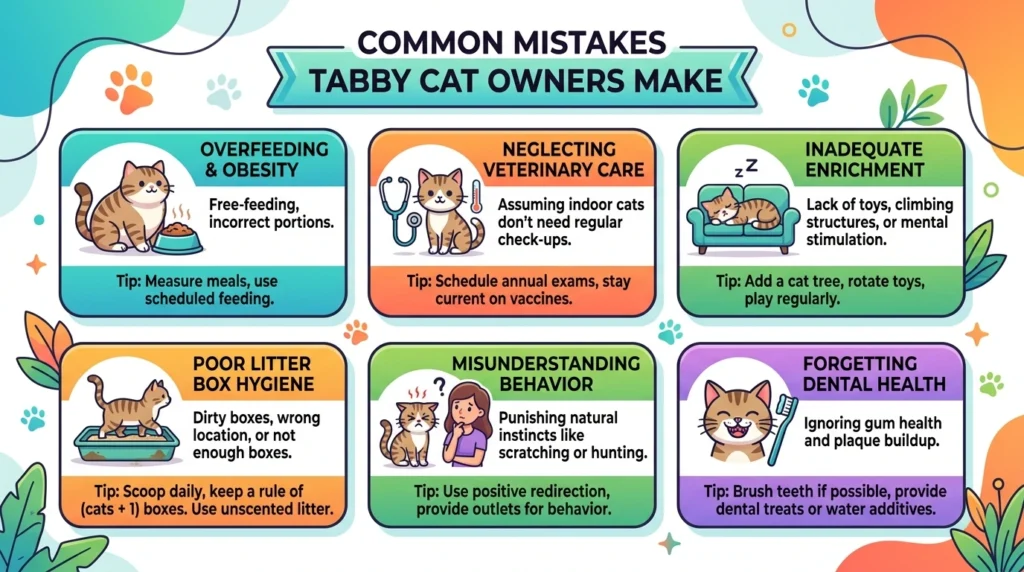
Mistake 1: Assuming All Orange Tabbies Are Male
Orange tabby cats are approximately 80% male but 20% of orange tabbies are female. Therefore, never assume an orange tabby’s sex based on color alone. Also, people sometimes assume all female cats can’t be tabby which is completely incorrect. Female tabby cats are extremely common across all five tabby patterns.
Mistake 2: Underestimating Indoor Tabby Cat Exercise Needs
A simple mistake I often see is owners assuming indoor tabby cats get enough exercise on their own. However, without structured play, indoor cats, especially tabbies with strong prey-drive instincts become sedentary. As a result, obesity, diabetes, and behavioral problems develop gradually. Therefore, daily structured play sessions are genuinely essential, not optional.
Mistake 3: Choosing a Breed-Specific Tabby Without Researching Breed Needs
A Bengal tabby and a British Shorthair tabby both display spotted tabby patterns. However, their care needs couldn’t be more different. Bengals need high activity, climbing structures, and significant daily stimulation. British Shorthairs thrive in calm, predictable environments with moderate play. Therefore, always research the breed behind the tabby pattern before adopting a purebred tabby cat.
Mistake 4: Neglecting Dental Care
Dental disease affects the majority of cats over age three and tabby cats are no exception. However, most owners skip dental care because it feels challenging or unnecessary. As a result, painful dental disease develops silently over years. Therefore, start brushing your tabby cat’s teeth from kittenhood, provide dental-supporting treats, and schedule professional dental cleanings as your vet recommends.
Mistake 5: Not Microchipping
Because tabby cats are so common in appearance, an escaped tabby cat is extremely difficult to identify as yours specifically without a microchip. Therefore, microchip your tabby cat early and keep registration details current. Also, ensure your cat wears an identification collar with current contact information as a secondary layer of protection.
Pro Tip: The mackerel tabby pattern, the most common tabby pattern globally, features narrow parallel stripes that can develop small “necklace” markings around the neck and chest area. These markings are completely normal and don’t indicate a health concern. However, if you notice changes in your tabby’s coat pattern such as new bald patches, color changes, or scaling skin consult your vet promptly, as skin changes can indicate underlying health issues in cats of any coat pattern.
Frequently Asked Questions About the Tabby Cat
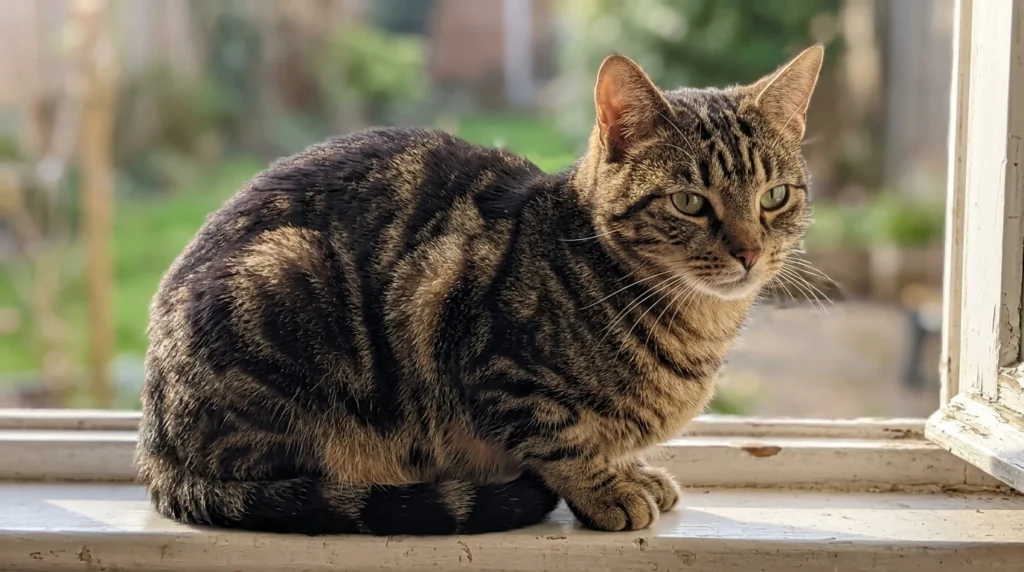
1. Is a tabby cat a specific breed?
No tabby is a coat pattern, not a cat breed. The tabby pattern appears across hundreds of domestic cat breeds and mixed-breed cats worldwide. Therefore, tabby cats don’t share a single breed standard, temperament profile, or set of health characteristics beyond their coat markings. When you adopt a tabby cat, you’re selecting a coat pattern not a specific breed. The individual cat’s actual breed background (or genetic mix) determines its size, coat length, lifespan, personality tendencies, and health considerations far more meaningfully than the tabby pattern itself.
2. Why do all tabby cats have an “M” on their forehead?
Every tabby cat displays an “M” marking on their forehead because of how the tabby gene controls pigment distribution during coat development. The agouti gene responsible for the tabby pattern creates predictable pigmentation pathways during fetal development. These pathways naturally converge on the forehead in a way that produces the distinctive “M” shape consistently across all five tabby patterns. Therefore, the “M” is a genetic inevitability rather than a coincidence. Various cultural traditions Islamic, Christian, and Egyptian have assigned different symbolic meanings to this marking over thousands of years of human-cat coexistence.
3. What are the different types of tabby cat patterns?
There are five distinct tabby patterns. The mackerel tabby features narrow parallel stripes running vertically down the sides, the most common pattern globally. The classic tabby displays bold swirling “bullseye” markings on the sides. The spotted tabby has round or oval spots rather than stripes. The ticked tabby shows no body stripes instead, individual hairs display alternating bands of color. Finally, the patched tabby (also called torbie) combines classic or mackerel tabby markings with tortoiseshell patches of orange and black. Therefore, “tabby” encompasses five significantly different visual appearances rather than just one look.
4. Are orange tabby cats always male?
Approximately 80% of orange tabby cats are male but 20% are female. The orange coat color in cats links to the X chromosome. Because male cats carry only one X chromosome, they only need one copy of the orange gene to display orange coloring. Female cats carry two X chromosomes; they need two copies of the orange gene to be fully orange. Therefore, while orange tabbies are predominantly male, female orange tabbies definitely exist and are genuinely beautiful animals. Never assume a tabby cat’s sex based solely on coat color, always verify with a veterinary examination.
5. How long do tabby cats live?
Tabby cat lifespan depends entirely on individual breed background, health care quality, and living environment, not coat pattern. Domestic mixed-breed tabby cats which benefit from genetic diversity often live 15–20 years with excellent care. Purebred tabby cats live according to their specific breed’s typical lifespan. For example, a tabby Maine Coon typically lives 12–15 years, while a tabby British Shorthair may reach 14–20 years. Therefore, providing regular veterinary care, a healthy diet, appropriate exercise, and a safe indoor environment are the most reliable factors determining your tabby cat’s individual longevity regardless of their specific coat pattern.
6. Are tabby cats good for first-time owners?
Yes tabby cats are excellent choices for first-time cat owners, particularly domestic shorthair tabbies from shelters. Because most shelter tabby cats are mixed-breed domestic shorthairs, they tend to be adaptable, resilient, and personable characteristics that reflect their broad genetic diversity. Also, their care requirements are straightforward weekly brushing, regular feeding, annual vet visits, and daily play. However, first-time owners should still research the specific breed background if adopting a purebred tabby, as breed-specific needs vary significantly. For a first-time owner seeking an uncomplicated, affectionate companion, a shelter domestic shorthair tabby is genuinely one of the best choices available.
7. What is a torbie cat?
A torbie cat short for tortoiseshell tabby is a cat displaying both tabby markings and tortoiseshell coloring simultaneously. These cats carry the genes for both the tabby pattern and the tortoiseshell orange-and-black color distribution. As a result, you see swirling or striped tabby markings expressed in patches of orange and patches of dark color rather than a single solid tabby color. Because tortoiseshell coloring links to X chromosomes, tortie cats are almost always female a male torbie is an extremely rare genetic anomaly. Torbie cats are not a separate breed, they’re a specific color-pattern combination that can appear across many different breeds and mixed-breed domestic cats.
The Tabby Cat Common, Beloved, and Endlessly Fascinating
The tabby cat is simultaneously the most ordinary and most extraordinary cat in the world. Common enough to fill every shelter. Variable enough that no two look exactly alike. Ancient enough to appear in Egyptian art, Norse mythology, and Islamic tradition. And personable enough to win the hearts of cat lovers across every culture and century.
Whether you’re drawn to the bold swirls of a classic tabby, the delicate spots of a spotted tabby, or the understated elegance of a ticked Abyssinian, the tabby pattern offers something genuinely unique in every individual cat.
Therefore, if you’re considering adding a tabby cat to your household, start at your local shelter. Also, take your time meeting individual cats rather than selecting based on appearance alone. The right tabby cat will make itself known through its personality and that personality will be entirely, wonderfully its own.