
Introduction
Your dog is staring at your plate again. Those big eyes locked onto your mashed potatoes like they haven’t eaten in a week. Sound familiar? Before you share that spoonful, you’re probably wondering if dogs can eat potatoes safely?
The honest answer is: it depends. Potatoes aren’t automatically dangerous for dogs. However, preparation method, potato type, and your dog’s individual health all play a huge role in whether potatoes are safe or harmful.
In my experience, this is one of the most common food questions dog owners ask and also one of the most misunderstood. Some sources say potatoes are perfectly fine. Others warn against them completely. Therefore, you deserve a clear, honest, vet-backed answer.
This guide covers everything you need to know. You’ll learn which potatoes are safe, which are dangerous, how to prepare them correctly, and when to avoid them entirely. Let’s get the full picture.
Can Dogs Eat Potatoes? Here’s the Full Truth
The Short Answer
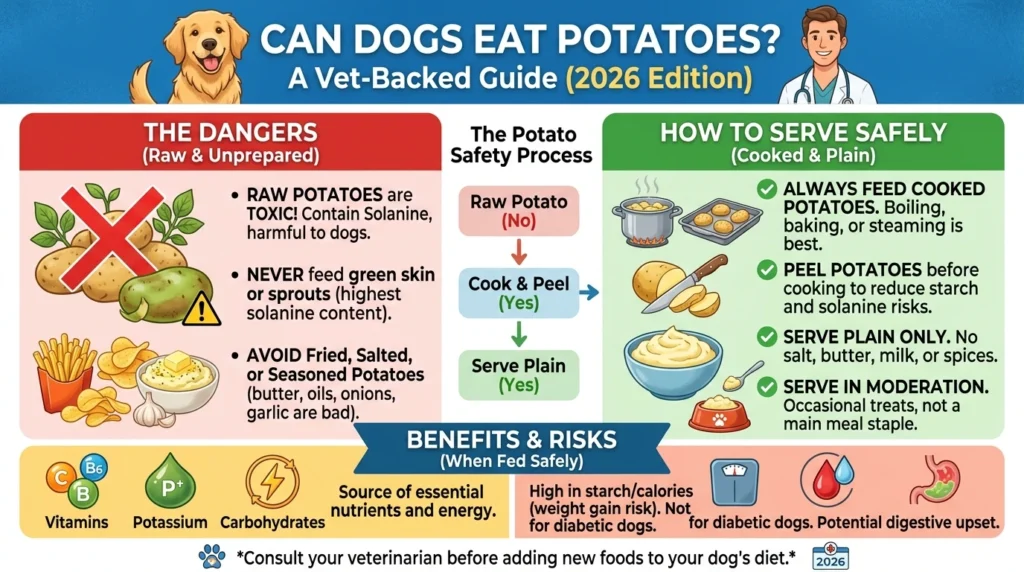
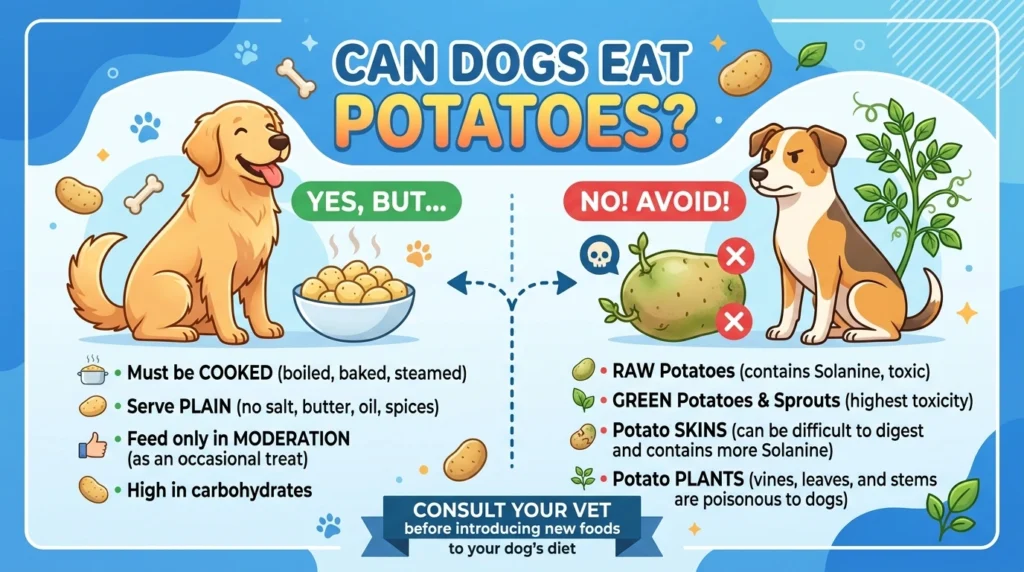
Yes, dogs can eat potatoes. However, only when they’re prepared correctly and served in moderation. Raw potatoes and potato skins are a different story entirely. Also, dogs with certain health conditions should avoid potatoes completely.
Potatoes belong to the nightshade family of plants. As a result, they contain a natural compound called solanine especially in raw form and in the green parts of the potato. Solanine is toxic to dogs in significant amounts. Therefore, understanding how to prepare potatoes safely is genuinely important before you share them with your dog.
What Makes Potatoes Potentially Beneficial?
Cooked plain potatoes do offer some nutritional value for dogs. Here’s what they contain:
- Vitamin C supports immune function
- Vitamin B6 supports brain health and metabolism
- Potassium supports heart and muscle function
- Iron supports healthy red blood cells
- Fiber supports digestive health in moderate amounts
- Carbohydrates provide energy
However, dogs don’t require potatoes in their diet. Most complete and balanced dog foods already cover these nutritional needs. Therefore, potatoes work best as an occasional treat not a dietary staple.
When Can Dogs Eat Potatoes Safely?
The Safe Potato Rules
Not all potatoes are equal for dogs. Therefore, follow these clear guidelines every time:
✅ SAFE for dogs:
- Plain boiled potatoes no seasoning
- Plain baked potatoes no toppings
- Plain steamed potatoes no additives
- Plain mashed potatoes made with water only, no butter, salt, or milk
❌ NOT SAFE for dogs:
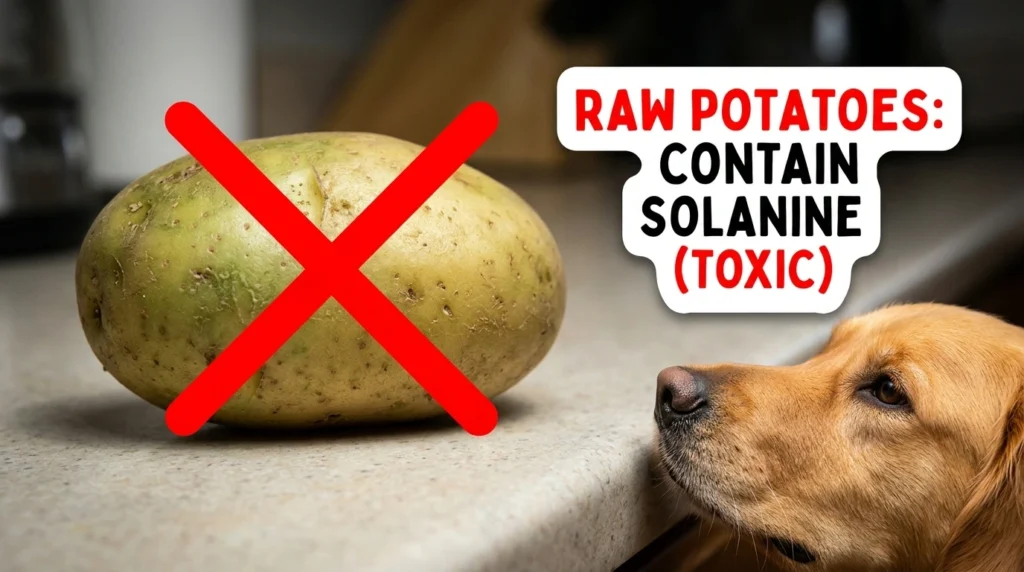
- Raw potatoes contain solanine
- Green potatoes high solanine content
- Potato skins concentrated solanine
- Fried potatoes or chips high fat and salt
- Mashed potatoes with butter, cream, or seasonings
- Potatoes with onion, garlic, or chives these are toxic to dogs
How Much Potatoes Can Dogs Eat?
Portion size matters significantly. Too much potato causes digestive upset and for dogs with diabetes, it can cause dangerous blood sugar spikes.
Use this general guide:
| Dog Size | Maximum Potato Per Serving |
| Small (under 20 lbs) | 1–2 small pieces (1 tablespoon) |
| Medium (20–50 lbs) | 2–3 small pieces (2 tablespoons) |
| Large (50+ lbs) | 3–4 small pieces (3 tablespoons) |
Also, potatoes should never exceed 10% of your dog’s daily caloric intake. Therefore, treat them as an occasional snack not a meal replacement.
Pro Tip: Always introduce any new food slowly. Give your dog a tiny piece of plain cooked potato and wait 24 hours. Watch for signs of digestive upset, loose stools, vomiting, or gas. If your dog reacts poorly, avoid potatoes entirely and consult your vet.
Step-by-Step: How to Safely Prepare Potatoes for Dogs
Follow These Steps Every Time
Preparation makes all the difference. Therefore, follow this simple process whenever you want to share potatoes with your dog:
- Choose the right potato. Select a fresh potato with no green patches. Avoid any potato that smells off or has started sprouting. Green or sprouting potatoes contain higher solanine levels therefore they’re not safe for dogs.
- Wash the potato thoroughly. Rinse under cold running water to remove any pesticide residue or surface bacteria. This step matters even if you plan to peel the potato.
- Peel completely. Remove all the skin. Potato skins contain concentrated solanine and are harder for dogs to digest. Therefore, always peel before cooking.
- Cut into small pieces. Dice the potato into small, bite-sized chunks. Smaller pieces cook faster and reduce choking risk especially for small breeds.
- Boil or steam until soft. Cook the potato pieces in plain water with no added salt, butter, or seasonings. Boiling or steaming is the safest cooking method for dogs.
- Allow to cool completely. Never serve hot food to your dog. Let the cooked potato cool to room temperature before offering it. Hot food can burn your dog’s mouth and throat.
- Serve plain as a small treat. Offer a small portion as a treat not as a meal. Also, mix a small amount into your dog’s regular food if they’re hesitant to try it alone.
- Store leftovers safely. Store any unused cooked potato in a sealed container in the fridge. Use within 2–3 days. Discard anything that smells off or develops mold.
Types of Potatoes: What’s Safe and What’s Dangerous?
Comparing Potato Types for Dogs
Not all potatoes carry the same risk level. Therefore, here’s a clear breakdown of the most common potato types:
| Potato Type | Safe for Dogs? | Notes |
| White potato (cooked, plain) | ✅ Yes | Safe in moderation |
| Sweet potato (cooked, plain) | ✅ Yes | Often considered better for dogs |
| Red potato (cooked, plain) | ✅ Yes | Safe when properly prepared |
| Green potato (any type) | ❌ No | High solanine avoid completely |
| Raw potato | ❌ No | Solanine risk always cook first |
| Potato skins | ❌ No | Too much solanine and hard to digest |
| Mashed with butter/milk | ❌ No | Fat and dairy cause digestive issues |
| French fries | ❌ No | High fat, salt, and often seasonings |
| Potato chips | ❌ No | Excessive salt and unhealthy fat |
| Hash browns | ❌ No | Often contain onion and garlic |
Sweet Potatoes vs. Regular Potatoes
Sweet potatoes are generally considered the better option for dogs. They contain more fiber, more vitamin A, and a lower glycemic index than regular white potatoes. As a result, many vets and nutritionists recommend sweet potatoes over regular potatoes as an occasional treat.
However, the same preparation rules apply. Always cook sweet potatoes plain, peel them first, and serve in small portions. Also, dogs with diabetes should still approach sweet potatoes cautiously and consult your vet before including either type regularly.
Important Warnings: When Dogs Should NOT Eat Potatoes
Dogs With These Conditions Should Avoid Potatoes
Potatoes aren’t appropriate for every dog. Therefore, avoid feeding potatoes to dogs with:
Diabetes: Potatoes are high in starch and carbohydrates. As a result, they cause blood sugar spikes that are dangerous for diabetic dogs. If your dog has diabetes, consult your vet before offering any starchy food.
Kidney disease: Potatoes contain potassium which dogs with kidney disease may struggle to process. Therefore, always get specific dietary guidance from your vet if kidney disease is a factor.
Obesity: Potatoes are calorie-dense. Even plain cooked potatoes add extra calories that overweight dogs don’t need. Therefore, choose lower-calorie treat options if your dog is on a weight management program.
Known food sensitivities: Some dogs develop sensitivities to potato-based ingredients. Also, many grain-free dog foods use potato as a carbohydrate base which the FDA has linked to potential heart concerns (DCM) in ongoing research.
Signs of Solanine Poisoning in Dogs
If your dog accidentally eats raw potato, green potato, or large amounts of potato skin, watch for these warning signs:
- Vomiting or nausea
- Diarrhea
- Lethargy or weakness
- Trembling or shaking
- Difficulty breathing
- Excessive drooling
If you notice any of these symptoms after your dog eats potato, contact your vet immediately. Solanine poisoning requires prompt veterinary attention; don’t wait to see if symptoms resolve on their own.
Pro Tip: Keep the ASPCA Animal Poison Control Center number saved in your phone: (888) 426-4435. If your dog eats something potentially toxic, you can call for immediate guidance before reaching your vet. Fast action genuinely saves lives in poisoning situations.
Common Mistakes Dog Owners Make With Potatoes
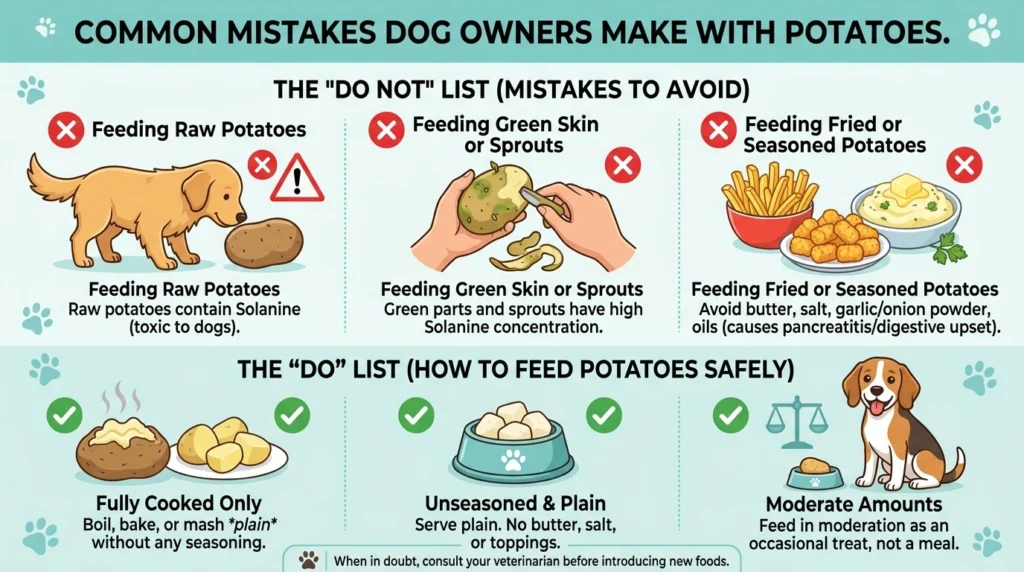
Mistake 1: Feeding Raw Potato
This is the most dangerous mistake. Raw potatoes contain significantly higher solanine levels than cooked ones. Therefore, even a small amount of raw potato can cause digestive upset or toxicity in dogs. Always cook potatoes thoroughly before offering any to your dog.
Mistake 2: Sharing Table Scraps With Toppings
Mashed potatoes with butter, cream, chives, garlic, or salt are a regular part of many human meals. However, these additions make potatoes genuinely dangerous for dogs. Garlic and onion are toxic to dogs. Also, butter and cream cause digestive upset and contribute to pancreatitis in dogs prone to the condition.
Mistake 3: Feeding Too Much Too Often
Even safe foods become problematic in excess. Because potatoes are high in starch and calories, feeding them regularly adds unnecessary calories to your dog’s diet. Therefore, treat potatoes as an occasional snack not a daily food addition.
Mistake 4: Ignoring Green Patches
Green areas on a potato indicate elevated solanine concentration. Many owners simply cut around the green section and assume the rest is safe. However, solanine can spread beyond the visible green area. Therefore, discard any potato with significant green discoloration entirely rather than trying to salvage it.
Mistake 5: Not Consulting the Vet for Dogs With Health Issues
General feeding guidelines work for healthy adult dogs. However, dogs with diabetes, kidney disease, heart conditions, or obesity need individualized dietary advice. Therefore, always consult your vet before adding new foods including potatoes to a dog with any existing health condition. This step protects your dog and gives you peace of mind.
Frequently Asked Questions: Can Dogs Eat Potatoes?
1. Can dogs eat mashed potatoes?
Dogs can eat plain mashed potatoes made with water only, no butter, milk, salt, garlic, or chives. However, most homemade mashed potatoes contain at least some of these additions, which makes them unsafe for dogs. Therefore, if you want to share mashed potato with your dog, prepare a small separate plain portion using just boiled potato and water. Also, keep the portion small; a tablespoon or two is plenty for most dogs.
2. Can dogs eat potato skins?
No potato skins are safe for dogs. The skin contains the highest concentration of solanine in the entire potato. Also, skins are difficult to digest and can cause gastrointestinal issues. Therefore, always peel potatoes completely before cooking and serving them to your dog. This simple step removes the most significant solanine risk.
3. Can puppies eat potatoes?
Puppies can eat small amounts of plain cooked potato. However, their digestive systems are more sensitive than adult dogs. Therefore, introduce any new food extremely slowly, start with just a tiny piece and monitor closely for 24 hours. Also, puppies need nutritionally complete puppy food as their primary diet. Potatoes should be a very occasional treat only, not a regular part of a puppy’s meals.
4. Are sweet potatoes better than regular potatoes for dogs?
Generally, yes sweet potatoes are considered nutritionally superior for dogs. They contain more fiber, more vitamin A, and have a lower glycemic index than regular white potatoes. As a result, many vets recommend sweet potatoes as the preferred occasional potato treat. However, the same safety rules apply: always cook them plain, peel them first, and serve in small amounts. Also, dogs with diabetes should consult their vet before eating either type.
5. Can dogs eat potato chips or french fries?
No, absolutely not. Potato chips and french fries are harmful to dogs for several reasons. First, they contain excessive amounts of salt which causes dehydration and sodium poisoning in dogs. Also, they’re high in unhealthy fat, which can trigger pancreatitis. In addition, many flavored chips contain onion powder, garlic powder, or other seasonings that are toxic to dogs. Therefore, never share chips or fries with your dog, no matter how much they beg.
6. What happens if my dog eats a raw potato?
A small amount of raw potato may cause mild digestive upset vomiting, diarrhea, or stomach discomfort. However, larger amounts can cause solanine poisoning, with symptoms including weakness, trembling, and breathing difficulty. Therefore, if your dog eats raw potato especially green potato or large quantities contact your vet immediately. Don’t wait for symptoms to worsen before seeking advice. Prompt action is always the safest approach.
7. Can dogs with diabetes eat potatoes?
No dogs with diabetes should avoid potatoes. Potatoes are high in starch and carbohydrates, which cause blood sugar spikes that are dangerous for diabetic dogs. As a result, even small amounts can disrupt blood sugar management significantly. Therefore, always consult your veterinarian about appropriate treat options for diabetic dogs. Your vet can recommend safe, low-glycemic alternatives that won’t interfere with your dog’s diabetes management plan.
The Bottom Line on Dogs and Potatoes
So can dogs eat potatoes ? Yes, but only when prepared correctly and served in small amounts. Plain, peeled, fully cooked potato makes a safe occasional treat for healthy adult dogs. However, raw potatoes, green potatoes, and potato skins are genuinely dangerous and should always be avoided.
Also, remember that potatoes add no essential nutrition that your dog’s regular food doesn’t already provide. Therefore, treat them as exactly that, an occasional treat, not a dietary staple.
When in doubt, always consult your vet especially if your dog has diabetes, kidney disease, or any other existing health condition. Your vet knows your dog’s individual health profile and can give you personalized guidance.