
Introduction
Your dog is sniffing around the garden and suddenly chomps on a wild mushroom before you can stop them. Sound familiar? It’s one of those heart-stopping moments that every dog owner dreads.
So can dogs eat mushrooms safely? The honest answer is: it depends entirely on the type of mushroom. Some store-bought mushrooms are perfectly safe for dogs in small amounts. Others, especially wild mushrooms, can be fatally toxic and require emergency veterinary care immediately.
This is genuinely one of the most important food safety topics for dog owners. Because mushrooms grow wild in parks, gardens, and forests, accidental ingestion happens more often than most people realize.
In this guide, you’ll learn exactly which mushrooms dogs can eat, which ones are deadly dangerous, how to recognize poisoning symptoms, and what to do in an emergency. Therefore, by the end, you’ll feel confident and prepared no matter what your dog decides to sniff out on your next walk. Let’s get into it.
Can Dogs Eat Mushrooms? The Complete Safety Guide
The Short Answer First
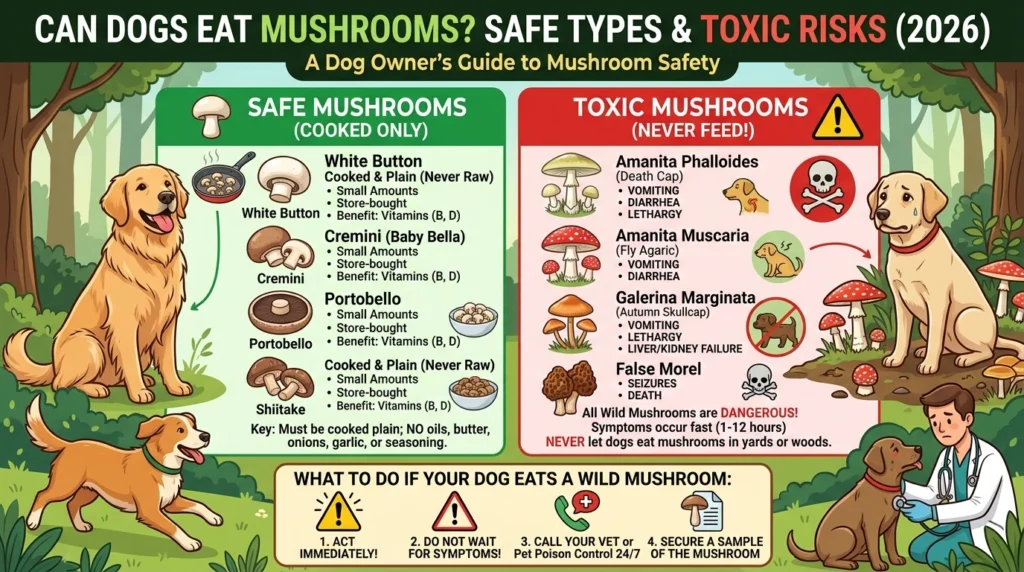
Yes, dogs can eat certain mushrooms safely. However, the key word here is certain. Plain, cooked, store-bought mushrooms like white button mushrooms, portobello mushrooms, and cremini mushrooms are generally safe for dogs in small quantities.
Wild mushrooms, however, are a completely different story. Many wild species contain toxins that attack a dog’s liver, kidneys, and nervous system. Because identifying wild mushrooms accurately requires expert knowledge, the safest rule is simple: if your dog eats any wild mushroom, treat it as an emergency.
Why Mushrooms Are Tricky for Dog Owners
Here’s what makes mushrooms uniquely dangerous compared to other foods. First, toxic and safe mushrooms often look very similar even to trained human eyes. Second, some of the most deadly mushroom species have a mild, pleasant smell that actually attracts dogs. Third, symptoms of mushroom poisoning sometimes take 6 to 24 hours to appear long after the mushroom has been digested.
As a result, waiting to “see how your dog feels” after eating a wild mushroom is never a safe approach. Always contact your vet immediately if your dog eats any unidentified mushroom.
Which Mushrooms Can Dogs Eat Safely?
Store-Bought Mushrooms Generally Safe
These common grocery store mushrooms are generally considered safe for dogs when served plain and in small amounts:
| Mushroom Type | Safe for Dogs? | Notes |
| White Button Mushroom | ✅ Yes | Plain, cooked only no seasoning |
| Portobello Mushroom | ✅ Yes | Small amounts, plain and cooked |
| Cremini Mushroom | ✅ Yes | No garlic, onion, or butter added |
| Shiitake Mushroom | ✅ Yes | Plain, cooked not raw |
| Oyster Mushroom | ✅ Yes | Small portions, no seasoning |
| Maitake Mushroom | ✅ Yes | May support immune health vet guidance advised |
Important Rules for Feeding Safe Mushrooms
Even safe mushrooms need preparation rules. Therefore, follow these guidelines every time:
- Always cook them raw mushrooms are harder for dogs to digest
- Never add seasoning garlic, onion, butter, and salt are all toxic or harmful to dogs
- Serve in small amounts mushrooms should be an occasional treat, not a regular diet staple
- Introduce slowly new foods can upset your dog’s stomach even when they’re technically safe
Why Plain Matters So Much
This point genuinely surprises people. A portobello mushroom on its own? Fine for most dogs. However, that same mushroom sautéed in garlic and butter? Suddenly it becomes dangerous because garlic is toxic to dogs and butter causes pancreatitis in high amounts. Therefore, never share mushroom dishes prepared for humans with your dog.
Toxic Mushrooms That Dogs Must Never Eat
The Most Dangerous Wild Mushrooms
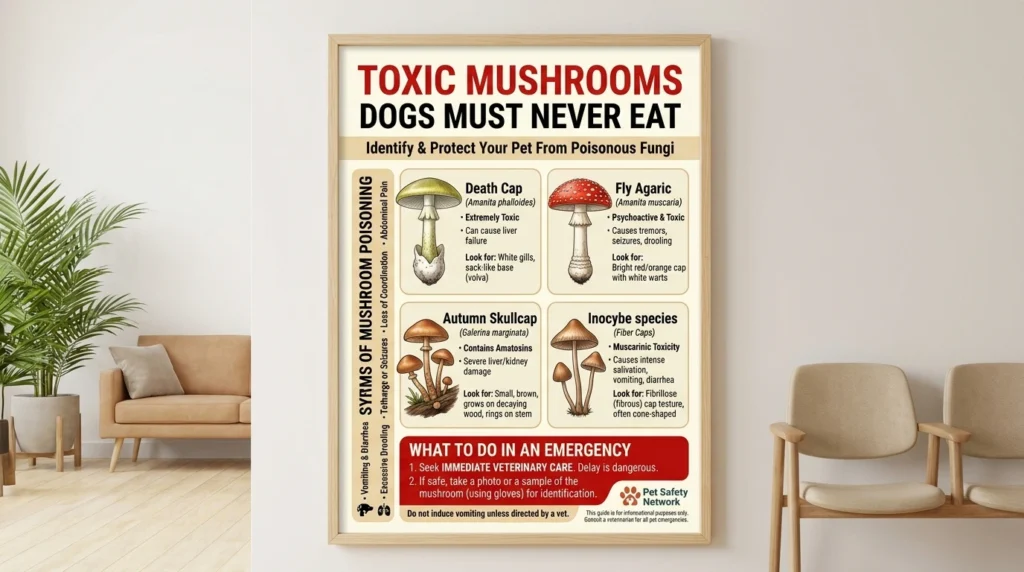
This is the critical section. These wild mushroom species cause severe or fatal poisoning in dogs. Therefore, memorize these names or save this page for quick reference:
Deadly Toxic Varieties
| Mushroom Name | Toxicity Level | Primary Damage |
| Amanita phalloides (Death Cap) | Extremely Deadly | Liver failure, death |
| Amanita ocreata (Angel of Death) | Extremely Deadly | Liver and kidney failure |
| Galerina marginata | Extremely Deadly | Liver failure |
| Amanita muscaria (Fly Agaric) | Highly Toxic | Neurological damage |
| Gyromitra species (False Morel) | Highly Toxic | Liver damage, seizures |
| Inocybe species | Highly Toxic | Nervous system damage |
| Clitocybe dealbata | Highly Toxic | Excessive salivation, seizures |
Why the Death Cap Is the Most Dangerous
The Amanita phalloides commonly called the Death Cap causes more mushroom-related deaths in dogs and humans than any other species worldwide. It’s terrifying because it looks relatively harmless and has a mild, pleasant smell. Also, it grows widely across North America, Europe, and Australia.
Because symptoms often don’t appear for 6 to 24 hours after ingestion, owners sometimes miss the connection between the mushroom and the illness. By then, severe liver damage may already have occurred. Therefore, immediate emergency vet care gives your dog the best possible chance of survival.
Pro Tip: Take a photo of the mushroom your dog ate or collect a sample in a paper bag (not plastic). Your vet needs this information to identify the species and choose the right treatment. This one step can genuinely save your dog’s life.
How to Recognize Mushroom Poisoning in Dogs
Symptoms to Watch For
Mushroom poisoning symptoms vary depending on the species consumed. However, these are the most common warning signs across all toxic varieties:
Early Symptoms (within 30 minutes to 6 hours):
- Vomiting
- Diarrhea
- Excessive drooling or salivation
- Weakness or lethargy
- Loss of appetite
- Abdominal pain or bloating
Later Symptoms (6 to 24 hours liver/kidney damage):
- Yellowing of eyes or skin (jaundice)
- Extreme lethargy
- Seizures or tremors
- Loss of coordination or staggering
- Collapse
- Coma in severe cases
What to Do If Your Dog Eats a Wild Mushroom
Act fast. Speed matters enormously with mushroom poisoning. Therefore, follow these steps immediately:
- Don’t wait for symptoms to appear. Call your vet or emergency animal hospital right now.
- Collect a sample or photo of the mushroom if you can do so safely.
- Note the time your dog ate the mushroom your vet needs this information.
- Don’t induce vomiting unless your vet specifically instructs you to do so.
- Get to a vet immediately, don’t drive to a regular pharmacy or wait until morning.
The ASPCA Animal Poison Control Center (888-426-4435) is available 24 hours a day. In addition, the Pet Poison Helpline (855-764-7661) provides expert guidance around the clock. Keep both numbers saved in your phone right now.
Common Mistakes Dog Owners Make With Mushrooms
Mistake 1: Assuming All Mushrooms Look Dangerous
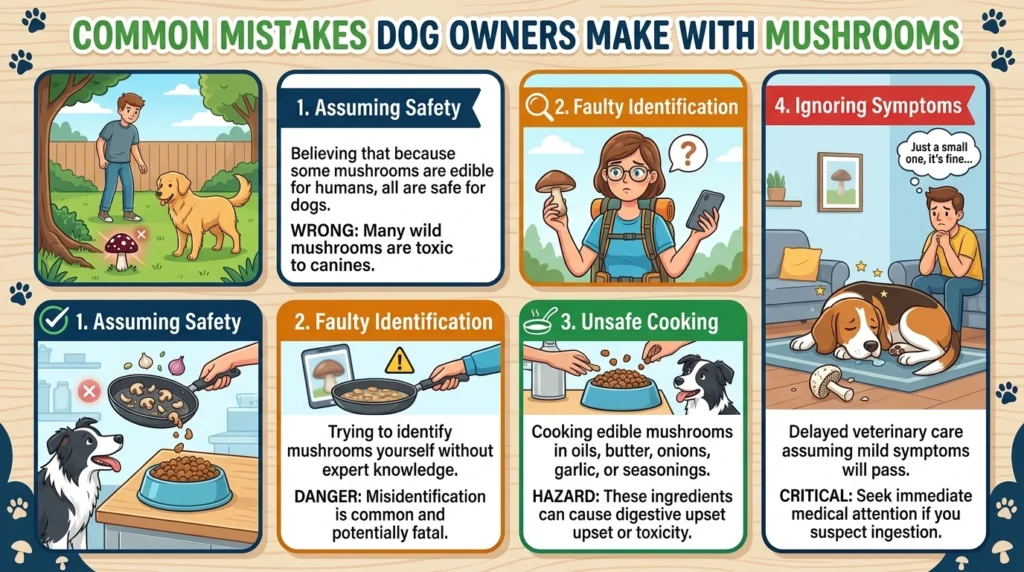
Toxic mushrooms don’t advertise themselves with scary colors or unusual shapes. In fact, the most deadly species like the Death Cap look unremarkable and almost identical to safe edible varieties. Therefore, never assume a mushroom is safe based on appearance alone. If your dog eats any wild mushroom, treat it as potentially toxic every single time.
Mistake 2: Waiting to See If Symptoms Appear
This mistake costs lives every year. Because some mushroom toxins cause delayed symptoms particularly liver toxins your dog may seem perfectly fine for hours after eating a deadly mushroom. By the time visible symptoms appear, significant internal damage has already occurred. Therefore, always call your vet immediately even if your dog seems completely normal.
Mistake 3: Sharing Seasoned Mushroom Dishes
You might think offering your dog a small piece of your mushroom stir-fry is harmless. However, most cooked mushroom dishes contain garlic, onion, or high-fat ingredients that are genuinely harmful to dogs. Garlic causes red blood cell damage in dogs, even in small amounts. Therefore, only ever offer your dog plain, unseasoned, lightly cooked mushrooms nothing from your plate.
Mistake 4: Not Checking the Garden Regularly
Wild mushrooms pop up overnight literally. A garden that looked mushroom-free on Monday can have dozens of mushrooms by Wednesday after rain. Therefore, check your garden regularly, especially after wet weather. Remove any wild mushrooms immediately using gloves, and dispose of them safely away from your dog’s reach.
Mistake 5: Underestimating Foraging Dogs
Some dogs actively seek out and eat mushrooms on walks. Because dogs use their nose to explore the world, a mushroom’s earthy smell is genuinely appealing to them. Therefore, keep your dog on a leash in woodland or park areas where wild mushrooms grow. Teaching a reliable “leave it” command is also an incredibly valuable safety skill worth practicing consistently.
Pro Tip: Train your dog to respond to “leave it” before you ever need it in an emergency. This single command has saved countless dogs from accidental poisoning not just from mushrooms, but from all kinds of dangerous things they find on walks. Start practicing today with low-value treats and work up gradually.
Frequently Asked Questions Can Dogs Eat Mushrooms?
1. Can dogs eat cooked mushrooms from the supermarket?
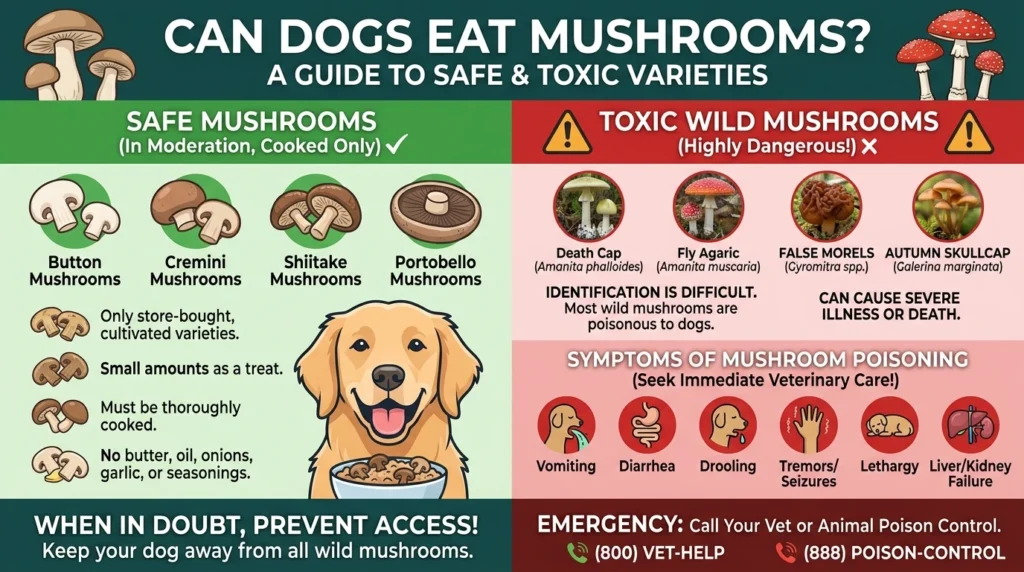
Yes, plain, cooked supermarket mushrooms like white button, portobello, and cremini mushrooms are generally safe for dogs in small amounts. However, they must be prepared without any seasoning, garlic, onion, butter, or oil. These additions are harmful to dogs even in small quantities. Also, cooked mushrooms are easier for dogs to digest than raw ones. Therefore, if you want to share a mushroom treat with your dog, cook it plainly and offer just a small piece as an occasional snack not as a regular meal addition.
2. What happens if a dog eats a wild mushroom?
If your dog eats a wild mushroom, contact your vet or emergency animal hospital immediately even if your dog seems perfectly fine. Because some mushroom toxins cause delayed symptoms, waiting for visible signs of illness is genuinely dangerous. Toxic mushrooms can cause vomiting, diarrhea, liver failure, kidney failure, seizures, and death. Therefore, speed is critical. Collect a sample or photo of the mushroom if possible, note the time of ingestion, and get to a vet without delay.
3. How quickly does mushroom poisoning show in dogs?
The timeline varies depending on the mushroom species. Some toxins cause symptoms within 30 minutes. Others particularly liver toxins found in Death Cap mushrooms may not produce visible symptoms for 6 to 24 hours after ingestion. As a result, the absence of immediate symptoms doesn’t mean your dog is safe. Therefore, always treat any wild mushroom ingestion as a veterinary emergency regardless of how your dog appears in the first few hours.
4. Are mushrooms good for dogs in any way?
Some mushrooms do offer nutritional benefits for dogs. For example, Maitake, Reishi, and Turkey Tail mushrooms contain compounds that may support immune function and overall health. However, these should only be offered under veterinary guidance ideally through vet-approved dog supplements rather than whole mushrooms. Because mushroom supplements for dogs have become increasingly popular, always choose products specifically formulated for dogs and consult your vet before starting any supplement routine.
5. Which mushrooms are most dangerous for dogs?
The most dangerous mushrooms for dogs are those in the Amanita family particularly the Death Cap (Amanita phalloides) and the Destroying Angel (Amanita bisporigera). Also, Galerina marginata and Gyromitra species (false morels) cause severe liver damage and can be fatal even in small amounts. These mushrooms grow wild across North America, Europe, and beyond. Therefore, any mushroom your dog eats outdoors should be treated as potentially from one of these deadly species until proven otherwise by a professional.
6. Can puppies eat mushrooms?
Puppies have more sensitive digestive systems than adult dogs. Therefore, it’s best to avoid offering mushrooms to puppies altogether, even the store-bought safe varieties. Their immune systems and digestive tracts are still developing, making them more vulnerable to adverse reactions. Also, puppies are naturally curious and more likely to eat things quickly without caution. As a result, keeping all mushrooms away from puppies is the safest approach. Always consult your vet before introducing any new food to a puppy’s diet.
7. What should I do if I’m not sure what mushroom my dog ate?
Treat every unidentified mushroom as toxic and act immediately. First, call your vet or the ASPCA Animal Poison Control Center (888-426-4435) right away. Then collect a photo or physical sample of the mushroom if you can do so safely. Also, note exactly when your dog ate the mushroom and approximately how much they consumed. Don’t wait for symptoms to appear early treatment dramatically improves outcomes in mushroom poisoning cases. Therefore, when in doubt, always err on the side of caution and seek professional help immediately.
Keep Your Dog Safe Know Before They Sniff
Can dogs eat mushrooms ? The answer is clear: store-bought varieties prepared plainly are generally safe in small amounts. However, wild mushrooms present a genuine and serious danger that every dog owner needs to understand.
The golden rule is simple: if your dog eats any wild or unidentified mushroom, contact your vet immediately. Don’t wait. Don’t guess. Because the difference between a safe outcome and a fatal one often comes down to how quickly you act.
Check your garden regularly. Keep your dog on a leash in wooded areas. Teach a reliable “leave it” command. Also, save your vet’s emergency number and the ASPCA Poison Control number in your phone right now before you ever need them.