
Introduction
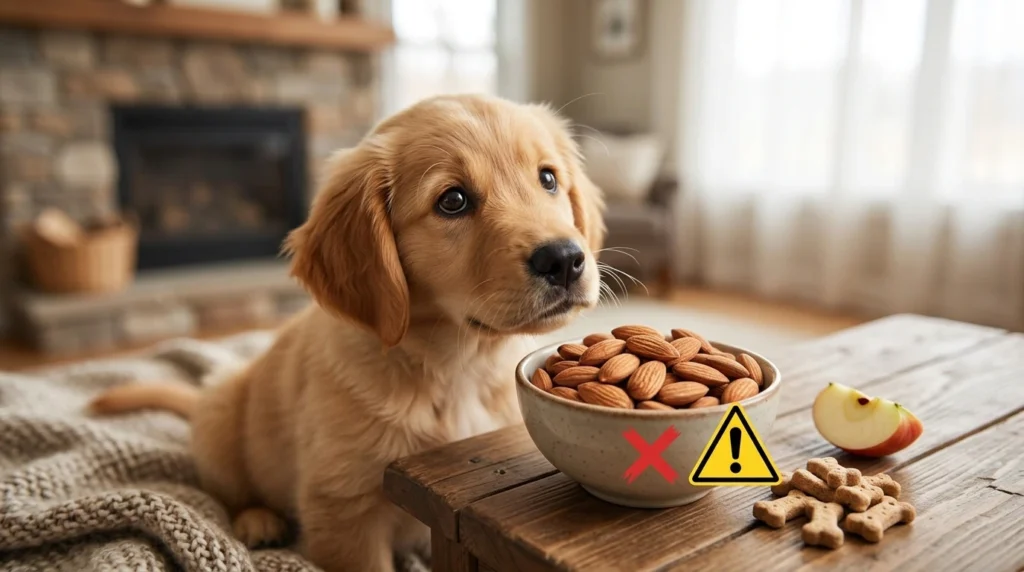
Your dog is staring at you with those irresistible eyes while you snack on almonds. You wonder if dogs can eat almonds, or is this one snack I should definitely keep away from them?
It’s a genuinely important question. Many dog owners assume that if something is healthy for humans, it’s probably fine for dogs too. However, that logic doesn’t always hold up and almonds are a perfect example of why.
Can dogs eat almonds? The short answer is no, not safely. While almonds aren’t toxic to dogs the way macadamia nuts or grapes are, they still pose real risks that every dog owner should understand. Digestive problems, choking hazards, and dangerous salt or flavoring content all make almonds a food worth keeping out of your dog’s reach.
In this guide, you’ll learn exactly why almonds are risky for dogs, what happens if your dog eats one, and which safe alternatives you can offer instead. Let’s get into it because your dog’s safety genuinely matters.
Can Dogs Eat Almonds? The Complete Safety Breakdown
Why Almonds Are Problematic for Dogs
So, can dogs eat almonds without any real harm? Most veterinary experts say no and here’s why.
First, dogs don’t process almonds the way humans do. Their digestive systems struggle to break down the high fat content in nuts efficiently. As a result, even a small amount of almonds can cause significant digestive upset in many dogs.
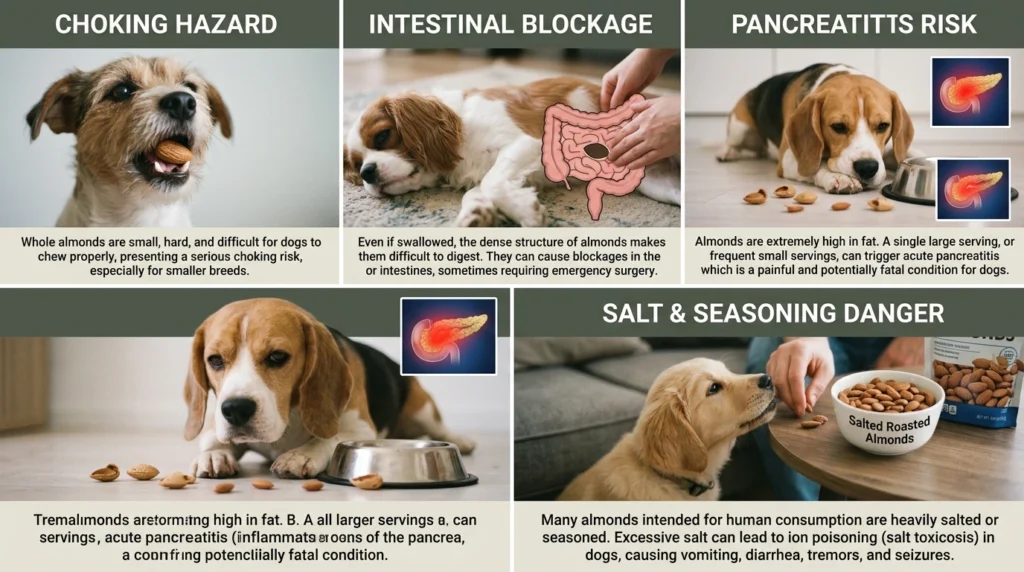
Also, almonds present a genuine choking hazard especially for small breeds. Dogs tend to swallow food quickly without proper chewing. Therefore, a whole almond can easily become lodged in the throat or esophagus.
Here’s a clear summary of the main risks:
- Digestive upset vomiting, diarrhea, and stomach pain
- Choking hazard especially dangerous for small dogs
- Pancreatitis risk high fat content can trigger this serious condition
- Salt toxicity flavored or salted almonds add dangerous sodium levels
- Aflatoxin exposure almonds can harbor mold that produces harmful toxins
- Obstruction risk almonds can block the digestive tract in small dogs
Are Almonds Toxic to Dogs?
Here’s where things get slightly nuanced. Almonds aren’t classified as acutely toxic to dogs in the same category as grapes, raisins, xylitol, or macadamia nuts. However, “not toxic” doesn’t mean “safe.”
The real danger lies in the indirect effects. Because almonds are high in fat, they can trigger pancreatitis, a painful and sometimes life-threatening inflammation of the pancreas. Also, flavored almonds (honey roasted, salted, smoked) introduce additional dangers like excessive sodium and artificial sweeteners.
Therefore, the safest approach is to treat almonds as an off-limits food for dogs entirely.
What Happens If Your Dog Eats Almonds?

Recognizing the Warning Signs
Maybe your dog already snatched an almond off the floor before you could stop them. Don’t panic but do watch carefully. Here’s what to look for after your dog eats almonds:
Mild symptoms (usually within 6–12 hours):
- Vomiting
- Diarrhea
- Lethargy
- Loss of appetite
- Excessive gas or bloating
More serious symptoms requiring immediate vet attention:
- Difficulty breathing or swallowing
- Severe vomiting that doesn’t stop
- Signs of extreme abdominal pain (hunching, whining)
- Jaundice (yellowing of eyes or skin)
- Weakness or collapse
What to Do Right Away
If your dog eats almonds, follow these steps immediately:
- Stay calm. One or two plain almonds in a large dog rarely causes a serious emergency. However, smaller dogs or larger quantities require faster action.
- Check what type of almond they ate. Plain, raw almonds carry lower risk. Salted, flavored, or chocolate-covered almonds are significantly more dangerous. Therefore, identify the type quickly.
- Note how many they ate. A single almond is very different from a handful. Also, your dog’s size matters enormously here. What’s mild for a Labrador can be serious for a Chihuahua.
- Call your vet or an animal poison control line. Always consult your vet before deciding whether to wait or act. The ASPCA Animal Poison Control Center is available 24/7 at (888) 426-4435.
- Watch for symptoms for at least 24 hours. Even if your dog seems fine initially, monitor them closely. Pancreatitis symptoms, for example, can develop hours after ingestion.
- Don’t induce vomiting without vet guidance. Inducing vomiting incorrectly can cause additional harm. Therefore, always get professional advice first.
Pro Tip: Save your vet’s phone number and the ASPCA Poison Control number in your phone right now before an emergency happens. In my experience, having those numbers instantly available makes a stressful situation significantly more manageable.
Nuts Dogs Can Eat Safely
Since dogs can’t eat almonds safely, you might wonder, are there any nuts that are actually okay for dogs? Yes a few options are generally considered safer when given in small amounts.
| Nut Type | Safe for Dogs? | Notes |
| Almonds | ❌ No | Digestive risk, choking hazard |
| Macadamia Nuts | ❌ No | Toxic never feed |
| Walnuts | ❌ No | Can cause toxicity and seizures |
| Pecans | ❌ No | Contains juglone, harmful to dogs |
| Peanuts | ✅ Limited | Plain, unsalted only not a true nut |
| Cashews | ✅ Limited | Plain only very occasional treat |
| Pistachios | ⚠️ Caution | High fat avoid regularly |
| Hazelnuts | ⚠️ Caution | Choking risk for small dogs |
Healthier Treat Alternatives
Rather than risking nuts at all, here are genuinely safe and healthy dog treats you can offer instead:
- Blueberries antioxidant-rich and low calorie
- Carrot sticks great for dental health
- Apple slices (no seeds) sweet and fiber-rich
- Plain cooked chicken high protein, easily digestible
- Cucumber slices hydrating and low calorie
- Watermelon (no seeds or rind) refreshing summer treat
- Plain cooked sweet potato fiber-rich and nutritious
These alternatives give your dog a satisfying treat experience. Also, they’re genuinely nutritious rather than just empty calories.
Dangerous Almond Varieties: What Makes Them Even Riskier
Flavored Almonds Are Far More Dangerous
Plain almonds are already inadvisable for dogs. However, flavored almonds multiply the risk significantly. Here’s why each common variety causes additional concern:
Salted Almonds
Salt toxicity in dogs is a real and serious risk. Because dogs are much smaller than humans, the sodium content in a handful of salted almonds can genuinely overwhelm their system. Symptoms of salt toxicity include:
- Excessive thirst and urination
- Vomiting and diarrhea
- Tremors or seizures in severe cases
- Swelling of the limbs
Honey Roasted Almonds
The added sugar in honey roasted almonds causes problems beyond just calories. Also, some sugar-free versions use xylitol, an artificial sweetener that’s extremely toxic to dogs. Even small amounts of xylitol can cause severe hypoglycemia and liver failure. Therefore, flavored almonds should be treated as a genuine emergency risk.
Chocolate-Covered Almonds
Chocolate is toxic to dogs full stop. Combining chocolate with almonds creates a double hazard. Therefore, if your dog eats chocolate-covered almonds, contact your vet immediately without waiting for symptoms to appear.
Smoked Almonds
Smoked almonds often contain additional seasonings including garlic and onion powder both of which are toxic to dogs. As a result, smoked almonds represent one of the most dangerous almond varieties your dog could encounter.
Common Mistakes Dog Owners Make With Almonds
Mistake 1: Assuming “Just One Won’t Hurt”
One almond might seem harmless. However, this logic leads to gradual increases in risky feeding behavior. Also, small breeds can react badly to even a single almond due to their size. Therefore, establish a firm “no almonds” rule from the start.
Mistake 2: Leaving Almond Bags Unattended
Dogs are resourceful. A bag of almonds left on a low table or accessible countertop can disappear quickly. Therefore, always store nuts in sealed containers in high cupboards that your dog can’t access.
Mistake 3: Sharing Trail Mix With Your Dog
Trail mix often contains almonds alongside raisins and macadamia nuts, both of which are genuinely toxic to dogs. Also, the combination creates a multi-hazard situation. Therefore, never share trail mix with your dog under any circumstances.
Mistake 4: Waiting Too Long to Call the Vet
Many dog owners wait to see if symptoms develop before calling their vet. However, some serious effects like pancreatitis take hours to fully manifest. Therefore, calling your vet immediately after your dog eats almonds is always the right move, even if your dog seems perfectly fine.
Mistake 5: Giving Almond Butter as a “Safe” Alternative
Almond butter seems like a gentler option but it carries the same high fat risks as whole almonds. Also, many commercial almond butters contain added salt, sugar, or xylitol. Therefore, stick to plain, xylitol-free peanut butter in tiny amounts if you want to offer your dog a nut butter treat.
Pro Tip: Always read the full ingredient list of any peanut butter or nut butter before offering it to your dog. Xylitol hides in many “natural” or “sugar-free” products. Because xylitol is extremely dangerous for dogs, this one-minute check could genuinely save your dog’s life.
Frequently Asked Questions: Can Dogs Eat Almonds?

1. Can dogs eat almonds without getting sick?
Most dogs who eat a single plain almond won’t experience a life-threatening emergency. However, many will experience some level of digestive discomfort including vomiting, diarrhea, or stomach pain. Also, small breeds face higher risk from choking or intestinal obstruction. Therefore, even though almonds aren’t acutely toxic, they’re not safe to feed intentionally. Always consult your vet if your dog eats almonds and you’re concerned about their reaction.
2. My dog ate one almond. What should I do?
First, stay calm. One plain almond in a medium or large dog is unlikely to cause a serious emergency. However, monitor your dog closely for the next 24 hours for vomiting, diarrhea, lethargy, or signs of abdominal pain. If your dog is small, or if the almond was flavored or salted, call your vet immediately. Also, note the time your dog ate the almond so you can give your vet accurate information if symptoms develop.
3. Are almonds toxic to dogs like grapes or macadamia nuts?
No almonds don’t belong in the same category as grapes, raisins, or macadamia nuts, which are acutely toxic to dogs. However, this doesn’t make almonds safe. The risks from almonds are primarily indirect digestive upset, pancreatitis from high fat content, and choking hazard. Therefore, while almonds won’t cause immediate toxicity in most cases, they still pose real health risks that make them unsuitable for dogs.
4. Can dogs eat almond milk?
Plain, unsweetened almond milk in tiny amounts is generally considered low-risk for dogs. However, many commercial almond milks contain added sugars, vanilla flavoring, or other additives that aren’t suitable for dogs. Also, some brands add vitamins in concentrations that may not be appropriate for dogs. Therefore, almond milk shouldn’t become a regular part of your dog’s diet. If you want to add liquid variety to your dog’s diet, plain water or a vet-approved bone broth is a much better choice.
5. What nuts are actually safe for dogs to eat?
Very few nuts are genuinely safe for dogs and even the safer options should only be given occasionally and in small amounts. Plain, unsalted peanuts (technically a legume, not a nut) are the most commonly accepted option. Plain, unsalted cashews are also considered lower risk in small quantities. However, macadamia nuts, walnuts, pecans, and black walnuts are all genuinely dangerous for dogs. Therefore, when in doubt, skip the nuts entirely and choose a dog-friendly treat instead.
6. Can puppies eat almonds?
No puppies should ever eat almonds. Their digestive systems are even more sensitive than adult dogs. Also, puppies are smaller and therefore face greater risk from choking and intestinal obstruction. Because puppies explore the world with their mouths, it’s especially important to keep almonds and all nuts completely out of their reach. If a puppy eats almonds, contact your vet right away and don’t wait to see if symptoms appear.
7. What should I feed my dog instead of almonds for a crunchy treat?
Several safe options give your dog that satisfying crunch without the risks. Baby carrots are an excellent choice. They’re low calorie, good for dental health, and most dogs absolutely love them. Also, small apple slices (with seeds and core removed) provide a sweet, crunchy experience that dogs enjoy. Plain rice cakes or commercially made dog dental treats are also great alternatives. Therefore, you have plenty of options to satisfy your dog’s snack cravings safely.
Keep Your Dog Safe From Almond Risks
So can dogs eat almonds ? The clear answer is no. While almonds aren’t acutely toxic, the risks are real and consistent. Digestive upset, pancreatitis, choking hazards, and the dangers of flavored varieties all make almonds a snack best kept away from your dog entirely.
The good news is that your dog doesn’t need almonds. There are so many genuinely safe, nutritious, and delicious treats you can share with them instead. Carrots, blueberries, apple slices, and plain cooked chicken all make wonderful alternatives.
Therefore, the next time your dog gives you those irresistible eyes at snack time, reach for a dog-safe treat instead. Also, if your dog has already eaten almonds and you’re worried, call your vet. That’s always the right first step.