
Introduction
Your dog is staring at you with those irresistible eyes while you snack on cashews. Sound familiar? Most dog owners have been there and the question hits immediately. Can dogs eat cashews without any harm?
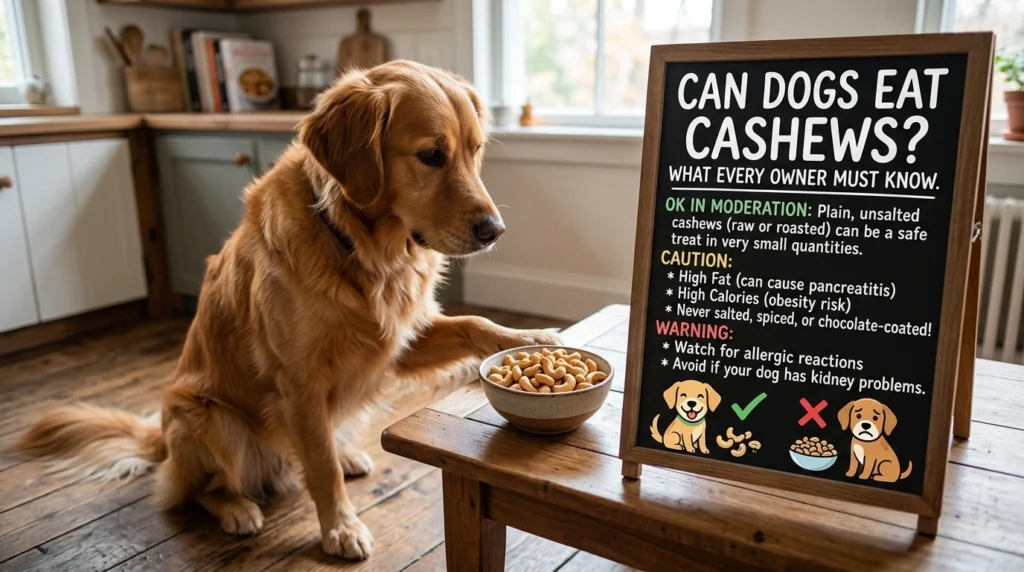
The short answer is: yes, but with important conditions. Cashews aren’t toxic to dogs the way macadamia nuts or grapes are. However, they do carry real risks that every dog owner needs to understand before sharing even a single nut.
In my experience, many owners assume “not toxic” means “completely safe.” That’s not always true, especially with nuts. Cashews are high in fat, calories, and sodium. As a result, feeding them incorrectly can lead to serious health issues over time.
This guide covers everything you need to know. You’ll learn which cashews are safe, how many your dog can have, what risks to watch for, and healthier alternatives to consider. Therefore, by the end, you’ll feel completely confident making the right choice for your dog. Let’s get into it.
Can Dogs Eat Cashews? The Complete Safety Breakdown
The Basic Answer Yes, But Be Careful
Dogs can eat cashews in small amounts. However, several important conditions apply before you share your snack. Cashews fall into a grey zone; they’re not on the toxic foods list for dogs, but they’re not a recommended treat either.
Here’s why cashews require caution:
- High fat content cashews contain significant fat levels that can upset your dog’s digestive system
- High calorie density even a small handful adds up quickly for a small dog
- Often salted most store-bought cashews contain added salt, which is harmful to dogs
- Potential allergen some dogs show allergic reactions to tree nuts
- Risk of pancreatitis high-fat foods can trigger this painful and serious condition
Therefore, the key isn’t just whether cashews are toxic, it’s whether they’re genuinely safe in your specific dog’s situation.
What Makes Cashews Different From Other Nuts?
Not all nuts carry the same risk for dogs. Therefore, understanding where cashews sit in the nut safety spectrum matters.
| Nut Type | Safe for Dogs? | Risk Level |
| Cashews | In small amounts | Moderate |
| Peanuts | Yes (plain, unsalted) | Low |
| Almonds | No | Moderate-High |
| Macadamia Nuts | Never | Very High Toxic |
| Walnuts | No | High |
| Pecans | No | High |
| Brazil Nuts | No | High (fat content) |
| Pistachios | No | Moderate-High |
As a result, cashews are actually one of the safer nuts for dogs but that doesn’t mean you should feed them freely. Also, macadamia nuts are severely toxic and should never reach your dog under any circumstances.
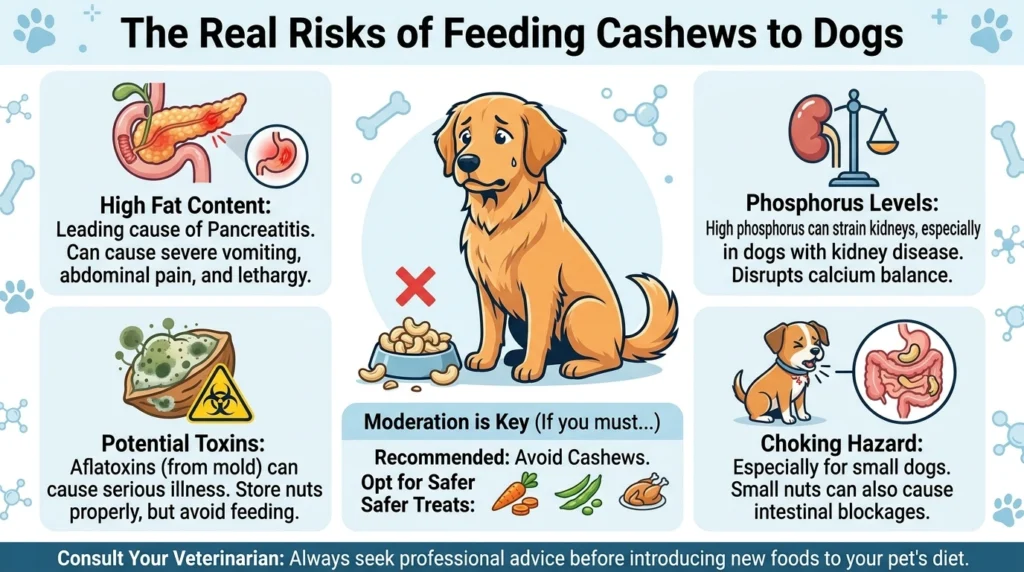
The Real Risks of Feeding Cashews to Dogs
Risk 1: Pancreatitis From High Fat Content
This is the biggest concern. Cashews are naturally high in fat. When dogs eat too much fat even from healthy sources their pancreas can become inflamed. This condition is called pancreatitis, and it’s genuinely painful and sometimes life-threatening.
Signs of pancreatitis include:
- Vomiting or nausea
- Hunched back or abdominal pain
- Loss of appetite
- Lethargy and weakness
- Diarrhea
Therefore, if your dog shows any of these signs after eating cashews, contact your vet immediately. Don’t wait to see if symptoms improve on their own.
Risk 2: Salt Toxicity From Salted Cashews
Most cashews sold in stores come heavily salted. Salt is harmful to dogs even in moderate amounts. Because dogs have much lower sodium tolerance than humans, even a small serving of salted cashews can cause problems.
Signs of too much salt include:
- Excessive thirst and urination
- Vomiting
- Swelling or bloating
- Tremors in severe cases
Therefore, only ever offer your dog plain, unsalted, roasted cashews, never the salted or flavored varieties found in most snack bags.
Risk 3: Weight Gain and Obesity
Cashews are calorie-dense. A single ounce of cashews contains approximately 157 calories. For a small dog weighing 10 pounds, that’s a significant portion of their daily caloric needs from a single snack. As a result, regular cashew feeding contributes to weight gain and obesity which leads to joint problems, diabetes, and heart disease over time.
Risk 4: Allergic Reactions
Some dogs are allergic to tree nuts, including cashews. An allergic reaction may appear immediately or develop over repeated exposures. Therefore, watch for these symptoms after your dog’s first cashew experience:
- Facial swelling or hives
- Itchy skin or scratching
- Watery eyes or runny nose
- Difficulty breathing call your vet immediately if this occurs
Pro Tip: Always introduce any new food including cashews one piece at a time. Wait 30 minutes and watch for any reaction before offering more. This simple habit has saved many dogs from uncomfortable or dangerous allergic responses.
How to Safely Feed Cashews to Your Dog: Step-by-Step
Safe Cashew Serving Guidelines
If your vet has confirmed cashews are appropriate for your specific dog, follow these guidelines:
- Choose plain, unsalted, roasted cashews only. Never use salted, flavored, chocolate-covered, or raw cashews. Raw cashews can contain urushiol, the same compound found in poison ivy which causes reactions in some dogs.
- Start with just one cashew. Give a single cashew and wait 24 hours. Watch carefully for any digestive upset, skin reactions, or behavioral changes before offering more.
- Limit portion size strictly. For small dogs (under 20 lbs), one to two cashews maximum per occasion. For medium dogs (20–50 lbs), two to three cashews. For large dogs (over 50 lbs), a maximum of four to five cashews is appropriate.
- Offer cashews as an occasional treat only. Treats including cashews should never exceed 10% of your dog’s daily caloric intake. Therefore, cashews work best as a rare reward, not a regular snack.
- Break cashews into smaller pieces for small dogs. A whole cashew can be a choking hazard for very small breeds. Therefore, always break them into bite-sized pieces for dogs under 15 pounds.
- Never feed cashew butter without checking ingredients. Many cashew butters contain xylitol, an artificial sweetener that’s extremely toxic to dogs. Therefore, always read ingredient labels carefully before sharing any nut butter.
- Store cashews out of reach. Dogs are resourceful. An entire bag of cashews can cause serious harm if your dog gets into it unsupervised. Therefore, store nuts in high, secure locations away from curious paws.
Healthier Treat Alternatives to Cashews for Dogs
Better Snack Options Your Dog Will Love
Since cashews carry real risks, why not try some genuinely dog-friendly alternatives? These options are safer, lower in fat, and most dogs love them just as much.
| Treat | Benefits | Serving Size |
| Baby carrots | Low calorie, great for teeth | 2–3 pieces daily |
| Blueberries | Antioxidants, low calorie | Small handful |
| Plain cooked chicken | High protein, easily digestible | Small pieces |
| Watermelon (seedless) | Hydrating, low calorie | Small cubes |
| Apple slices (no seeds) | Fiber, vitamins | 1–2 slices |
| Plain cooked sweet potato | Vitamins, fiber | Small cubes |
| Cucumber slices | Very low calorie, hydrating | Several slices |
Why These Options Beat Cashews
Each alternative on this list provides genuine nutritional benefits without the high fat content or salt risk of cashews. Also, most of these treats cost significantly less than premium nuts. Therefore, swapping cashews for carrots or blueberries is genuinely better for your dog’s long-term health.
Warning Signs After Your Dog Eats Cashews
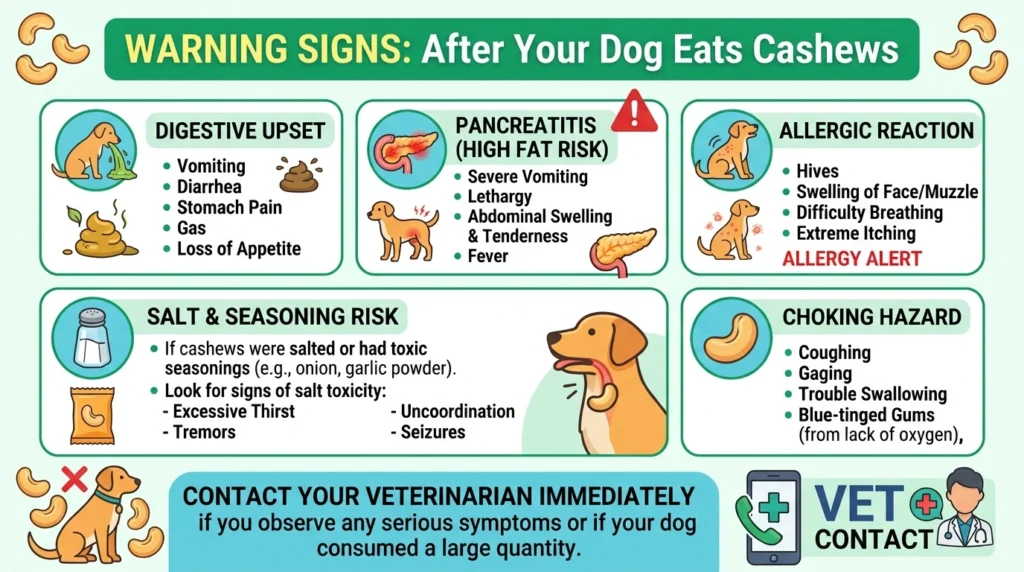
What to Watch for and When to Call Your Vet
Even when you’re careful, accidents happen. Your dog might steal a handful of salted cashews from the coffee table while you’re not looking. Therefore, knowing what to watch for is essential.
Call Your Vet Immediately If You See:
- Difficulty breathing or swallowing
- Severe vomiting or repeated retching
- Extreme lethargy or collapse
- Facial swelling or hives
- Tremors or loss of coordination
Monitor Closely for 24 Hours If You See:
- Mild stomach upset or loose stools
- Slight decrease in appetite
- Mild lethargy that passes within a few hours
In addition, always tell your vet how many cashews your dog ate and whether they were salted or plain. This information helps them assess the situation quickly and accurately.
What About Cashew Oil or Cashew Milk?
Cashew-based products carry the same risks as whole cashews, sometimes more. Cashew milk often contains added sugars or sweeteners. Cashew oil is pure fat. Therefore, avoid all cashew-derived products unless your vet specifically approves them for your dog’s diet.
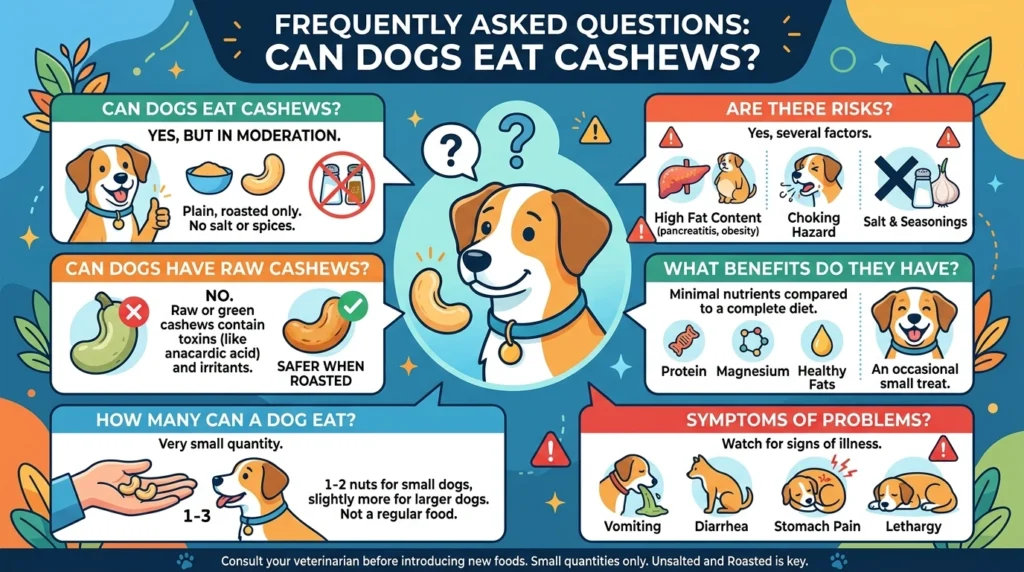
Frequently Asked Questions: Can Dogs Eat Cashews?
1. Can dogs eat cashews every day?
No, dogs should not eat cashews every day. Even plain, unsalted cashews are high in fat and calories. Daily feeding significantly increases the risk of weight gain, obesity, and pancreatitis over time. Therefore, treat cashews as an occasional reward once or twice a week at most, in very small quantities. Also, always factor the cashew calories into your dog’s daily food allowance so you don’t accidentally overfeed.
2. My dog ate a whole bag of salted cashews. What should I do?
Contact your vet or an animal poison control center immediately. A large amount of salted cashews can cause sodium toxicity, severe digestive upset, and pancreatitis. Don’t wait for symptoms to appear before seeking help. The ASPCA Animal Poison Control Center is available 24/7 at (888) 426-4435. Also, note approximately how many cashews your dog consumed. Your vet will need this information to assess the situation properly.
3. Are roasted cashews safer than raw cashews for dogs?
Yes, roasted cashews are generally safer for dogs than raw ones. Raw cashews can sometimes contain urushiol, the irritating compound found in poison ivy, which causes reactions in sensitive individuals. Roasting neutralizes this compound. However, always choose plain roasted cashews with no added salt, oil, or seasoning. Also, never feed cashews roasted with garlic, onion powder, or other seasonings that are toxic to dogs.
4. Can puppies eat cashews?
It’s best to avoid giving cashews to puppies entirely. Puppies have more sensitive digestive systems than adult dogs. Also, their caloric needs are very specifically calibrated for growth high-fat treats like cashews disrupt that balance. Therefore, stick to puppy-specific treats recommended by your vet during the first year of your dog’s life. Once your dog reaches full adult size, you can discuss appropriate occasional treats with your veterinarian.
5. How many cashews can a small dog safely eat?
For small dogs under 20 pounds, one to two plain unsalted cashews is the absolute maximum per occasion. Even that small amount contributes meaningful fat and calories to a tiny dog’s daily intake. Therefore, consider whether the treat is worth it or whether a lower-calorie option like a baby carrot provides better value for your small dog’s health and waistline.
6. Are there any nutritional benefits to cashews for dogs?
Cashews do contain some beneficial nutrients including magnesium, zinc, and healthy unsaturated fats. However, dogs can get all these nutrients from their regular balanced dog food. Therefore, there’s no compelling nutritional reason to add cashews specifically to your dog’s diet. The risks simply outweigh the modest nutritional benefits when healthier, safer treat options are so readily available.
7. Can dogs eat cashew butter?
Only with extreme caution. Plain cashew butter made from 100% cashews with no added salt, sugar, or sweeteners is technically safe in tiny amounts. However, most commercial cashew butters contain added salt, sugar, or most dangerously xylitol, an artificial sweetener that’s severely toxic to dogs. Therefore, always read the full ingredient list before offering any nut butter. When in doubt, stick to plain dog treats or fresh vegetables instead.
The Bottom Line on Dogs and Cashews
So can dogs eat cashews ? Yes, but only under very specific conditions. Plain, unsalted, roasted cashews in tiny portions are not toxic to most healthy adult dogs. However, the risks including pancreatitis, salt toxicity, weight gain, and allergic reactions mean cashews should always be a rare treat rather than a regular snack.
Therefore, if you do share a cashew with your dog, keep it plain, keep it small, and keep it occasional. Also, always watch for any unusual reaction in the 24 hours following a new food introduction.
When in doubt, reach for a safer option: carrots, blueberries, or apple slices make wonderful dog treats with far fewer risks attached. Your dog won’t know the difference. And their long-term health is absolutely worth that small swap.