
Introduction
Walk into any pet store and the dog food aisle hits you immediately. Dozens of bags. Hundreds of choices. Every single one claiming to be the healthiest, most natural, most complete option on the shelf. Sound familiar?
Finding the best dog food for your specific dog doesn’t have to feel this hard. The truth is, great nutrition comes down to a handful of clear, measurable factors and once you understand them, choosing becomes genuinely straightforward.
In my experience, most dog owners already care deeply about what goes in their dog’s bowl. They just need someone to cut through the marketing noise and give them honest, practical guidance. That’s exactly what this guide does.
You’ll learn what separates genuinely great dog food from cleverly packaged mediocrity. You’ll get honest brand comparisons, a step-by-step selection guide, and clear answers to the questions dog owners ask most. Let’s get your dog eating better starting today.
What Makes the Best Dog Food Worth Choosing?
The Real Difference Between Good and Great
Not all dog food delivers equal nutrition. However, most bags look similar on the outside. Therefore, knowing what to look for on the inside, specifically on that back panel changes everything.
The best dog food shares these key qualities:
- Named animal protein as the first ingredient chicken, beef, salmon, or turkey (not “meat” or “poultry”)
- AAFCO nutritional adequacy statement confirms complete and balanced nutrition
- No artificial preservatives no BHA, BHT, or ethoxyquin
- No artificial colors or flavors zero nutritional benefit, purely cosmetic
- Traceable, quality ingredients whole foods you can actually recognize
- Appropriate for your dog’s life stage puppy, adult, or senior formulas
Why the AAFCO Statement Matters So Much
Ever noticed that small paragraph on the back of dog food bags? That’s the AAFCO nutritional adequacy statement and it’s one of the most important things you can check.
Look specifically for “complete and balanced based on feeding trials.” This means real dogs ate this food and confirmed its health benefits. However, if it only says “formulated to meet” standards, the food was verified on paper not on actual dogs. Therefore, feeding trial validation is always the stronger quality signal.
How to Choose the Best Dog Food: Step-by-Step Guide

- Match food to your dog’s life stage. Puppies, adults, and seniors have genuinely different nutritional needs. Puppy food contains more DHA for brain development and higher calories for growth. Senior food typically has lower calories and added joint support. Therefore, never feed a puppy formula to a senior dog long-term.
- Consider your dog’s size. Large breed dogs need controlled calcium-to-phosphorus ratios especially as puppies. Small breed dogs need higher caloric density in smaller portions. Therefore, always check whether a formula specifically mentions your dog’s size category.
- Read the first five ingredients carefully. These make up the bulk of what’s actually in the food. Also, watch for ingredient splitting when one ingredient like corn appears multiple times under different names to hide its true quantity.
- Check protein and fat percentages. For healthy adult dogs, look for at least 22–26% protein and 10–15% fat on the guaranteed analysis panel. Active dogs need more. Senior dogs sometimes need less. Therefore, adjust your targets based on your dog’s specific activity level.
- Research recall history before buying. Spend two minutes searching the brand name plus “recall” online. Also, check the FDA’s official pet food recall database at fda.gov. A clean recall history signals strong quality control.
- Calculate daily cost not bag price. Divide the bag price by how many days it lasts for your dog’s weight. This reveals the true value of any food. As a result, premium brands often cost less per day than budget options when digestibility is factored in.
- Transition gradually over 7–10 days. Mix 25% new food with 75% old food first. Then shift the ratio slowly every two to three days. Rushing this step causes digestive upset that can unfairly make good food seem like a bad fit.
Pro Tip: Keep a simple journal for the first four weeks on any new food. Note your dog’s stool quality, energy level, coat shine, and appetite daily. This gives you real data, not just a gut feeling about whether the food is working for your specific dog.
Best Dog Food Brands in 2026: Honest Comparison
Top Brands Side by Side
Here’s how the most trusted dog food brands compare across the criteria that genuinely matter:
| Brand | First Ingredient | AAFCO Validation | Recall Record | Vet Rec. Rate | Daily Cost (50lb) |
| Purina Pro Plan | Chicken/Salmon | Feeding trials | Excellent | ⭐⭐⭐⭐⭐ | ~$2.50–$3.00 |
| Hill’s Science Diet | Chicken meal | Feeding trials | Excellent | ⭐⭐⭐⭐⭐ | ~$2.75–$3.25 |
| Royal Canin | Chicken by-product | Feeding trials | Excellent | ⭐⭐⭐⭐ | ~$3.00–$3.50 |
| Purina ONE | Chicken | Formulation | Very Good | ⭐⭐⭐ | ~$1.75–$2.25 |
| Blue Buffalo | Deboned Chicken | Some trials | Good | ⭐⭐⭐ | ~$2.50–$3.00 |
| Orijen | Free-run Chicken | Limited | Excellent | ⭐⭐⭐ | ~$5.00–$6.50 |
| Iams Adult | Chicken | Formulation | Very Good | ⭐⭐⭐ | ~$1.50–$2.00 |
My Honest Top Picks by Category
Best Overall Dog Food: Purina Pro Plan
Purina Pro Plan leads every meaningful evaluation category. Real named protein comes first. Feeding-trial-validated AAFCO compliance confirms real dog health outcomes. Over 500 scientists and veterinary nutritionists back their formulations. Also, their recall history is exceptionally clean relative to their production volume. As a result, vets recommend it more consistently than almost any other brand.
Best Budget Dog Food: Purina ONE
For owners who need quality nutrition at a more accessible price, Purina ONE delivers real chicken first, no corn or wheat filler, and solid protein percentages. Therefore, it represents the best value at the mid-range price point without meaningful nutritional compromise.
Best Premium Dog Food: Orijen
Orijen uses approximately 85% animal-sourced ingredients free-run poultry, wild-caught fish, and cage-free eggs. However, the daily cost for a large dog is significant. Therefore, it suits owners who prioritize maximum ingredient quality above all other considerations.
Best Vet-Recommended Alternative: Hill’s Science Diet
Hill’s sits alongside Purina Pro Plan as the most consistently vet-recommended brand. Their clinical research investment is exceptional. Also, their prescription diet line gives vets excellent therapeutic options for dogs with health conditions.
Common Mistakes When Choosing the Best Dog Food
Mistake 1: Falling for Grain-Free Marketing
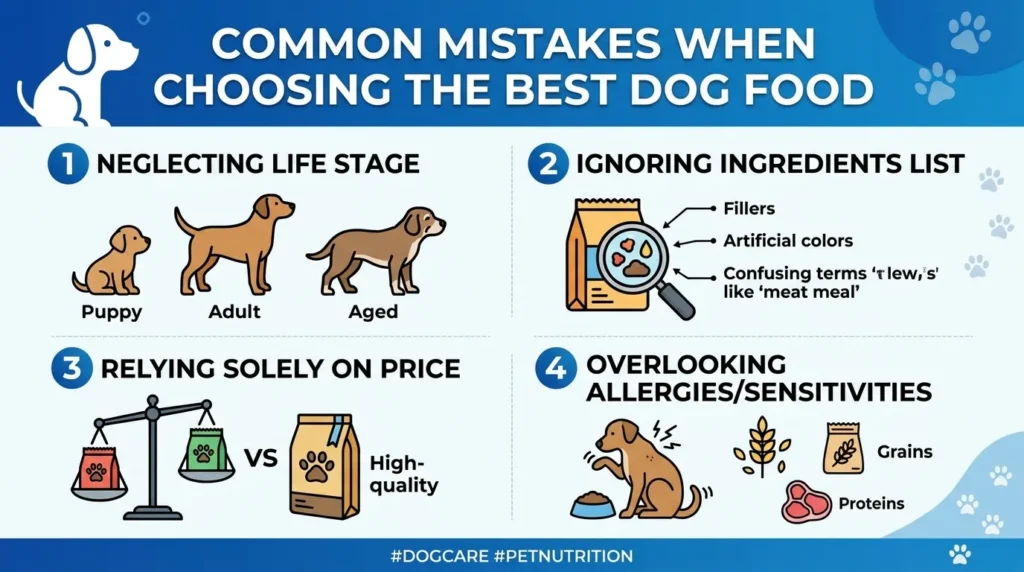
Grain-free dog food sounds healthier but for most dogs, it isn’t. Since 2018, the FDA has been investigating a link between grain-free diets and dilated cardiomyopathy (DCM) a serious heart condition. Therefore, unless your vet specifically recommends grain-free for a diagnosed condition, grain-inclusive formulas are the safer choice for most healthy dogs.
Mistake 2: Choosing Based on Front-of-Bag Language
“Natural,” “holistic,” “premium,” and “human-grade” are largely unregulated terms in pet food. Therefore, they tell you very little about actual nutritional quality. Always flip the bag and read the ingredient list, guaranteed analysis, and AAFCO statement instead.
Mistake 3: Never Reassessing as Your Dog Ages
The best dog food for your dog at age two isn’t necessarily the best at age nine. Senior dogs need adjusted caloric density, more joint support, and sometimes modified protein levels. Therefore, reassessing your dog’s food at every annual vet visit doesn’t feed the same formula forever without checking whether it still suits their changing needs.
Mistake 4: Overfeeding a High-Quality Food
Premium dog food is often more nutrient-dense than budget alternatives. As a result, your dog may need less per day than feeding guidelines suggest. Always weigh your dog monthly and adjust portions based on their actual body condition, not just the recommended amount on the bag.
Mistake 5: Ignoring the Transition Period
Switching to the best dog food in the world causes digestive upset if done too quickly. Therefore, always transition gradually over 7–10 days. Mix 25% new food with 75% old food first, then shift the ratio slowly. This simple habit prevents loose stools that can make excellent food look like a poor fit.
Pro Tip: The clearest signs that you’ve found the right food for your dog are three things happening together: consistently firm stools, a noticeably shiny coat, and strong steady energy appropriate for your dog’s age. When all three are positive, you’ve found a winner worth sticking with.
Frequently Asked Questions About the Best Dog Food
1. What is the best dog food recommended by vets?
Purina Pro Plan and Hill’s Science Diet are the two most consistently recommended dog food brands by veterinarians across the United States. Both carry feeding-trial-validated AAFCO compliance, invest heavily in peer-reviewed nutritional research, and maintain clean manufacturing safety records. Royal Canin also earns strong veterinary recommendation particularly for breed-specific or condition-specific needs. However, the best dog food for your specific dog depends on their age, size, health conditions, and individual tolerances. Therefore, always confirm any food choice with your own vet’s personalized guidance.
2. Is expensive dog food always better than budget options?
Not always but there’s often a meaningful quality difference as you move up price tiers. Budget brands frequently use lower-quality protein sources, more filler ingredients, and synthetic additives to keep costs down. However, Purina ONE delivers genuinely solid nutrition at a mid-range price that represents strong consumer value. The most useful metric is daily feeding cost versus nutritional quality delivered not bag price alone. Also, a more digestible premium food often requires smaller portions, which narrows the cost gap further.
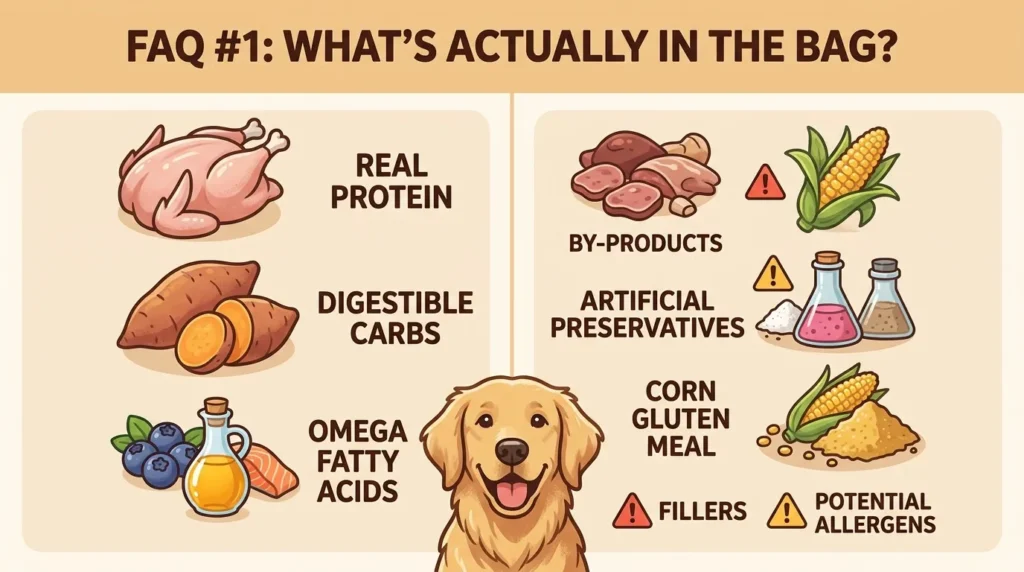
3. What ingredients should I avoid in dog food?
Avoid these ingredients when looking for the best dog food:
- BHA, BHT, ethoxyquin synthetic preservatives with questionable long-term safety profiles
- Artificial colors (Red 40, Yellow 5, Blue 2) no nutritional value at all
- Unspecified protein sources “meat by-products” or “animal digest” without named species
- Corn syrup added sugar that contributes to obesity and blood sugar spikes
- Excessive grain fillers dominating the first five ingredients over animal protein
4. How do I know if my dog’s current food is working well?
Watch for these positive signs over 8–12 weeks on any food:
- Firm, consistent stools in appropriate volume not excessive or loose
- Shiny, healthy coat without excessive shedding or flakiness
- Stable energy levels appropriate for your dog’s age and breed
- Healthy body weight you can feel ribs without pressing hard
- Enthusiastic appetite at mealtimes without digestive discomfort afterward
However, if you see persistent loose stools, dull coat, low energy, or unexplained weight changes after the transition period, consult your vet before switching foods.
5. Is wet food or dry food better for dogs?
Both wet food and dry food can be excellent choices; they serve different purposes. Dry dog food (kibble) offers convenience, longer shelf life, dental cleaning benefits from chewing, and lower daily cost. Wet food provides significantly higher moisture content, important for dogs who don’t drink enough water and is often more palatable for picky eaters or senior dogs. Therefore, many vets recommend a combination approach: dry food as the base with a small amount of wet food as a topper. This gives your dog the benefits of both formats simultaneously.
6. How often should I feed my dog?
Most adult dogs do best on two meals per day morning and evening. However, puppies under six months typically need three to four smaller meals daily because of their faster metabolism and smaller stomach capacity. Senior dogs may also benefit from two smaller meals rather than one large one. Therefore, split your dog’s daily portion into two servings as a general rule. Also, avoid feeding large meals right before or after vigorous exercise particularly important for large deep-chested breeds prone to bloat.
7. Should I choose grain-free or grain-inclusive dog food?
For most healthy dogs, grain-inclusive food is the safer and better-researched choice. The FDA has been investigating a potential link between grain-free diets and dilated cardiomyopathy (DCM) in dogs since 2018 particularly formulas high in peas, lentils, and legumes. Grains are not harmful to most dogs and provide useful energy, fiber, and B vitamins. Therefore, choose grain-free only if your vet has specifically recommended it for a diagnosed grain sensitivity or allergy. Otherwise, a high-quality grain-inclusive formula like Purina Pro Plan is the smarter nutritional choice for the vast majority of dogs.
Feed Your Dog the Best Starting Today
Finding the best dog food for your dog comes down to understanding a handful of clear principles named protein first, feeding-trial AAFCO validation, clean recall history, and the right formula for your dog’s life stage and size.
Brands like Purina Pro Plan and Hill’s Science Diet consistently lead every credible evaluation metric. Purina ONE delivers outstanding mid-range value. Orijen leads on ingredient quality for owners who prioritize that above cost. However, the single most important step is matching the food to your individual dog’s needs confirmed with your vet’s personalized input.
Measure portions accurately. Transition slowly. Reassess annually. Watch those three health indicators: stool, coat, and energy.