
Introduction
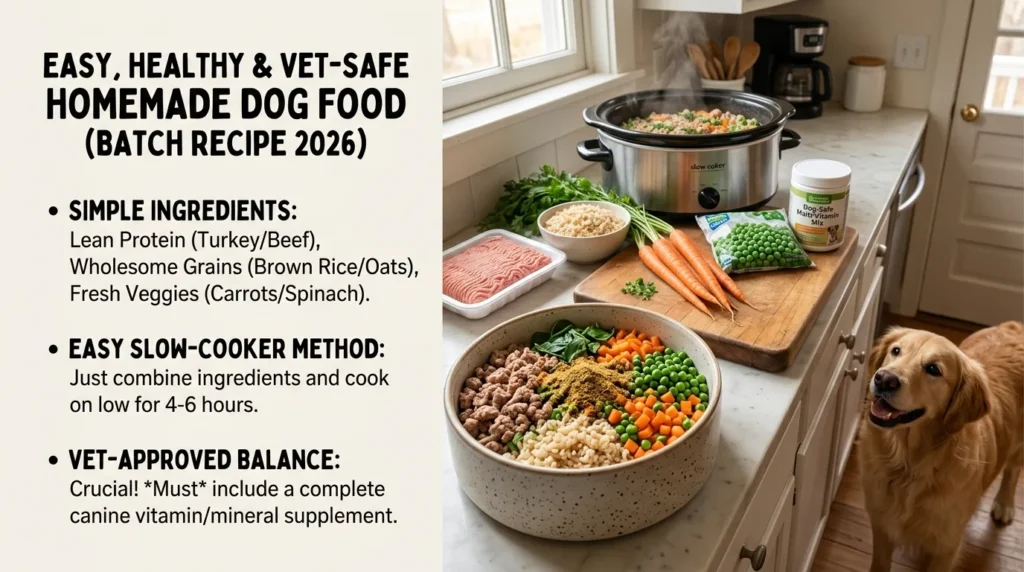
Your dog gives you unconditional love every single day. So it makes perfect sense that you want to give them the very best food possible. More and more dog owners are turning to a homemade dog food recipe and honestly, it’s easy to understand why.
Store-bought kibble often contains fillers, artificial preservatives, and vague ingredients that leave you wondering what your dog is actually eating. Cooking for your dog gives you complete control over every ingredient in their bowl.
However, homemade dog food done wrong can cause serious nutritional gaps over time. Therefore, getting the balance right from the start is absolutely essential. In my experience, the biggest mistake owners make is following random online recipes without checking whether they’re nutritionally complete.
This guide changes that completely. You’ll get safe, vet-approved recipe guidelines, step-by-step instructions, ingredients to always avoid, and practical tips to make home cooking simple and sustainable. Let’s get your dog eating better starting today.
Why a Homemade Dog Food Recipe Is Worth Trying
The Real Benefits of Cooking for Your Dog
Have you ever flipped a bag of dog food over and struggled to understand half the ingredients? That moment of confusion is exactly why homemade dog food has grown so popular. When you cook for your dog, you know precisely what goes into every meal.
Here are the genuine benefits of switching to a homemade dog food recipe:
- Complete ingredient control no artificial colors, flavors, or preservatives
- Better for dogs with allergies you can eliminate specific trigger ingredients
- Improved palatability most dogs eat homemade food with far more enthusiasm
- Fresher nutrition whole food ingredients deliver better bioavailability
- Stronger bond cooking for your dog deepens your connection in a surprising way
- Customizable easy to adjust for age, weight, health conditions, and preferences
Is Homemade Dog Food Actually Healthier?
This is a fair question and the honest answer is: it depends entirely on the recipe. A well-balanced homemade dog food recipe absolutely delivers superior nutrition. However, an unbalanced recipe can cause serious deficiencies over time.
Therefore, the key is following a nutritionally complete formula one that provides the right balance of protein, carbohydrates, healthy fats, vitamins, and minerals. Also, consulting your vet before switching to homemade food is always the smartest first step.
The Golden Rules of a Safe Homemade Dog Food Recipe
What Every Recipe Must Include
Before you start cooking, understand what your dog genuinely needs in every meal. A complete homemade dog food recipe must contain these five nutritional pillars:
- Quality protein chicken, turkey, beef, fish, or eggs
- Complex carbohydrates brown rice, sweet potato, oats, or quinoa
- Healthy vegetables carrots, green beans, peas, spinach, or broccoli
- Healthy fats fish oil, flaxseed oil, or small amounts of olive oil
- Nutritional supplement a vet-recommended complete supplement like BalanceIT
The Basic Recipe Ratio to Follow
Most veterinary nutritionists recommend this simple ratio for a balanced homemade dog food recipe:
- 50% lean protein
- 25% complex carbohydrate
- 25% vegetables
- Plus a vet-approved vitamin and mineral supplement
This ratio works well for most healthy adult dogs. However, puppies, senior dogs, and dogs with medical conditions need adjusted formulations. Therefore, always consult your vet before starting any homemade diet especially for dogs with specific health needs.
Pro Tip: Before committing fully to homemade dog food, ask your vet for a referral to a board-certified veterinary nutritionist. They can create a recipe tailored specifically to your dog’s weight, age, breed, and health history. This small investment pays off enormously in long-term health outcomes.
Step-by-Step Homemade Dog Food Recipe: Chicken and Rice
The Most Popular Starter Recipe
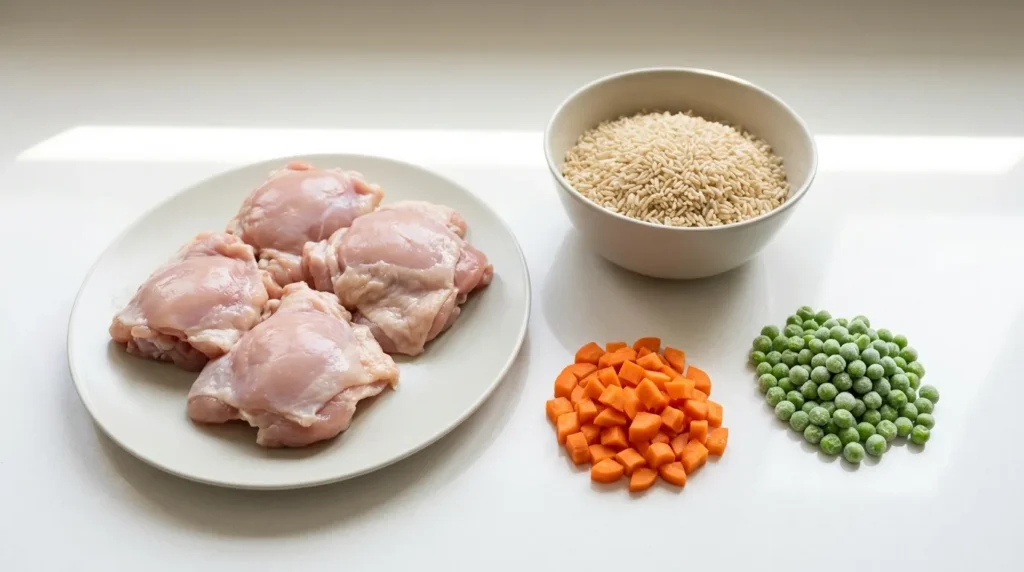
This is the recipe I recommend most often to owners just starting out. It’s simple, nutritious, affordable, and most dogs absolutely love it. Also, it’s gentle on sensitive stomachs making it a great transition food.
Ingredients (Makes approximately 5 days of meals for a 30-lb dog)
- 2 lbs boneless, skinless chicken breast or thighs
- 1.5 cups brown rice (dry)
- 1 cup carrots (diced)
- 1 cup green beans (chopped)
- 1 cup peas (frozen or fresh)
- 1 tablespoon fish oil
- Vet-recommended complete supplement (follow package dosage)
Step-by-Step Cooking Instructions
- Cook the rice first. Add 1.5 cups brown rice to 3 cups of water. Bring to a boil, then reduce heat and simmer for 35–40 minutes until fully cooked. Set aside to cool.
- Cook the chicken thoroughly. Place chicken in a large pot and cover with water. Boil for 20–25 minutes until fully cooked through. Never serve undercooked chicken. Drain the water and let it cool completely.
- Prepare the vegetables. Steam carrots, green beans, and peas until soft, approximately 8–10 minutes. Steaming preserves more nutrients than boiling. Allow to cool before mixing.
- Shred or dice the chicken. Once cooled, shred the chicken into small, manageable pieces. Also, remove any small bone fragments carefully if using bone-in pieces.
- Combine all ingredients. In a large mixing bowl, combine chicken, rice, and vegetables thoroughly. Add fish oil and mix well throughout.
- Add the supplement. Follow your vet-recommended supplement’s dosage instructions carefully. Mix evenly through the entire batch.
- Portion and store correctly. Divide into daily portions based on your dog’s weight. Store in the refrigerator for up to 4 days, or freeze individual portions for up to 3 months.
More Homemade Dog Food Recipe Options to Try
Recipe Variations for Different Needs
One recipe doesn’t suit every dog. Therefore, here are three additional homemade dog food recipe options to rotate through:
| Recipe Name | Main Protein | Carb Source | Best For |
| Turkey and Sweet Potato | Ground turkey | Sweet potato | Sensitive stomachs |
| Salmon and Quinoa | Wild-caught salmon | Quinoa | Skin and coat health |
| Beef and Oat | Lean ground beef | Rolled oats | Active, energetic dogs |
| Chicken and Brown Rice | Chicken breast | Brown rice | Everyday balanced meal |
| Lamb and Barley | Ground lamb | Pearl barley | Novel protein allergies |
Turkey and Sweet Potato Recipe (Quick Version)
This recipe is excellent for dogs with sensitive digestion. Also, sweet potato provides excellent fiber and beta-carotene for immune support.
Ingredients:
- 1.5 lbs ground turkey (lean)
- 2 medium sweet potatoes (peeled and cubed)
- 1 cup peas
- 1 cup spinach (chopped)
- 1 tablespoon flaxseed oil
- Vet-recommended supplement
Method: Brown turkey in a pan over medium heat. Steam sweet potatoes until soft. Combine all ingredients, add oil and supplement, mix well. Cool completely before serving.
Salmon and Quinoa Recipe (Quick Version)
Salmon delivers outstanding omega-3 fatty acids for skin and coat health. Therefore, this recipe is particularly beneficial for dogs with dull coats or dry skin.
Ingredients:
- 1.5 lbs wild-caught salmon (boneless, cooked)
- 1.5 cups quinoa (cooked)
- 1 cup broccoli (steamed, chopped)
- 1 cup carrots (steamed, diced)
- Vet-recommended supplement
Method: Bake or poach salmon at 375°F for 20 minutes until fully cooked. Flake into small pieces. Cook quinoa according to package directions. Combine all ingredients with a supplement. Mix well and cool before serving.
Foods to Never Include in a Homemade Dog Food Recipe
Dangerous Ingredients That Can Harm Your Dog
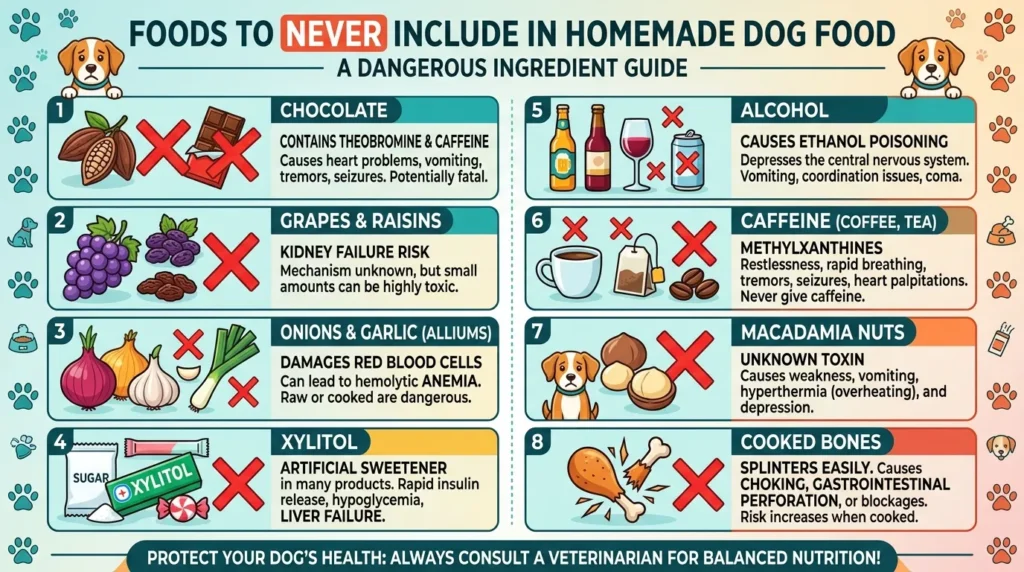
This section is critical. Some human foods are genuinely toxic to dogs even in small amounts. Therefore, memorize this list and never include these ingredients in any homemade dog food recipe:
Absolutely toxic never use:
- Onions and garlic destroy red blood cells, cause anemia
- Grapes and raisins cause acute kidney failure
- Chocolate contains theobromine, highly toxic to dogs
- Macadamia nuts cause weakness, vomiting, tremors
- Xylitol found in peanut butter, gum, and sweeteners; causes liver failure
- Avocado contains persin, toxic to dogs
- Alcohol even tiny amounts cause serious harm
- Raw yeast dough expands in stomach, causes dangerous bloating
Use with caution check with your vet first:
- Raw eggs risk of salmonella and biotin deficiency
- Raw fish may contain parasites; always cook fish thoroughly
- Dairy products many dogs are lactose intolerant
- Corn not toxic but provides minimal nutritional value
Common Cooking Mistakes to Avoid
Beyond toxic ingredients, these cooking errors reduce the safety and nutrition of your homemade dog food recipe:
- Adding salt or seasoning dogs don’t need salt, and many spices are harmful
- Using cooking oils heavily small amounts of healthy oil are fine; excess fat causes pancreatitis
- Skipping the supplement this is the most critical mistake; whole food alone rarely provides complete canine nutrition
- Feeding too much homemade food is often more calorie-dense than kibble; measure portions carefully
- Not consulting your vet always discuss homemade feeding with your veterinarian before starting
Pro Tip: Always check the ingredient list of commercial peanut butter before using it as a treat alongside homemade meals. Many brands now contain xylitol which is genuinely life-threatening for dogs. Look for peanut butter with just one ingredient: peanuts.
Frequently Asked Questions About Homemade Dog Food Recipes
1. Is a homemade dog food recipe safe for all dogs?
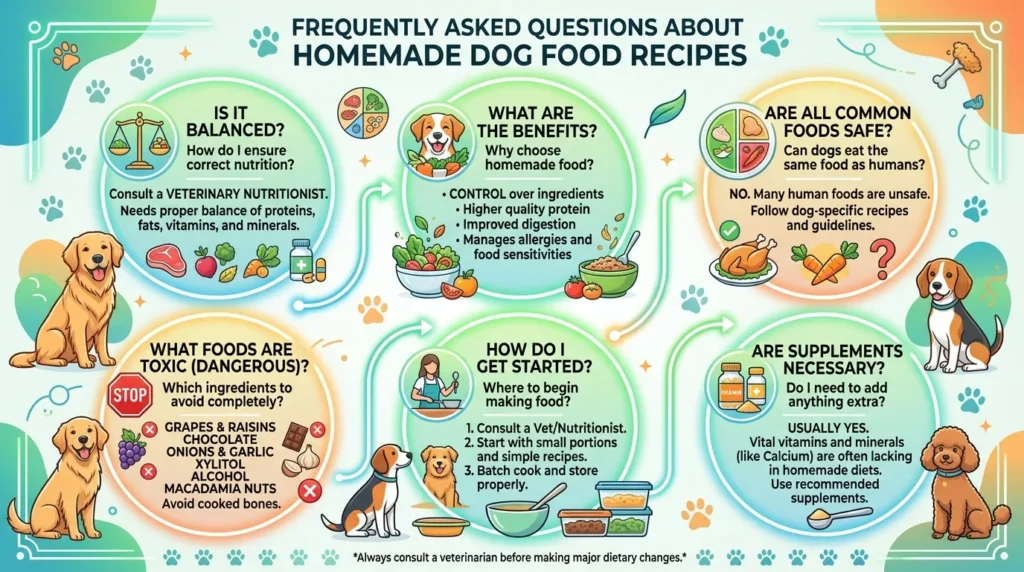
A well-balanced homemade dog food recipe is safe for most healthy adult dogs. However, puppies, pregnant dogs, senior dogs, and dogs with medical conditions like kidney disease or diabetes have very specific nutritional needs that a general recipe may not meet. Therefore, always consult your veterinarian before switching any dog but especially dogs with existing health conditions to a homemade diet. Your vet may also refer you to a board-certified veterinary nutritionist for a custom recipe.
2. How much homemade food should I feed my dog per day?
The right amount depends on your dog’s weight, age, and activity level. As a general starting guideline, most adult dogs need approximately 2–3% of their body weight in food daily. For example, a 30-pound dog needs roughly 9–14 oz of food per day. However, homemade food varies in caloric density depending on ingredients. Therefore, weigh your dog monthly and adjust portions based on whether they’re maintaining a healthy body condition. Your vet can give you a precise daily calorie target.
3. Do I need to add supplements to a homemade dog food recipe?
Yes this step is essential and non-negotiable. Whole food ingredients alone rarely provide the complete spectrum of vitamins and minerals dogs need. Deficiencies in calcium, zinc, vitamin D, and vitamin E are extremely common in homemade diets without supplementation. Therefore, always add a vet-recommended complete supplement like BalanceIT, Rx Vitamins NuTRIzyme, or a similar product. Your vet can recommend the right supplement for your specific recipe.
4. Can I feed my dog a homemade food recipe every day?
Yes, daily homemade feeding is absolutely achievable with proper planning. In fact, batch cooking once or twice a week makes it very manageable. Also, freezing individual portions in advance removes the daily cooking burden entirely. The key is ensuring your recipe is nutritionally complete and balanced every time, not just occasionally. Therefore, stick to your established recipe rather than improvising different ingredients each day, which makes nutritional consistency much harder to maintain.
5. How do I store homemade dog food safely?
Store homemade dog food in airtight containers in the refrigerator for up to 4 days. For longer storage, freeze individual meal portions in freezer-safe containers or zip-lock bags for up to 3 months. Always thaw frozen portions in the refrigerator overnight never at room temperature, because bacteria grow quickly in thawing meat. Also, never leave homemade food in your dog’s bowl for more than two hours at room temperature, especially in warm weather.
6. What’s the cheapest protein to use in a homemade dog food recipe?
Chicken is consistently the most affordable, widely available, and nutritionally excellent protein for homemade dog food. Ground turkey is another budget-friendly option. Eggs also provide excellent, affordable protein though they should be cooked rather than served raw. For larger dogs or multiple dogs, buying protein in bulk from warehouse stores significantly reduces the per-meal cost. Also, rotating proteins every few weeks prevents your dog from developing sensitivities to a single protein source.
7. Can puppies eat homemade dog food?
Puppies can eat homemade food but their nutritional needs differ significantly from adult dogs. They need more calories, higher protein, specific calcium-to-phosphorus ratios, and DHA for brain development. Therefore, a standard adult homemade dog food recipe is not appropriate for puppies without significant modification. If you want to feed your puppy homemade food, work directly with a veterinary nutritionist to create a puppy-specific formula. Nutritional mistakes during puppyhood can affect bone development and long-term health in serious ways.
Start Cooking for Your Dog Today
Making a homemade dog food recipe is one of the most loving things you can do for your dog. Fresh ingredients, complete nutrition, and the knowledge that you know exactly what goes into every bowl that’s genuinely powerful.
However, always remember the golden rules. Keep the right protein-carb-vegetable ratio. Add a complete supplement every time. Avoid all toxic ingredients. Also, check in with your vet regularly to make sure your dog is thriving on their new diet.
Start with the chicken and rice recipe. It’s simple, affordable, and dogs consistently love it. Then gradually explore other recipes as you gain confidence in the kitchen.