

Introduction
Some dogs are pets. The Newfoundland dog is something more: it’s a companion, a protector, and quite possibly the gentlest giant you’ll ever meet. These massive, bear-like dogs have earned a legendary reputation for their calm temperament, incredible loyalty, and natural instinct to rescue people from water.
But owning a Newfoundland is a big commitment. And I mean that literally. These dogs weigh between 100 and 150 pounds. They shed heavily, drool enthusiastically, and need consistent care and space to thrive.
However, for the right family, a Newfoundland dog transforms daily life in the most wonderful way. They’re patient with children, gentle with strangers, and deeply devoted to their people.
So is a Newfoundland the right dog for you? This complete guide covers everything you need to know. You’ll learn about their personality, care needs, health concerns, grooming requirements, and what life with one of these magnificent dogs truly looks like. Let’s get into it.
What Is the Newfoundland Dog? Breed Overview and History
Origins of This Gentle Giant
The Newfoundland dog originated on the island of Newfoundland, Canada. Fishermen there relied on these powerful dogs to haul fishing nets, pull carts, and rescue drowning sailors from icy Atlantic waters. Therefore, their strength, swimming ability, and calm temperament were literally bred for survival work.
Their exact ancestry isn’t entirely clear. However, most historians believe they descended from indigenous Canadian dogs crossed with large working breeds brought by European settlers. As a result, the modern Newfoundland combines extraordinary physical power with a remarkably gentle personality.
The breed gained international recognition in the 19th century. Famous figures including Lord Byron, who wrote a poem dedicated to his Newfoundland, helped popularize them across Europe and America.
Key Breed Facts at a Glance
| Feature | Details |
| Origin | Newfoundland, Canada |
| Size | Giant |
| Weight | 100–150 pounds |
| Height | 26–28 inches at shoulder |
| Lifespan | 9–10 years |
| Coat | Thick, water-resistant double coat |
| Colors | Black, brown, grey, Landseer (black and white) |
| Temperament | Gentle, patient, loyal, calm |
| Energy Level | Moderate |
| Good With Kids | Yes excellent |
| AKC Group | Working Group |
Newfoundland Dog Temperament: What to Really Expect
The “Gentle Giant” Reputation Is Earned
The term “gentle giant” gets overused in dog descriptions. However, for the Newfoundland dog, it’s genuinely accurate. These dogs are naturally calm, patient, and extraordinarily tolerant even with very young children who haven’t yet learned gentle handling.
In my experience, Newfoundlands have a unique quality that’s hard to describe until you’ve seen it. They seem to sense when someone needs comfort. They’ll quietly move next to a crying child or sit beside someone who’s upset. As a result, they’re sometimes trained as therapy dogs and they excel at it.
Personality Traits That Define the Breed
Here’s what you can genuinely expect from a well-bred Newfoundland:
- Calm and patient rarely reactive or easily startled
- Devoted to family forms deep bonds with every household member
- Excellent with children naturally gentle and protective
- Friendly with strangers not naturally suspicious or aggressive
- Good with other pets generally peaceful with other dogs and animals
- Intelligent learns commands well with positive reinforcement
- Naturally protective will act if they sense real danger
Are They Good Watch Dogs?
Newfoundlands are alert dogs. However, they’re not natural alarm barkers or aggressive guardians. Their sheer size is often enough to deter unwanted visitors. Also, their deep, resonant bark commands attention when they do use it. Therefore, while they’re not guard dogs in the traditional sense, their presence alone provides significant security.
How to Care for a Newfoundland Dog: Step-by-Step Guide
Daily and Weekly Care Requirements
Caring for a Newfoundland requires genuine commitment. Here’s a practical step-by-step care guide:
- Feeding Adult Newfoundlands eat 4 to 6 cups of high-quality dry dog food per day. Because of their giant size, split meals into two servings to reduce bloat risk. Always consult your vet about the right caloric intake for your dog’s specific weight and activity level.
- Exercise Despite their size, Newfoundlands have moderate exercise needs. Aim for 30 to 60 minutes of daily activity. They particularly love swimming; it’s in their DNA. However, avoid intense exercise in hot weather because their thick coat makes overheating a real risk.
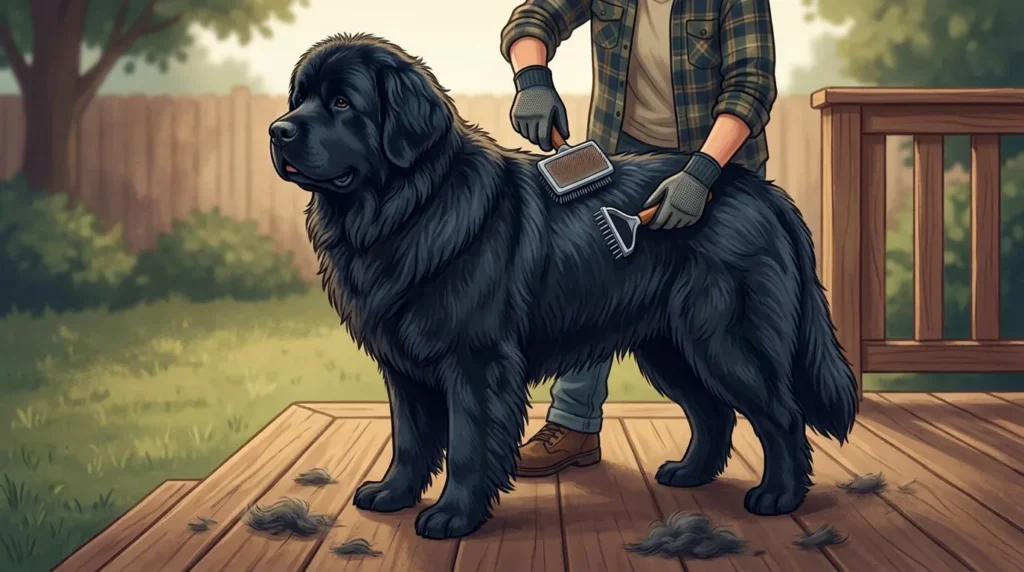
- Grooming Brush your Newfoundland at least three times per week. Their thick double coat mats easily without regular attention. During the shedding season (spring and autumn), daily brushing becomes necessary. Also, check and clean their ears weekly to prevent infections.
- Bathing Bathe your Newfoundland every 4 to 6 weeks. Because of their heavy coat, use a powerful dog dryer after bathing air drying takes too long and can cause skin issues underneath the dense fur.
- Nail trimming Trim nails every 3 to 4 weeks. Long nails cause discomfort and affect gait especially important for giant breeds where joint health matters enormously.
- Teeth cleaning Brush teeth at least three times per week. Dental disease affects giant breeds significantly. Therefore, starting a dental routine early makes maintenance much easier long-term.
- Drool management Newfoundlands drool. A lot. Keep a dedicated “drool cloth” near feeding areas and main relaxation spots. Also, wipe their jowls after drinking to reduce mess on floors and furniture.
Pro Tip: Start grooming routines when your Newfoundland is still a puppy. A 10-week-old puppy that learns to accept brushing, nail trimming, and ear cleaning grows into a 130-pound adult who cooperates with grooming willingly. Starting early makes every future grooming session dramatically easier for both of you.
Newfoundland Dog Health: What Every Owner Should Know
Common Health Concerns in the Breed
Like all giant breeds, the Newfoundland dog faces specific health challenges. Therefore, understanding these issues helps you provide better preventive care and catch problems early.
Major Health Conditions to Watch For
Subvalvular Aortic Stenosis (SAS)
SAS is a heart condition that affects Newfoundlands more than most breeds. It involves a narrowing near the aortic valve that restricts blood flow. Responsible breeders screen for this condition. However, always request health clearances from breeders and schedule annual cardiac check-ups with your vet.
Hip and Elbow Dysplasia
Giant breeds carry significant body weight across their joints. As a result, hip and elbow dysplasia affect Newfoundlands at higher rates than small breeds. Maintaining a healthy weight, providing appropriate exercise, and using joint-supportive supplements (with vet guidance) all help manage this risk.
Cystinuria
Cystinuria is a genetic kidney condition that causes bladder and kidney stones. It affects Newfoundlands at a higher rate than most breeds. Therefore, DNA testing for cystinuria is recommended for all breeding dogs. Ask your breeder about this specifically.
Bloat (Gastric Dilatation-Volvulus)
Bloat is a life-threatening emergency that affects large, deep-chested breeds. The stomach fills with gas and can twist. As a result, blood flow cuts off rapidly making this a genuine emergency requiring immediate veterinary care. Feed two smaller meals daily, avoid exercise immediately after eating, and know your nearest emergency vet clinic.
Preventive Health Schedule
- Annual vet check-ups minimum; twice yearly for dogs over 6
- Cardiac screening annually from age 1
- Hip and elbow evaluations OFA certification recommended
- Weight monitoring monthly weigh-ins help catch gradual weight gain
- Dental check professional cleaning as recommended by your vet
Always consult your veterinarian about the appropriate health screening schedule for your specific Newfoundland dog.
Newfoundland Dog Grooming: Managing That Magnificent Coat
Understanding the Double Coat
The Newfoundland’s coat is genuinely remarkable. It consists of a soft, dense undercoat and a longer, coarser outer coat. Together, they provide natural waterproofing which made these dogs exceptional water rescue workers historically. However, that same coat requires significant maintenance in a home environment.
Grooming Tools You’ll Actually Need
Invest in these tools before bringing your Newfoundland home:
- Slicker brush removes tangles and surface debris effectively
- Undercoat rake reaches deep into the thick undercoat during shedding
- Metal comb checks for remaining mats after brushing
- Detangling spray makes stubborn mats far easier to work through
- High-velocity dryer essential for drying the thick coat after bathing
- Ear cleaning solution weekly ear maintenance prevents infections
Shedding The Honest Truth
Newfoundlands shed year-round. However, spring and autumn bring heavy seasonal shedding that produces genuinely impressive amounts of fur. Therefore, if dog hair on furniture or clothing bothers you significantly, a Newfoundland may not be your ideal match. Also, a good robot vacuum becomes one of your most valued household items as a Newfoundland owner.
Common Mistakes New Newfoundland Owners Make

Mistake 1: Underestimating the Space Requirement
A 130-pound dog needs room to move comfortably. Therefore, apartment living is genuinely challenging for this breed, not impossible, but difficult. Ideally, a house with a safely fenced yard gives your Newfoundland the space they need to stretch, play, and cool down after activity.
Newfoundlands are naturally gentle. However, proper early socialization still matters enormously. Because they grow so large, an unsocialized Newfoundland that jumps on people or pulls on leash creates real problems. Therefore, start puppy classes early and expose your dog to different people, environments, and situations from the very beginning.
Mistake 3: Overfeeding
Giant breeds gain weight easily and extra weight accelerates joint deterioration significantly. Therefore, measure every meal precisely rather than free-feeding. Also, monitor your dog’s waistline monthly and adjust portions based on body condition rather than just following label guidelines rigidly.
Mistake 4: Exercising in Heat
Newfoundlands were bred for cold, wet Canadian climates. Their thick double coat provides poor heat dissipation. As a result, they overheat faster than most breeds in warm weather. Therefore, schedule exercise for early morning or evening during summer months. Always provide fresh water and shaded rest areas.
Mistake 5: Choosing a Puppy Without Health-Tested Parents
Responsible Newfoundland breeders test breeding dogs for SAS (heart), hip and elbow dysplasia, and cystinuria. Therefore, always request health clearance certificates before purchasing a puppy. Also, visit the breeder in person when possible and ask to meet at least one parent dog. Puppy mill Newfoundlands carry significantly higher health risks and vet bills that follow can be substantial.
Pro Tip: Join a Newfoundland dog club or online community before bringing your puppy home. In my experience, experienced Newfoundland owners are extraordinarily generous with advice, grooming tips, and breed-specific guidance that saves new owners enormous amounts of time, money, and stress.
Frequently Asked Questions About the Newfoundland Dog

1. Is the Newfoundland dog good with children?
Yes, the Newfoundland dog is widely considered one of the best breeds for families with children. Their natural patience, gentle temperament, and protective instincts make them extraordinary family companions. They rarely react aggressively even when children are rough or clumsy. However, their size alone poses an accidental risk to very small toddlers; a wagging tail or enthusiastic greeting can knock a small child over unintentionally. Therefore, always supervise interactions between any dog and very young children, regardless of the breed’s gentle reputation.
2. How much does a Newfoundland dog cost?
A Newfoundland puppy from a reputable, health-testing breeder typically costs between $1,500 and $3,000 in the United States. However, the ongoing costs are equally significant. Food alone for a 130-pound dog costs considerably more than feeding a small breed. Also, veterinary care, grooming supplies, and professional grooming appointments add up substantially. Therefore, budget honestly for both the purchase price and the lifetime ownership costs before committing to this breed.
3. Do Newfoundland dogs do well in apartments?
Technically possible but genuinely challenging. Newfoundlands have moderate exercise needs that can theoretically be met through daily walks. However, their size makes small living spaces uncomfortable for both the dog and the owner. Also, access to outdoor swimming opportunities significantly enriches a Newfoundland’s quality of life. Therefore, a house with a safely fenced yard is strongly preferred. If apartment living is your only option, commit to very consistent daily exercise and enrichment activities.
4. How long do Newfoundland dogs live?
The average lifespan of a Newfoundland dog is 9 to 10 years. This is shorter than many medium-sized breeds, a reality of giant breed physiology. However, excellent nutrition, appropriate exercise, regular veterinary care, and responsible weight management all contribute to maximizing quality and length of life. Also, choosing a puppy from health-tested parents significantly reduces the risk of hereditary conditions that shorten lifespan.
5. Are Newfoundland dogs easy to train?
Yes, Newfoundlands are intelligent and generally eager to please, which makes training a rewarding experience. They respond best to positive reinforcement methods, treats, praise, and play work far better than harsh corrections. However, their size means that basic obedience training isn’t optional. A poorly trained 130-pound dog creates serious management challenges. Therefore, start training from the first day your puppy arrives home, and enroll in a puppy class within the first few weeks.
6. Do Newfoundland dogs really rescue people from water?
Yes this isn’t just a historical legend. Newfoundlands have a natural instinct to rescue people from water, and this trait remains strong in the breed today. Their webbed feet, powerful swimming ability, and water-resistant coat all support their legendary water rescue capabilities. Also, the breed competes in a sport called “water rescue” or “Newfoundland water trials” where dogs demonstrate traditional rescue skills in controlled conditions. It’s genuinely impressive to watch.
7. How much do Newfoundland dogs shed?
Newfoundlands shed significantly year-round, with heavy seasonal shedding in spring and autumn. Therefore, regular brushing (at least 3 times weekly) is essential for managing loose hair and preventing painful matting. Also, investing in a quality vacuum cleaner designed for pet hair makes a real difference to daily household management. If heavy shedding is a dealbreaker for your household, a Newfoundland probably isn’t your ideal match and that’s perfectly fine to acknowledge before committing.
Is a Newfoundland Dog Right for You?
The Newfoundland dog is one of the most magnificent, loving, and genuinely impressive breeds in the entire dog world. Their combination of enormous size, extraordinary gentleness, and deep devotion to family creates a companion unlike almost any other.
However, they’re also a significant commitment. The grooming, the drool, the space requirements, the food costs, and the relatively short lifespan all deserve honest consideration before you decide.
Therefore, research thoroughly, visit reputable breeders, speak to current Newfoundland owners, and consult your vet about whether this breed suits your lifestyle realistically.