
Has your cat’s vet mentioned phosphorus, kidney values, or a renal diet? That can feel worrying at first. However, choosing low phosphorus cat food becomes easier once you know what to look for.
Phosphorus is an essential mineral. Yet damaged kidneys may struggle to remove extra phosphorus from the blood. As a result, many cats with chronic kidney disease need a carefully planned diet.
The right food does more than lower one mineral. It should also provide enough calories, support muscle, taste good, and suit your cat’s health stage. Most importantly, your cat must eat it.
This guide explains labels, food types, transition tips, and common mistakes. You’ll also learn when a prescription kidney diet may make more sense than regular food.
Please consult your vet before changing your cat’s diet. Kidney disease needs blood tests, urine tests, blood pressure checks, and ongoing care.
What Low Phosphorus Cat Food Actually Means
Low phosphorus cat food contains less phosphorus than many standard adult cat foods. Still, “low” is not a fixed term on most retail labels. Therefore, ask for the food’s typical phosphorus content. Ideally, request a dry matter value or milligrams per 100 calories.
A true renal diet for cats usually changes several nutrients together. For example, it may include:
- Controlled phosphorus content
- Modified amounts of high-quality protein
- Added omega-3 fatty acids
- More B vitamins and potassium
- Higher calorie density
- Controlled sodium
- A texture designed to tempt picky cats
These changes help support cats with kidney disease. However, a food that only cuts phosphorus may not meet every need.
Also, healthy cats should not start a therapeutic kidney diet without veterinary advice. Cats need phosphorus, protein, and other nutrients in the right balance. Therefore, unnecessary restriction can create new problems.
Pro Tip: Ask the manufacturer for phosphorus in both dry matter percentage and milligrams per 100 kilocalories. This makes fair comparisons much easier.
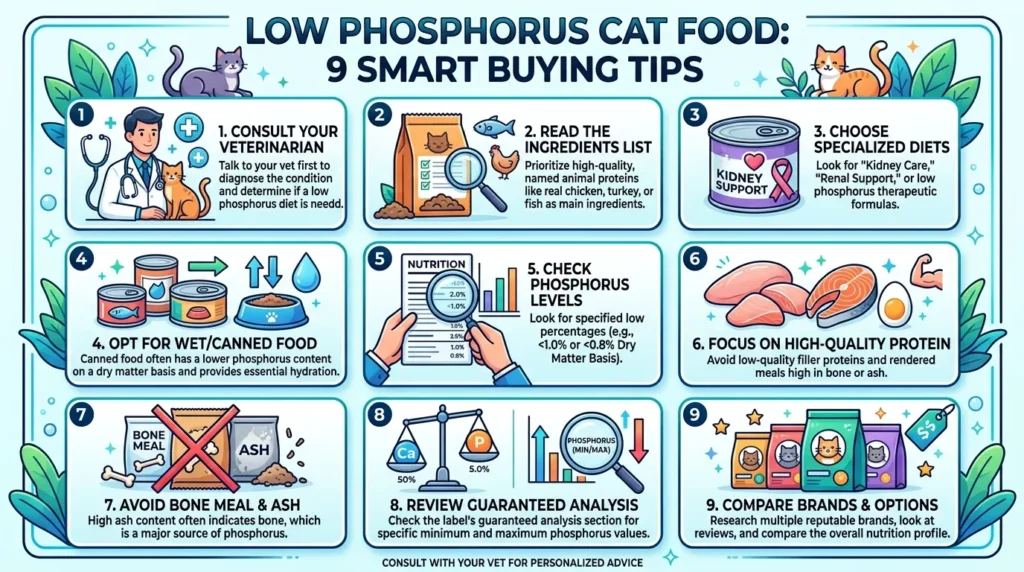
How to Choose Low Phosphorus Cat Food: 9 Steps
Shopping for low phosphorus cat food can feel confusing. Packages rarely show every value you need. Fortunately, a simple process can save time and reduce guesswork.
1. Start With Your Cat’s Diagnosis
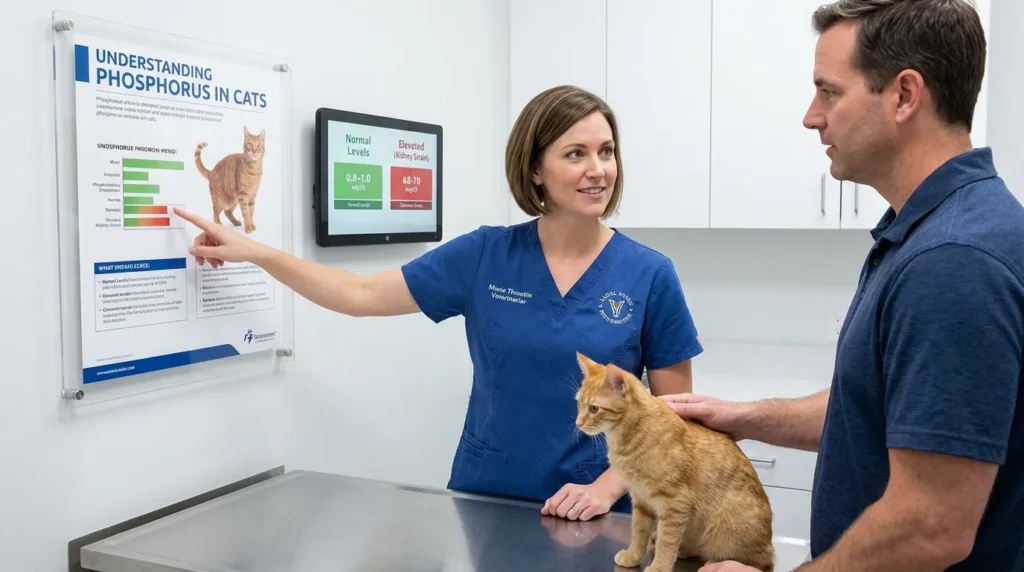
First, confirm why your vet recommended a diet change. A high blood phosphorus result is different from early kidney changes with normal blood phosphorus.
Your vet may also stage chronic kidney disease. Then, they can match phosphorus control to your cat’s needs.
2. Ask About a Prescription Kidney Diet
Veterinary renal diets address a full nutrient profile, not phosphorus alone. Your vet may suggest wet food, dry food, or both. In my experience, two approved textures help when appetite changes.
3. Compare Foods on the Same Basis
Wet food contains far more water than kibble. Therefore, the “as fed” phosphorus number can look lower even when the dry nutrients are similar.
Use dry matter values for a fair comparison. You can also compare milligrams of phosphorus per 100 calories.
Here’s a simple dry matter formula:
Phosphorus on a dry matter basis = as-fed phosphorus ÷ dry matter percentage × 100
For example, food with 78% moisture has 22% dry matter. Still, ask the company for a typical analysis when possible. Guaranteed analysis values may show minimums, not the average amount in each batch.
4. Check the Complete Nutrient Profile
Don’t choose low phosphorus cat food by one number alone. Your cat still needs enough protein, fat, vitamins, minerals, and calories.
Also, check for a complete and balanced nutrition statement. Broths, toppers, and complementary foods may not work as the main diet.
5. Prioritize Calories and Muscle Support
Cats with chronic kidney disease may lose weight and muscle. Therefore, the best food is one your cat can eat in a useful amount.
Ask your vet to track body weight and muscle condition. In addition, home weigh-ins can spot changes early.
6. Consider Wet Cat Food for Hydration
Many kidney cats benefit from extra water intake. For that reason, wet cat food often fits well into a kidney support plan.
You can also add a little warm water to approved food. However, serve it fresh and remove leftovers promptly.
7. Review Treats and Toppers
Treats can quietly raise the total phosphorus intake. Meat-heavy treats, dried fish, organ meats, cheese, and bone-based products may contain more phosphorus.
Instead, ask your vet which treats fit the daily plan. Keep them small and occasional.
8. Plan a Slow Food Transition
Cats often reject sudden changes. Therefore, switch gradually unless your vet gives different advice.
Try this basic schedule:
- Days 1 to 3: Serve 75% old food and 25% new food.
- Days 4 to 6: Serve equal amounts.
- Days 7 to 9: Serve 25% old food and 75% new food.
- Day 10 onward: Offer the new food alone.
Some cats need several weeks. Never force a switch when your cat feels sick or refuses meals. Call your vet if appetite drops.
9. Recheck Bloodwork and Appetite
Diet needs can change over time. Therefore, your vet may recheck phosphorus, kidney values, potassium, weight, hydration, and blood pressure.
If low phosphorus cat food does not control blood phosphorus enough, your vet may discuss a phosphate binder. Never add one on your own. The type and dose must match your cat’s food intake and lab results.
Low Phosphorus Cat Food Options Compared
There isn’t one perfect format. Some cats love pâté, while others prefer chunks or kibble.
| Food type | Best use | Main benefit | Watch for |
| Veterinary renal wet food | Cats with diagnosed kidney disease | Lower phosphorus plus extra moisture | Cost, texture preference, and appetite |
| Veterinary renal dry food | Cats that prefer kibble | Calorie dense and easy to portion | Lower water intake than wet food |
| Mixed renal wet and dry | Picky cats needing variety | More textures and flexible feeding | Keep the full plan vet-approved |
| Over-the-counter lower-phosphorus food | Selected cases under vet guidance | More flavors and easier access | May not match a therapeutic renal profile |
| Home-prepared renal diet | Cats with special medical needs | Can be tailored by a specialist | Must come from a veterinary nutritionist |
| Treats or toppers | Small appetite boost | Can improve interest in meals | May unbalance the diet or add phosphorus |
For many diagnosed cats, a veterinary diet is the first option to discuss. Research links therapeutic kidney diets with better outcomes than standard maintenance foods in cats with CKD.
However, food refusal changes the decision. A cat that eats enough of an approved second-choice food may do better than a cat refusing the ideal diet.
Have you tried warming the meal slightly? It smells stronger, while a wide plate may feel more comfortable.
Avoid mixing medicines into your cat’s favorite meal unless your vet recommends it. One bitter experience can create a lasting food aversion.
Common Mistakes and Important Warnings
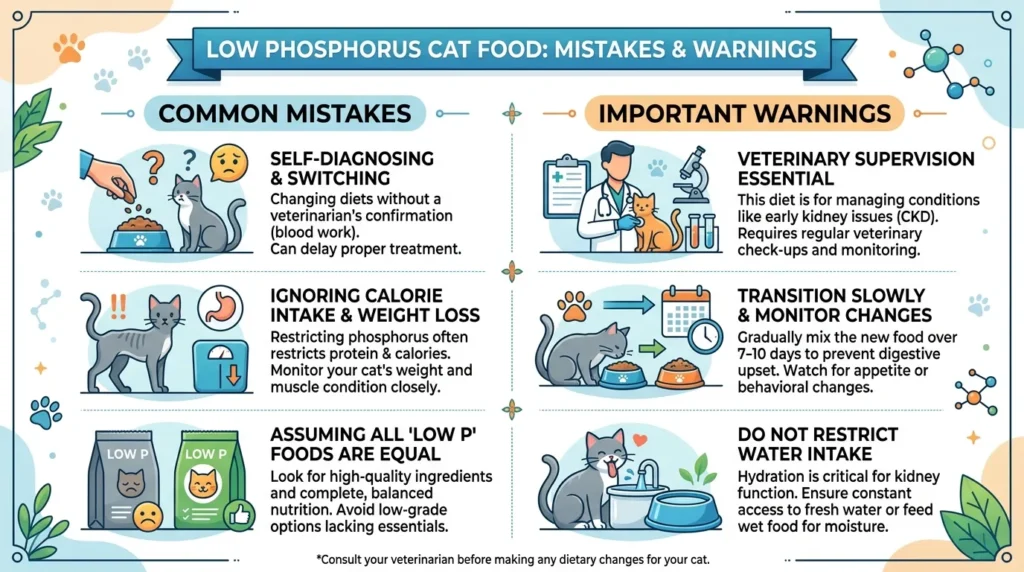
The biggest mistake is treating low phosphorus cat food as a cure. It can support kidney care, but it cannot replace diagnosis, fluids, nausea control, blood pressure care, or other treatment.
Another mistake is cutting protein too far. Cats need suitable amino acids. Therefore, your vet must balance phosphorus control with muscle support.
Watch out for these common problems:
- Choosing food only because “senior” appears on the label
- Comparing wet and dry food with as-fed values
- Feeding an unbalanced homemade recipe from social media
- Using bone meal, dairy, or organ meat as regular toppers
- Adding phosphate binders without veterinary instructions
- Ignoring weight loss because your cat still eats a little
- Switching food too fast
- Assuming one phosphorus target fits every cat
Also, don’t let a cat go without food while holding out for one renal formula. Poor appetite can signal nausea, dehydration, pain, constipation, or worsening disease.
Contact your vet promptly if your cat stops eating, vomits often, seems weak, or loses weight.
Finally, remember that online food lists go out of date. Recipes and nutrient levels can change. Therefore, confirm the current phosphorus analysis with the manufacturer.
Low Phosphorus Cat Food FAQ
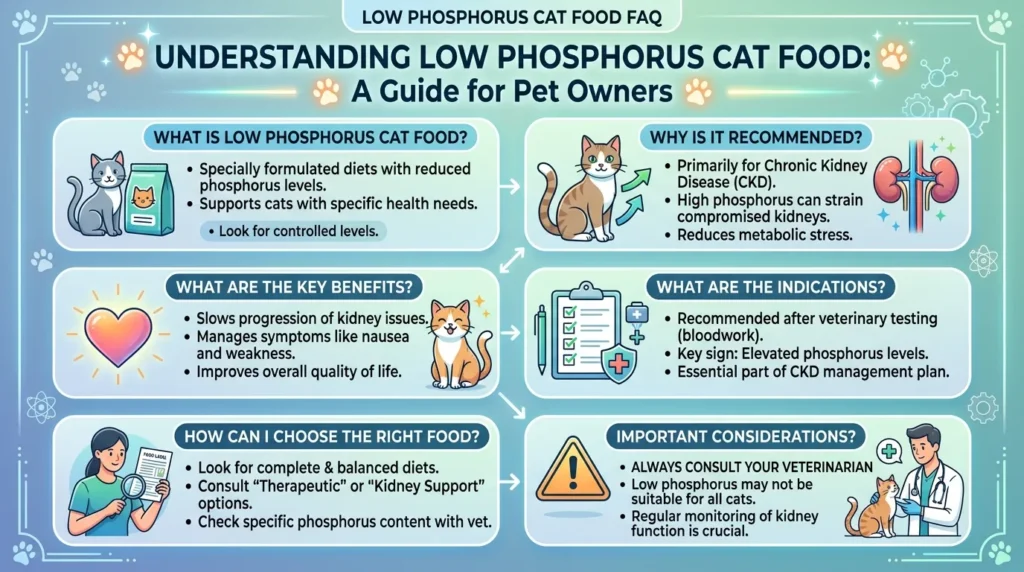
What Phosphorus Level Should I Look For?
There is no single target for every cat. Your vet will consider your cat’s kidney stage, blood phosphorus, weight, appetite, and other conditions.
Ask for the food’s typical phosphorus on a dry matter or calorie basis. Then, let your vet compare it with your cat’s treatment goal.
Is Low Phosphorus Cat Food Only for Kidney Disease?
Most people search for low phosphorus cat food after a kidney diagnosis. However, vets may use controlled-phosphorus diets in other specific cases.
Healthy cats should not eat a therapeutic renal diet without advice. These foods change several nutrients, not phosphorus alone.
Is Wet Low Phosphorus Cat Food Better Than Dry Food?
Wet low phosphorus cat food adds moisture, which can help many kidney cats. However, dry renal food may provide more calories in a smaller amount.
The best choice depends on what your cat eats well. Many owners use both formats with veterinary approval.
Can I Make Low Phosphorus Cat Food at Home?
You can, but only with a recipe from a board-certified veterinary nutritionist. Homemade renal diets need precise amounts of protein, minerals, vitamins, fats, and calories.
Random online recipes often miss key nutrients. Therefore, don’t improvise.
Are Egg Whites Good for Cats With Kidney Disease?
Cooked egg whites provide protein with less phosphorus than many meat sources. Still, they do not form a complete diet by themselves.
Your vet or veterinary nutritionist may use them in a balanced recipe. Don’t add large amounts without checking the full nutrient plan.
Can Treats Ruin a Low Phosphorus Diet?
Several small treats can add meaningful phosphorus, especially dried fish, organs, bones, dairy, and meat-rich snacks.
Ask your vet for approved treats. You can also reserve a small amount of your cat’s main food as a treat.
What if My Cat Refuses Prescription Kidney Food?
Tell your vet rather than waiting. Nausea, mouth pain, constipation, dehydration, or food aversion may cause refusal.
Your vet may treat the cause first. Then, try other approved flavors, textures, temperatures, or alternatives.
Do Phosphorus Binders Replace Low Phosphorus Cat Food?
Usually, binders do not replace the diet plan. A vet may add one when diet alone does not keep blood phosphorus in the desired range.
Binders must be given with food. Also, the dose depends on the meal and lab results. Use only the product and amount your vet prescribes.
Help Your Cat Eat With Confidence
Choosing low phosphorus cat food gets easier when you focus on the whole cat. Start with your vet’s diagnosis. Then, compare foods on a dry matter or calorie basis.
Next, choose a complete diet your cat will actually eat. A slow transition, fresh portions, and several approved textures can help.
Most of all, track appetite, weight, and follow-up bloodwork. These details show whether the plan still works.