
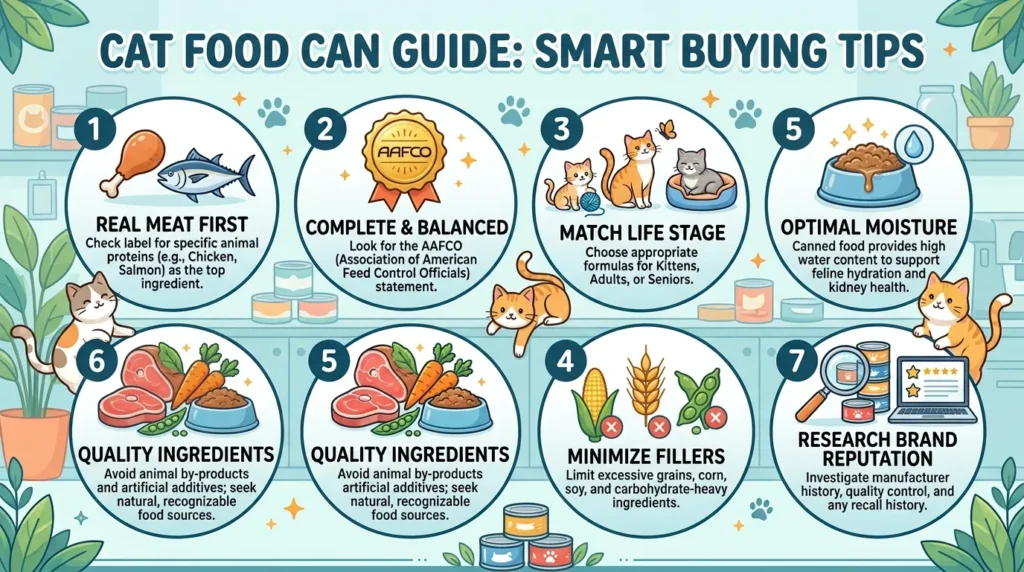
Introduction
Choosing the right cat food can feel harder than it should. You stand in the pet food aisle, read five labels, compare flavors, and still wonder, “Will my cat actually eat this?” I’ve seen many cat owners face the same problem, especially when their cats are picky.
A good cat food can is not just about flavor. It should fit your cat’s age, health, weight, and daily routine. It should also give your cat enough moisture, protein, and key nutrients. However, not every shiny label means better food.
In this guide, you’ll learn how to choose canned cat food with more confidence. We’ll look at labels, ingredients, feeding tips, common mistakes, and simple examples. Also, you’ll know when to ask your vet before changing your cat’s diet.
What Is a Cat Food Can and Why Does It Matter?
Cat food can usually contain wet cat food made for daily meals or occasional feeding. Many cats enjoy it because it smells stronger than dry food. Also, the soft texture feels easier to chew, especially for kittens and older cats.
Wet food often has higher moisture than dry kibble. As a result, it can help cats take in more water through food. This matters because many cats don’t drink much water on their own.
A cat food can may include meat, fish, broth, vitamins, minerals, and added taurine. Taurine is very important for cats. Because cats need animal-based nutrients, you should check whether the food supports complete daily nutrition.
However, some canned foods are only treats or toppers. They may taste great, but they may not work as your cat’s main meal. Therefore, always read the label before you buy.
Look for words such as:
- Complete and balanced
- For adult maintenance
- For kittens or growth
- For all life stages
- For supplemental feeding only
If the label says “supplemental feeding only,” don’t use it as your cat’s full diet. Instead, use it as a small add-on.
How to Choose a Cat Food Can the Smart Way
Picking cat food can become easier when you follow a simple plan. First, don’t judge the food by the front label only. Brands use beautiful photos, bold claims, and fancy flavors to catch your eye.
Instead, turn the can around and read the real details.
1. Check the life stage
Your cat’s age matters. A kitten needs different nutrition than an adult cat. Also, a senior cat may need softer food or special support.
Choose food based on your cat’s stage:
- Kitten food for growing cats
- Adult food for healthy adult cats
- Senior food for older cats
- Vet-recommended food for medical needs
If you’re not sure, ask your vet. This is especially important if your cat has kidney, urinary, weight, or dental issues.
2. Look for complete and balanced wording
A good daily cat food can say it is complete and balanced. This means it should contain all needed nutrients in the right amounts.
However, don’t confuse treats with meals. Some tuna-style cans look like full meals, but they may lack key nutrients. Therefore, the label matters more than the picture.
3. Read the protein source
Cats need animal-based protein. So, check the first few ingredients. You may see chicken, turkey, beef, salmon, tuna, liver, or broth.
That said, ingredients alone don’t tell the full story. A food can still be balanced even if the ingredient list looks simple. Also, some added vitamins and minerals are normal in canned cat food.
4. Check calories per can
Calories matter more than many owners think. One cat food may have very different calories from another. Therefore, two cans may look the same size but feed your cat differently.
If your cat gains weight, check the calorie line. If your cat loses weight, check it again. Then adjust portions with your vet’s help.
5. Match texture with your cat’s taste
Cats can be picky about texture. Some love pâté. Others want chunks, gravy, shreds, or mousse.
Try these textures:
- Pâté for cats who like smooth food
- Chunks in gravy for cats who enjoy sauce
- Shreds for cats who like meat-like texture
- Mousse for kittens or senior cats
- Broth-based food for extra moisture
Have you tried warming wet food slightly? Many cats enjoy it more when it smells fresh.
6. Avoid sudden food changes
Don’t switch foods overnight unless your vet tells you to. Cats have sensitive stomachs. So, a sudden change may cause vomiting, loose stool, or refusal to eat.
Try this simple change plan:
- Days 1-2: 75% old food, 25% new food
- Days 3-4: 50% old food, 50% new food
- Days 5-6: 25% old food, 75% new food
- Day 7: 100% new food
However, slow down if your cat reacts badly.
Pro Tip: Always keep one or two backup cans of your cat’s favorite food. Cats can reject a new flavor fast, and backup food saves stress.
Cat Food Can Examples and Quick Comparison
Not every cat food can fit every cat. Some cats need more moisture. Some need fewer calories. Others just need a flavor they won’t ignore.
Here’s a simple comparison to help you understand the main types.
| Type of canned food | Best for | What to check |
| Pâté wet cat food | Picky cats, older cats | Calories, protein source, complete label |
| Gravy canned cat food | Cats who love sauce | Sugar, salt, calories, portion size |
| Kitten canned food | Growing kittens | Growth label, calories, feeding guide |
| Senior canned food | Older cats | Soft texture, vet advice, calories |
| Limited ingredient food | Sensitive cats | Protein source and vet guidance |
| Prescription wet food | Health conditions | Use only with vet advice |
A cat food can with gravy may look more tempting. However, some cats lick the gravy and leave the meat. If that happens, your cat may not get enough calories.
In my experience, picky cats often prefer small changes. For example, they may accept chicken pâté after eating turkey pâté. But they may reject a fish shred if the smell feels too strong.
You can also rotate flavors if your cat handles changes well. However, don’t rotate too fast. Your cat’s stomach needs time to adjust.
Simple serving example
Let’s say your cat eats one cat food can in the morning and some dry food at night. That may work for some cats. However, another cat may need two smaller wet meals and no dry food.
Your best guide is your cat’s body condition. You should feel the ribs lightly, but they should not stick out. Also, your cat should have steady energy and normal stools.
Common Cat Food Can Mistakes to Avoid
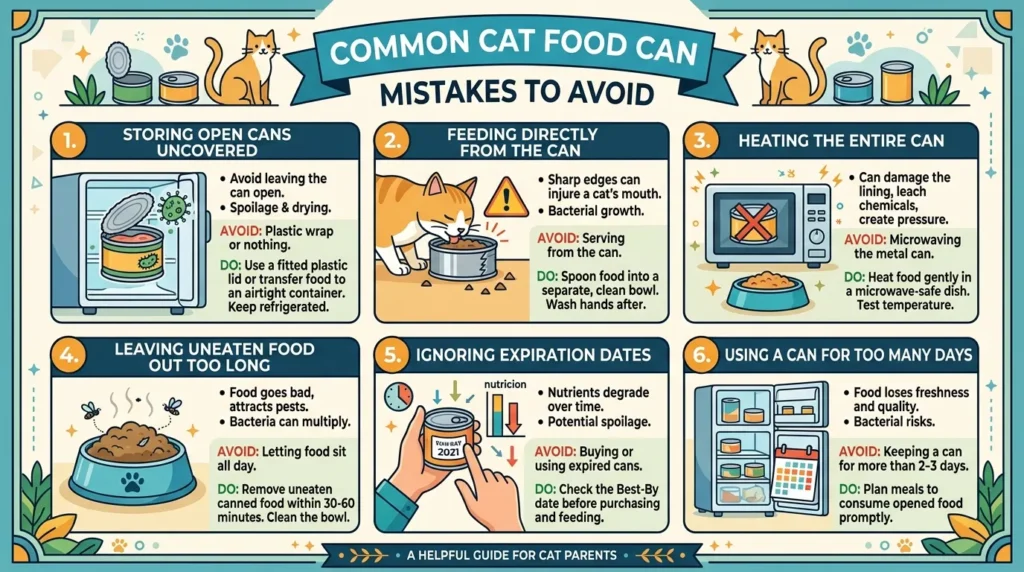
Even loving cat owners make small feeding mistakes. The good news? You can fix most of them quickly.
Mistake 1: Feeding by can size only
A small cat food can still contain many calories. Meanwhile, a larger can may contain fewer calories per ounce. So, don’t feed by size alone.
Always check the calorie statement. Then compare it with your cat’s weight, age, and activity level.
Mistake 2: Ignoring the “supplemental” label
Some foods look like full meals, but they are not complete diets. For example, plain fish cans may only support extra feeding.
Therefore, check the label before you use it daily. If it says supplemental, treat it like a topper.
Mistake 3: Leaving wet food out too long
Wet food can spoil faster than dry food. Also, many cats dislike food after it dries out.
Serve a fresh portion. Then remove leftovers after a reasonable time. If your home is warm, remove it sooner.
Mistake 4: Buying too many new cans at once
Cats change their minds. One day they love salmon. The next day they walk away like you served cardboard.
So, buy a few cans first. Then stock up only after your cat accepts the food.
Mistake 5: Skipping vet advice for health problems
If your cat has urinary issues, kidney disease, diabetes, food allergies, or weight problems, don’t guess. A regular cat food can may not meet special needs.
Always consult your vet before using a new diet for a medical condition. This keeps your cat safer.
Mistake 6: Forgetting clean water
Wet food adds moisture, but your cat still needs fresh water. Keep water bowls clean. Also, try a cat fountain if your cat loves moving water.
Because cats can be fussy, place water away from the litter box. Many cats prefer that.
Storage and Feeding Tips for Better Freshness
A cat food can should smell fresh when opened. If it smells strange, looks swollen, leaks, or has rust around the seal, don’t use it. It’s better to waste one can than risk your cat’s health.
After opening a can, cover it well and refrigerate it. Also, use a pet food lid instead of loose foil when possible. This helps control odor and keeps food fresher.
Before serving chilled food, you can let it sit for a short time. Some cats dislike cold food. Therefore, room-temperature wet food may work better.
Try these quick freshness habits:
- Wash your cat’s bowl daily
- Use shallow bowls for whisker comfort
- Store unopened cans in a cool place
- Check expiry dates before buying
- Avoid dented or swollen cans
- Don’t mix old leftovers with fresh food
Also, watch your cat after meals. If your cat vomits often, refuses food, or has stool changes, call your vet.
Cat Food Can FAQ
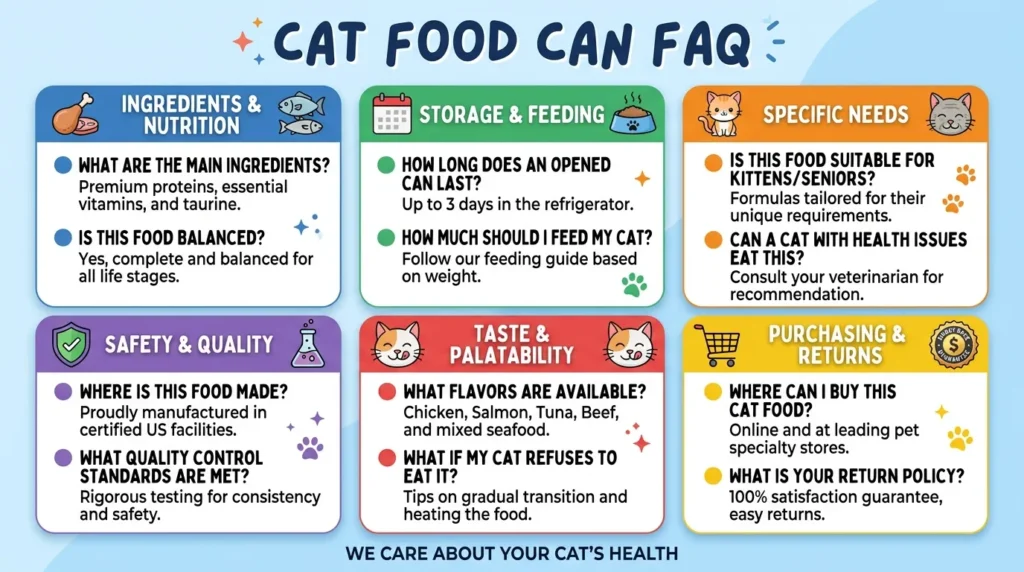
1. Is a cat food can better than dry food?
A cat food can be helpful because wet food usually adds more moisture. Many cats also enjoy its smell and soft texture. However, “better” depends on your cat’s needs.
Some cats do well with wet food only. Others eat a mix of wet and dry food. Therefore, ask your vet what fits your cat’s age, weight, and health.
2. How many cans should I feed my cat each day?
The right amount depends on calories, body weight, and activity. One cat food can may not equal another because calories can vary a lot.
Start with the feeding guide on the label. Then watch your cat’s weight and body shape. If your cat gains or loses weight, adjust portions with vet advice.
3. Can kittens eat adult canned cat food?
Kittens should usually eat food made for growth. Adult food may not give them enough of what they need. So, choose kitten food or food marked for all life stages.
If you find only adult food at home, use it only as a short-term option. Then switch back to proper kitten food as soon as possible.
4. Why does my cat lick the gravy and leave the meat?
Many cats love gravy because it smells strong and tastes rich. However, if your cat leaves the solid food, it may miss important calories and nutrients.
Try pâté, mousse, or smaller chunks. Also, mash the food with a little warm water to spread the flavor evenly.
5. Can I feed my cat fish-flavored cans every day?
Some cats love fish, but daily fish may not suit every cat. Also, some fish-based foods are toppers, not complete meals. So, read the label first.
A balanced rotation can work for many cats. However, talk to your vet if your cat has allergies, urinary problems, or a sensitive stomach.
6. What should I do if my cat refuses a new can?
First, don’t panic. Cats often reject sudden changes. Mix a small amount of the new food with the old food. Then increase it slowly.
You can also try a different texture. For example, switch from chunks to pâté. If your cat refuses food for more than a day, call your vet.
7. Is grain-free canned cat food always better?
No, grain-free does not always mean better. What matters most is complete nutrition, safe ingredients, proper calories, and your cat’s health needs.
Some cats need special diets, but many do not. Therefore, choose food based on real needs, not just marketing claims.
Final Thoughts
Choosing the right cat food can get easier when you know what to check. Start with the life stage, complete and balanced wording, calories, texture, and feeding guide. Then watch how your cat responds.
Don’t chase fancy labels only. Instead, choose food that supports your cat’s daily health and fits your budget. Also, make changes slowly because cats love routine.
If your cat has health problems, talk to your vet before changing food. Finally, try a few safe options, note what your cat enjoys, and build a feeding routine that feels simple for both of you.