
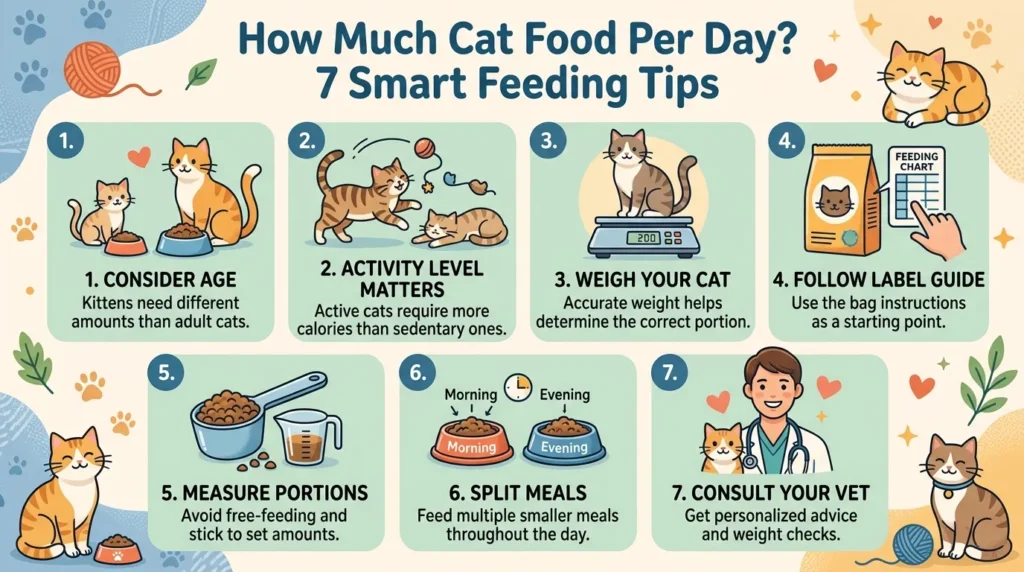
Ever looked at your cat’s bowl and wondered, “Is this enough?” You’re not alone. Many cat owners ask how much cat food per day their cat really needs, especially when food labels feel confusing.
The answer depends on your cat’s weight, age, activity, body shape, and food calories. Also, wet food and dry food measure very differently. So, one scoop may be perfect for one cat and too much for another.
This cat feeding guide gives you a simple way to plan meals. It also keeps how much cat food per day clear and practical. You’ll learn how to use calories, read labels, avoid overfeeding, and build a healthy feeding schedule. However, consult your vet if your cat is underweight, overweight, pregnant, ill, or on a special diet.
How Much Cat Food Per Day Is Normal?
For many healthy adult indoor cats, a good starting point is 20 to 25 calories per pound of ideal body weight each day. So, a 10-pound cat may need about 200 to 250 calories daily.
However, this is only a starting range. Some cats need fewer cat calories because they sleep most of the day. Other cats need more because they play, climb, or spend time outdoors.
The best way to decide how much cat food per day to give is to check three things. Once you know these, how much cat food per day feels much less confusing:
- Your cat’s ideal weight
- The calories in the food
- Your cat’s body condition
In my experience, most feeding mistakes start with guessing. A “small handful” of kibble can hide a lot of calories. Also, a few treats can push your cat over the daily limit.
If your cat keeps gaining weight, reduce food slowly with vet advice. If your cat loses weight without reason, call your vet. Sudden weight loss can point to a health problem.
Simple Daily Cat Food Chart
Use this chart as a starting point. It gives a quick view of how much cat food per day may suit common cat weights. Then adjust with your vet if needed.
| Cat’s Ideal Weight | Daily Calories | Dry Food Example | Wet Food Example |
| 5 lb | 100–125 kcal | 1/4 to 1/3 cup | 1 to 2 small cans |
| 8 lb | 160–200 kcal | 1/3 to 1/2 cup | 2 to 3 small cans |
| 10 lb | 200–250 kcal | 1/2 to 2/3 cup | 2 to 3 small cans |
| 12 lb | 240–300 kcal | 2/3 to 3/4 cup | 3 to 4 small cans |
| 15 lb | 300–375 kcal | 3/4 to 1 cup | 4 to 5 small cans |
These examples depend on the brand. For example, one dry food may have 300 calories per cup. Another may have 500 calories per cup.
So, when asking how much cat food per day, check the calorie line first. It may say “kcal per cup,” “kcal per can,” or “kcal per pouch.”
How Much Cat Food Per Day by Food Type
When you compare how much cat food per day by food type, wet cat food and dry cat food can both work well when they are complete and balanced. However, they do not measure the same way.
Wet Cat Food
Wet cat food contains more moisture. As a result, it can help cats take in more water. This matters because many cats don’t drink much from a bowl.
A common 3-ounce can may contain 60 to 100 calories. Therefore, a 10-pound adult cat may eat around two to three small cans daily.
However, don’t guess by can size alone. Rich pâté foods may have more calories. Gravy-style foods may have fewer calories. So, always read the label.
Dry Cat Food
Dry cat food is easy to store and simple to serve. However, it packs many calories into a small amount. That’s why free-feeding can cause weight gain.
A cup of dry food may contain 300 to 500 calories. So, even a half cup can cover much of your cat’s day.
If you feed dry food, use a real measuring cup. Also, avoid topping up the bowl all day unless your vet agrees.
Mixed Feeding
Many owners use both wet and dry food. This can work well. First, decide the total daily calories. Then subtract the wet food calories. Finally, give the remaining calories as dry food.
Here’s an easy example:
- Your cat needs 220 calories daily.
- One wet food can have 80 calories.
- You feed one can per day.
- You have 140 calories left.
- Your dry food has 420 calories per cup.
- You feed about 1/3 cup dry food.
This method makes how much cat food per day easier to control. It also helps families keep how much cat food per day is consistent.
Pro Tip: Write your cat’s daily calorie target on the food bag. Then add the wet and dry amounts beside it. This small note can stop accidental overfeeding.
How Much Cat Food Per Day: Step-by-Step Guide

Now, let’s make the process simple. You don’t need fancy tools. However, you do need consistency.
1. Find Your Cat’s Ideal Weight
Start with ideal weight, not always current weight. For example, a 15-pound cat may only need food for a 12-pound goal weight.
If you’re unsure, ask your vet. Your vet can check your body condition score. This score looks at ribs, waist, and belly shape.
2. Check the Food Calories
Next, look at the label. Find the calorie amount. It may say:
- kcal per cup
- kcal per can
- kcal per pouch
- kcal per kilogram
If the label only lists calories per kilogram, check the brand website. You can also contact the company.
3. Choose a Daily Calorie Target
For many adult indoor cats, start with 20 to 25 calories per pound of ideal weight. However, adjust based on activity and body condition.
Use the lower end if your cat is lazy, neutered, or gaining weight. Use the higher end if your cat is active, lean, or still hungry.
4. Divide Food Into Meals
Most cats do well with two or more meals daily. Also, small meals can reduce begging because your cat gets food more often.
You can try:
- Breakfast and dinner
- Morning, afternoon, and night
- Wet meals plus measured dry food
- Puzzle feeders for dry food
If your cat eats too fast, use a slow feeder. In addition, add playtime before meals to match natural hunting behavior.
5. Track Weight Every Two Weeks
Your cat’s body tells you if the amount works. Therefore, weigh your cat every two weeks if possible. You can also take a side photo monthly.
If your cat gains weight, reduce calories a little. If your cat loses too much, increase food or call your vet.
Never crash diet a cat. Fast weight loss can be dangerous. So, if your cat needs to lose weight, ask your vet for a safe plan.
Real Examples of Daily Cat Food Amounts
Examples make this easier. So, here are common feeding situations.
Healthy 10-Pound Indoor Cat
Milo is a 10-pound indoor cat. He plays a little, but he mostly naps near the window.
A good target may be 200 to 250 calories per day. His owner feeds one 80-calorie wet food can. Then she gives about 140 calories of dry food.
If the dry food has 420 calories per cup, Milo gets about 1/3 cup dry food. This keeps the total near 220 calories.
Overweight 14-Pound Cat
Luna weighs 14 pounds, but her vet says her ideal weight is 11 pounds. So, her owner should not feed her like a 14-pound cat.
Instead, Luna needs a vet-approved calorie target. She may also need measured meals, fewer treats, and more playtime.
This is where how much cat food per day becomes personal. Also, overweight cats should lose weight slowly.
Active Young Adult Cat
Leo is lean, active, and loves chasing toys. He weighs 9 pounds and burns more energy than a sleepy indoor cat.
He may need the higher end of the calorie range. However, his owner still watches his waist and weight.
Senior Cat With Appetite Changes
Bella is 13 years old. She eats less than before and seems thinner. Her owner should not just add more food and hope.
Instead, Bella needs a vet check. Dental pain, thyroid disease, kidney issues, and other problems can change appetite.
For senior cats, the answer to how much cat food per day should include health checks, not just math.
Mistakes That Change How Much Cat Food Per Day
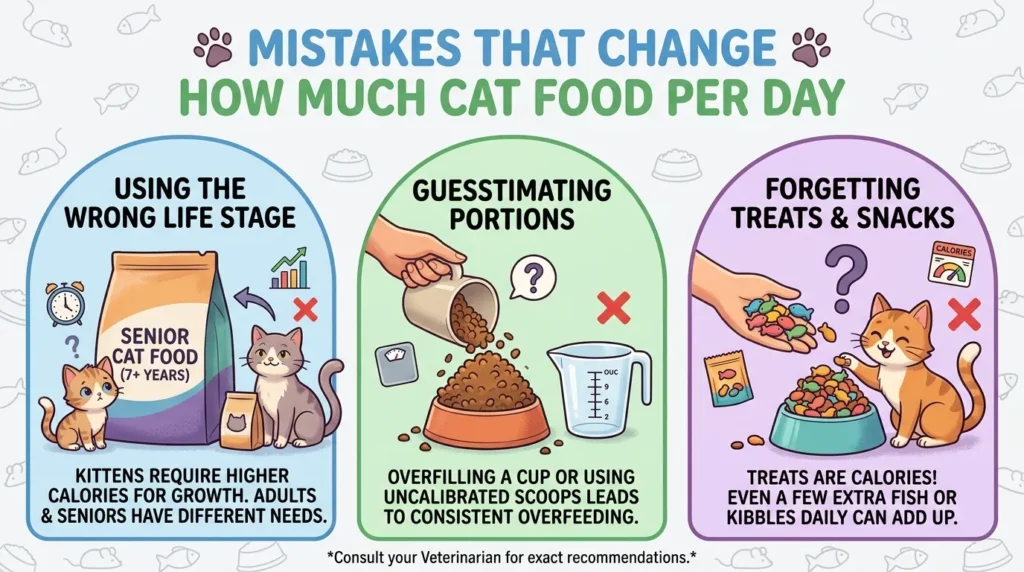
Feeding cats looks easy. However, small mistakes can add up fast.
Free-Feeding Too Much Dry Food
Leaving dry food out all day works for some cats. However, many cats overeat when food never disappears.
If your cat gains weight, switch to measured meals. Also, use puzzle feeders to slow eating.
Forgetting Treat Calories
Treats count. A few crunchy treats may seem tiny, but they still add calories. Therefore, keep treats small.
A good rule is to keep treats under 10% of daily calories. So, a cat eating 220 calories should get no more than about 22 treat calories.
Feeding Every Cat the Same Amount
Two cats may need different portions. One may be active and lean. The other may be older and less active.
Feed them separately if needed. Also, watch for food stealing.
Trusting the Bag Without Adjusting
Food labels give general feeding guides. However, they may not match your cat’s exact needs.
Use the label as a starting point. Then adjust based on weight, hunger, stool quality, and body shape.
Changing Food Too Fast
Cats can have sensitive stomachs. So, switch food slowly over 7 to 10 days.
First, mix a little new food into the old food. Then increase the new food each day. This helps prevent vomiting and loose stool.
How Much Cat Food Per Day FAQ
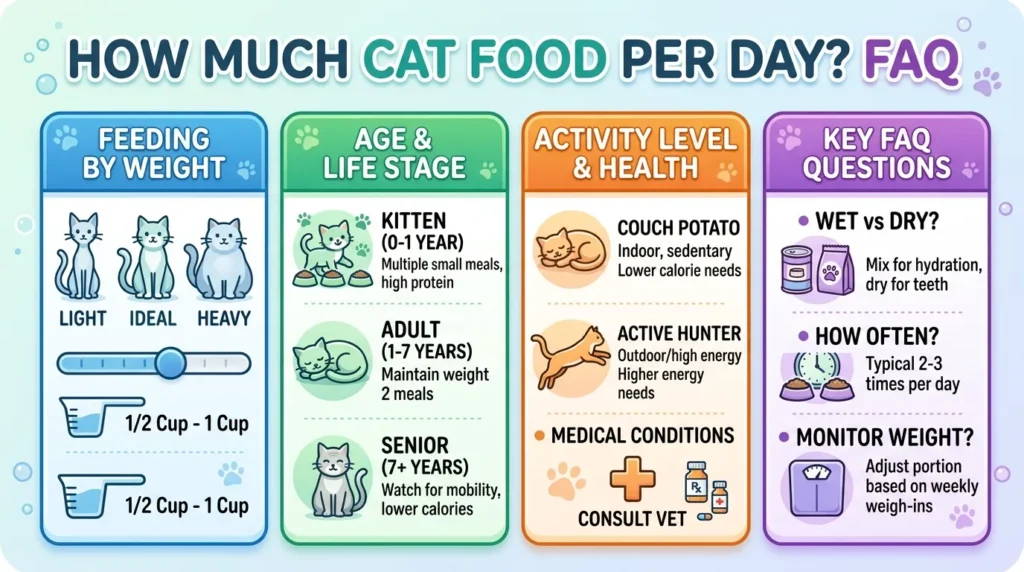
1. How much cat food per day should an indoor cat eat?
Most healthy indoor adult cats need about 20 to 25 calories per pound of ideal body weight each day. For example, a 10-pound indoor cat may need around 200 to 250 calories daily.
However, activity level matters. A sleepy cat may need less. A playful cat may need more. Therefore, use calories and body condition together.
2. How much cat food per day should be wet food?
Many adult cats eat about two to three 3-ounce cans per day. However, this depends on calories per can and your cat’s ideal weight.
First, check the label. Then compare it with your cat’s daily calorie target. Also, ask your vet if your cat has kidney, urinary, weight, or digestive issues.
3. How much cat food per day should be dry food?
Many adult cats eat about 1/3 to 2/3 cup of dry food per day. However, dry foods vary a lot in calories.
One brand may have 300 calories per cup. Another may have 500. So, the safest answer comes from the calorie label, not the cup size.
4. Can I feed my cat once a day?
Some adult cats can eat once daily. However, many cats do better with two or more meals. Smaller meals can reduce hunger, begging, and fast eating.
Kittens need more frequent meals. Also, cats with health problems may need a special schedule. Therefore, ask your vet if you’re unsure.
5. Why is my cat always hungry?
Your cat may feel hungry because the food amount is too low. However, boredom can also cause begging. Some cats ask for food because they want attention.
In addition, health problems can increase hunger. Diabetes, thyroid disease, parasites, and poor digestion may play a role. So, call your vet if hunger changes suddenly.
6. Should kittens eat more food per day?
Yes, kittens need more calories for growth. They also need kitten food, not adult cat food. In most cases, kittens eat several small meals daily.
However, the amount changes quickly as they grow. So, follow the kitten food label and ask your vet during wellness visits.
Final Thoughts
Learning how much cat food per day your cat needs can feel confusing at first. However, it gets easier when you focus on calories, ideal weight, and body condition.
Start with the label. Then measure each meal. Also, keep treats small and track your cat’s weight every few weeks.
Most importantly, don’t panic if the first amount isn’t perfect. Your cat’s needs can change with age, activity, weather, and health. If you notice weight changes, appetite changes, vomiting, or low energy, consult your vet. With a little care, you can build a feeding routine that keeps your cat happy, healthy, and excited for mealtime.