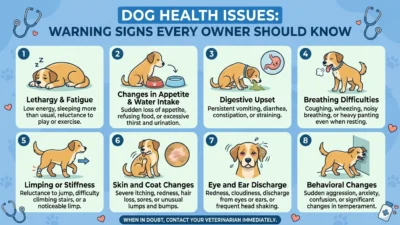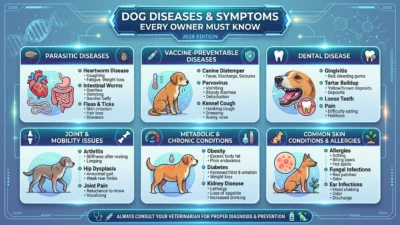
Introduction
Your dog can’t tell you when something feels wrong. That’s the hardest part of being a dog owner. One day your pup seems perfectly fine and the next, you’re Googling symptoms at midnight wondering what’s happening.
Knowing the top 10 most common dog diseases can genuinely save your dog’s life. Because when you recognize the early warning signs, you can act fast. And fast action makes all the difference.
In my experience working closely with pet owners and following veterinary research, most dog health problems are either preventable or highly treatable especially when caught early. This guide walks you through each condition clearly and practically. You’ll know what to watch for, what to do, and when to call your vet.
Let’s get into it.
Top 10 Most Common Dog Diseases: The Complete Overview
Why Every Dog Owner Needs This Knowledge
Dogs get sick just like people do. However, unlike people, dogs hide their pain instinctively. This makes early detection incredibly important for every dog owner.
Therefore, understanding common diseases gives you a real advantage. You become your dog’s first line of defense. Also, many of these conditions look similar on the surface so knowing the differences helps you have better conversations with your vet.
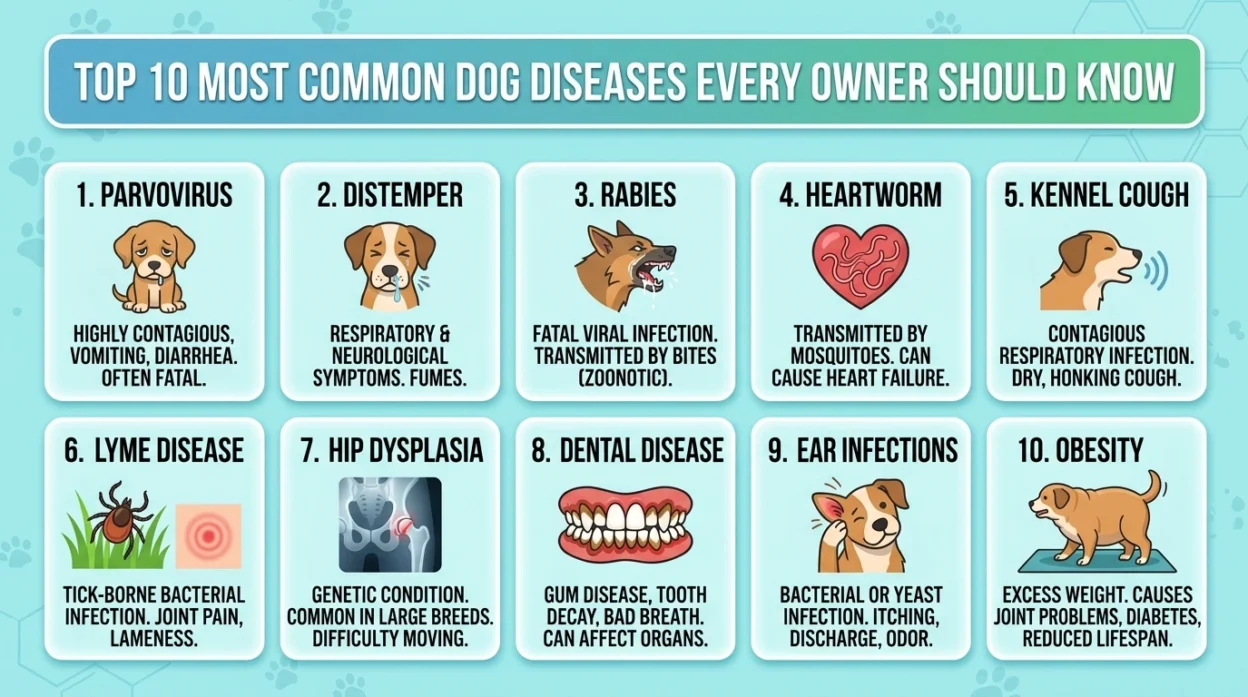
Here are the top 10 most common dog diseases that veterinarians see most frequently around the world.
Disease #1 to #5 The Most Frequently Diagnosed Conditions
1. Canine Parvovirus
Parvovirus is one of the most dangerous diseases on this list. It spreads incredibly fast especially among unvaccinated puppies. As a result, it kills more young dogs than almost any other illness.
Key symptoms to watch for:
- Severe bloody diarrhea
- Vomiting and lethargy
- Loss of appetite
- Rapid dehydration
Vaccination is your best protection here. Therefore, make sure your puppy receives their full parvo vaccine series on schedule. If you notice these symptoms, contact your vet immediately. Don’t wait.
2. Kennel Cough (Infectious Tracheobronchitis)
Ever heard your dog make a honking cough that sounds almost like they’re choking? That’s often kennel cough. It’s highly contagious and spreads quickly wherever dogs gather in dog parks, boarding facilities, and groomers.
Common symptoms include:
- Persistent dry, honking cough
- Runny nose
- Mild fever in some cases
- Reduced appetite
The good news is that most healthy adult dogs recover on their own within two to three weeks. However, puppies and senior dogs need closer monitoring. Also, a vaccine is available and recommended for dogs that socialize frequently.
3. Canine Distemper
Distemper is a serious viral illness that attacks multiple body systems simultaneously. It affects the respiratory, gastrointestinal, and nervous systems making it particularly devastating.
Signs to watch for:
- Eye and nose discharge
- Coughing and fever
- Seizures in advanced cases
- Hardening of paw pads
Fortunately, vaccination prevents distemper very effectively. First, ensure your dog’s vaccines are current. Then, to avoid contact with wildlife, raccoons and foxes can carry and spread the virus.
4. Dental Disease (Periodontal Disease)
Here’s one that surprises most owners: dental disease is actually the most common health condition in adult dogs. By age three, over 80% of dogs show some signs of gum disease. Yet most owners never think to check their dog’s mouth.
Warning signs include:
- Bad breath that seems unusually strong
- Red or swollen gums
- Difficulty chewing food
- Loose or missing teeth
- Excessive drooling
Therefore, brushing your dog’s teeth regularly makes a huge difference. In addition, annual dental cleanings at your vet keep serious problems at bay. Don’t ignore bad breath; it’s rarely “just normal dog breath.”
Pro Tip: Start dental hygiene habits when your dog is a puppy. This makes the process easier for both of you throughout their life.
Obesity might not sound like a “disease” but it is. In fact, excess weight leads directly to diabetes, joint disease, heart problems, and a shorter lifespan. Vets consider it one of the most preventable health crises in modern pet care.
Signs your dog may be overweight:
- You can’t feel their ribs easily
- No visible waist when viewed from above
- Low energy and reluctance to exercise
- Difficulty breathing during mild activity
However, the solution is straightforward. First, measure your dog’s food rather than guessing portions. Then, incorporate daily walks and active play. Also, limit high-calorie treats. Finally, ask your vet about an appropriate target weight for your dog’s breed.
[Dog Health Products: Best Picks to Keep Your Pup Healthy]
Disease #6 to #10 Common Conditions That Need Attention
6. Ear Infections (Otitis Externa)
Ear infections are incredibly common especially in breeds with floppy ears like Cocker Spaniels, Basset Hounds, and Golden Retrievers. Moisture, allergies, and ear structure all contribute to the problem.
Symptoms to look for:
- Frequent head shaking
- Scratching at ears repeatedly
- Redness or swelling inside the ear
- Dark discharge or strong odor
- Whimpering when ears are touched
Therefore, regular ear cleaning is essential for susceptible breeds. However, always use a vet-recommended ear cleaner and never insert anything deep into the ear canal. If symptoms appear, consult your vet promptly. Untreated ear infections can lead to serious complications.
7. Skin Allergies (Atopic Dermatitis)
Does your dog scratch constantly? Do they lick their paws obsessively? Skin allergies are one of the top reasons dogs visit veterinarians each year.
Allergies in dogs can be triggered by:
- Environmental factors like pollen and dust mites
- Food ingredients particularly beef, chicken, or wheat
- Flea bites even a single bite can trigger a reaction
- Mold and household chemicals
Common symptoms include:
- Itchy, red, or inflamed skin
- Recurring ear infections
- Hair loss in affected areas
- Paw licking and face rubbing
As a result, identifying the trigger is crucial. Your vet may recommend allergy testing, dietary changes, or medication. Also, regular flea prevention helps eliminate one major trigger entirely.
8. Arthritis and Joint Disease
Arthritis affects dogs just as it affects people causing daily pain and reduced mobility. It’s particularly common in large breeds, senior dogs, and dogs that were overweight for extended periods.
Signs your dog may have arthritis:
- Stiffness after resting or sleeping
- Reluctance to climb stairs or jump
- Limping especially after exercise
- Visible swelling around joints
- Personality changes due to chronic pain
However, arthritis is manageable with the right approach. Joint supplements like glucosamine and chondroitin help many dogs noticeably. In addition, maintaining a healthy weight reduces pressure on joints significantly. Always consult your vet before starting any supplement or pain management plan.
9. Diabetes Mellitus
Canine diabetes is becoming increasingly common largely because of rising obesity rates in dogs. It occurs when the body either doesn’t produce enough insulin or can’t use it effectively.
Key warning signs include:
- Excessive thirst and frequent urination
- Sudden weight loss despite a good appetite
- Cloudy eyes (cataracts)
- Recurring infections
Fortunately, diabetes is manageable with proper veterinary care. First, your vet will confirm the diagnosis through blood and urine tests. Then, treatment typically involves daily insulin injections and dietary adjustments. Therefore, early detection makes management much easier and more effective.
10. Heartworm Disease
Heartworm disease is transmitted through mosquito bites making it a risk almost everywhere. Worms grow inside the heart and lungs, causing severe damage over time. In advanced cases, it can be fatal.
Symptoms often don’t appear until the disease is advanced:
- Mild persistent cough
- Fatigue after light exercise
- Reduced appetite and weight loss
- Swollen belly in severe cases
However, prevention is simple, affordable, and highly effective. Monthly heartworm preventatives protect your dog year-round. Also, annual heartworm testing ensures early detection if prevention is ever missed. This is one disease where prevention is absolutely worth the small monthly effort.
Quick Reference: Top 10 Most Common Dog Diseases at a Glance
| # | Disease | Main Symptom | Prevention |
| 1 | Canine Parvovirus | Bloody diarrhea, vomiting | Vaccination |
| 2 | Kennel Cough | Honking cough | Vaccine + hygiene |
| 3 | Canine Distemper | Discharge, seizures | Vaccination |
| 4 | Dental Disease | Bad breath, swollen gums | Regular brushing |
| 5 | Obesity | Low energy, weight gain | Diet + exercise |
| 6 | Ear Infections | Head shaking, discharge | Regular cleaning |
| 7 | Skin Allergies | Itching, paw licking | Allergy management |
| 8 | Arthritis | Stiffness, limping | Weight control |
| 9 | Diabetes | Thirst, weight loss | Healthy diet |
| 10 | Heartworm Disease | Cough, fatigue | Monthly prevention |
Common Mistakes Dog Owners Make With These Diseases
Waiting Too Long to See the Vet
This is the biggest and most costly mistake. Many owners assume symptoms will “pass on their own.” However, conditions like parvovirus and heartworm disease progress rapidly. Therefore, when in doubt, call your vet. A quick phone call is always worth it.
Skipping Preventative Care
Vaccines, heartworm prevention, flea control, and dental cleanings aren’t optional extras. They’re the foundation of your dog’s health. In addition, preventative care is significantly cheaper than treating a fully developed disease. Think of it as an investment not an expense.
Googling Symptoms Instead of Calling the Vet
We’ve all done it. However, online symptom checkers can lead you in the wrong direction causing unnecessary panic or, worse, false reassurance. Always use reliable sources like the American Kennel Club (akc.org) for general guidance. Then consult your actual vet for anything that concerns you about your specific dog.
Ignoring Subtle Behavioral Changes
Dogs don’t cry out when they’re in pain, they go quiet instead. Therefore, subtle changes like reduced playfulness, different eating habits, or unusual lethargy are often the first signs something is wrong. Trust your instincts. You know your dog better than anyone.
Pro Tip: Keep a simple health journal for your dog. Note their eating habits, energy levels, and any unusual behaviors weekly. This record becomes incredibly valuable when visiting your vet.
Frequently Asked Questions About the Top 10 Most Common Dog Diseases
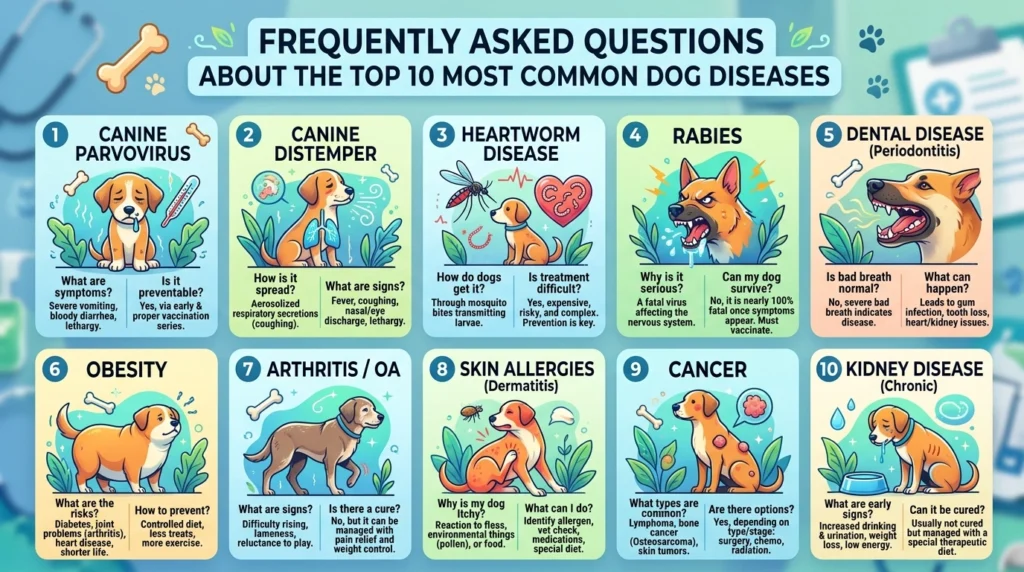
1. What is the most common disease in dogs overall?
Dental disease is technically the most common condition in adult dogs affecting over 80% by age three. However, it’s also the most overlooked because owners rarely think to check their dog’s teeth. Regular brushing and annual dental cleanings prevent most dental problems before they become serious. Therefore, start oral hygiene habits early and maintain them consistently throughout your dog’s life.
2. How can I tell if my dog is seriously ill versus mildly unwell?
Certain signs always warrant immediate veterinary attention. These include bloody diarrhea or vomiting, seizures, difficulty breathing, sudden collapse, extreme lethargy, or refusal to eat for more than 24 hours. However, mild symptoms like a single soft stool or slightly reduced appetite for one meal may just need monitoring. When in doubt, call your vet. Most clinics offer phone consultations to help you assess urgency quickly.
3. Are these diseases contagious to humans?
Most common dog diseases are not contagious to humans. However, a few conditions like certain skin infections or intestinal parasites can occasionally spread. Therefore, always wash your hands after handling a sick dog. Also, keep sick dogs away from young children and immunocompromised family members as a precaution. Your vet can advise specifically if your dog’s condition has any human health implications.
4. What vaccinations protect against the top dog diseases?
The core vaccines protect against parvovirus, distemper, adenovirus, and rabies. In addition, the bordetella vaccine protects against kennel cough especially important for dogs that visit groomers or dog parks. Also, the leptospirosis vaccine is recommended in many areas. First, discuss your dog’s lifestyle with your vet. Then, they’ll recommend a vaccination schedule tailored to your dog’s specific risk factors and location.
5. How much does treating common dog diseases typically cost?
Costs vary significantly depending on the disease and how advanced it is at diagnosis. For example, treating parvo can cost anywhere from $500 to $2,000 or more depending on severity. Dental cleanings typically run $300 to $700. Heartworm treatment, however, can reach $1,000 to $3,000 for advanced cases. Therefore, preventative care which costs a fraction of treatment is always the smarter financial choice. Pet insurance is also worth considering to manage unexpected costs.
6. Can diet prevent some of these common dog diseases?
Absolutely good nutrition plays a major role in preventing several conditions on this list. A balanced, high-quality diet helps prevent obesity, diabetes, skin allergies, and even dental disease to some extent. Therefore, choose a food appropriate for your dog’s life stage and size. Also, avoid overfeeding and limit processed treats. Finally, consult your vet about dietary choices especially if your dog shows signs of food sensitivities or weight problems.
7. How often should I take my dog to the vet for checkups?
Healthy adult dogs should visit the vet at least once a year for a wellness exam. However, puppies need more frequent visits during their first year for vaccines and growth monitoring. Senior dogs generally over age seven benefit from twice-yearly checkups because health changes happen faster as dogs age. In addition, any time you notice concerning symptoms, don’t wait for the annual appointment. Early detection consistently leads to better outcomes across every disease on this list.
Protecting Your Dog Starts With What You Know
Understanding the top 10 most common dog diseases is genuinely one of the most powerful things you can do as a dog owner. You can’t prevent every illness but you can recognize warning signs early, make smart preventative choices, and advocate effectively for your dog’s health.
Regular vet visits, up-to-date vaccinations, good nutrition, and daily observation are your strongest tools. In addition, trusting your instincts matters if you know your dog’s normal behavior better than anyone.
Your dog gives you unconditional love every single day. Staying informed about their health is one of the most meaningful ways to give that love right back.