
Introduction
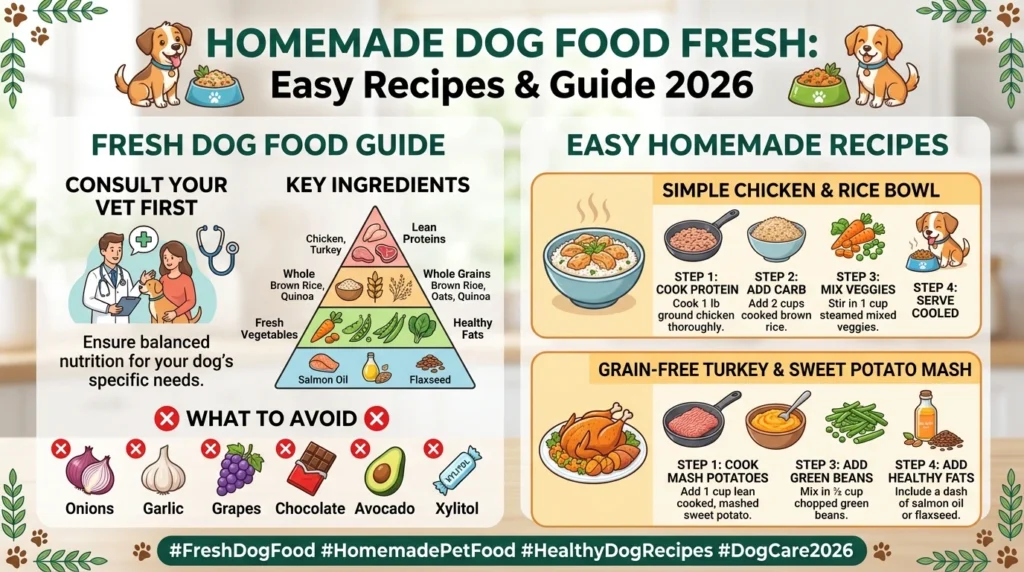
Your dog deserves real food. Not mystery ingredients. Not artificial preservatives. Just fresh, wholesome meals made with love right in your own kitchen.
Homemade dog food fresh is becoming the go-to choice for thousands of dog owners worldwide. And honestly? It makes complete sense. You know exactly what goes into every bowl. No hidden chemicals. No vague “meat by-products.” Just real ingredients you can actually recognize.
However, many owners feel nervous about starting. They worry about getting the nutrition wrong, or spending too much time cooking. The good news is fresh homemade dog food is simpler than you think.
In this guide, you’ll learn everything you need. From safe ingredients to easy recipes, from common mistakes to vet-approved tips we’ve got it all covered. Let’s give your dog the fresh meals they truly deserve.
What Is Homemade Dog Food Fresh and Why Does It Matter?
Fresh homemade dog food is exactly what it sounds like. You cook real, whole-food ingredients at home and serve them to your dog instead of or alongside commercial kibble.
The Big Difference From Commercial Food
Commercial dry kibble goes through extreme heat processing. As a result, many natural nutrients get destroyed during manufacturing. Synthetic vitamins are then added back in afterward.
Fresh homemade food, however, preserves more natural nutrients. Because it’s gently cooked at lower temperatures, your dog gets more bioavailable nutrition from every meal.
Why So Many Owners Are Making the Switch
In my experience, the switch to fresh food almost always comes from one of these reasons:
- A dog with chronic digestive issues that kibble couldn’t fix
- A picky eater who suddenly won’t touch dry food
- A senior dog needing softer, more digestible meals
- An owner who simply wants more control over ingredients
Have you noticed your dog’s coat looking dull lately? Or struggling with loose stools? Fresh food can often make a remarkable difference within just a few weeks.
Pro Tip: You don’t have to go fully homemade overnight. Start by adding fresh food as a topper on your dog’s kibble. Even small amounts of fresh ingredients make a positive difference.
Key Benefits of Feeding Homemade Dog Food Fresh
Before jumping into recipes, let’s look at why fresh food is worth the effort. There are several compelling reasons to consider this approach.
Better Digestibility
Fresh, lightly cooked food is generally easier for dogs to digest. Therefore, your dog absorbs more nutrition from smaller portions. Many owners also notice significantly smaller, firmer stools a clear sign of better absorption.
Full Ingredient Control
When you prepare fresh homemade dog food, you decide everything that goes into the bowl.
Improved Coat and Skin Health
Fresh food, especially recipes rich in omega-3 fatty acids from fish or flaxseed, can dramatically improve coat shine. In addition, skin conditions like dryness or itchiness often improve with a fresh diet.
Higher Palatability
Dogs go absolutely wild for fresh food. The aroma alone is enough to bring even the pickiest eater running to their bowl. For dogs with reduced appetite, especially seniors, this palatability boost is genuinely helpful.
How to Make Homemade Dog Food Fresh: Step-by-Step Guide
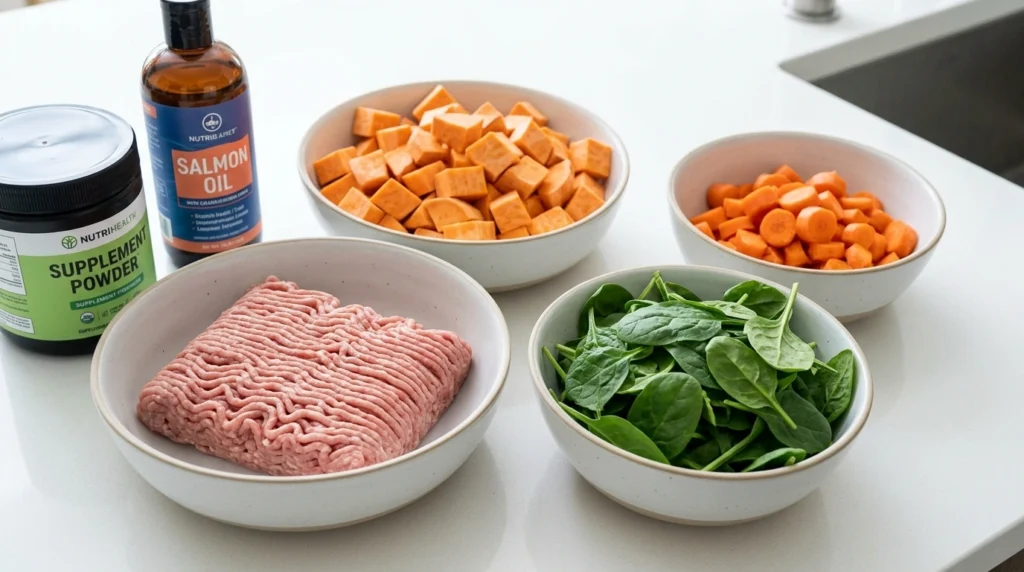
Ready to get started? Follow these steps carefully. Also, remember to consult your vet before making significant dietary changes, especially if your dog has health conditions.
Step 1 Choose Your Protein Source
Start with a lean, named protein as the base of every meal. Good options include:
- Chicken (boneless, skinless) easy to digest, widely available
- Turkey (ground or breast) lean and nutritious
- Beef (lean ground or chuck) rich in iron and protein
- Salmon (boneless) excellent source of omega-3 fatty acids
- Eggs (whole, cooked) affordable and nutrient-dense
Step 2 Add Healthy Carbohydrates
Carbohydrates provide energy and fiber. Therefore, always include a quality carb source:
- Brown rice gentle on digestion, widely recommended
- Sweet potato rich in vitamins A and C
- Oats great for sensitive stomachs
- Quinoa a complete protein carbohydrate source
Step 3 Include Dog-Safe Vegetables
Vegetables add vitamins, minerals, and fiber. However, not all vegetables are safe for dogs. Stick to these proven options:
- Carrots great for teeth and vision
- Green beans low calorie, high fiber
- Spinach rich in iron (in moderation)
- Peas good source of vitamins B and K
- Broccoli nutrient-dense (small amounts only)
Step 4 Add a Veterinary-Approved Supplement
This step is critical. Homemade food alone often misses key micronutrients. As a result, most veterinary nutritionists recommend adding a complete supplement like BalanceIT or a similar product to ensure full nutritional coverage.
Step 5 Cook, Cool, and Portion
- Cook all proteins thoroughly never feed raw without veterinary guidance
- Allow food to cool completely before serving
- Portion into daily servings based on your dog’s weight
- Refrigerate portions for up to 3 days, or freeze for up to 3 months
Step 6 Transition Gradually
Don’t switch overnight. Instead, mix fresh food gradually with your dog’s current diet over 7 to 10 days. Start with 25% fresh and 75% current food, then slowly shift the ratio each day.
[Best Dry Dog Food for Large Dogs: Top Picks 2026 Guide]
Simple Homemade Dog Food Fresh Recipes to Try Today
Here are three easy, vet-friendly recipes to get you started. Each one uses simple, accessible ingredients.
Recipe 1 Classic Chicken and Rice
Ingredients:
- 2 cups boneless chicken breast (cooked, shredded)
- 1 cup brown rice (cooked)
- ½ cup carrots (steamed, diced)
- ½ cup peas (cooked)
- 1 tablespoon fish oil
Instructions: Cook chicken thoroughly, shred into small pieces. Mix all ingredients together. Add fish oil. Cool completely before serving.
Recipe 2 Salmon and Sweet Potato Bowl
Ingredients:
- 1.5 cups boneless salmon (cooked, flaked)
- 1 cup sweet potato (cooked, mashed)
- ½ cup green beans (steamed, chopped)
- 1 tablespoon flaxseed oil
Instructions: Bake or steam salmon until fully cooked. Flake into pieces. Combine with mashed sweet potato and green beans. Drizzle with flaxseed oil. Cool before serving.
Recipe 3 Ground Turkey and Veggie Mix
Ingredients:
- 2 cups lean ground turkey (cooked)
- ½ cup oats (cooked)
- ½ cup spinach (steamed, chopped)
- ½ cup broccoli (steamed, finely chopped)
- 1 whole egg (scrambled, cooked)
Instructions: Brown ground turkey thoroughly. Cook oats separately. Steam vegetables until soft. Combine all ingredients. Cool completely before serving.
Quick Nutritional Comparison
| Recipe | Main Protein | Key Benefit | Best For |
| Chicken & Rice | Chicken | Easy digestion | Sensitive stomachs |
| Salmon & Sweet Potato | Salmon | Omega-3 rich | Skin and coat health |
| Turkey & Veggie Mix | Turkey | High protein | Active adult dogs |
Safe Ingredients vs. Dangerous Foods for Dogs
Always Safe ✅
- Lean cooked meats (chicken, turkey, beef, salmon)
- Brown rice, oats, sweet potato
- Carrots, green beans, peas, spinach
- Blueberries, watermelon (seedless)
- Cooked eggs
Always Dangerous ❌ Never Feed These
This is critically important. Some human foods are highly toxic to dogs. Therefore, always keep these away from your dog’s bowl:
- Onions and garlic cause red blood cell damage
- Grapes and raisins can cause kidney failure
- Chocolate toxic to the nervous system
- Xylitol (artificial sweetener) extremely dangerous
- Avocado contains persin, toxic to dogs
- Macadamia nuts cause muscle weakness and tremors
- Cooked bones splinter and cause internal injury
Common Mistakes to Avoid With Fresh Homemade Dog Food
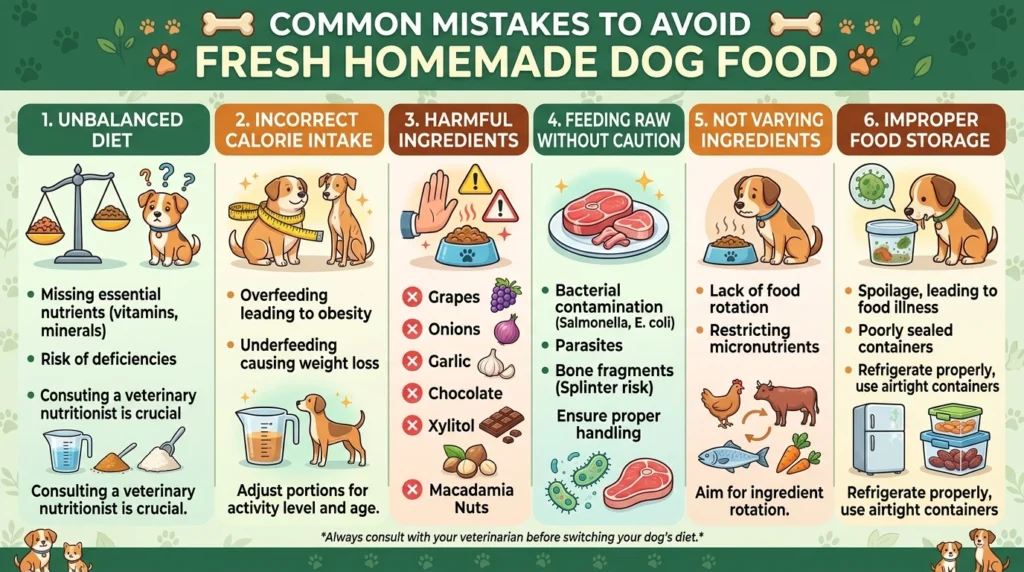
Even experienced cooks make these errors when starting out. Here’s what to watch for carefully.
Skipping the Nutritional Supplement
This is the biggest mistake I see. A beautifully cooked meal of chicken, rice, and vegetables still misses critical micronutrients dogs need. Calcium, zinc, vitamin D, and vitamin E are commonly deficient in homemade diets. Always add a vet-recommended complete supplement.
Feeding the Wrong Portion Size
Fresh food is more digestible than kibble. As a result, your dog often needs less volume to meet their caloric needs. Overfeeding leads to rapid weight gain even on healthy food. Calculate portions based on your dog’s target weight, not their appetite.
Using Seasonings or Additives
Never season your dog’s food with salt, pepper, garlic powder, onion powder, or any spices. These ingredients are either toxic or harmful to dogs, even in small amounts. Keep homemade dog food plain and simple.
Not Consulting Your Vet First
Fresh food is wonderful but it’s not one-size-fits-all. Dogs with kidney disease, diabetes, pancreatitis, or food allergies have very specific nutritional requirements. Always consult your veterinarian before switching to a homemade diet, especially for dogs with existing health conditions.
Storing Food Incorrectly
Fresh homemade food spoils quickly. Never leave it in the bowl for more than two hours at room temperature. Refrigerate immediately after cooking and use within three days. Freeze additional portions in labeled, airtight containers for up to three months.
Pro Tip: Batch cook on weekends to save time during the week. Make a large pot of chicken and rice, divide into daily portions, and freeze most of it. Your dog gets fresh food every day without daily cooking effort.
Frequently Asked Questions About Homemade Dog Food Fresh
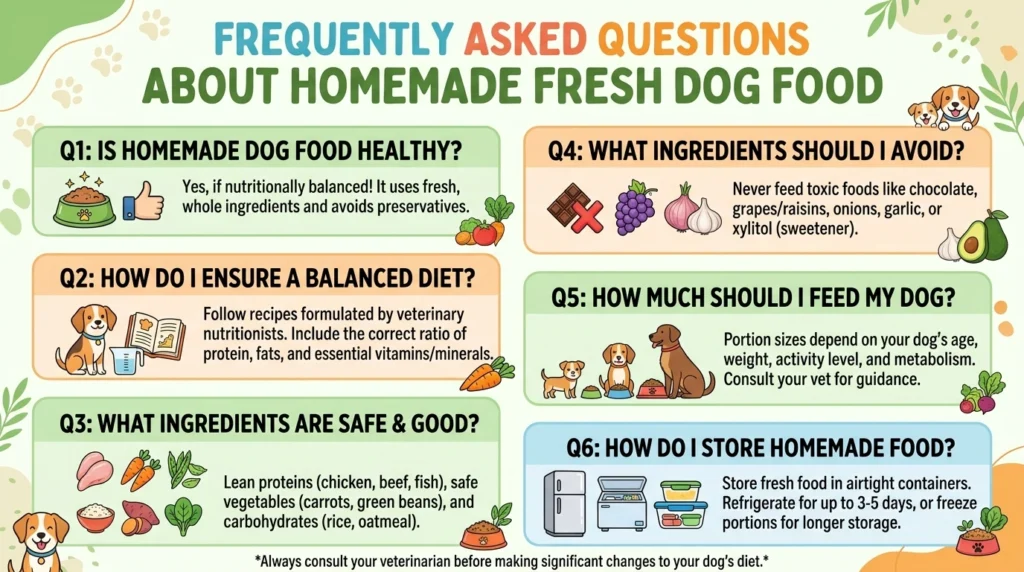
1. Is homemade dog food fresh actually better than commercial kibble?
For many dogs, yes. Fresh homemade food is generally more digestible, made from higher-quality whole ingredients, and free from artificial additives. However, it must be nutritionally balanced to be genuinely beneficial. A poorly balanced homemade diet can cause serious nutritional deficiencies over time. The key is following a vet-approved recipe and adding a complete nutritional supplement. When done correctly, fresh homemade food can significantly improve coat condition, digestion, energy levels, and overall health outcomes.
2. How do I know if my homemade recipe is nutritionally complete?
The safest approach is to use a recipe developed or reviewed by a board-certified veterinary nutritionist. You can also use tools like the BalanceIT recipe calculator, which helps you formulate balanced meals for your dog’s specific weight and life stage. Simply cooking chicken and rice without supplementation isn’t enough. Your dog needs specific ratios of calcium, phosphorus, and micronutrients that plain whole foods alone don’t provide. Always consult your vet before committing to a fully homemade diet long-term.
3. How much homemade fresh food should I feed my dog daily?
A general starting guideline is approximately 2% to 3% of your dog’s ideal body weight in fresh food per day. For example, a 50-pound dog would need roughly 1 to 1.5 pounds of food daily. However, this varies based on activity level, age, metabolism, and whether you’re mixing fresh food with kibble. Your vet can calculate a more precise daily caloric target based on your dog’s individual body condition score.
4. Can puppies eat homemade fresh dog food?
Yes but puppy nutrition is significantly more complex than adult dog nutrition. Puppies need specific ratios of calcium, phosphorus, and DHA for proper bone and brain development. Large breed puppies especially need carefully controlled calcium levels. Always use a recipe specifically designed for puppies by a veterinary nutritionist, and never assume an adult dog recipe works equally well for growing pups. Consult your vet before starting any homemade diet for a puppy.
5. What are the safest proteins to use in homemade dog food?
Chicken and turkey are the safest, most digestible starting proteins for most dogs. Salmon is excellent for omega-3 fatty acids and skin health. Lean beef provides iron and variety. Eggs are affordable, nutrient-dense, and virtually universally tolerated. Always cook proteins thoroughly and never feed raw meat without specific veterinary guidance, as raw diets carry food safety risks for both dogs and the humans handling the food.
6. How long does fresh homemade dog food last?
Cooked fresh dog food lasts 3 to 4 days in the refrigerator when stored in a sealed container. For longer storage, freeze individual daily portions in airtight containers or freezer bags for up to 3 months. Always label containers with the date prepared. Thaw frozen portions in the refrigerator overnight rather than at room temperature. Discard any food that smells off or has been left out for more than two hours.
7. Can I mix fresh homemade food with dry kibble?
Absolutely and this is actually a great approach for many owners. Mixing fresh food as a topper on kibble adds moisture, palatability, and real-food nutrition without requiring fully homemade meals every day. When mixing, adjust total portion sizes to avoid overfeeding. A 50/50 split works well for many dogs. This hybrid approach is especially useful for owners who want the benefits of fresh food without the time commitment of fully homemade feeding.
Start Feeding Your Dog Fresh Food Today
Homemade dog food fresh isn’t just a trend, it’s a genuinely meaningful way to improve your dog’s health, digestion, and quality of life. With the right recipes, proper supplementation, and your vet’s guidance, you can create balanced, delicious meals your dog will absolutely love.
Start simple. Try the chicken and rice recipe this weekend. Watching how your dog responds to the enthusiasm at mealtime tells you everything. From there, you can gradually build your recipe repertoire and find the combinations your dog loves most.
Remember to always consult your vet before making major dietary changes. Fresh food done right is wonderful. Fresh food done without proper guidance can miss important nutritional needs.